
The insurance adjuster's first settlement offer arrives within days of your accident—$3,000 for a crash that totaled your car and sent you to the emergency room.
They claim it's their "best and final offer," but Alabama accident victims who accept these quick settlements often discover months later they've signed away rights worth tens of thousands of dollars when medical complications arise and bills keep mounting.
Alabama's Unique Legal Landscape for Accident Claims
Filing an accident claim in Alabama requires navigating state-specific laws that can dramatically impact your recovery.
Unlike most states that allow partial recovery even when victims share fault, Alabama's legal framework creates unique challenges requiring careful strategy from the moment an accident occurs.
Key Alabama laws affecting accident claims include:
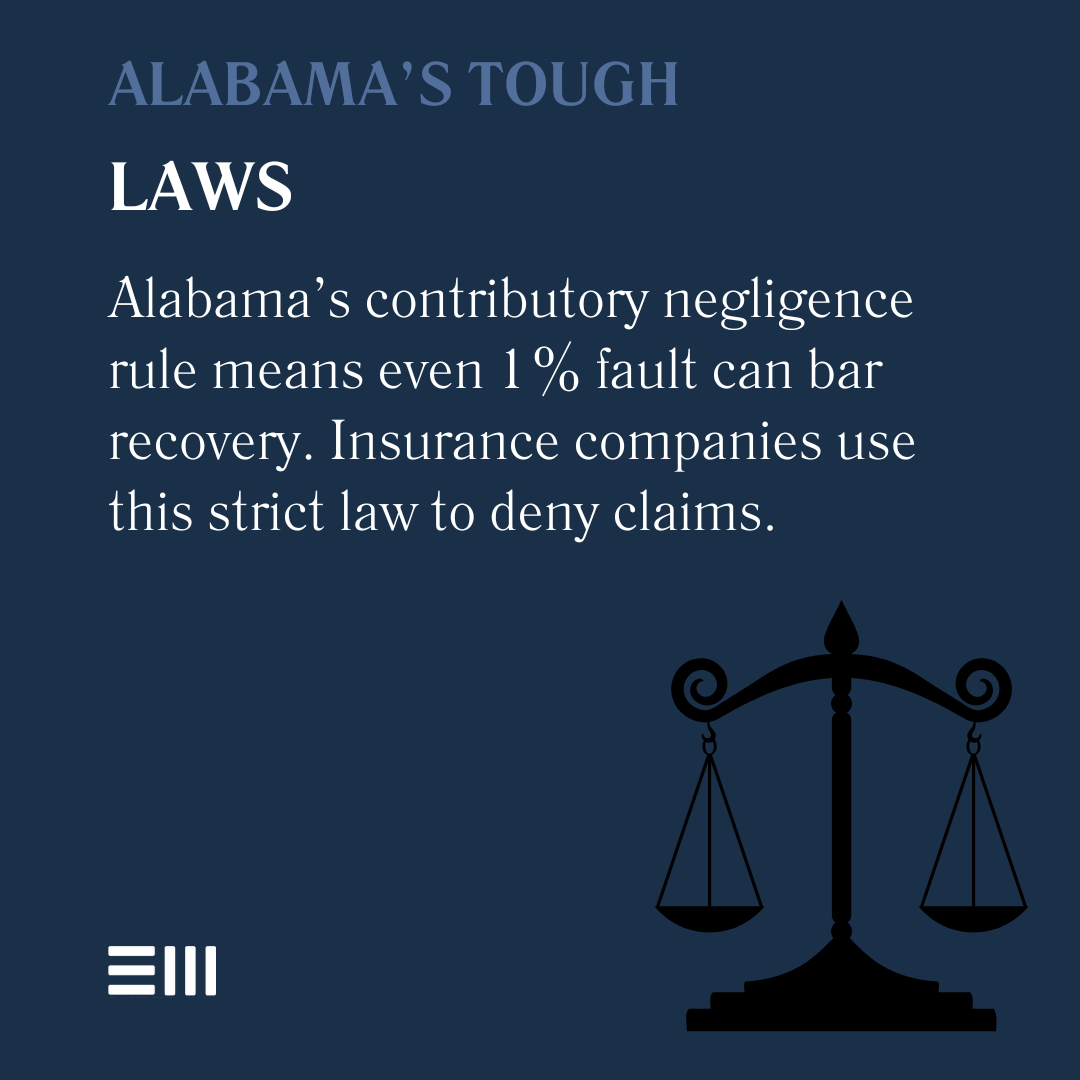
- Pure contributory negligence barring recovery for any victim fault.
- Two-year statute of limitations for most personal injury claims.
- Mandatory liability insurance minimums of 25/50/25.
- Guest statute limiting passenger claims against drivers.
- Specific notice requirements for claims against municipalities.
- Damage caps on punitive awards in certain cases.
Understanding these laws before filing your claim prevents costly mistakes that could eliminate your right to compensation entirely.
Insurance companies exploit victims' lack of knowledge about Alabama law, using tactics designed to shift blame and minimize payouts within this strict legal framework.
This proves especially challenging in car accident cases where fault determination can be complex.
Critical First Steps After an Accident in Alabama
The actions you take immediately following an accident lay the foundation for your entire claim. Insurance companies begin building their defense the moment you report the incident, making your initial response critical for protecting your rights.
Essential steps to protect your claim include:
- Calling 911 to create an official accident report.
- Photographing vehicle damage, injuries, and scene conditions.
- Collecting witness names and contact information.
- Seeking immediate medical evaluation even for minor pain.
- Reporting to your insurance company factually.
- Avoiding admissions of fault or recorded statements.
These initial actions create the evidence foundation necessary for successful claims.
Delaying medical treatment or failing to document the scene gives insurance adjusters ammunition to dispute your injuries or shift blame. Every gap in documentation becomes a tool for claim denial or reduction.
For accidents involving commercial vehicles, review our guide on truck accident catastrophic injuries for additional considerations.

Gathering Evidence That Strengthens Your Claim
Strong evidence transforms weak claims into compelling cases that insurance companies cannot ignore.
Alabama's contributory negligence rule makes thorough evidence collection particularly vital, as insurers search for any indication of victim fault to deny claims entirely.
Critical evidence for Alabama accident claims includes:
- Police accident reports with officer observations.
- Medical records linking injuries to the accident.
- Photographs of injuries throughout recovery.
- Vehicle repair estimates and actual invoices.
- Witness statements recorded close to the event.
- Traffic camera or surveillance footage.
Beyond basic documentation, successful claims often require demonstrating the other party's clear fault while refuting any allegations of contributory negligence.
This might include cell phone records showing distracted driving, maintenance records revealing vehicle defects, or expert accident reconstruction disproving the insurance company's version of events. The strength of your evidence directly correlates with your settlement value.
Understanding Insurance Company Tactics
Insurance adjusters employ sophisticated strategies designed to minimize payouts while appearing helpful and concerned about your recovery.
Recognizing these tactics helps you avoid common traps that reduce claim values or provide grounds for denial.
Common insurance company strategies include:
- Requesting unnecessary recorded statements to find inconsistencies.
- Offering quick, lowball settlements before injury extent is known.
- Delaying claim processing hoping you'll accept less.
- Disputing medical treatment necessity or duration.
- Claiming pre-existing conditions caused current injuries.
- Alleging contributory negligence based on minor factors.
Adjusters receive extensive training in psychological techniques to encourage admissions that damage claims.
They may act friendly while systematically gathering information to deny or devalue your claim. Understanding their motivations and methods helps you interact carefully while protecting your interests throughout the claims process.
Timeline and Deadlines You Cannot Miss
Alabama law imposes strict deadlines that can permanently bar your right to compensation if missed. Beyond the obvious statute of limitations, various procedural requirements create traps for unwary accident victims pursuing claims.
Critical deadlines in Alabama accident claims:
- Two years to file personal injury lawsuits.
- Six months for claims against cities or counties.
- One year for uninsured motorist claims.
- Immediate notice for hit-and-run incidents.
- 30 days for certain insurance policy requirements.
- Varies by policy for collision coverage claims.
Missing any deadline typically eliminates your claim entirely, regardless of injury severity or clear liability. Insurance companies intentionally delay and complicate the process, hoping victims miss deadlines or make procedural errors.
Starting the claims process immediately after your accident provides buffer time for unexpected complications while ensuring compliance with all requirements.
When to Seek Legal Representation
While minor accidents with clear liability might be resolved through direct insurance negotiation, certain circumstances demand professional legal assistance to protect your rights and maximize recovery.
Attempting to handle complex claims alone often results in settlements worth a fraction of represented cases.
Situations requiring immediate legal help include:
- Serious injuries requiring extended treatment.
- Disputes over fault or contributory negligence.
- Multiple parties or insurance companies involved.
- Commercial vehicle or trucking accidents.
- Insurance company denying or delaying claims.
- Settlement offers failing to cover medical bills.
Attorneys level the playing field against insurance companies' resources and expertise. They understand evidence requirements, negotiate from positions of strength, and aren't intimidated by adjuster tactics.
Most importantly, experienced lawyers know claim values and won't accept inadequate settlements that leave you financially devastated.
Frequently Asked Questions About Accident Claims in Alabama
Accident victims often share similar concerns about the claims process in Alabama.
Understanding these common issues helps you navigate your claim with confidence and avoid costly mistakes.
How Long Do I Have to File an Accident Claim in Alabama?
Alabama provides two years from the accident date to file personal injury lawsuits. However, insurance claims should begin immediately. Delaying allows evidence to disappear and witnesses to forget crucial details. Some claims against government entities require notice within six months, making immediate action essential.
What If the Insurance Company Says I'm Partially at Fault?
Any fault attribution in Alabama completely bars recovery under contributory negligence laws. Insurance companies aggressively investigate victim behavior seeking any excuse to deny claims. Never admit fault or give recorded statements without legal counsel. Even seemingly minor admissions like "I didn't see them coming" can eliminate your entire claim.
Should I Accept the First Settlement Offer?
First offers typically represent fraction of claim value, especially before treatment completes. Insurance companies count on financial pressure and lack of knowledge to secure cheap settlements. Accepting early offers usually waives rights to future compensation when complications arise or full injury extent becomes apparent.
What If I Can't Afford Medical Treatment?
Many doctors provide treatment under "letters of protection" pending claim resolution. These arrangements allow immediate care without upfront payment. Health insurance should be used when available, with reimbursement handled through settlement. Never delay treatment due to cost concerns, as gaps harm both health and claim value.
How Much Is My Accident Claim Worth?
Claim values depend on injury severity, medical costs, lost wages, and impact on life quality. Alabama's contributory negligence rule means claims are worth either full value or nothing. Experienced attorneys evaluate all damages including future medical needs, permanent limitations, and pain and suffering to determine appropriate compensation.
Let Justice Roll
Navigating Alabama's complex accident claim process alone risks your financial future when insurance companies prioritize profits over fair compensation.
At Baxley Maniscalco, our experienced personal injury attorneys understand Alabama's unique legal challenges and fight to maximize your recovery.
We handle insurance company tactics, protect you from contributory negligence allegations, and ensure you receive full compensation for your injuries.
Don't let insurance adjusters take advantage of your situation. Call (256) 770-7232 today for a free consultation and learn how we can help you secure the settlement you deserve.