
The familiar ping of a rideshare app has become the soundtrack of modern transportation, but when that convenient ride ends in screeching tires and twisted metal, passengers face a maze of insurance policies and corporate deflection.
Across Alabama's cities and rural roads, thousands of Uber and Lyft vehicles blur the lines between personal and commercial driving, creating liability puzzles that traditional car accident rules never anticipated.
As rideshare drivers toggle between app modes and insurance coverage shifts by the second, accident victims discover that determining who pays for their injuries requires navigating a complex web of corporate policies, state regulations, and insurance fine print.
For those experienced with Alabama car accident claims, rideshare cases add entirely new layers of complexity.
Understanding Rideshare Insurance Coverage Periods
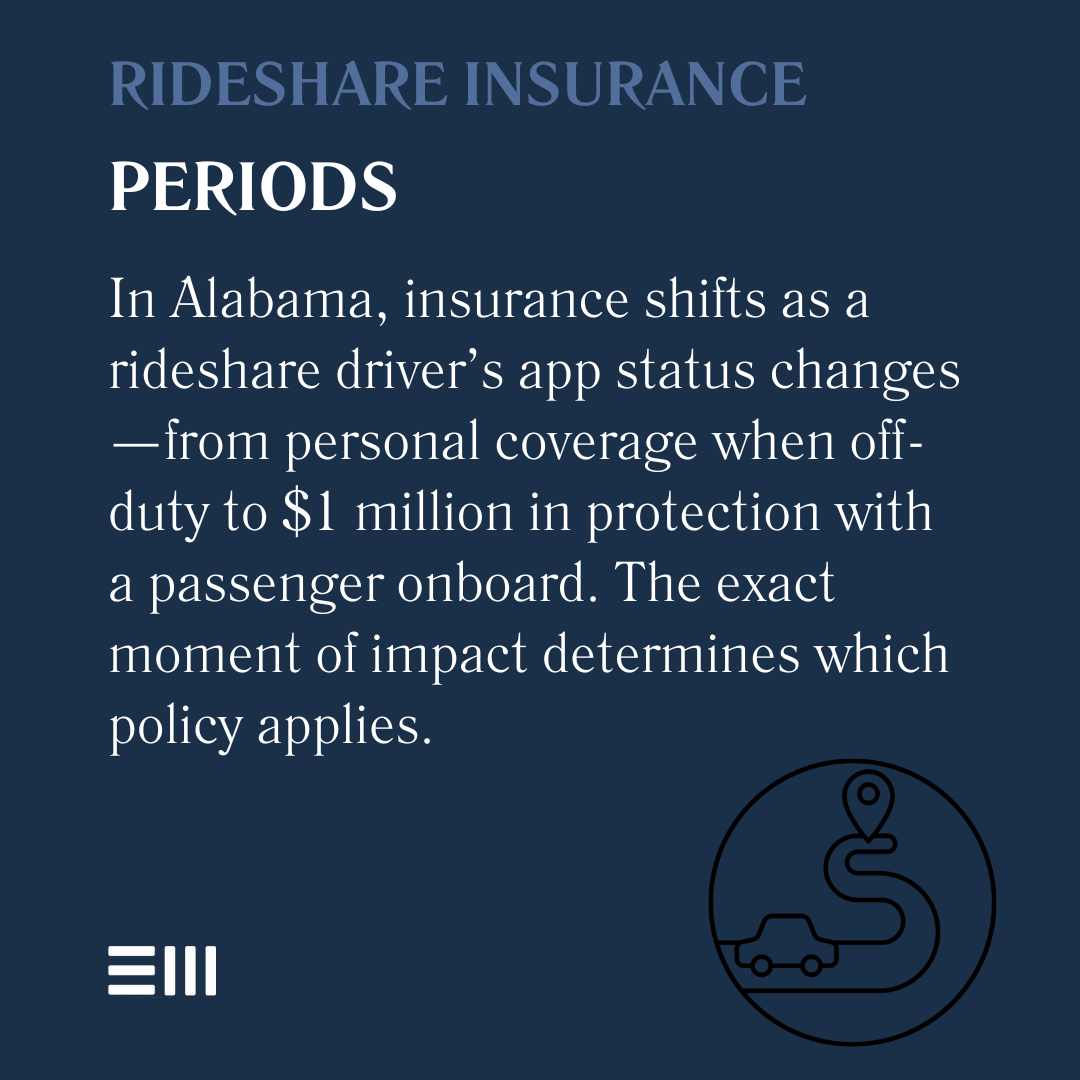
Rideshare accidents in Alabama involve unique insurance frameworks that change based on the driver's app status at the time of collision.
These coverage periods determine which insurance policy applies and how much protection exists for accident victims.
The three distinct coverage periods are:
- Period 0 (App Off): Driver's personal auto insurance applies exclusively.
- Period 1 (App On, No Passenger): Limited rideshare coverage supplements personal insurance.
- Period 2 (Passenger Matched): Enhanced rideshare insurance becomes primary.
- Period 3 (Passenger in Vehicle): Maximum rideshare coverage in effect.
- Transition Moments: Coverage gaps may exist during status changes.
- Multi-App Scenarios: Complications when drivers use multiple platforms.
Understanding these periods proves essential because insurance coverage can vary from minimal personal policy limits to commercial-level protection worth over one million dollars.
The precise moment of impact determines available compensation sources.
Determining Liability in Alabama Rideshare Accidents
Establishing fault in rideshare accidents involves multiple potential defendants and overlapping insurance policies.
Alabama's legal framework adds complexity through contributory negligence rules that can bar recovery entirely.
Key liability considerations include:
- Driver Negligence: Rideshare driver's actions causing the accident.
- Third-Party Fault: Other motorists responsible for the collision.
- Rideshare Company Responsibility: Corporate liability for driver screening or app design.
- Vehicle Maintenance: Mechanical failures due to poor upkeep.
- Road Conditions: Government liability for hazardous infrastructure.
- Passenger Actions: Distracting behavior contributing to crashes.
Each potential defendant may have different insurance coverage and legal defenses.
Rideshare companies typically claim drivers are independent contractors to limit liability, while their insurance policies contain exclusions and conditions that complicate claims.
Understanding the criteria for personal injury claims becomes even more critical in rideshare contexts.
Alabama Laws Affecting Rideshare Claims
Alabama's regulatory approach to rideshare services creates specific requirements and protections that influence accident claims. State legislation balances innovation with public safety concerns.
Important Alabama rideshare regulations include:
- Insurance Minimums: Required coverage amounts for each operating period.
- Driver Background Checks: Screening requirements for rideshare operators.
- Vehicle Inspections: Safety standards for rideshare vehicles.
- Local Ordinances: City-specific rules in Birmingham, Mobile, and other areas.
- Contributory Negligence: Alabama's harsh rule affecting passenger recovery.
- Statute of Limitations: Two-year deadline for filing injury claims.
These regulations interact with rideshare company policies to create a complex legal environment. Alabama's contributory negligence doctrine poses particular challenges, as any passenger fault could eliminate compensation rights entirely.
For guidance on filing insurance claims after accidents, rideshare cases require special considerations.
Steps to Take After a Rideshare Accident
Quick action following a rideshare accident protects legal rights and preserves evidence needed for successful claims.
The unique nature of rideshare accidents requires specific documentation beyond typical car crashes.
Critical post-accident steps include:
- Screenshot App Status: Capture driver information and trip details immediately.
- Document Multiple Insurers: Collect information from all involved insurance companies.
- Preserve Electronic Evidence: Save app notifications, receipts, and route data.
- Identify Witnesses: Record contact information for passengers and bystanders.
- Report Through App: Use rideshare platform's accident reporting feature.
- Seek Medical Treatment: Document injuries even if they seem minor.
These actions create an evidence trail linking injuries to the rideshare service and establishing coverage periods.
Delaying documentation can result in lost data as rideshare companies may delete records after specific timeframes.
Common Challenges in Rideshare Injury Claims
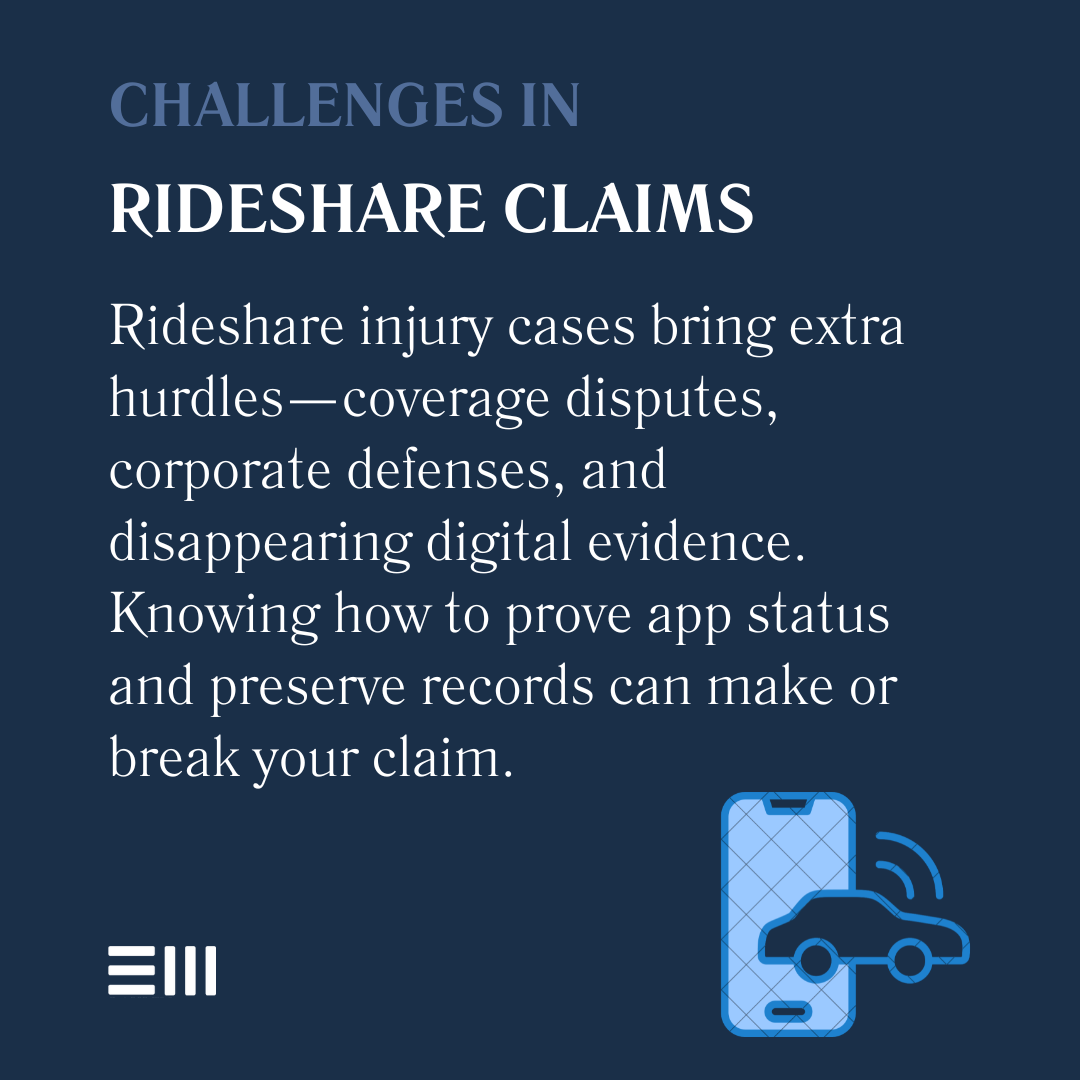
Rideshare accident victims face unique obstacles not present in traditional car accident cases. Understanding these challenges helps set realistic expectations and develop effective strategies.
Typical complications include:
- Coverage Disputes: Insurers arguing about which policy applies.
- Independent Contractor Defense: Companies denying responsibility for drivers.
- Multiple Insurance Layers: Navigating personal, rideshare, and commercial policies.
- Corporate Legal Teams: Well-funded opposition from rideshare companies.
- Evidence Preservation: Digital data that disappears quickly.
- Interstate Issues: Accidents involving out-of-state drivers or companies.
Overcoming these challenges requires understanding both traditional personal injury law and evolving rideshare regulations.
Insurance companies often exploit confusion about coverage periods to deny or minimize claims.
Frequently Asked Questions About Rideshare Accident Claims in Alabama
Understanding rideshare accident claims raises important questions for those injured while using or encountering these services in Alabama.
Who Pays If My Uber Driver Causes an Accident?
Uber provides liability coverage when drivers are logged into the app, with amounts varying by period.
During trips, Uber's commercial policy typically provides primary coverage up to $1 million. However, coverage depends on proper documentation of app status and may involve multiple insurance companies.
Understanding typical settlement amounts for personal injury cases in Alabama helps set expectations for rideshare claims.
Can I Sue Both the Driver and Rideshare Company?
Yes, you may have claims against multiple parties. The driver faces personal liability for negligent driving, while the rideshare company may bear responsibility under certain circumstances. Success depends on proving negligence and navigating independent contractor relationships.
What If I Was Partially At Fault for the Accident?
Alabama's contributory negligence rule bars recovery if you're even 1% at fault. This harsh standard makes rideshare passenger claims particularly challenging. Any passenger distraction or failure to wear seatbelts could eliminate compensation rights.
How Long Do I Have to File a Rideshare Accident Claim?
Alabama's statute of limitations gives you two years from the accident date to file a lawsuit. However, insurance claims have different deadlines, often requiring notice within days or weeks. Early action preserves rights under all applicable policies.
What If the Rideshare Driver Was Using Multiple Apps?
Drivers often work for multiple platforms simultaneously, creating coverage complications. Determining which company's insurance applies requires investigating app status for each platform at the accident moment. This complexity often requires legal assistance to resolve.
These questions highlight the unique complexities rideshare accidents create within Alabama's legal system.
Let Justice Roll
Rideshare accidents in Alabama shatter the illusion of simple, convenient transportation, leaving victims to navigate insurance mazes designed to protect corporate profits rather than injured passengers.
Your injuries deserve compensation regardless of whether they occurred in an Uber, Lyft, or collision with a rideshare vehicle. Don't let insurance companies exploit confusion about coverage periods or corporate structures to deny your rightful compensation.
Our attorneys at Baxley Maniscalco understand the evolving landscape of rideshare liability and know how to cut through corporate deflection to secure maximum compensation.
We've helped Alabama accident victims recover from injuries caused by rideshare drivers, and we're prepared to fight the well-funded legal teams these companies deploy.
Contact us today for a free consultation about your rideshare accident claim. Let us handle the complex liability questions while you focus on recovery, ensuring you receive every dollar available under Alabama law.