A decade of false accusations. $400,000 allegedly paid to witnesses. And finally, a jury verdict of $256 million—believed to be the second-largest plaintiff's verdict in Alabama history.
The Drummond Co. defamation case that concluded in January 2026 sent shockwaves through legal circles and delivered a powerful message: when individuals or organizations spread damaging lies, Alabama courts will hold them accountable.
This landmark Alabama defamation lawsuit didn't just vindicate one company after years of fighting fabricated allegations.
It demonstrated the serious legal consequences that await those who weaponize false information to destroy reputations and livelihoods.
Whether you're a business owner facing slanderous attacks, a professional whose career has been damaged by lies, or an individual whose reputation has been unjustly tarnished, understanding defamation law empowers you to fight back.
What Happened in the Drummond Defamation Case?
The Drummond Co. verdict represents one of the most significant outcomes in Alabama defamation lawsuit history. Understanding how this case unfolded provides valuable insight into how defamation claims work and what makes them successful.
Birmingham-based Drummond Co. operates coal mining operations in Colombia.
For years, a human rights attorney named Terrence P. Collingsworth and his organization, International Rights Advocates, accused the company of collaborating with Colombian paramilitary groups to commit murders and human rights abuses.
These allegations painted Drummond as complicit in horrific violence against workers and community members.
Drummond maintained its innocence and eventually filed suit, claiming the accusations were entirely fabricated.
The company alleged that Collingsworth's organization paid witnesses approximately $400,000 to provide false testimony supporting the damaging claims. After a decade of litigation, a federal jury unanimously agreed with Drummond.
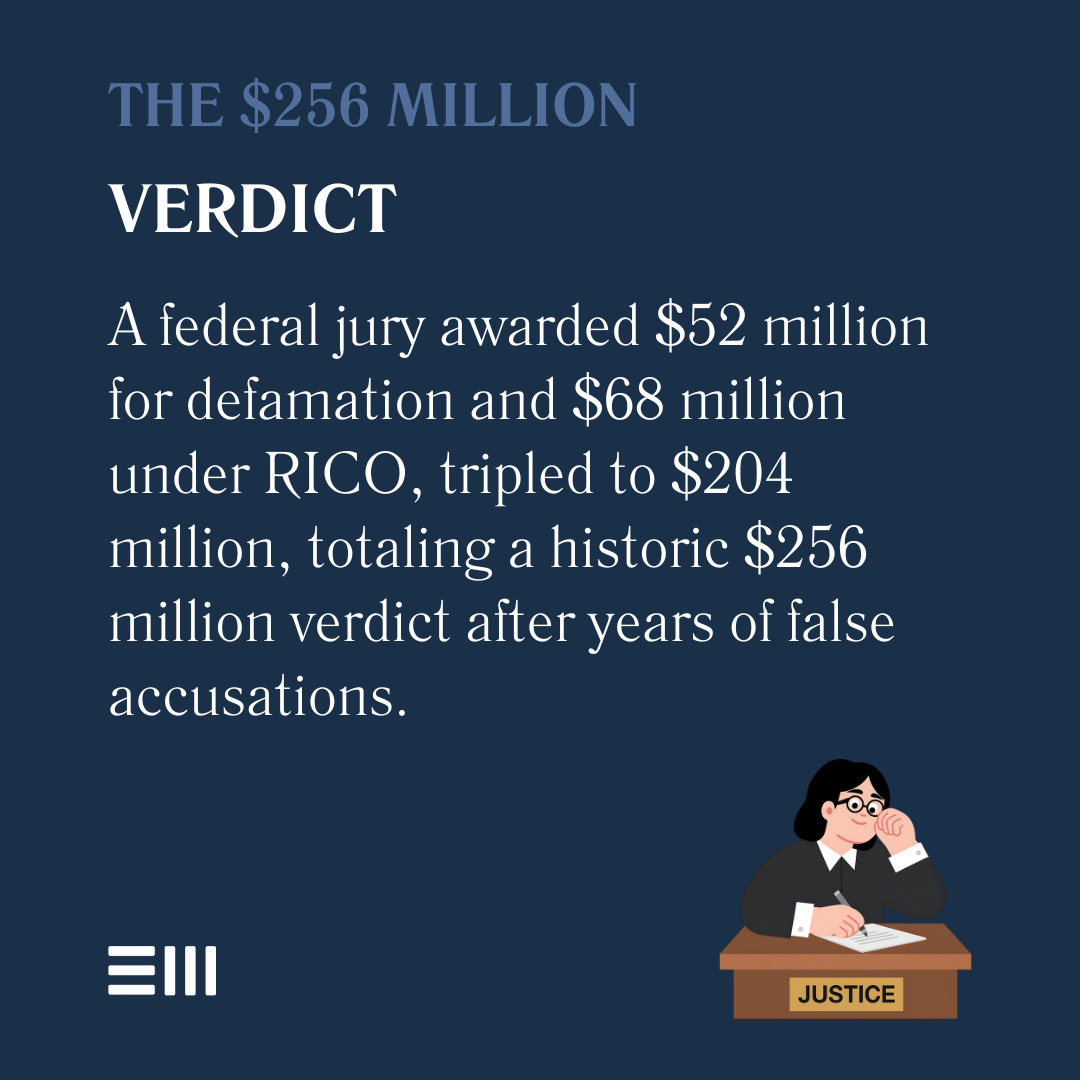
The jury's verdict broke down into two major components. First, they awarded $52 million specifically for defamation—compensation for the damage done to Drummond's reputation through false statements.
Second, they awarded $68 million for violations of the Racketeer Influenced and Corrupt Organizations Act (RICO), finding that the defendants engaged in a pattern of corrupt activity, including bribery, obstruction of justice, and extortion.
Under federal law, RICO damages are automatically tripled, bringing that portion to $204 million and the total verdict to $256 million.
This case illustrates how seriously courts treat deliberate campaigns of false accusations and the substantial remedies available to victims.
Understanding Defamation Law in Alabama
Alabama defamation lawsuit claims fall under civil law and provide legal recourse when someone's false statements cause harm to another person's reputation. The state recognizes two primary forms of defamation, each with distinct characteristics.
Libel refers to defamatory statements made in written or published form. This includes newspaper articles, social media posts, emails, letters, and any other permanently recorded communication.
Slander involves spoken defamatory statements, such as false accusations made in conversation, during speeches, or in broadcast media.
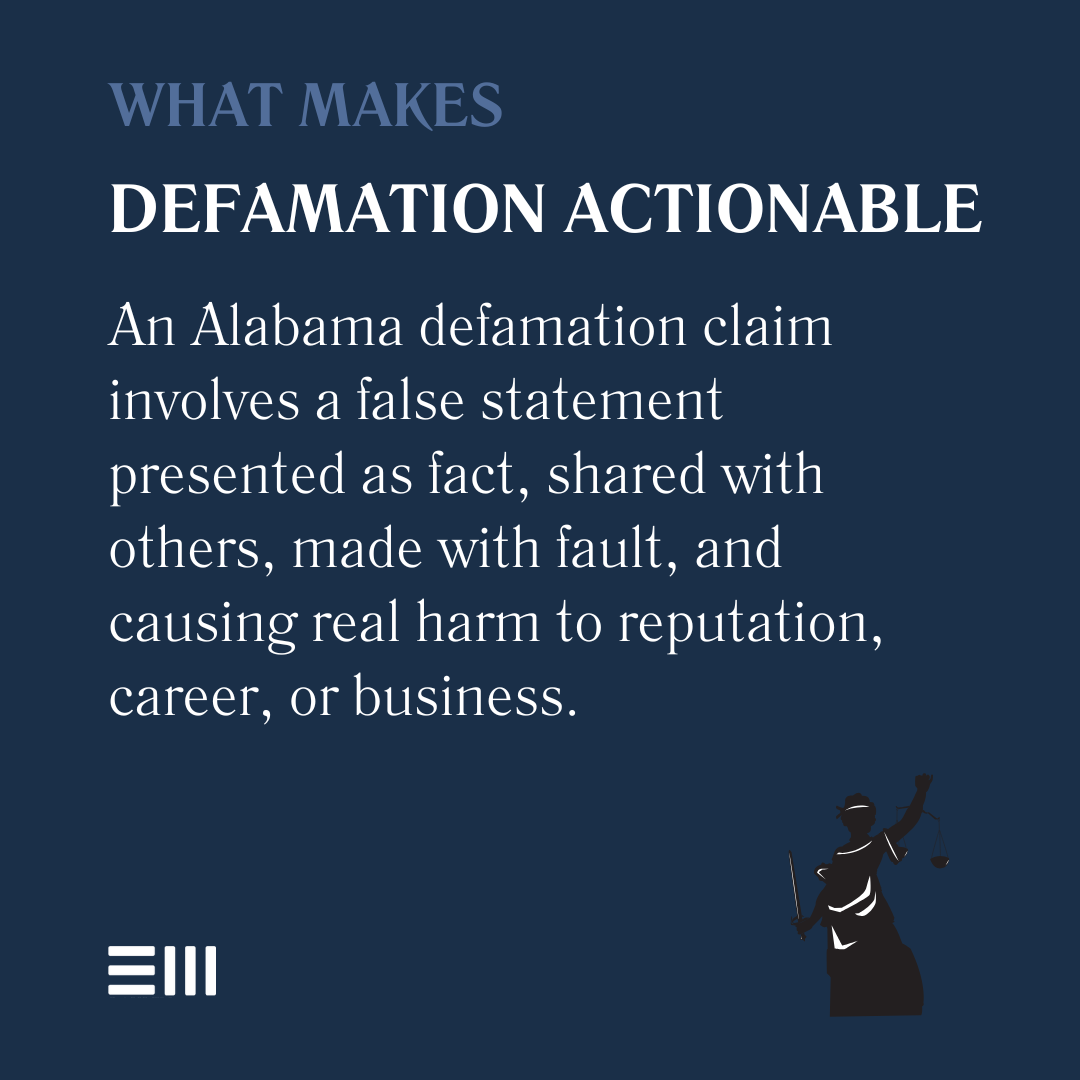
To succeed in an Alabama defamation lawsuit, plaintiffs must generally prove several key elements. The court examines each component carefully before awarding damages.
- False statement of fact. The defendant made a statement presented as factual that was actually untrue, not merely an opinion or exaggeration.
- Publication to third parties. The false statement was communicated to at least one person other than the plaintiff, whether through speech, writing, or broadcast.
- Fault on defendant's part. The defendant acted with at least negligence in making the false statement, or with actual malice if the plaintiff is a public figure.
- Damages suffered. The plaintiff experienced actual harm as a result of the defamatory statement, such as lost business, damaged relationships, or emotional distress.
Certain statements are considered defamatory per se under Alabama law, meaning damages are presumed without requiring specific proof of harm.
These include false accusations of criminal conduct, statements imputing a loathsome disease, claims that harm someone's business or profession, and accusations of sexual misconduct.
Understanding these elements helps potential plaintiffs evaluate whether their situation may support a valid defamation claim.
Types of Damages Available in Defamation Cases
When an Alabama defamation lawsuit succeeds, courts may award several categories of damages depending on the circumstances and severity of the harm. The Drummond verdict demonstrates the substantial compensation possible when defamation is proven.
Compensatory damages aim to make the plaintiff whole by covering actual losses. These damages address tangible harm that can be measured and documented through evidence.
- Economic losses. Lost income, destroyed business relationships, declined sales, or career setbacks directly caused by the defamatory statements.
- Reputation repair costs. Expenses incurred to restore professional standing, including public relations efforts or corrective advertising.
- Medical expenses. Costs for treating anxiety, depression, or other health conditions resulting from the emotional impact of defamation.
- Lost opportunities. Contracts, partnerships, or advancement prospects that disappeared because of damaged reputation.
Beyond compensatory damages, Alabama courts may award additional categories in appropriate cases. General damages compensate for harm that's difficult to quantify precisely, such as mental anguish, humiliation, and loss of standing in the community.
Punitive damages punish defendants for particularly egregious conduct and deter similar behavior—though Alabama caps punitive damages at three times compensatory damages or $1.5 million, whichever is greater, in most civil cases.
The Drummond case also incorporated RICO claims, which allowed for automatic tripling of those damages. While RICO applies to specific patterns of criminal activity, it demonstrates how strategic legal approaches can maximize recovery for victims of organized defamation campaigns.
How Long Do You Have to File an Alabama Defamation Lawsuit?
Alabama imposes strict time limits on defamation claims that plaintiffs must understand and respect. Missing these deadlines typically results in losing the right to pursue legal action entirely, regardless of how strong the underlying case might be.
The statute of limitations for defamation claims in Alabama is two years from the date of publication. For written defamation, this means two years from when the libelous material was published or distributed. For spoken defamation, the clock starts when the slanderous statement is made.
Several factors can complicate determining when the limitations period begins. Online defamation presents particular challenges because content may remain accessible indefinitely, and courts have developed different approaches to handling republication.
Some jurisdictions apply the "single publication rule," starting the clock when content first appears online rather than each time someone views it.
The discovery rule may extend filing deadlines in cases where the plaintiff couldn't reasonably have known about the defamatory statement when it was made.
However, this exception applies narrowly, and courts expect plaintiffs to act promptly once they become aware of potentially defamatory content.
Acting quickly when you discover defamatory statements preserves your legal options and prevents evidence from becoming stale or unavailable.
Frequently Asked Questions About Alabama Defamation Lawsuits
Many people considering defamation claims have similar questions about their rights and options.
These answers address the concerns we most commonly encounter from Alabama residents whose reputations have been damaged by false statements.
What's the Difference Between Defamation and Free Speech?
The First Amendment protects opinions, satire, and true statements, but it does not shield deliberately false statements of fact that damage someone's reputation.
Courts carefully distinguish between protected speech and actionable defamation by examining whether a reasonable person would interpret the statement as factual and whether the statement can be proven true or false.
Can I Sue for Defamation Over Social Media Posts?
Yes. Social media posts that contain false statements of fact can support defamation claims just like traditional publications. Platforms like Facebook, Twitter, and Instagram have become common sources of defamation cases.
However, Section 230 of the Communications Decency Act generally protects the platforms themselves from liability—your claim would typically be against the individual who posted the defamatory content.
Do I Need to Prove the Defendant Knew Their Statement Was False?
The standard depends on your status. Private individuals must prove the defendant acted negligently—failing to exercise reasonable care in determining truth.
Public figures face a higher bar, needing to demonstrate "actual malice," meaning the defendant knew the statement was false or acted with reckless disregard for its truth.
What if the Defamatory Statement Hurt My Business?
Business defamation, sometimes called trade libel or commercial disparagement, allows companies to sue when false statements damage their commercial reputation.
The Drummond case exemplifies this—false accusations harmed the company's business relationships and standing, justifying substantial damages.
Can I Get the Defamatory Content Removed?
Courts can order defendants to remove defamatory content as part of injunctive relief. However, obtaining such orders typically requires first proving defamation occurred. Working with an attorney helps you pursue both removal and compensation simultaneously.
Consulting with an experienced attorney clarifies which legal remedies apply to your specific situation and the best strategy for pursuing them.