
Every year, thousands of Alabama families face difficult decisions about caring for loved ones who cannot care for themselves.
Whether it's an aging parent showing signs of dementia or a child with severe disabilities approaching adulthood, understanding guardianship and conservatorship becomes a pressing concern that affects entire families.
Understanding the Basics of Alabama Guardianship
Guardianship and conservatorship serve as legal mechanisms designed to protect vulnerable individuals who cannot make decisions for themselves.
These court-appointed arrangements ensure that someone trustworthy manages personal, medical, or financial matters for those who lack the capacity to do so independently.
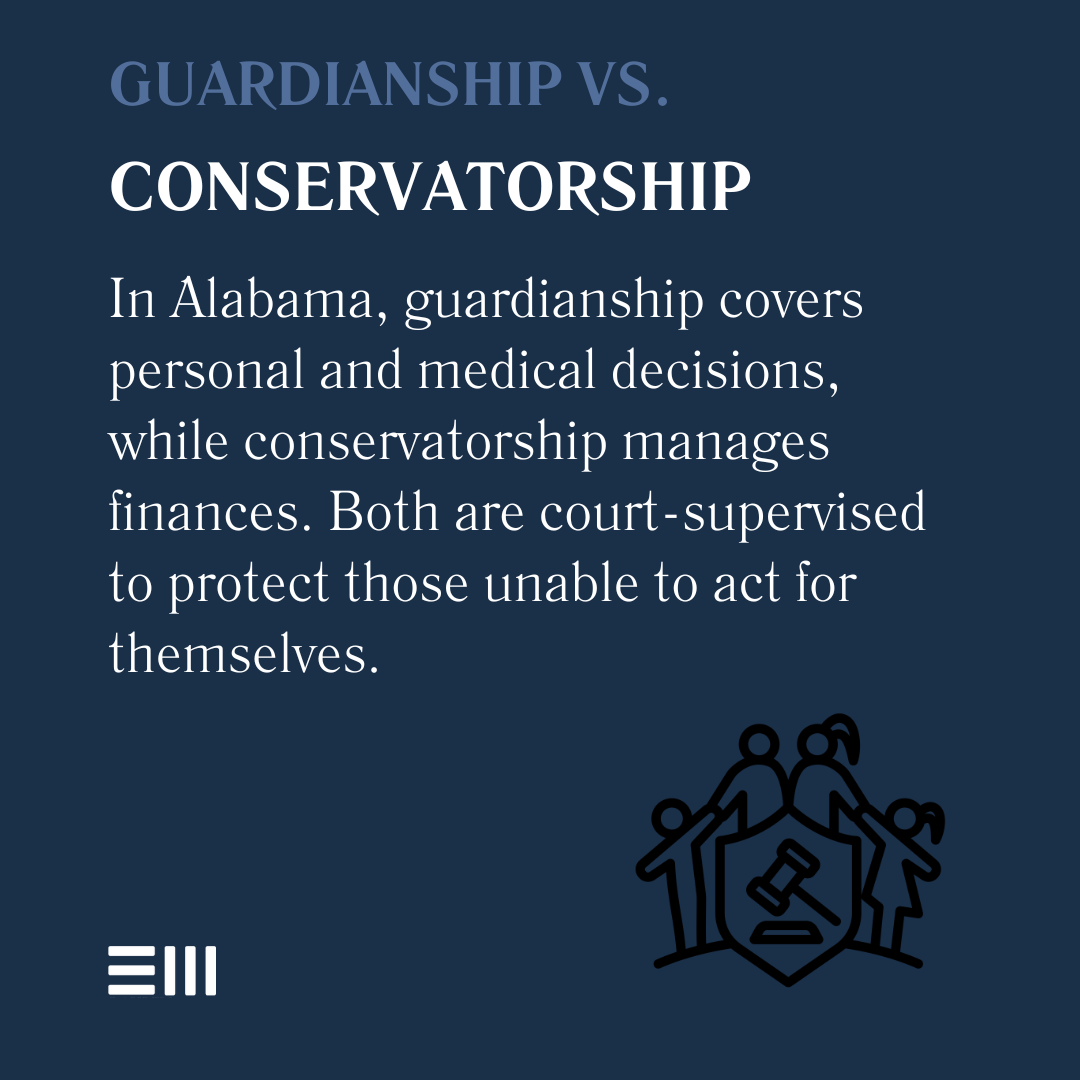
In Alabama, guardianship primarily addresses personal and medical decisions, while conservatorship focuses on financial management.
The state's probate courts oversee these arrangements, following specific legal procedures outlined in the Alabama Uniform Guardianship and Protective Proceedings Act.
Understanding these distinctions helps families choose the appropriate legal tool for their specific situation.
When Is Guardianship Necessary in Alabama?
Several circumstances may indicate the need for guardianship in Alabama. Recognizing these situations early can help families prepare for the legal process and ensure their loved ones receive proper protection.
Common scenarios requiring guardianship include:
- Adults with severe cognitive impairments from Alzheimer's or dementia.
- Individuals with profound developmental disabilities reaching age 19.
- Adults suffering from severe mental illness affecting decision-making abilities.
- Elderly individuals experiencing significant cognitive decline.
- Adults with traumatic brain injuries impacting their judgment.
- Individuals with substance abuse problems causing incapacitation.
The need for guardianship becomes apparent when an individual consistently makes decisions that endanger their health, safety, or welfare, and less restrictive alternatives prove insufficient.
The Conservatorship Process for Financial Protection in Alabama
Conservatorship specifically addresses financial management when an individual cannot handle their monetary affairs responsibly.
This legal arrangement protects assets and ensures bills get paid while preventing financial exploitation.
Financial indicators suggesting conservatorship include:
- Unpaid bills despite available funds.
- Susceptibility to financial scams or exploitation.
- Inability to manage investments or property.
- Confusion about financial transactions.
- Giving away money inappropriately.
- Accumulating debt without understanding.
Alabama law requires clear evidence that the individual cannot manage their financial resources effectively before appointing a conservator.
The court carefully evaluates each situation to ensure conservatorship remains the least restrictive option available.
Legal Requirements and Court Procedures
Establishing guardianship or conservatorship in Alabama involves specific legal steps through the probate court system.
Understanding these requirements helps families navigate the process more effectively.
The process typically includes:
- Filing a petition with the appropriate Alabama probate court.
- Providing medical documentation of incapacity.
- Notifying all interested parties about the proceedings.
- Attending a court hearing where evidence is presented.
- Receiving the court's decision on appointment.
- Completing required training for appointed guardians or conservators.
Alabama courts require substantial evidence of incapacity before removing someone's rights. Medical evaluations, testimony from healthcare providers, and documentation of the individual's inability to make decisions all factor into the court's determination.
The entire process typically takes several months, depending on case complexity and court schedules.
Alternatives to Full Guardianship
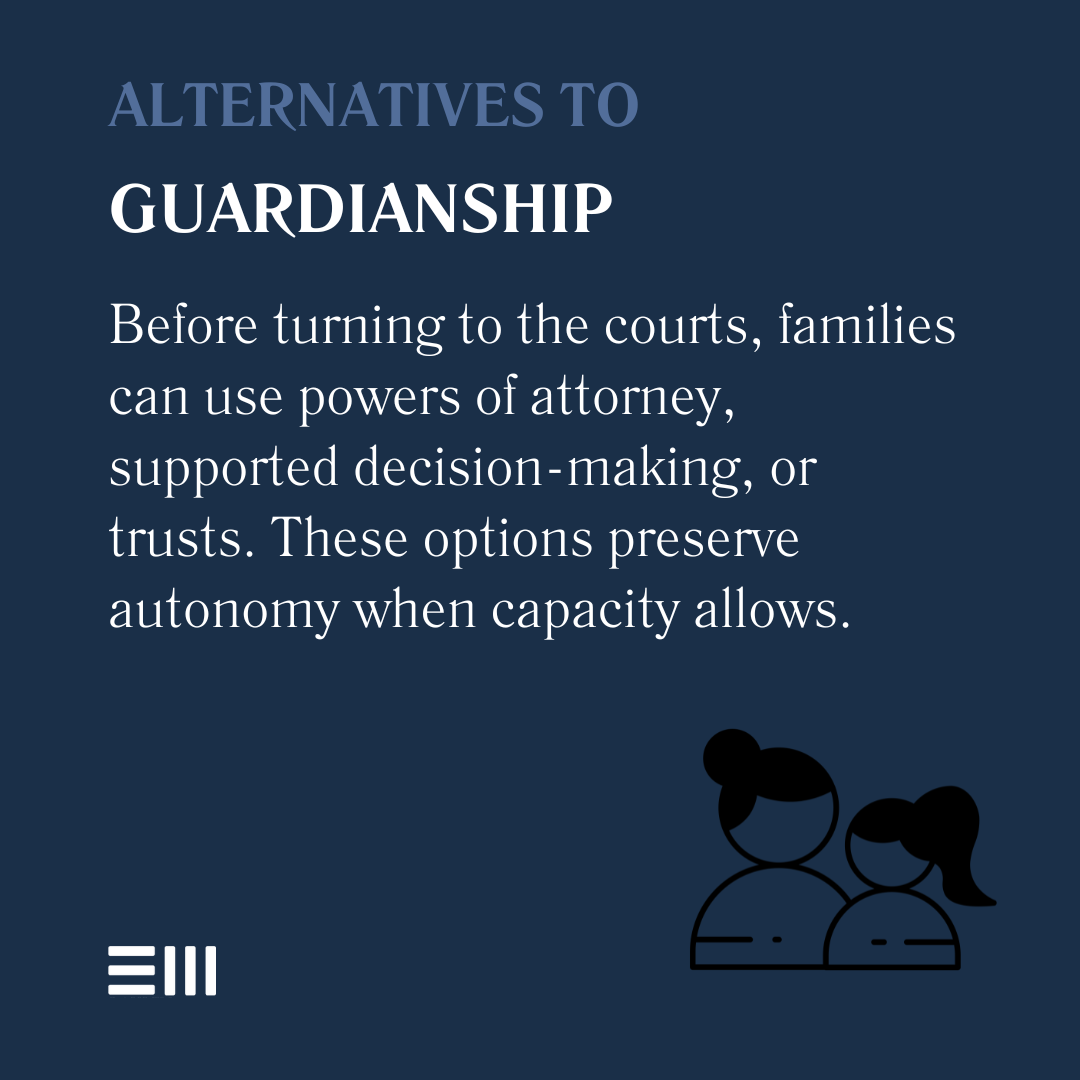
Before pursuing guardianship or conservatorship, Alabama families should explore less restrictive alternatives that might meet their loved one's needs while preserving more autonomy.
Available alternatives include:
- Power of attorney documents for financial and healthcare decisions.
- Representative payee arrangements for government benefits.
- Supported decision-making agreements.
- Trust arrangements for asset management.
- Joint bank accounts with trusted family members.
- Advance healthcare directives.
These options often provide sufficient protection without the need for court intervention. However, they require the individual to have some capacity to understand and consent to the arrangement.
When these alternatives prove inadequate, guardianship or conservatorship becomes necessary.
Responsibilities and Duties of Guardians
Alabama guardians and conservators assume significant legal responsibilities when appointed by the court. Understanding these duties helps ensure proper care while avoiding potential legal issues.
Guardian responsibilities include:
- Making medical treatment decisions.
- Choosing appropriate living arrangements.
- Ensuring adequate food, clothing, and shelter.
- Arranging for education or vocational training.
- Maintaining regular contact with the ward.
- Filing annual reports with the court.
Conservator duties involve:
- Managing income and assets prudently.
- Paying bills and taxes timely.
- Maintaining accurate financial records.
- Investing funds appropriately.
- Seeking court approval for major transactions.
- Submitting detailed annual accountings.
Both roles require acting in the ward's best interest, avoiding conflicts of interest, and maintaining detailed records of all decisions and transactions.
Alabama courts monitor these arrangements through required reporting and may remove guardians or conservators who fail to fulfill their duties properly.
Frequently Asked Questions About Alabama Guardianship and Conservatorship
Understanding guardianship and conservatorship raises many questions for Alabama families.
These common inquiries address key concerns about the process and its implications.
How Long Does the Guardianship Process Take in Alabama?
The timeline varies depending on case complexity and court schedules. Generally, emergency guardianships can be established within days when immediate danger exists.
Standard guardianship proceedings typically take 30 to 90 days from filing to final appointment. Contested cases involving family disputes or unclear incapacity may extend several months longer.
What Are the Costs Associated with Guardianship?
Expenses include court filing fees, attorney fees, medical evaluation costs, and guardian training fees. Total costs range from $1,500 to $5,000 for uncontested cases.
Contested proceedings involving litigation can exceed $10,000. Ongoing costs include annual court fees, accounting expenses, and potential guardian compensation if approved by the court.
Can Guardianship Be Terminated or Modified?
Yes, Alabama law allows for modification or termination when circumstances change. If the ward regains capacity, they or interested parties can petition the court for restoration of rights.
The court requires medical evidence demonstrating improved capacity. Guardianships can also be modified to expand or limit powers based on the ward's changing needs.
Who Can Serve as a Guardian or Conservator?
Alabama law prioritizes family members but allows any qualified adult to serve. The court considers the proposed guardian's relationship to the ward, ability to fulfill duties, potential conflicts of interest, and criminal history.
Professional guardians or public guardians may be appointed when suitable family members are unavailable. Estate planning attorneys can help families understand the selection criteria and prepare for court proceedings.
What Happens if Family Members Disagree?
Family disputes complicate guardianship proceedings significantly. The court evaluates each party's suitability and acts in the ward's best interest.
Mediation may help resolve conflicts before trial. If agreement cannot be reached, the judge makes the final determination after considering all evidence and testimony.
These questions represent just a few concerns families face when considering guardianship or conservatorship. Each situation presents unique challenges requiring careful legal guidance.
Take Action to Protect Your Loved Ones Today
Navigating Alabama's guardianship and conservatorship laws requires experienced legal guidance to protect your loved ones effectively.
At Baxley Maniscalco, our elder law attorneys understand the emotional and legal complexities these situations present.
We help families explore all options, from less restrictive alternatives to full guardianship proceedings, ensuring the best outcome for your unique circumstances.
Contact our office today at (256) 770-7232 to schedule a consultation and learn how we can help you make informed decisions about your family's future.