Alabama hemp retailers must now individually wrap each 10-milligram gummy, avoid labels depicting ink pens or earbuds, and pay $50 per product design for state approval.
The Alabama Alcoholic Beverage Control Board's October 2025 regulations transform the hemp industry with requirements that advocates call "overkill" and businesses warn could drive them under.
Sweeping Changes to THC Limits and Packaging
The new regulations drastically restrict how hemp products can be sold, packaged, and marketed in Alabama. Following legislation passed in early 2025 targeting synthetic hemp products like Delta-8 and Delta-9, these rules represent the state's first comprehensive attempt at hemp market control.
THC serving limits now mirror alcohol-style single-serving restrictions. Hemp beverages cannot exceed 12 fluid ounces or contain more than 10 milligrams of total THC per serving.
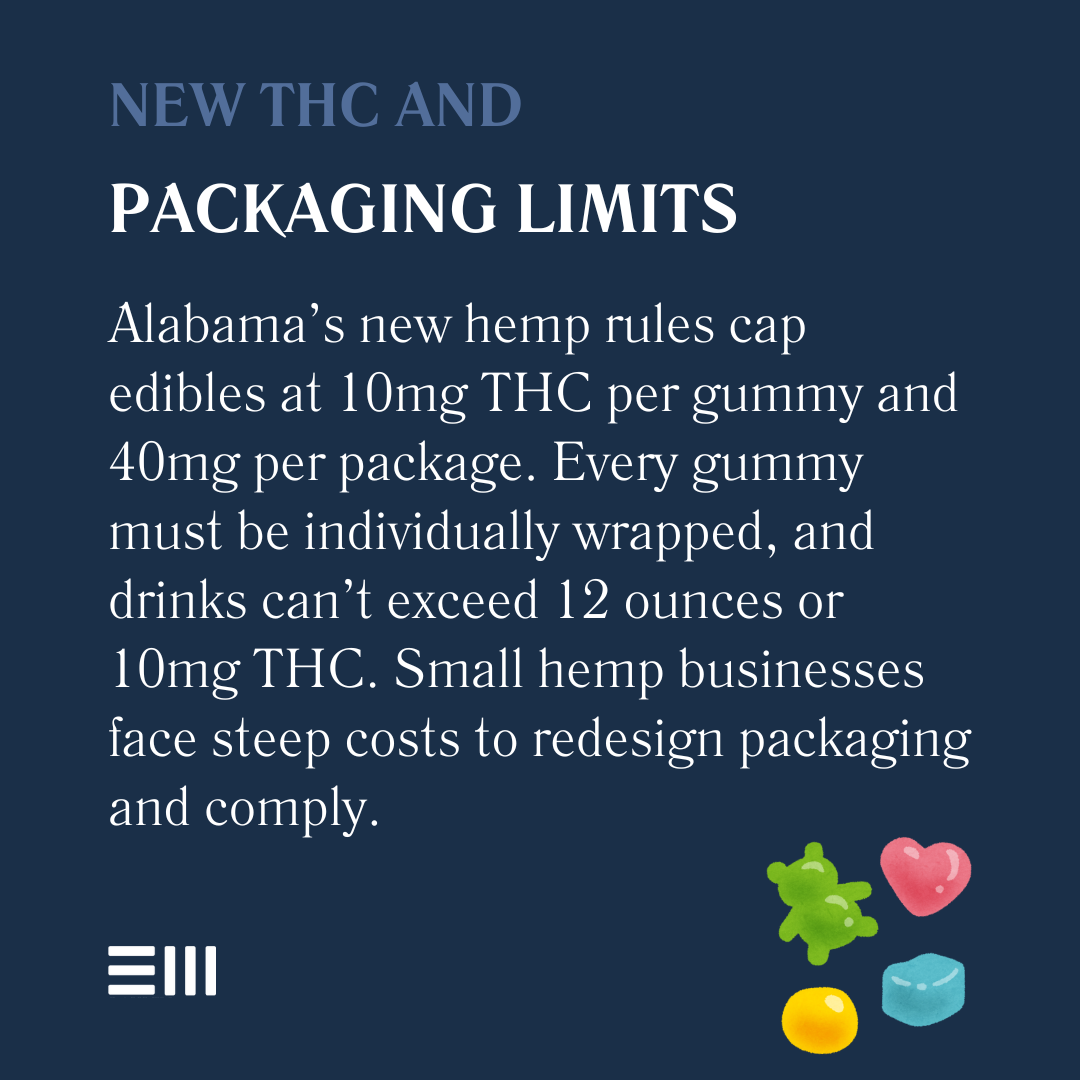
Edible products face even stricter requirements—each gummy must be individually wrapped and contain no more than 10 milligrams, with packages limited to 40 milligrams total.
New serving size requirements mandate:
- Hemp beverages: Maximum 12 oz or 10mg THC per customer.
- Topical products: Maximum 40mg total THC per container.
- Edible products: Individual 10mg servings in single wrapping.
- Package limits: Maximum 40mg THC per carton.
These restrictions force manufacturers to completely redesign product lines and packaging systems, with compliance costs threatening smaller operations.
The Cartoon Character Controversy
Perhaps no provision has generated more confusion than the extensive list of banned imagery. Beyond expected restrictions on cartoon characters appealing to children, the regulations prohibit labels featuring mundane objects with no apparent connection to youth marketing.
The ABC Board bans any product labels depicting superheroes, comic book characters, or mythical creatures like unicorns—understandable child-safety measures.
However, the prohibited list extends to seemingly arbitrary items including ink pens, pencils, highlighters, flash drives, cell phones, watches, handheld games, headphones, earbuds, and even clothing imagery.
"I've never seen packaging that has those items," says Jennifer Boozer Stewart, Alabama Cannabis Coalition Communications Director. "And even if they did, who cares, right? What does that have to do with anything?"
Complete prohibited imagery list includes:
- Character bans: Cartoons, celebrities, video game figures.
- Food imagery: Cereal, cookies, candy, ice cream references.
- Office supplies: Pens, pencils, markers, flash drives.
- Personal items: Phones, headphones, clothing, cosmetics.
Manufacturers must pay $50 per label design for ABC Board approval, adding significant costs for companies with diverse product lines.
Business Licensing Hurdles
The licensing requirements create substantial barriers for hemp businesses, particularly in municipalities that have enacted moratoriums.
Prattville, Millbrook, and Pike Road have already banned hemp sales, forcing existing businesses to close regardless of their operating history or legitimacy.
Business owners must provide extensive documentation including approval letters from local governments, which these moratoriums make impossible to obtain.
The regulations require disclosure of all owners holding 10% or more stake, including personal information like social security numbers, birth certificates, and ten-year criminal histories.
Licensing requirements demand:
- Municipal approval: Written authorization from local government.
- Personal disclosure: SSN, birthdate, criminal records for all major owners.
- Financial proof: Evidence of funding and property ownership.
- Surety bond: $25,000 bond requirement for operation.
"If you are a functioning hemp dispensary in those cities, no matter how long you've been there, how legitimate your business is, they will not approve you," Stewart explains.
Enforcement Without Warrants
The new rules grant ABC Board members and law enforcement unprecedented power to search hemp businesses randomly without warrants. Officers can confiscate products deemed non-compliant, with businesses given only 15 days to appeal seizures.
This warrantless search provision raises constitutional concerns about Fourth Amendment protections. Our civil rights attorneys understand how government overreach can threaten legitimate businesses operating in emerging industries.
Enforcement mechanisms include:
- Warrantless searches: Random inspections without cause.
- Product seizure: Immediate confiscation of suspected violations.
- Limited appeals: 15-day window to challenge enforcement.
- Record inspections: Full access to business documentation.
These broad powers create uncertainty for businesses trying to comply with evolving regulations while maintaining operations.
Industry Impact and Business Closures
Several small hemp retailers closed immediately after the legislative changes, citing inability to remain profitable under the new restrictions.
The individual wrapping requirement for edibles alone increases packaging costs exponentially, while the 40-milligram package limit reduces product value.
Established businesses face difficult decisions about continuing operations.
Compliance costs include new packaging, label redesigns, approval fees, testing expenses, and potential legal consultation. Many operators question whether the regulated market can sustain profitable businesses.
The regulations particularly impact small, independent retailers who lack resources for extensive compliance infrastructure.
Market consolidation seems inevitable as larger operators with deeper pockets absorb compliance costs smaller competitors cannot afford.
Frequently Asked Questions
Hemp business owners and consumers seek clarity on these complex new requirements.
When Do These Regulations Take Effect? The rules take effect January 1, 2026, giving businesses limited time to achieve compliance. Non-compliant products cannot be sold after this date.
Can Existing Inventory Be Sold? Current inventory may be sold with restrictions until the deadline. After January 1, 2026, all products must meet new standards or face confiscation.
What Happens to Non-Compliant Businesses? Violations trigger escalating penalties from warnings to $10,000 fines, license revocation, and potential criminal charges for egregious violations.
Do Medical Patients Get Exceptions? No medical exemptions exist under these regulations. All hemp products must comply regardless of consumer medical needs.
Can Businesses Challenge Local Bans? While our litigation team can evaluate constitutional challenges to moratoriums, local governments maintain broad authority over business operations.
These questions reflect widespread confusion about navigating Alabama's new hemp landscape while maintaining viable businesses.
Compliance Strategies Moving Forward
Successful navigation of these regulations requires immediate action and strategic planning. Businesses should audit current inventory, redesign packaging systems, and establish relationships with compliant suppliers immediately.
Professional legal guidance becomes essential given the complexity and potential constitutional issues involved. Understanding both the letter and practical application of these rules can mean the difference between thriving and closing.
Our business law attorneys recommend developing comprehensive compliance programs addressing all regulatory aspects while maintaining flexibility for future changes.