As Alabama legislators prepare for the 2026 session, familiar education bills are making their way back to Montgomery.
These proposals, many of which fell short in previous sessions, address everything from classroom content to parental rights and school safety.
Here's what Alabama parents and educators need to know about the upcoming legislative agenda.
National Anthem in Every Classroom
Senator Gerald Allen of Tuscaloosa continues his seven-year effort to mandate weekly playing of the Star-Spangled Banner in all Alabama K-12 schools.
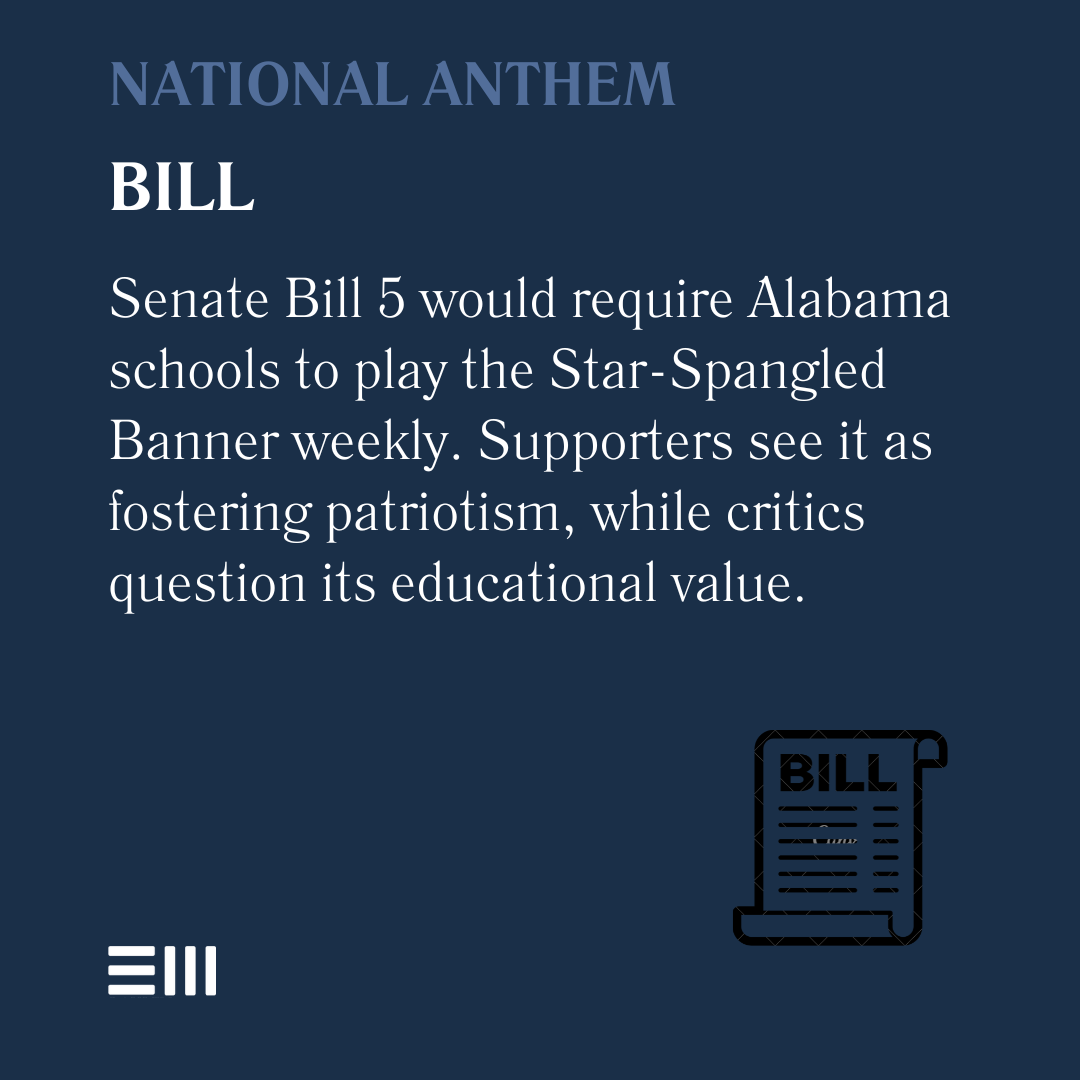
Senate Bill 5 would require schools to play the national anthem's first stanza at least once per week during school hours. After nearly passing last year when it cleared a House committee, this bill appears positioned for another strong push in 2026.
Proponents argue that regular exposure to the national anthem fosters patriotism and civic pride among students. Critics question whether mandating patriotic displays serves educational purposes and worry about the time taken from instructional activities.
Religious Instruction During School Hours
Senate Bill 4, sponsored by Senator Shay Shelnutt of Trussville, would require all public school districts to create policies allowing students to leave campus for religious instruction during the school day.
This "religious instruction release time" proposal cleared the Senate previously but stalled in the House. Its quick re-filing suggests renewed momentum for passage.
The program would allow religious organizations to provide instruction to students during school hours, with parents providing written consent.
The instruction would occur off school property at no expense to the school district. Supporters frame this as a parental rights issue, while opponents raise concerns about lost instructional time and potential social pressure on non-participating students.
Changes to Sex Education Standards
Senator Shelnutt has also reintroduced legislation requiring sex education programs to emphasize abstinence and "sexual risk avoidance" as primary prevention methods.
Senate Bill 3 would establish abstinence as the expected standard for all school-age children and require curricula to emphasize that a mutually faithful monogamous relationship within marriage is the expected standard of human sexual activity.
Strengthening School Threat Response
In response to growing concerns about school safety, Senator Matt Woods of Jasper has filed comprehensive legislation addressing terrorist threats against schools.
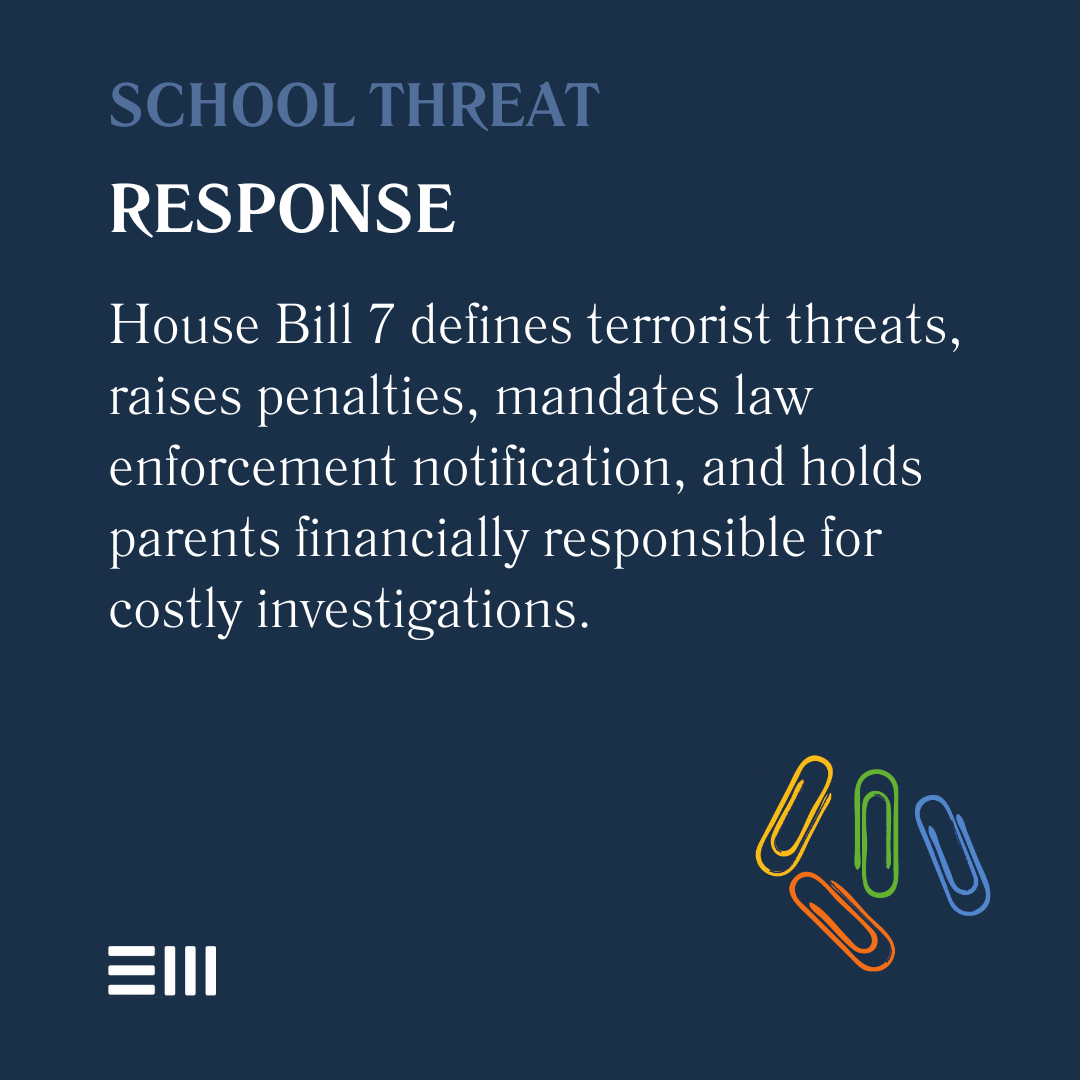
House Bill 7 would:
- Clearly define what constitutes a terrorist threat.
- Increase criminal penalties for threats.
- Require immediate law enforcement notification.
- Mandate automatic one-year suspension for students charged.
- Require expulsion upon conviction.
- Hold parents financially responsible for response costs.
This legislation responds to the increasing frequency of school threats that disrupt learning and drain resources.
Law enforcement agencies report spending hundreds of thousands annually investigating threats, costs that would shift to families under this proposal.
Volunteer Chaplains for Teachers
Representative Mark Gidley's House Bill 8 would allow schools to provide volunteer chaplain access to teachers upon request.
The bill includes specific credentialing requirements and limits chaplain interactions to staff rather than students. After passing the House 91-4 last year, this measure returns with modifications designed to address Senate concerns.
Chaplains would undergo background checks and receive school board approval. Their role would be limited to providing support to teachers who specifically request such services.
Workplace Leave for School Events
Democratic Representative Patrick Sellers of Birmingham has reintroduced the Parental Right to Participate in Schools Act.
House Bill 21 would guarantee parents up to 48 hours of annual leave to attend school events. The bill would apply to employers with 15 or more employees and cover parent-teacher conferences, school performances, and other school-sponsored activities.
Employers who fail to post required notices could face $100 daily fines.
Expanding Restrictions on Gender Discussions
For the fourth consecutive year, Representative Mack Butler of Gadsden seeks to expand Alabama's restrictions on classroom discussions of gender identity and sexual orientation.
House Bill 23 would:
- Extend current K-5 restrictions through grade 12.
- Prohibit display of related flags or insignia on school property.
- Restrict teachers from using pronouns inconsistent with students' biological sex.
Despite reaching the Senate floor twice, this controversial measure has yet to secure final passage.
Vaccine and Testing Exemptions
Representative Butler's House Bill 24 would simplify obtaining religious exemptions from vaccine and testing requirements.
Parents could exempt children with only a written statement citing religious beliefs, without additional documentation. The bill extends similar provisions to public colleges and universities.
Eliminating Driver's License School Requirements
In the session's only new education-related pre-filed bill, Representative Ron Bolton of Northport proposes eliminating the link between school enrollment and driver's licenses.
House Bill 33 would remove the 30-year-old requirement that students under 19 prove school enrollment to obtain or renew licenses, ending the practice of license suspension for dropouts or disciplinary issues.
What This Means for Alabama Families
These bills reflect ongoing debates about parental rights, educational content, safety measures, and the role of religion in public schools.
As the January session approaches, parents, educators, and community members should stay informed about these proposals and their potential impact on local schools.
Alabama residents can influence these legislative outcomes by:
- Contacting their state representatives and senators.
- Attending local legislative forums.
- Participating in public comment periods.
- Joining parent-teacher organizations.
- Following committee hearings and floor debates.
Your voice matters in shaping the future of Alabama education—now is the time to make it heard before these proposals become the laws that govern our children's classrooms.
LOOking Ahead
The 2026 legislative session will run for 15 weeks beginning in January. Additional education bills are expected before and during the session.
These pre-filed measures provide early insight into legislative priorities and signal which education issues will dominate debate in Montgomery.
As these bills move through the legislative process, their final forms may change significantly through amendments and compromises.
Staying engaged and informed remains crucial for anyone invested in Alabama's educational future.