
Five years is a long time to wait for a law to take effect. Alabama lawmakers approved a medical cannabis program in 2021, yet patients spent years watching the promise stall amid licensing disputes and litigation.
That wait is finally ending. Alabama medical marijuana became a reality in 2026, with the first legal sales taking place in early May and a growing roster of physicians now certified to recommend cannabis to qualifying patients.
Most of the approved doctors so far are based in central and northern Alabama.
For Alabama patients and families curious about this long-delayed program, here is a clear look at how it works.
How Alabama's Medical Cannabis Program Came to Be
The foundation of Alabama's medical marijuana is a 2021 law known as the Compassion Act. The Act created the Alabama Medical Cannabis Commission and tasked it with overseeing the new industry from cultivation through sale.
The path from passage to reality was not smooth. The program faced years of false starts, including disputes over how license applications were scored and litigation over which companies should be permitted to grow and sell cannabis. Those legal fights repeatedly pushed back the timeline.
The Commission eventually awarded dispensary licenses, physicians began the certification process, and the state opened its patient registry in late April 2026. The first legal medical cannabis sale in Alabama took place in Montgomery on May 4, 2026.
The First Certified Doctors
Not every physician can recommend Alabama medical marijuana. The law sets up a specific certification process, and only a small group of doctors has completed it so far.
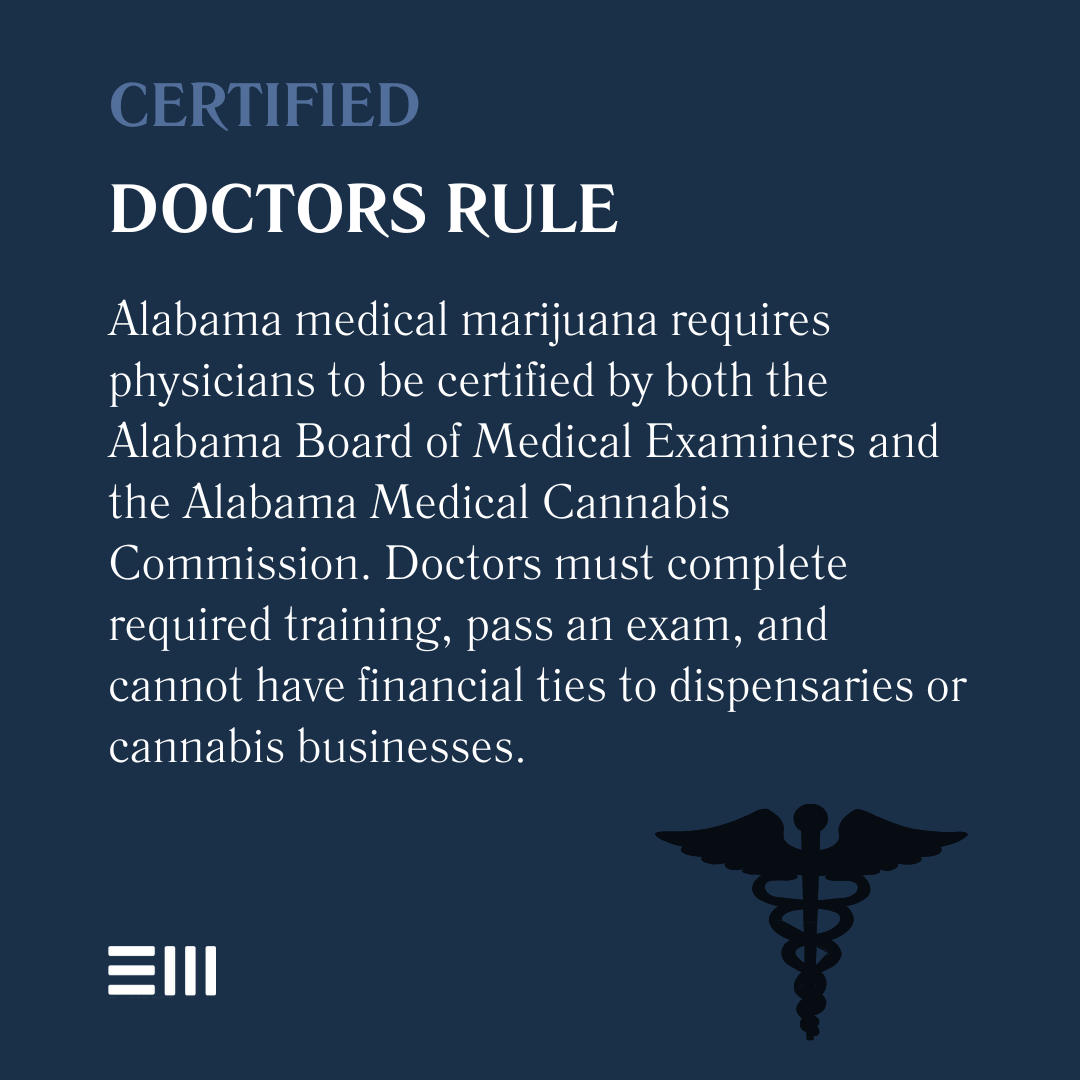
- Certification is required. A physician must be approved by both the Alabama Board of Medical Examiners and the Alabama Medical Cannabis Commission.
- A mandatory course. Doctors must complete a four hour training course on medical cannabis and pass an examination.
- Financial separation. Certified physicians cannot receive payments from licensed dispensaries or hold a stake in a licensed cannabis business.
- A small starting group. As of mid May 2026, roughly 32 medical professionals had been certified, most of them in central and north Alabama.
This limited pool of certified doctors is one reason access remains regionally uneven in the early months of the program.
Which Conditions Qualify
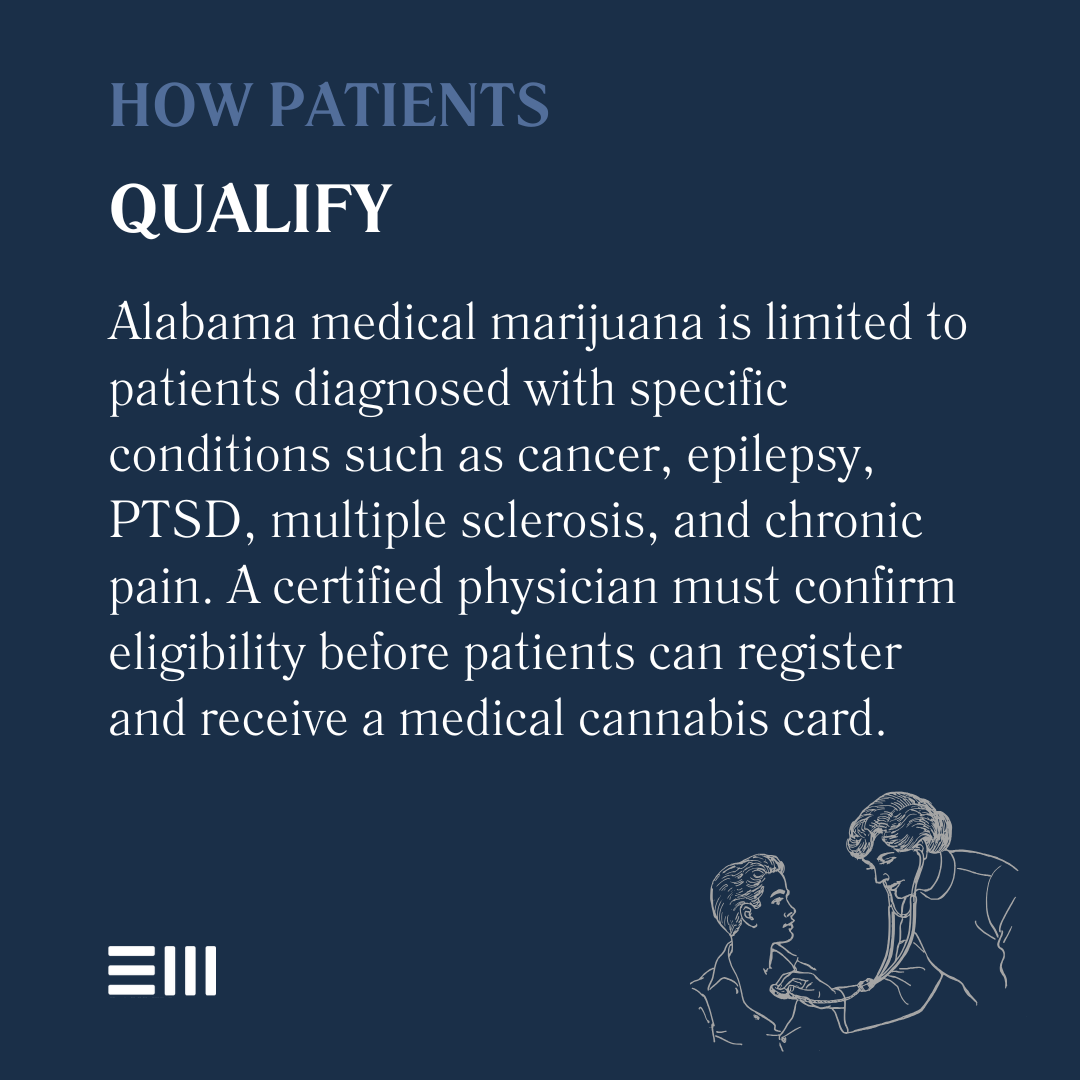
Alabama medical marijuana is available only to patients with specific medical conditions. The Compassion Act lists about 15 qualifying conditions, and a certified physician must diagnose the patient with one of them.
Qualifying conditions under the law include cancer, epilepsy, post-traumatic stress disorder, multiple sclerosis, Parkinson's disease, sickle cell anemia, Tourette's syndrome, panic disorder, depression, autism, and a terminal illness.
The law also covers conditions that produce chronic or intractable pain when conventional medical treatment has not brought relief. Because the qualifying list is defined by statute, a physician cannot recommend cannabis for a condition that falls outside it.
How a Patient Joins the Program
For patients who qualify, becoming part of the Alabama medical marijuana program follows a defined set of steps. The process runs through the Commission's official systems.
- See a certified physician. A patient must be evaluated and receive a recommendation from a certified doctor.
- Register with the Commission. After the recommendation, the patient creates a profile in the Alabama Medical Cannabis Commission portal.
- Obtain a medical cannabis card. Registered patients receive a card that allows purchases at licensed dispensaries.
- Buy only approved products. The law permits specific forms such as tablets, capsules, tinctures, gels, oils, and patches.
It is worth noting that Alabama's program does not allow raw plant material, smoking, or vaping, which makes it one of the more restrictive medical cannabis programs in the country.
What This Means for Alabama Families
The arrival of Alabama medical marijuana opens a new treatment option, but it also raises practical and legal questions worth understanding. Recreational marijuana remains illegal in Alabama, and possession outside the medical program can still carry criminal consequences.
Patients should also remember that holding a medical cannabis card does not override every other area of law.
Questions about employment, parental responsibilities, and use around children can still arise, and they often intersect with family law matters such as custody.
Anyone participating in the program should follow the Commission's rules closely and keep documentation of their lawful patient status.
Frequently Asked Questions About Alabama Medical Marijuana
Many Alabama residents have questions about the new program. Here are answers to some of the most common ones.
Is Marijuana Now Legal in Alabama?
Only for registered patients in the medical program. Recreational marijuana remains illegal, and possession outside the program can still lead to criminal charges.
Can Any Doctor Recommend Medical Cannabis?
No. Only physicians certified by both the Alabama Board of Medical Examiners and the Alabama Medical Cannabis Commission may issue a recommendation.
Can I Smoke Medical Marijuana in Alabama?
No. The program does not permit smoking, vaping, or raw plant material. Approved forms include tablets, capsules, tinctures, gels, oils, and patches.
How Do I Get a Medical Cannabis Card?
You must be diagnosed with a qualifying condition by a certified physician, then register through the Alabama Medical Cannabis Commission portal to receive your card.
Does a Card Protect Me at Work?
Not necessarily. A medical cannabis card does not override every workplace policy, so patients should understand their employer's rules.
Your Rights and Next Steps With Baxley Maniscalco
A new area of law always brings new questions, and Alabama medical marijuana is no exception. Patients, parents, and families may find that the program touches other parts of their lives in ways they did not expect.
Our experienced attorneys here at Baxley Maniscalco serve clients across the state of Alabama from our office in Oxford, reaching clients in Anniston, Gadsden, and surrounding communities.
If you have questions about a family law matter, a personal injury issue, or another legal concern, we are glad to listen and help you understand your options.
Call (256) 770-7232 or reach out through our contact form to schedule a consultation.