While inflation has eroded purchasing power by over 30% since July 2009, Alabama has relied entirely on the federal minimum wage floor of $7.25 an hour—leaving the state without any independent wage protections for its workforce. A newly filed bill in the Alabama Senate could finally change that reality.
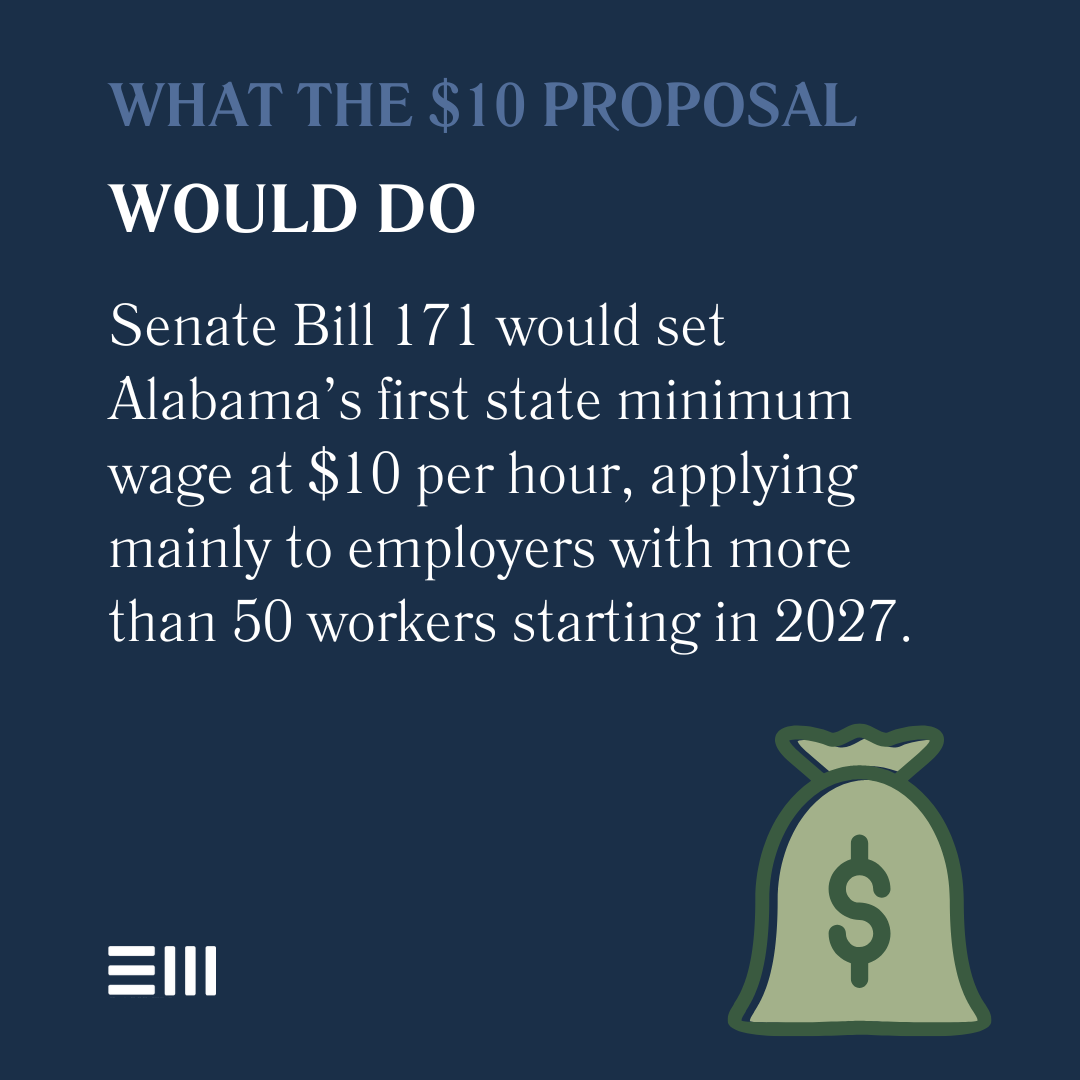
Senate Bill 171 proposes establishing Alabama's first-ever state minimum wage at $10 per hour, joining more than 30 states that have already moved beyond federal requirements.
For workers and employers alike, understanding Alabama minimum wage laws—both current and proposed—helps navigate workplace rights, compensation disputes, and compliance obligations.
Whether you're an employee questioning whether you're being paid fairly or a business owner preparing for potential changes, knowing the legal landscape protects your interests.
Current Alabama Minimum Wage Requirements
Alabama stands among a small group of states without an independent state minimum wage law. Understanding how current requirements work—and their limitations—provides context for why legislative action is being considered.
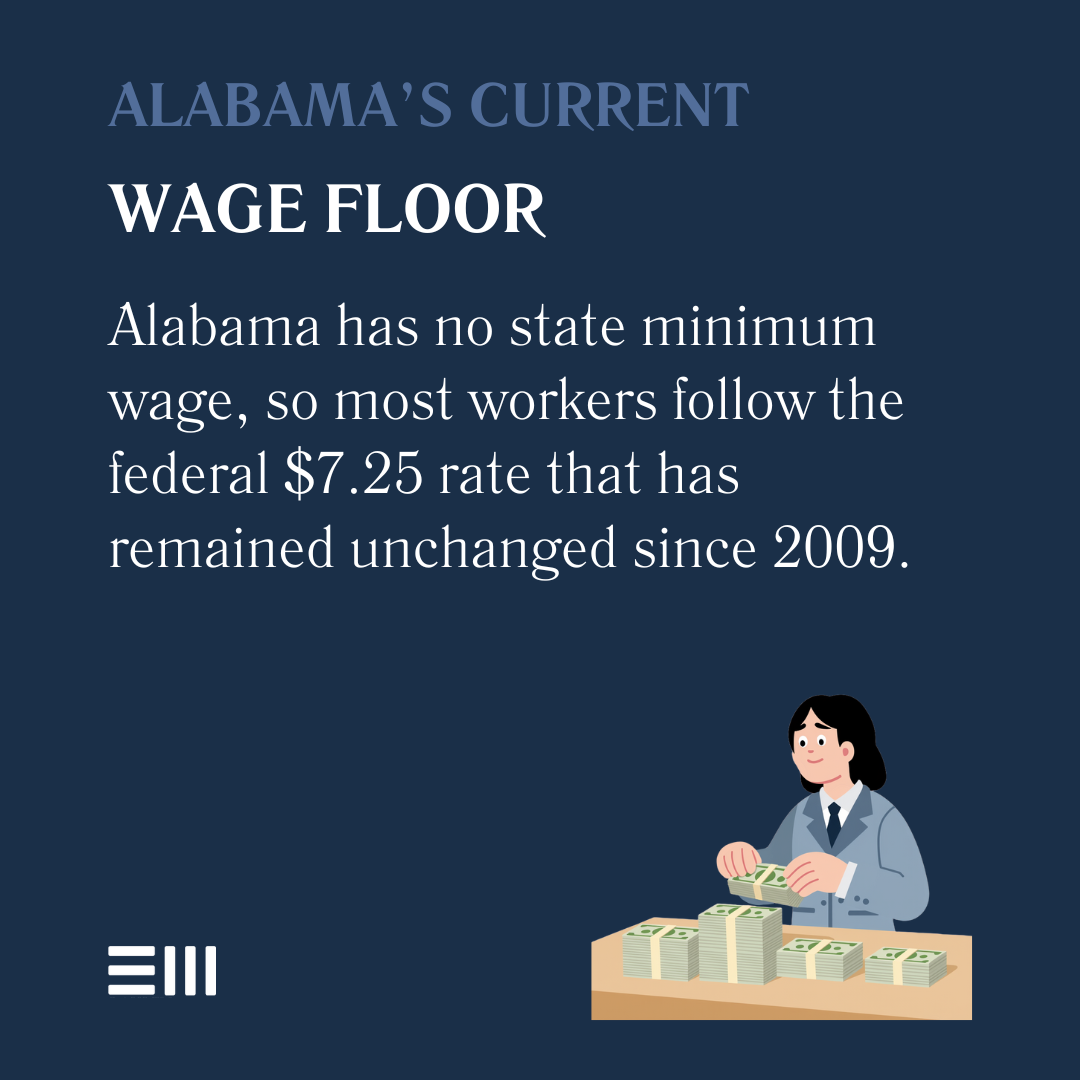
Because Alabama has no state minimum wage statute, employers must follow the federal Fair Labor Standards Act (FLSA), which sets the floor at $7.25 per hour.
This federal requirement has remained unchanged since 2009, making it the longest period without an increase since the minimum wage was established in 1938.
Workers in Alabama earning minimum wage today have significantly less purchasing power than their counterparts did nearly two decades ago.
The federal minimum wage applies to most but not all workers. Certain categories of employees may be exempt from minimum wage requirements or subject to different rates under federal law.
- Tipped employees. May be paid a cash wage as low as $2.13 per hour if tips bring total compensation to at least minimum wage.
- Young workers. Employees under 20 may be paid $4.25 per hour during their first 90 days of employment.
- Student workers. Full-time students in certain programs may receive 85% of minimum wage.
- Workers with disabilities. Special certificates may allow subminimum wages in limited circumstances.
These federal provisions currently govern Alabama workplaces, though the proposed state law could establish different standards for state-level enforcement.
What the Proposed Alabama Minimum Wage Bill Would Change
Senate Bill 171, introduced by Senator Robert Stewart of Selma, represents the most significant potential shift in Alabama's minimum wage policy in decades. The legislation would create an independent state wage floor while carving out exceptions for certain employers.
Under the proposed law, most Alabama employers would be required to pay workers at least $10 per hour—a 38% increase over the current federal minimum.
This rate would position Alabama's minimum wage above the federal floor but below neighboring states like Florida, which recently implemented a $15 minimum wage following a 2020 ballot initiative.
The bill includes a notable exemption for small businesses. Employers with 50 or fewer employees would not be subject to the new state minimum wage requirement, continuing to follow federal standards instead.
This provision aims to ease the transition for smaller operations that may face greater challenges absorbing increased labor costs.
If passed, the legislation would follow a phased implementation timeline. The law would take effect on October 1, 2026, with actual enforcement beginning January 1, 2027.
This gap provides businesses time to adjust payroll systems, budgets, and staffing plans before compliance becomes mandatory.
The bill's passage remains uncertain, and workers and employers should monitor its progress through the legislative session.
How Minimum Wage Laws Affect Workplace Rights
Whether the Alabama minimum wage proposal passes or current federal standards continue to apply, workers have legal protections when employers fail to pay required wages.
Understanding these rights helps employees recognize violations and take appropriate action.
Wage theft—the failure to pay workers their legally required compensation—affects millions of American workers annually.
Common violations include paying below minimum wage, failing to pay overtime, requiring off-the-clock work, making illegal deductions from paychecks, and misclassifying employees as exempt from wage requirements.
These violations may entitle workers to recover unpaid wages plus additional damages.
Workers who believe their employer has violated minimum wage laws have several potential avenues for recourse.
Federal claims may be filed with the U.S. Department of Labor's Wage and Hour Division, which can investigate employers and pursue back wages on behalf of workers.
Private lawsuits allow individual employees or groups of workers to seek compensation directly through the court system, often recovering not just unpaid wages but also liquidated damages, attorney fees, and court costs.
The statute of limitations for wage claims typically allows workers two years to file suit for standard violations, or three years if the employer's violation was willful. Acting promptly preserves legal options and maximizes potential recovery.
Employer Compliance Considerations
Businesses operating in Alabama face compliance obligations under current federal law and must prepare for potential changes if state legislation passes. Understanding these requirements helps employers avoid costly violations and legal exposure.
Current federal compliance requires maintaining accurate records of hours worked and wages paid, properly classifying employees as exempt or non-exempt from overtime requirements, ensuring tipped employees receive at least minimum wage when tips are included, and displaying required workplace posters informing employees of their rights.
Violations can result in back pay awards, liquidated damages equal to the unpaid wages, civil penalties, and in egregious cases, criminal prosecution.
If the proposed Alabama minimum wage becomes law, affected employers would need to take additional steps.
Businesses with more than 50 employees should begin evaluating which positions currently pay below $10 per hour and calculating the budget impact of required increases.
Payroll systems may need updates to ensure proper wage calculations and record-keeping. Employee communications should clearly explain any compensation changes once the law takes effect.
Proactive compliance planning protects businesses from liability while ensuring workers receive legally required compensation.
Frequently Asked Questions About Alabama Minimum Wage
Both workers and employers often have questions about minimum wage requirements and how potential changes might affect them.
These answers address the concerns we most commonly encounter from Alabama residents navigating wage and hour issues.
Does Alabama Currently Have a State Minimum Wage?
No. Alabama is one of only five states without an independent state minimum wage law. Employers must follow the federal minimum wage of $7.25 per hour established by the Fair Labor Standards Act.
The proposed SB171 would establish Alabama's first state minimum wage at $10 per hour if passed.
Would All Alabama Workers Receive the $10 Minimum Wage?
Under the current proposal, employees of businesses with 50 or fewer workers would remain subject only to federal minimum wage requirements.
The $10 state minimum would apply to employees of larger businesses. Federal exemptions for tipped employees, young workers, and certain other categories would likely continue to apply.
What Can I Do if My Employer Isn't Paying Minimum Wage?
Document your hours worked and wages received as thoroughly as possible. You may file a complaint with the U.S. Department of Labor or consult with an employment attorney about pursuing a private lawsuit.
Workers can often recover back wages, liquidated damages, and attorney fees for minimum wage violations. Understanding your rights regarding lost wage claims helps ensure you receive fair compensation.
When Would the New Alabama Minimum Wage Take Effect?
If SB171 passes, the law would take effect October 1, 2026, with enforcement beginning January 1, 2027. However, the bill must first pass both chambers of the Alabama Legislature and be signed by the governor. Its ultimate fate remains uncertain.
Can My Employer Reduce My Hours to Avoid Paying Higher Wages?
Employers generally have discretion over scheduling decisions, but reducing hours in retaliation for asserting legal rights may violate federal law.
Alabama law prohibits employers from retaliating against employees who exercise their workplace rights. If you experience adverse employment actions after raising wage concerns, consulting with an attorney helps determine whether your employer's conduct crosses legal lines.
Understanding your rights under both current and proposed Alabama minimum wage laws positions you to protect your interests in the workplace.