
As Jennifer Lindahl of the Montgomery Advertiser aptly describes it, autumn in Alabama transforms yards into nature's confetti-covered landscapes.
While the sight of colorful fallen leaves creates picturesque scenes across the state, the cleanup presents a legal minefield that many homeowners don't realize exists until it's too late.
The seemingly harmless act of burning leaves – a tradition many remember from childhood – is actually illegal throughout Alabama. This statewide prohibition catches many residents by surprise, especially those who've relocated from states with more lenient burning regulations.
With penalties reaching up to $3,000 in fines and potential jail time, understanding Alabama's burn laws isn't just good citizenship – it's essential financial and legal protection.
Understanding Alabama's Comprehensive Burn Ban
Alabama's approach to outdoor burning reflects serious concerns about public safety, air quality, and property protection.
The state's regulations create a clear framework that every property owner must understand:
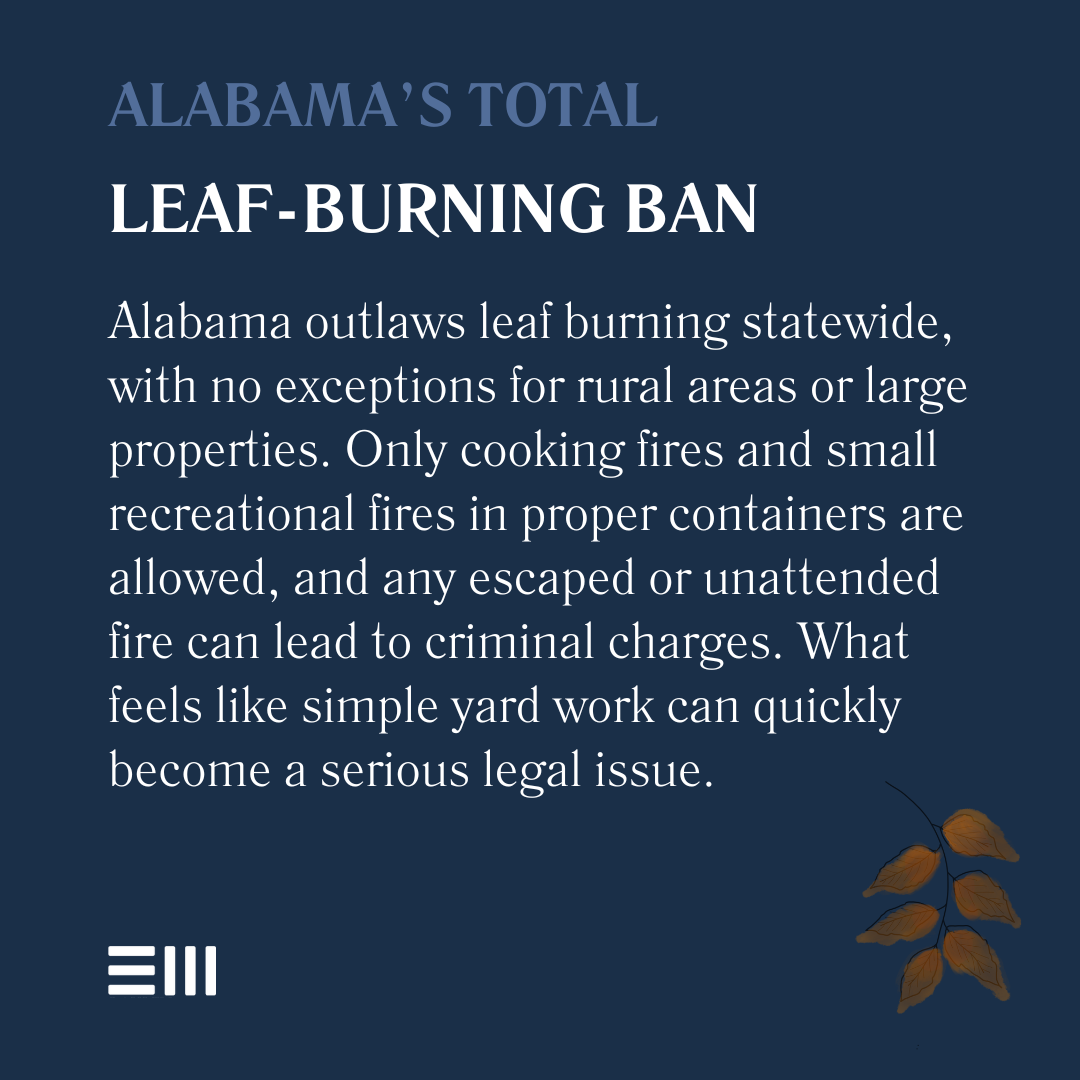
- Complete leaf burning prohibition applies statewide, with no exceptions for rural areas or large properties where many assume it would be permitted.
- Limited legal exceptions exist only for cooking purposes and recreational fires using firewood in proper fire pits or containers.
- Class C felony charges await those who intentionally set fires on property they don't own, representing the most severe penalty level.
- Misdemeanor violations can result from allowing fires to escape your property, burning without proper precautions, or leaving fires unattended.
- Permit requirements apply in protected areas, with authorities able to deny or revoke permits based on weather conditions and fire danger levels.
These regulations apply regardless of property size or location within Alabama, making compliance non-negotiable for all homeowners and renters.
The Heavy Price of Illegal Burning
The penalties for violating Alabama's burn laws can transform a simple yard cleanup into a costly legal nightmare. Understanding potential personal injury settlements in Alabama often involves property damage claims from escaped fires, making the stakes even higher:
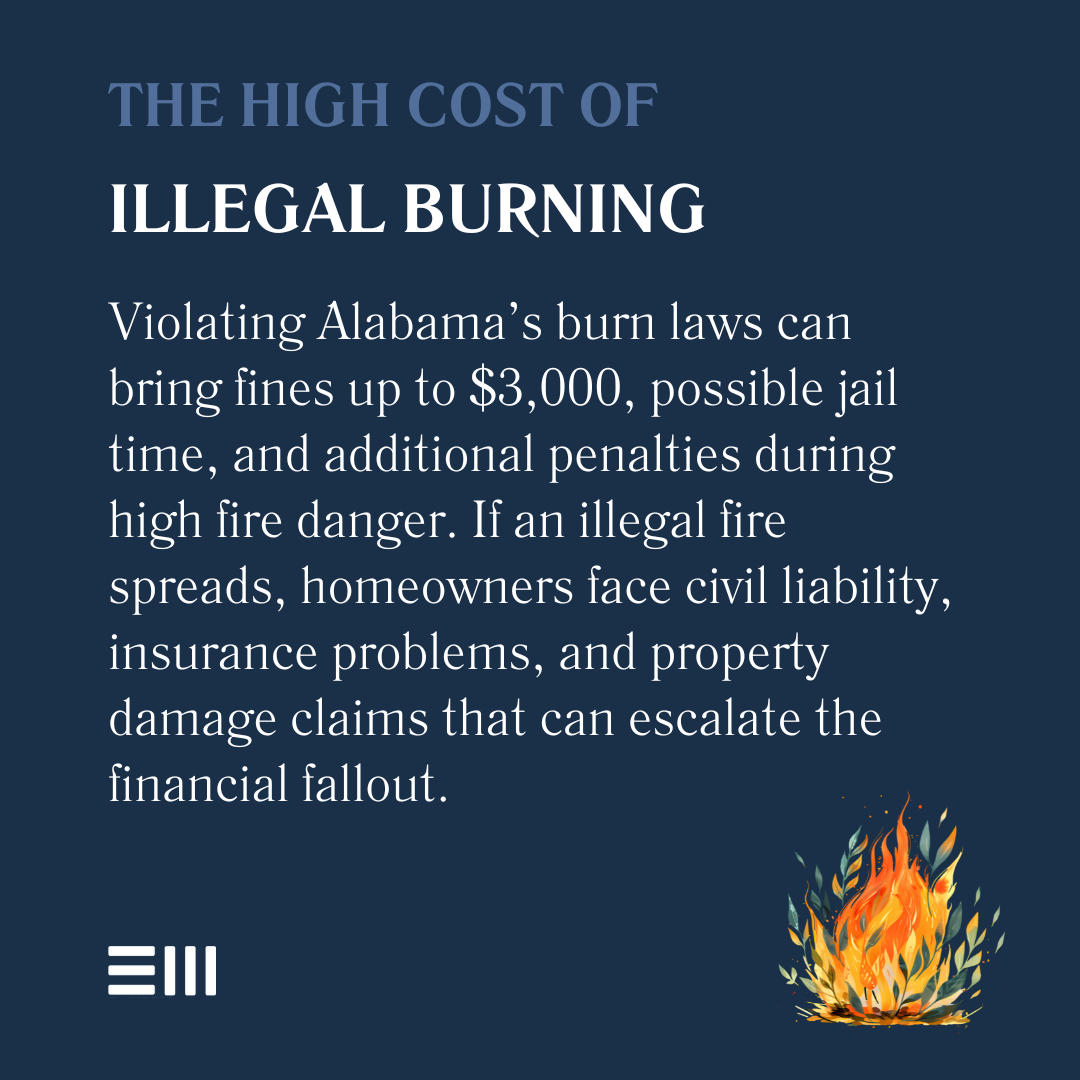
- Financial penalties can reach up to $3,000 for leaf burning violations, turning a money-saving cleanup method into an expensive mistake.
- Jail sentences of up to six months are possible for burn law violations, particularly in cases involving property damage or injury.
- Enhanced penalties apply during official burn bans, when drought conditions or high fire danger create additional risks.
- Civil liability extends beyond criminal penalties if your illegal fire damages neighboring properties or causes injuries.
- Insurance complications may arise, as many policies exclude coverage for damage resulting from illegal activities.
The combination of criminal penalties and potential civil liability makes illegal burning one of the riskiest decisions a homeowner can make.
Safe and Legal Leaf Disposal Alternatives
Fortunately, Alabama homeowners have multiple environmentally friendly and legal options for managing fall's leafy bounty. These alternatives not only keep you on the right side of the law but often provide additional benefits for your lawn and garden:
- Mulching directly into lawn using a mulching mower returns valuable nutrients to your grass while eliminating disposal needs entirely.
- Composting for garden enrichment transforms leaves into nutrient-rich soil amendment that improves garden beds and reduces fertilizer needs.
- Paper yard waste bags available at hardware stores provide proper containment for curbside pickup or transport to disposal sites.
- Municipal collection programs operate in many Alabama cities, offering scheduled leaf pickup services during peak fall seasons.
- Local drop-off sites accept yard waste year-round, providing convenient disposal options for larger leaf accumulations.
Never rake or blow leaves into streets or storm drains, as this practice violates local ordinances and contributes to flooding by clogging drainage systems.
Navigating Local Variations and Permit Requirements
While the statewide leaf burning ban provides a baseline, local jurisdictions often impose additional restrictions or requirements. The patchwork nature of these regulations makes thorough research essential before any outdoor burning activity.
Contact your local fire department or health department before planning any outdoor fire, even those that appear to fall within legal exceptions.
Some municipalities prohibit all outdoor burning within city limits, including fire pits and cooking fires. County regulations may differ significantly from city ordinances, particularly in unincorporated areas.
Protected areas, including state parks and wildlife management areas, require special burning permits that can be denied or revoked based on weather conditions.
Even with a valid permit, users must remain with the fire until completely extinguished, and any escape or safety violation transforms a permitted burn into an illegal one.
The Broader Context: Why Alabama Takes Burning Seriously
Alabama's strict approach to outdoor burning reflects hard-learned lessons from devastating wildfires and air quality crises. The state's climate creates conditions where small fires can quickly escape control, threatening lives, property, and natural resources.
Property damage claims from fire-related incidents often involve complex liability issues, especially when illegal burning is the cause.
The state's contributory negligence laws can completely bar recovery for plaintiffs who bear any fault, making fire safety compliance crucial for protecting both your property and your neighbors'.
Air quality concerns also drive burn regulations, particularly in urban areas where leaf burning contributes to respiratory problems and violates federal air quality standards.
What seems like a simple cleanup method can create health hazards for vulnerable populations including children, elderly residents, and those with respiratory conditions.
Let Justice Roll
Our experienced personal injury and property damage attorneys here at Baxley Maniscalco have seen firsthand how a moment's decision can spiral into criminal charges, civil lawsuits, and financial ruin.
Understanding how Alabama's strict liability laws affect damage claims is crucial when fire-related incidents occur.
If you're dealing with property damage claims related to outdoor fires, don't wait to seek legal counsel.
Contact Baxley Maniscalco at (256) 770-7232 to discuss your situation with attorneys who understand the implications of Alabama's burn laws.