

When Representative Barbara Boyd took the floor of the Alabama House on February 3, 2026, she spoke not only as a legislator but as a survivor.
Boyd, who represents District 32 and survived a serious car crash involving an impaired driver in 2024, watched her fellow lawmakers cast a 100 to 0 vote in favor of House Bill 1.
The chamber responded with applause. Moments later, she described herself as “a living miracle” on the House floor.
For Alabama families who have lost someone to an impaired driver, or for the survivors like Boyd who carry the physical reminders of that loss, HB1 represents something more than legal reform. It represents a promise that the state is paying closer attention.
Here’s what the bill actually proposes, what it would change, and what it might mean for anyone who finds themselves behind the wheel after a night out in Alabama.
What House Bill 1 Actually Does
HB1 would rewrite how Alabama handles first-time DUI convictions by removing the choice currently offered to offenders and replacing it with a stricter, mandatory framework.
Under current Alabama law, a person convicted of a first DUI faces a 90-day driver’s license suspension.
That suspension can be stayed if the offender voluntarily installs an ignition interlock device (sometimes called a “car breathalyzer”) on their vehicle for 90 days. The device requires the driver to pass a breath alcohol test before the engine will start.
HB1 would take that choice off the table entirely. If signed into law, first-time offenders would face both penalties at once.
Key Changes Under HB1
The bill would reshape Alabama’s DUI system in several ways. The biggest shifts involve the length of the interlock requirement, the removal of alternatives, and the connection between device fees and state programs:
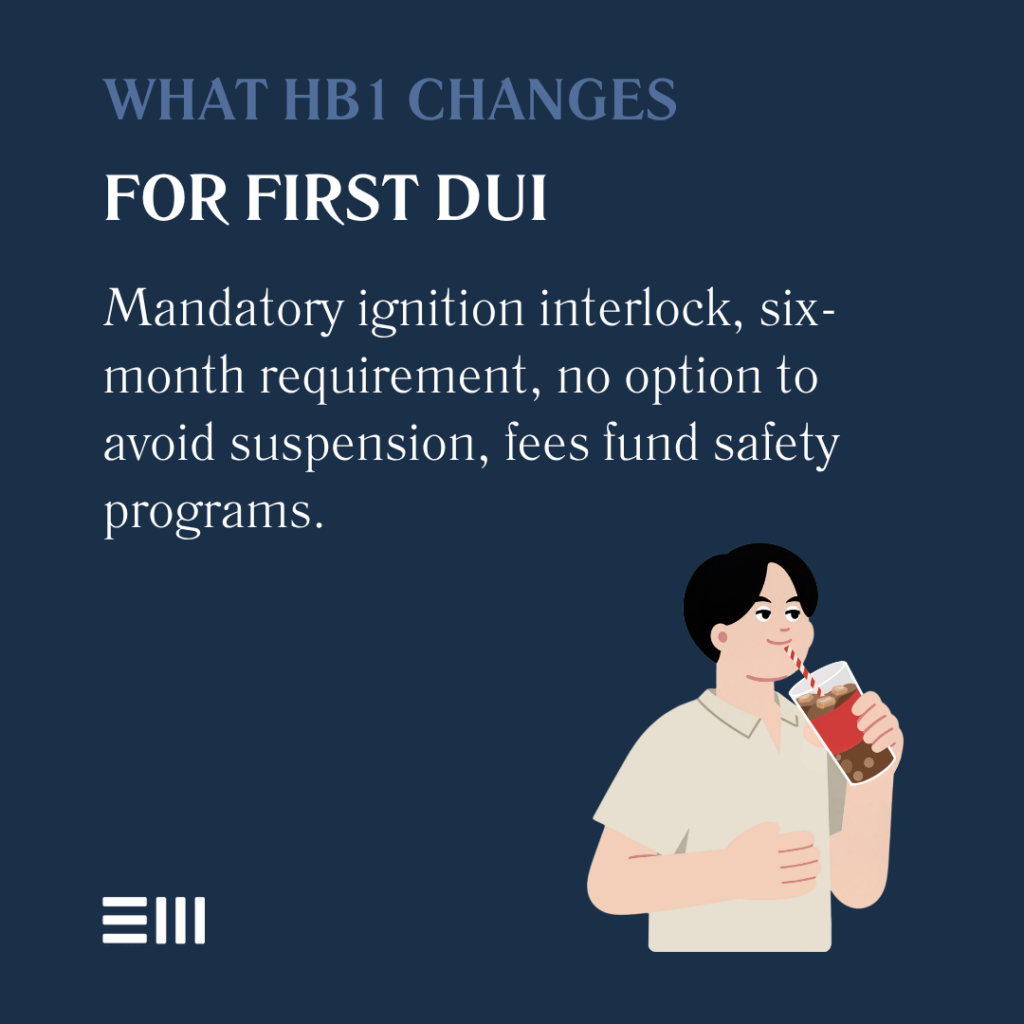
- Mandatory installation. First-time offenders would be required to install an ignition interlock device regardless of whether they also serve the 90-day suspension.
- Extended duration. The interlock requirement would run for six months rather than the current 90-day option.
- No more choice. The option to avoid a license suspension by voluntarily installing the device would be eliminated.
- Funding structure. Device fees paid by offenders would help support the state’s interlock indigent fund, municipal court systems, and the state’s highway traffic safety fund.
Together, these changes represent the biggest shift in how Alabama handles first DUI convictions in years, tying stricter penalties to funding mechanisms that support safer roadways.
The Story Behind the Bill
Legislation rarely arrives in a vacuum, and HB1 is no exception.
Representative Boyd has been open about the toll her 2024 crash took on her body and her life. She underwent multiple surgeries following the collision, and she has described the experience as one that changed how she views her work in the State House.
On the day of the vote, Boyd framed the issue not as a matter of punishment but as a matter of recognizing pain that often goes unspoken.
“We look at people every day who come and we don’t know what burdens they bare,” she said from the chamber floor.
She went on to note how widespread the ripple effects of impaired driving can be, adding that “a lot of us in our families and friends can find at least one person who has not been able to admit they have a problem.”
The bill was co-sponsored by Representative Chris England of Tuscaloosa, along with several other House members. Representative Ontario Tillman added what’s known as a friendly amendment during debate, which Boyd supported.
That amendment would require offenders to complete six months with a restricted license before applying to have their full driving privileges restored.
When the Penalties Get Steeper
Not every DUI case looks the same, and HB1 accounts for that. The bill includes provisions that expand the mandatory interlock period for certain aggravating circumstances.
In other words, the six-month requirement is a floor, not a ceiling. Depending on the facts of a case, an offender could end up with an interlock device in their vehicle for a full year or longer.
Circumstances That Double the Interlock Requirement
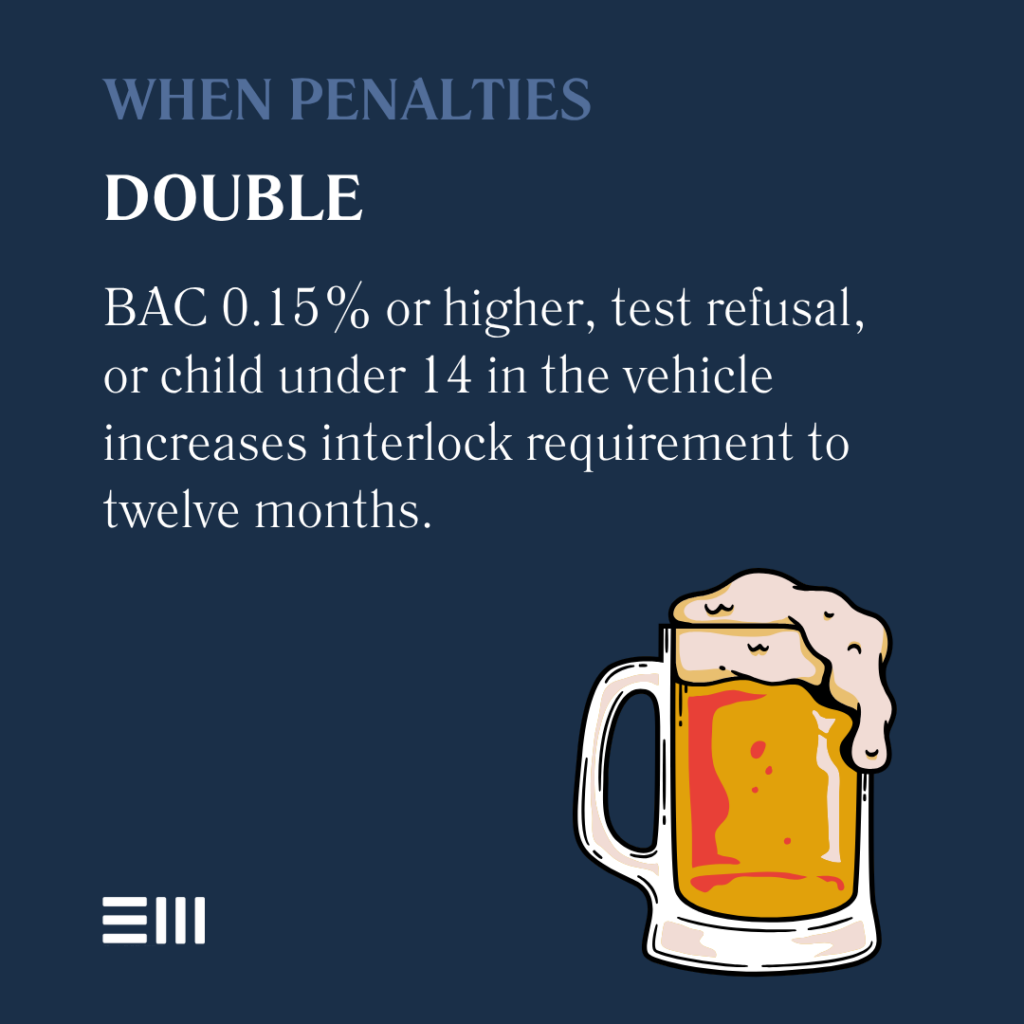
HB1 identifies specific situations that it treats more seriously than a standard first DUI conviction. These scenarios trigger a doubling of the interlock period from six months to twelve months.
- High blood alcohol concentration. A BAC of 0.15 percent or higher at the time of arrest doubles the interlock requirement.
- Refusing the test. Drivers who refuse to submit to a breath or chemical test face the same doubled penalty.
- Child passenger. If a child under 14 was in the vehicle at the time of the DUI, the interlock period doubles.
These provisions mirror a broader pattern in Alabama DUI law, where aggravating factors such as high BAC readings, test refusals, and endangering a minor consistently lead to enhanced consequences. HB1 simply extends that logic to the first offense interlock requirement.
An Important Exception for Rural Alabama
For all its firmness, HB1 builds in a practical exception that acknowledges a simple reality of life in much of the state. Not every Alabama resident lives within easy driving distance of a certified interlock installation provider.
The bill states that courts cannot force first-time offenders to install an interlock device if no approved provider operates within 50 miles of the offender’s home or place of work. For drivers in rural areas of Alabama where certified providers may be few and far between, this carveout matters.
It’s worth noting that even with this exception, the rest of the first DUI penalty structure still applies. Those penalties can include fines ranging from $600 to $2,100, up to a year in jail, and mandatory completion of a DUI or substance abuse program.
What Happens Next
HB1 cleared the Alabama House on February 3, 2026, but the bill still needs to move through the Senate before it can be signed into law. If enacted, the law would take effect on October 1, 2026.
For Alabama drivers, the message from lawmakers is clear. The state is moving toward a model where even a single DUI conviction carries the weight of a breathalyzer wired into the dashboard.
For the families who have buried loved ones because of impaired drivers, that shift cannot come soon enough. For drivers facing a DUI charge, the legal terrain is about to get more complicated.
In either case, understanding how this bill could reshape the consequences of an impaired driving arrest is the first step toward making informed decisions about what comes next.
Hurt by an Impaired Driver? Your Next Move Matters
Whether you’re a survivor of a DUI-related crash or you’re watching a family member try to rebuild after one, the path forward rarely feels straightforward. Medical bills pile up. Insurance adjusters push for quick settlements. The legal system moves on its own timeline.
Our experienced car accident attorneys here at Baxley Maniscalco understand what’s at stake when an impaired driver changes your life in an instant.
We serve clients across the state of Alabama from our office in Oxford, and we aren’t afraid to take a case to trial if that’s what it takes to get the outcome you deserve.
Call our team at (256) 770-7232 to schedule a free personal injury consultation, or reach out through our contact form. We’ll listen to your story, answer your questions, and help you figure out the next step.
Can't find what you're looking for? Search our site below.