

When Kandace Brown received a jury summons, she faced an impossible choice.
Brown’s daughter Parker would only feed directly from her mother—a common situation for many breastfeeding infants. Despite explaining her circumstances and submitting the proper exemption forms, county officials denied her request for accommodation.
“The only way she will eat is by me,” Brown explained in a Facebook post that would eventually catalyze statewide change.
Left with no alternatives, Brown brought her infant daughter to the courthouse. What followed, according to her viral social media post, was a “horrible experience” where the presiding judge demanded mothers make other arrangements for their children and even threatened involvement from the Department of Human Resources.
Though Brown was temporarily excused for a single day, court officials instructed her to return the following day—without her daughter. When she explained that her baby refused bottles, a female court staff member dismissively told her to simply pump breast milk.
“How can you tell me how to feed my child!” Brown wrote, capturing the frustration many parents feel when institutions fail to accommodate basic caregiving needs.
From Personal Struggle to Legal Precedent
What sets Brown’s story apart is what happened next. Rather than simply accepting this treatment, she turned her frustration into action.
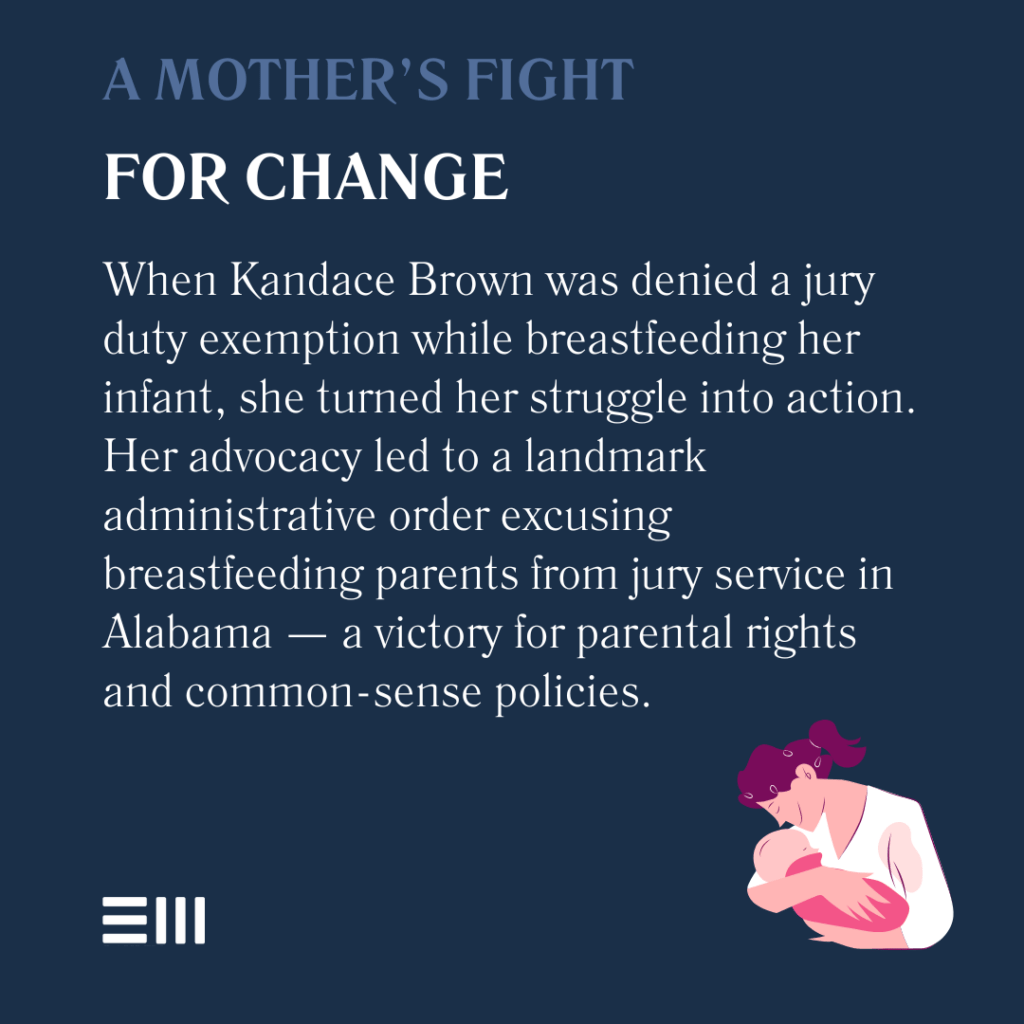
Following her experience, Brown advocated for change to Alabama’s jury duty exemption standards. Her efforts, bolstered by public support following her viral post, resulted in a significant victory: the Alabama Supreme Court issued an administrative order specifically excusing breastfeeding parents from jury service.
“I could not leave my baby. She needed me to be able to literally sustain her life,” Brown told interviewers about her motivation to challenge the system.
State lawmakers have also indicated plans to introduce formal legislation on the issue in the upcoming legislative session, potentially cementing these protections into state law.
Understanding Jury Duty Exemptions in Alabama
Brown’s case highlights an important area of family law that many Alabama residents aren’t aware of until they’re directly affected.
According to Professor Sharona Hoffman, a law expert from Case Western Reserve University, “Approximately half the states exempt breastfeeding mothers from jury duty or allow them to postpone jury service.”
Even in states without explicit exemptions for nursing parents, Hoffman notes that “many courts are generous with postponements” when presented with legitimate needs. For those seeking exemptions, she recommends contacting the court directly and providing information about when you anticipate being available to serve.
The victory in Alabama places the state among those recognizing that jury duty requirements must accommodate the fundamental biological realities of parenthood.
Legal Rights and Accommodations for Parents
While jury duty exemptions represent one area where parents’ needs intersect with legal obligations, they reflect a broader picture of how parental rights are evolving in Alabama’s legal landscape.
Sascha Mayer of Mamava, a company creating lactation spaces, praised Brown’s advocacy: “The fact that this mom stood up and said what she needed in a crowded courthouse was powerful. The Alabama Supreme Court’s quick action…shows common sense policies don’t have to take a long time.”
For breastfeeding parents who do participate in court proceedings, federal law now offers some protections. The Fairness for Breastfeeding Mothers Act of 2019 requires federal buildings with public restrooms to provide dedicated lactation spaces for visitors.
However, as Mayer notes, “We still have a long way to go in regard to providing the infrastructure and support for breastfeeding.”
What Alabama Parents Should Know About Their Rights
Brown’s story offers several important lessons for Alabama parents navigating the intersection of parental responsibilities and legal obligations:
- Know your rights: Familiarize yourself with current exemptions and accommodations available in Alabama courts and other institutions.
- Document everything: Brown’s written documentation of her experience proved crucial in gathering public support.
- Advocate firmly but respectfully: When facing institutional barriers, clearly articulate your needs and the reasoning behind them.
- Seek legal counsel when necessary: Complex situations involving parental rights often benefit from professional legal guidance.
- Consider the broader impact: Individual advocacy, as Brown demonstrated, can lead to systemic improvements that benefit countless others.
As one supporter of Brown’s efforts noted, “You are not the first person struggling within a given circumstance, but you might just be the first person to speak up and be heard.”
The Future of Parental Accommodations in Alabama Courts
The administrative order excusing breastfeeding parents from jury duty represents progress, but legal experts note that comprehensive legislation would provide more robust protections.
The pending bill in the Alabama legislature could potentially address additional concerns, including:
- Clearer guidelines for courthouse accommodations for parents
- Extended protections for parents with other caregiving responsibilities
- Specific procedures for requesting and documenting exemption needs
For parents navigating Alabama’s legal system, these developments represent meaningful progress toward recognizing that civic participation should not come at the expense of children’s well-being.
Navigating Family Legal Challenges with Experienced Counsel
When facing the intersection of family obligations and legal requirements, having knowledgeable legal representation can make a significant difference. At Baxley Maniscalco, our family law attorneys understand the complex challenges parents face when navigating Alabama’s legal system.
From jury duty exemptions to child custody matters, our experienced team provides guidance tailored to your family’s unique circumstances.
We advocate for sensible accommodations that respect both your legal obligations and your responsibilities as a parent.
Don’t face these challenging situations alone. Schedule a consultation with our team today by calling (256) 770-7232 or using our online scheduling tool.
Can't find what you're looking for? Search our site below.