

Roughly 69 percent of all police-reported crashes in the United States result in property damage alone, with no recorded injuries at the scene.
That means the vast majority of collisions look minor on paper — yet the financial and physical fallout from even a low-speed fender bender can run into thousands of dollars.
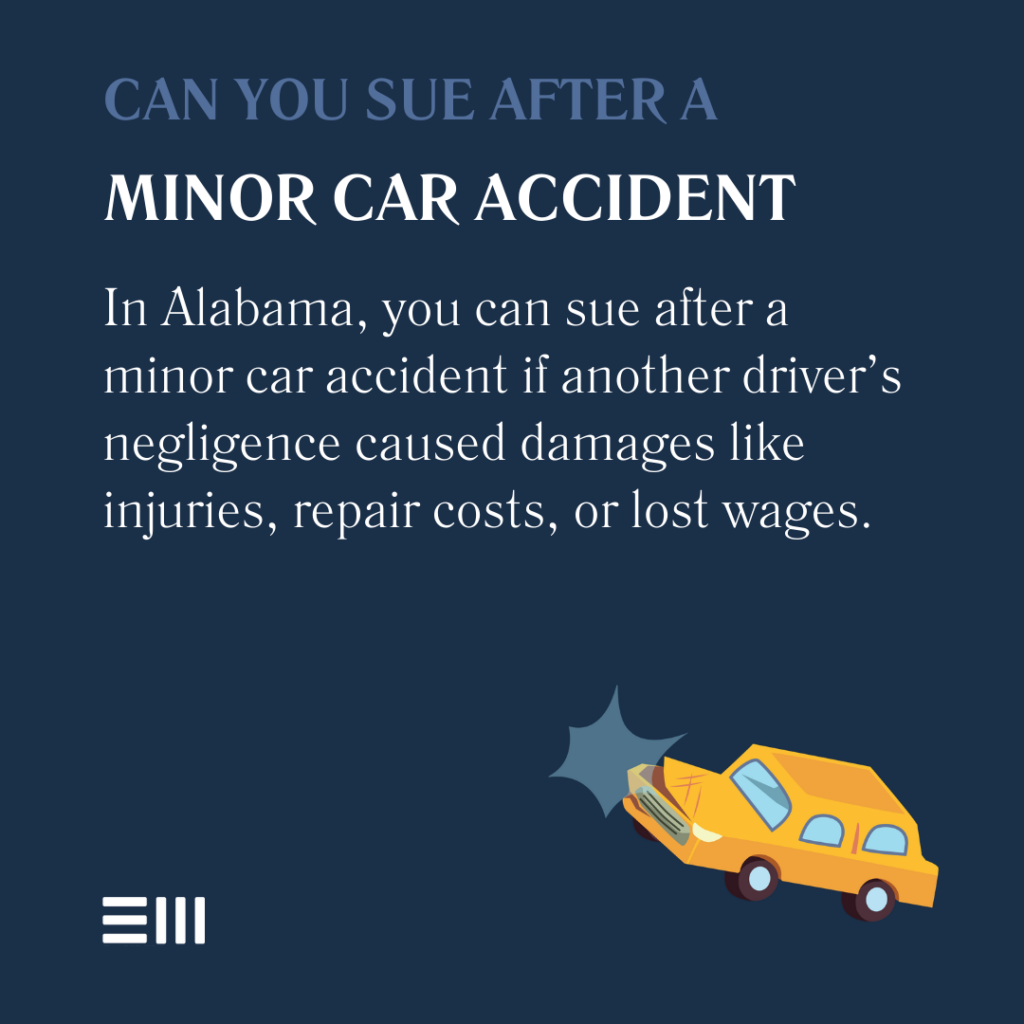
If you are dealing with unexpected repair bills, nagging pain, or an uncooperative insurance adjuster, you may be wondering: can you sue after a minor car accident in Alabama? The short answer is yes, but the details matter.
When a “Minor” Collision Still Gives You Legal Standing
Alabama law does not draw a bright line between major and minor accidents when it comes to your right to file a lawsuit.
What matters is whether another driver’s negligence caused you harm — regardless of how small the dent looks. If you can establish each element of negligence, including duty, breach, causation, and damages, you have legal grounds to pursue a claim.
Even low-speed collisions can produce soft-tissue injuries like whiplash, herniated discs, and chronic back pain that take days or weeks to surface.
A crash that seems insignificant at the scene may lead to medical bills, lost wages, and lasting discomfort.
The size of the impact does not determine the size of your legal rights, and you can sue after a minor car accident in Alabama whenever provable damages exist.
Recoverable Damages That Make Filing a Lawsuit Worthwhile
One of the first questions people ask is whether a minor accident is even worth suing over. The answer depends on the damages you can actually recover.
Alabama allows injured parties to seek both economic and non-economic compensation, and the totals can add up quickly — even from a fender bender.
- Vehicle repair or replacement costs. Even cosmetic damage to bumpers, fenders, and sensors on newer vehicles can cost several thousand dollars to fix.
- Medical expenses and future treatment. Emergency visits, imaging, physical therapy, and follow-up appointments all qualify, including treatment for injuries that appeared days after the crash.
- Lost wages and reduced earning capacity. Time missed from work for doctor visits, recovery, or pain-related limitations is compensable under Alabama law.
- Pain, suffering, and emotional distress. Ongoing discomfort, anxiety about driving, and disruption to daily life are recognized as non-economic damages.
- Rental car and transportation costs. Out-of-pocket expenses incurred while your vehicle is being repaired are also recoverable.
When these categories are totaled, many “minor” accidents produce legitimate claims worth pursuing. The key is thorough documentation from the very beginning, so no expense goes unaccounted for.
The Contributory Negligence Hurdle You Need to Clear
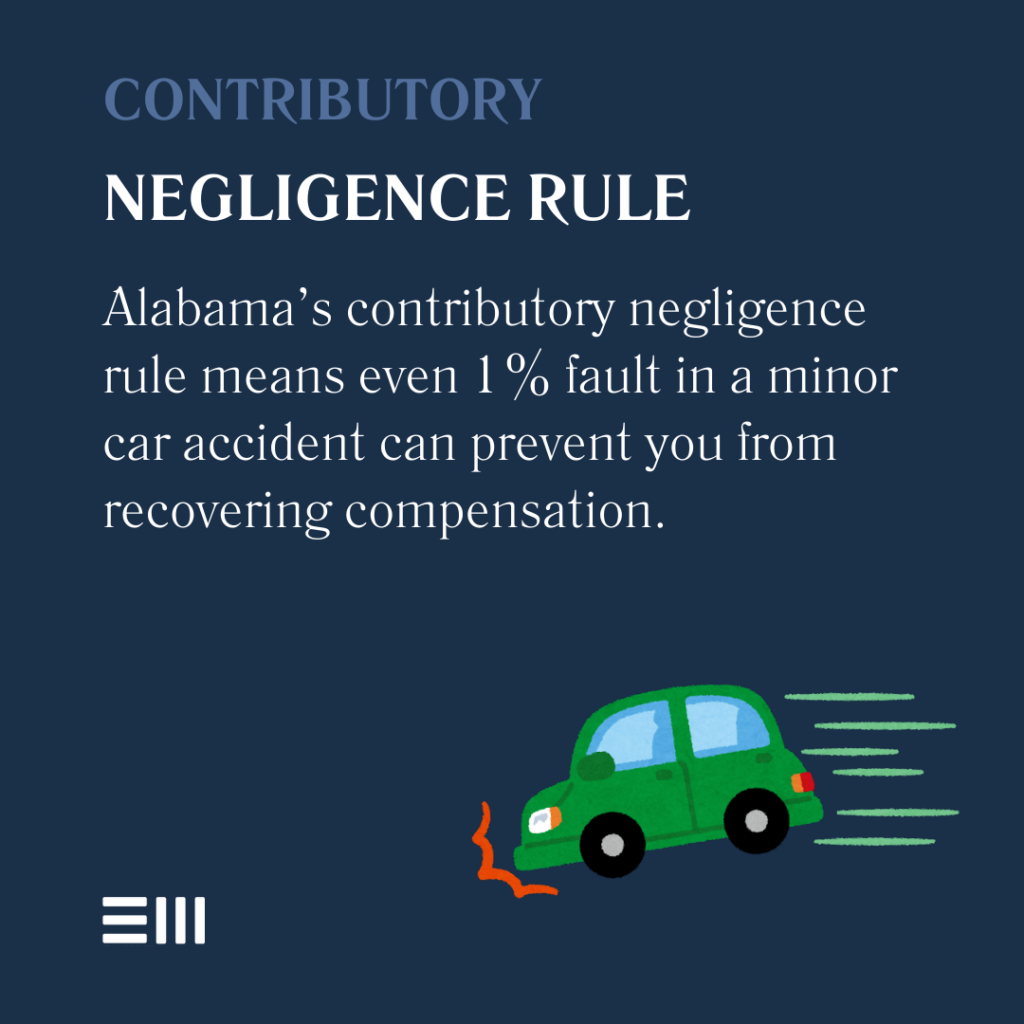
Alabama’s contributory negligence rule is one of the strictest in the country, and it applies to minor accidents just as forcefully as it does to major ones. If the other side can show you were even one percent at fault, your right to compensation could be completely eliminated.
In minor collisions, insurance companies frequently try to shift partial blame onto the injured driver. They may argue you stopped too suddenly, were following too closely, or failed to signal.
That is why understanding whether you can sue after a minor car accident in Alabama requires an honest assessment of the fault picture — and strong evidence to back up your account.
Dashcam footage, witness statements, and a police report are your best defenses against a contributory negligence argument.
Steps to Protect Your Claim After a Low-Impact Crash
The actions you take immediately after a minor accident can determine whether your case survives or collapses.
Many people underestimate the importance of documentation when the damage appears small, and that mistake often costs them later. Reviewing the dos and don’ts after a car accident is a good place to start.
- Call the police and request a report. An official record of the crash establishes basic facts that become harder to prove without one.
- Photograph everything at the scene. Capture vehicle damage from multiple angles, road conditions, traffic signs, and the positions of both cars before they are moved.
- Seek medical attention promptly. Visiting a doctor within 24 hours creates a medical record linking your symptoms to the collision, even if you feel fine at the scene.
- Avoid admitting fault or apologizing. Casual statements like “I’m sorry” can be used against you under Alabama’s at-fault system to argue contributory negligence.
- Keep records of every expense. Save receipts for repairs, medical visits, prescriptions, and any other costs tied to the accident.
Taking these steps transforms a minor accident into a well-documented claim, which is exactly what you need if the insurance company refuses to offer a fair settlement and you decide to sue after a minor car accident in Alabama.
Frequently Asked Questions About Minor Car Accident Lawsuits in Alabama
People dealing with minor collision claims often share the same concerns. Below are answers to the questions our team hears most often.
Can You Sue for Property Damage Only?
Yes. Alabama law allows you to file a lawsuit for property damage even when no physical injuries occurred. If the at-fault driver’s insurance company refuses to cover your repair costs or offers an unfairly low amount, a property-damage-only lawsuit is a valid legal option.
Is a Minor Accident Worth Suing Over?
It depends on the total damages involved. Once you add up repair bills, medical expenses, lost income, and pain and suffering, many minor accidents produce claims worth several thousand dollars or more.
If the insurance company is unwilling to pay what your claim is actually worth, litigation may be the most effective path forward.
How Does Alabama’s Statute of Limitations Apply to Minor Crashes?
The same two-year deadline that governs all personal injury claims in Alabama applies to minor accidents as well. For property-damage-only claims, the statute of limitations is six years.
Regardless of which type of claim you pursue, acting sooner preserves evidence and strengthens your position.
What if the Other Driver’s Insurance Denies My Claim?
A denial does not mean your case is over. Insurance companies routinely deny or undervalue minor accident claims, hoping the claimant will give up.
You still have the right to negotiate, file a complaint with the Alabama Department of Insurance, or pursue a lawsuit to recover what you are owed.
If you have additional questions about your specific situation, consulting directly with a qualified attorney is the fastest way to get reliable answers.
Your Minor Accident Deserves Serious Attention
Just because a crash looked small does not mean its consequences are. Our experienced car accident attorneys here at Baxley Maniscalco understand how Alabama’s strict fault rules affect even low-impact collisions, and we know how to build a case that insurance companies cannot ignore.
From documenting your damages to standing beside you through every stage of the legal process, we are committed to making sure your claim gets the attention it deserves.
Contact us today for a free consultation and find out how we can help you move forward with confidence.
Can't find what you're looking for? Search our site below.

