

The flights fit your parenting week. Your child’s passport hasn’t expired. Their grandparents abroad are already planning the visit.
Then the other parent objects. Having the travel document doesn’t settle whether this particular trip is permitted.
After an Alabama divorce, passport issuance, the custody order, and the destination’s entry rules require separate attention. A signature for one purpose may not cover another.
Our family law attorneys help parents review travel plans against the actual terms of their divorce and custody orders.
If the itinerary would change an existing parenting schedule, address that conflict before making nonrefundable commitments.
Planning an overseas trip with your child? Contact us for a confidential consultation or call (256) 770-7232.
Start With the Order, Not the Airline Reservation
Read the complete custody order, including later modifications and any temporary restrictions. Look beyond the paragraph that assigns your vacation week.
Alabama Code § 30-3-153 expressly includes holidays and vacations among the matters addressed when implementing joint custody.
Your order may require notice, written permission, an itinerary, or limits on where the child can travel. It may also address who keeps the passport.
Check departure and return times against school obligations and the other parent’s scheduled time. An overnight flight can turn a seven-day visit into a longer absence.
An order’s silence about foreign travel isn’t a reliable substitute for legal review when parents disagree. The rest of its decision-making and scheduling terms still matter.
For Children Under 16, Passport Consent Has Its Own Rules
The State Department’s under-16 passport instructions generally require the child and both parents or guardians to appear, unless an authorized alternative applies.
If one parent can’t attend, that parent can generally provide notarized Form DS-3053 and a photocopy of the identification shown to the notary.
The form and other notarized consent statements must be submitted within 90 days of signing or notarization. Coordinate the appointment and paperwork so consent doesn’t become stale.
A qualifying court order can support a one-parent application. The federal passport regulation identifies sole legal custody and specific passport or travel authorization among the possible grounds.
Being the parent with more overnights isn’t necessarily the same as having sole legal custody. Read the actual allocation of legal authority and any travel restrictions.
Passport consent concerns issuance of the document. It doesn’t, by itself, rewrite a vacation provision or approve every future itinerary.

Send a Travel Proposal the Other Parent Can Evaluate
A specific proposal makes it easier to identify a genuine conflict and work toward a solution. Include these details rather than asking for blanket permission to travel.
- Dates and transportation: list departure, return, flight connections, and the time you expect to complete the next custody exchange.
- Where the child will stay: provide destinations, lodging addresses, accompanying adults, and reliable contact information.
- Schedule changes: identify missed school, activities, or parenting time and propose any needed arrangements or make-up time.
- Documents and deadlines: explain which passport appointment, consent form, or travel letter needs attention, and when.
- Communication and contingencies: propose realistic check-ins and explain how you’ll share changes if a flight is delayed or the itinerary shifts.
These are planning suggestions, not a universal Alabama notice checklist. Follow any more specific requirements in your own order.
Keep the discussion between adults. Asking a child to secure the other parent’s signature puts them in the middle of a decision they don’t control.
A Passport Form and a Travel Letter Serve Different Purposes
Form DS-3053 addresses issuing a U.S. passport. A travel consent letter can document permission for a particular journey, with specified dates and an accompanying adult.
USAGov’s guidance on children’s travel documents explains that a child traveling with one parent may need a consent letter and recommends checking with the destination’s embassy or consulate.
The State Department also explains that the United States doesn’t generally require proof of both parents’ permission for a minor to travel internationally. Some other countries do.
That border-document rule doesn’t override a custody restriction. A parent still needs to comply with the court order governing the family.
Check the destination’s requirements for travel with minors, including exit rules. Permission to enter a country doesn’t answer every question about leaving it.
Ask which original or certified documents, translations, or notarization are required. A generic online letter may leave out information the destination or carrier expects.
When a Signature or Passport Is Being Withheld
First identify the exact disagreement. Is the other parent refusing the application, objecting to the destination, disputing the dates, or declining to hand over an existing passport?
Those problems may call for different requests. A passport-application order alone may leave the trip’s timing and document exchange unresolved.
Keep the proposed itinerary, relevant order provisions, and written communications. Explain what’s missing and when you first requested it.
If agreement isn’t possible, we can assess whether clarification, enforcement, or a request for specific court permission fits the situation. Relief depends on the order and facts.
Don’t treat a purchased ticket as an emergency that guarantees approval. Raise the issue early enough for meaningful review and a response from the other parent.
Existing Passports and Older Teenagers Need a Separate Check
If your child already has a passport, confirm where it is, its condition, and whether it will meet the destination’s validity requirements throughout the trip.
A passport issued before age 16 is generally valid for five years. The State Department requires a new in-person application rather than renewal of that child passport.
For applicants aged 16 or 17, the standard process changes: they must show that at least one parent or guardian knows they’re applying.
That doesn’t make an older teenager exempt from an applicable custody order. Passport eligibility and authority to alter the parenting schedule remain separate.
Also verify the document type. A U.S. passport card isn’t valid for international air travel; don’t mistake it for a passport book when planning flights.
An Example: A Signed Form, but a Disputed Return Date
Imagine that both parents cooperate in getting a ten-year-old a passport. Months later, one parent proposes an overseas visit during school break.
The proposed return flight lands after the other parent’s holiday time has begun. The order also requires advance itinerary sharing.
The earlier passport signature doesn’t resolve either issue. The parents still need to address the exchange conflict and follow the order’s notice terms.
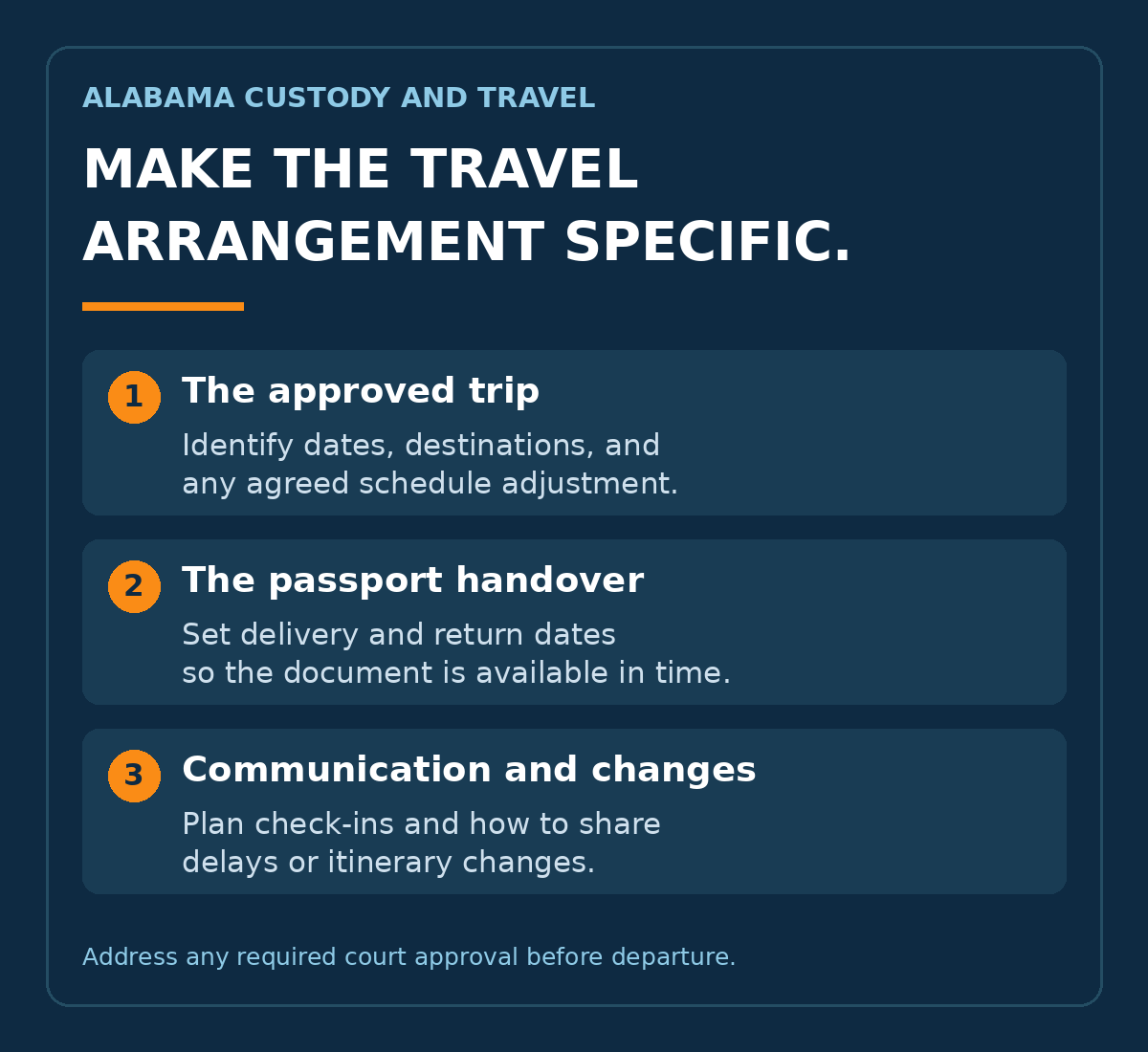
A useful resolution would specify the approved itinerary, any agreed schedule adjustment, and document handover. It wouldn’t rely on the assumption that signing once approved everything.
If You’re Worried the Child Won’t Be Returned
A threatened abduction calls for urgent help, not an ordinary vacation negotiation. Preserve threats, unexpected itinerary changes, and other concrete information without delaying action.
The Children’s Passport Issuance Alert Program, or CPIAP, can notify an enrolled child’s parent about a U.S. passport application. Eligible children are U.S. citizens under 18.
Enrollment alone doesn’t prevent international travel, guarantee denial of a U.S. passport, or block a foreign passport. Dual nationality may require additional attention.
If an abduction is imminent, contact law enforcement and the State Department’s Office of Children’s Issues at 1-888-407-4747. Follow its urgent prevention guidance.
Prompt legal review can address whether emergency court relief or passport safeguards are appropriate. An alert program is one tool, not a replacement for that review.
Build Clear Travel Terms Into the Parenting Arrangement
If international visits are likely to recur, a detailed arrangement can reduce the need to negotiate from scratch before each trip.
Consider addressing who stores the passport, how far ahead it must be delivered, who pays application costs, and when it must be returned.
A handover deadline should leave time to check the actual document. Finding an expired passport the night before departure creates an avoidable problem.
Also address notice, itinerary changes, reasonable contact, and travel that overlaps the other parent’s time. Any arrangement should fit the child’s needs and existing court requirements.
We can help turn a vague disagreement about “permission” into specific proposed terms and determine whether a court-approved change is needed.
Frequently Asked Questions About Child Passports and Travel
Do both divorced parents have to attend the passport appointment?
For a child under 16, that’s generally the starting rule, but authorized alternatives exist. A properly completed consent form may allow one parent to attend with the child.
A qualifying court order or other accepted evidence can also support an exception. Check the current application instructions and your custody documents before the appointment.
Does primary physical custody let me apply without the other parent?
Not automatically. Having most of the parenting time doesn’t necessarily give you sole legal authority for passport purposes.
The federal regulation and the specific court order control the available route. Don’t rely only on a label such as “primary parent.”
Does signing the passport form mean I approved the vacation?
Not by itself. Consent to issue a passport serves a different purpose from agreeing to the details of a later trip.
Address the destination, dates, and any schedule conflict separately. Follow the custody order and the destination’s documentation rules.
Can I use the special-circumstances form if my ex refuses?
Form DS-5525 isn’t an automatic workaround for a disagreement. Passport officials evaluate whether the circumstances justify an exception under the federal rules.
Explain the situation truthfully and provide requested evidence. A refusal may instead need to be addressed through the court handling custody.
Does CPIAP stop my child from leaving the United States?
No. The alert program monitors U.S. passport applications; enrollment alone doesn’t stop travel using a valid passport.
It also can’t block a foreign passport. If you believe departure or nonreturn is a real risk, seek prompt help beyond enrolling.
What if the other parent agrees by text but the order says otherwise?
Keep the message, but don’t assume an informal agreement overrides a court restriction or satisfies a required form of consent.
Have the order and proposed agreement reviewed before relying on them. Any necessary court approval should be addressed before departure.
Resolve the Permission Questions Before You Pack
International travel can be an important way for children to maintain family ties and experience another culture. Clear arrangements help preserve that opportunity.
We can review your custody order, identify the unresolved travel issue, and help you pursue a workable agreement or appropriate court relief.
Contact us or call (256) 770-7232 to schedule a confidential family-law consultation.
Can't find what you're looking for? Search our site below.