
Nearly 29% of all traffic fatalities in Alabama involve an alcohol-impaired driver, and the state logs roughly 199 DUI arrests per 100,000 licensed drivers each year.
If you’ve recently been charged — or someone close to you has — you’ve probably started searching for the difference between DWI vs DUI. The answer in Alabama may surprise you.
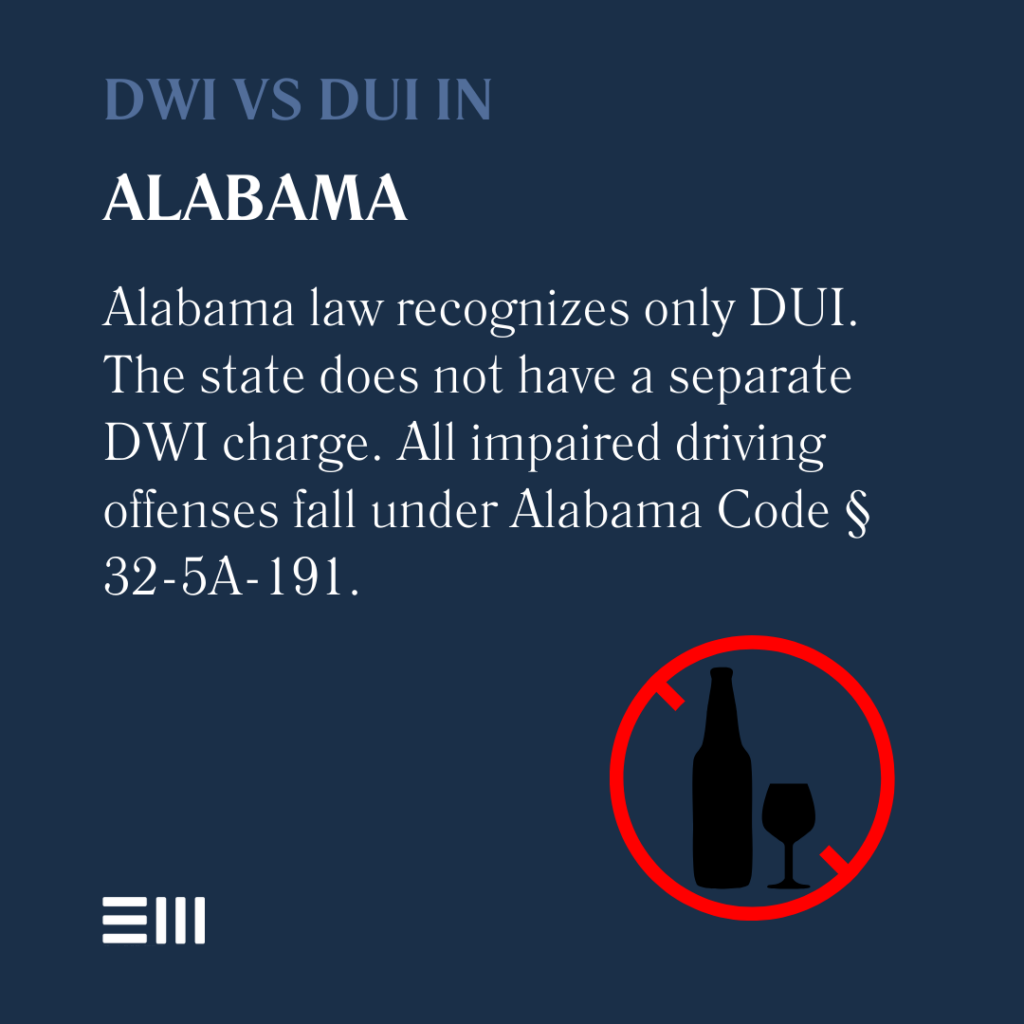
Unlike many other states, Alabama does not treat DWI and DUI as two separate offenses. There is no DWI statute on the books. Every impaired driving charge in the state falls under a single law: Alabama Code § 32-5A-191, which uses only the term DUI.
Understanding what that means for your situation — and what penalties you’re actually facing — is the first step toward making informed decisions about your defense.
Why Alabama Only Recognizes DUI — Not DWI
If you’re comparing DWI vs DUI because you’ve seen both terms used online, in conversation, or on out-of-state paperwork, here’s the short version: Alabama doesn’t use the DWI designation at all.
The state consolidates all impaired driving offenses under DUI (Driving Under the Influence), regardless of whether the impairment comes from alcohol, illegal drugs, prescription medication, or a combination.
In states that do separate the two, DWI (Driving While Intoxicated) often refers to a higher level of impairment or a BAC above the legal limit, while DUI sometimes applies to lesser impairment.
Alabama skips that distinction entirely. Whether your BAC was 0.08% or 0.18%, whether the substance was alcohol or a controlled prescription, the charge is the same: DUI. The severity of the penalties, however, is not.
BAC Thresholds That Trigger a DUI Charge
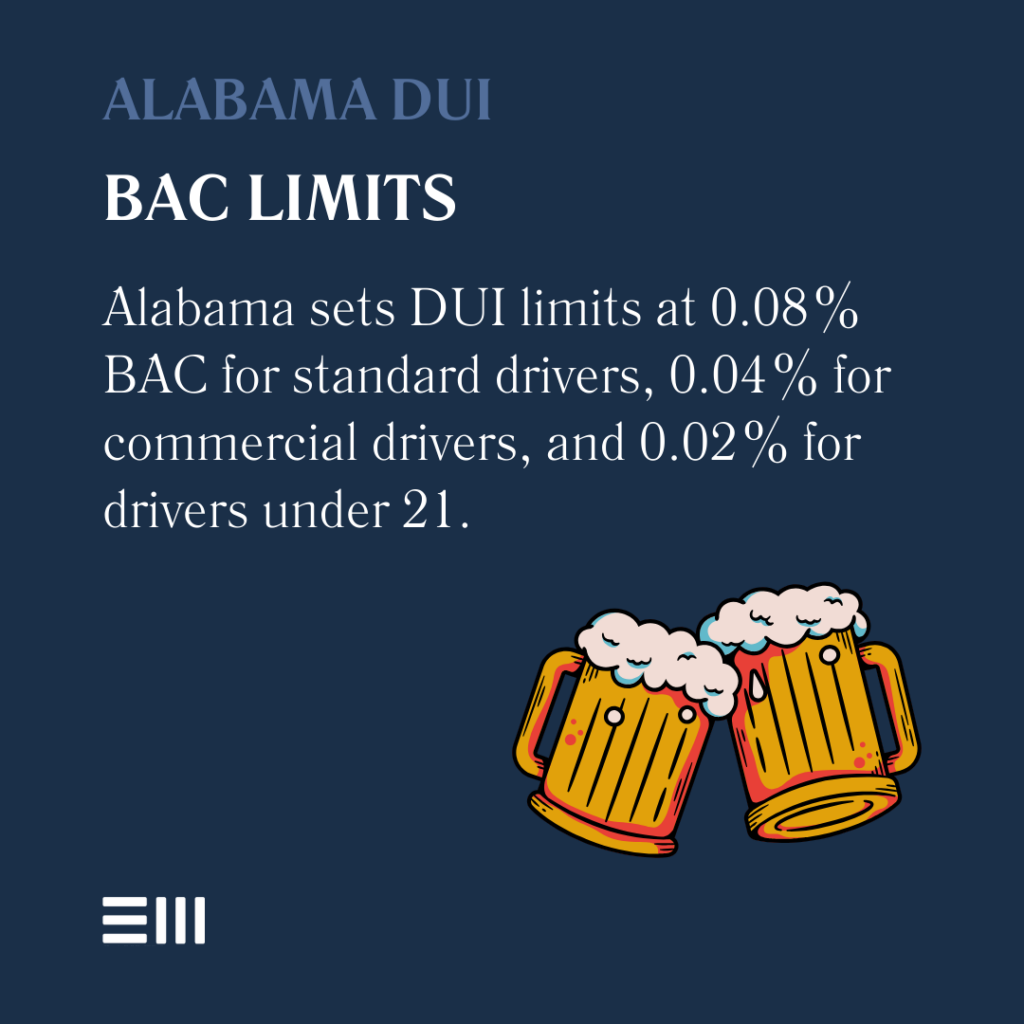
Alabama law establishes different blood alcohol concentration limits depending on the driver’s age and license type. Falling at or above any of these thresholds can result in a DUI charge:
- Standard drivers (21 and older). A BAC of 0.08% or higher meets the legal threshold for a per se DUI, meaning impairment is presumed by the number alone.
- Commercial vehicle operators. The limit drops to 0.04%, reflecting the higher responsibility placed on drivers operating large or commercial vehicles.
- Drivers under 21. Alabama enforces a near-zero-tolerance policy with a 0.02% limit, meaning even minimal alcohol consumption can lead to a charge.
- Enhanced penalty threshold. A BAC of 0.15% or above triggers significantly harsher sentencing, including double the minimum penalties for a standard DUI conviction.
These thresholds apply whether you’re pulled over on the highway or found sitting in a parked car with the keys accessible. Alabama’s “actual physical control” standard means you don’t have to be actively driving to face a DUI charge.
Penalties for a DUI Conviction in Alabama
Alabama’s DUI penalties escalate based on the number of prior offenses within a 10-year lookback window. Even a first offense carries consequences that can follow you for years.
A first DUI conviction is a misdemeanor that can result in up to one year in jail, fines ranging from $600 to $2,100, a 90-day license suspension, and mandatory completion of a substance abuse court referral program. A second conviction within 10 years increases the minimum jail time, raises fines substantially, and extends the license suspension to one year.
By the fourth conviction, the charge becomes a Class C felony — and once that felony threshold is crossed, every future DUI is treated as a felony regardless of timing.
For a more detailed breakdown of what each offense level means, see our DUI sentencing overview.
Alabama is also an implied consent state. Under Code § 32-5-192, every licensed driver is considered to have already agreed to submit to chemical testing if arrested for DUI.
Refusing a breath, blood, or urine test triggers an automatic 90-day license suspension on the first refusal, with longer suspensions for subsequent refusals. That refusal can also be introduced as evidence against you in court.
Frequently Asked Questions about DWI vs DUI in Alabama
Many people come to us with similar questions about how DWI vs DUI charges work in Alabama. Below are straightforward answers to the ones we hear most often.
Is There a Legal Difference between DWI and DUI in Alabama?
No. Alabama does not recognize DWI as a separate criminal charge. All impaired driving offenses — whether involving alcohol, drugs, or both — are prosecuted under the state’s DUI statute. If you see the term DWI used in Alabama, it’s likely informal or carried over from another state’s terminology.
Can I Get a DUI without Actually Driving?
Yes. Alabama law applies to anyone in “actual physical control” of a vehicle while impaired. Courts have interpreted this broadly. If you’re sitting in the driver’s seat with access to the keys, you could face a DUI charge even if the vehicle was parked and the engine was off.
How Long Does a DUI Stay on My Record in Alabama?
A DUI conviction remains on your criminal record permanently in Alabama. There is no expungement for DUI convictions. For sentencing purposes, Alabama uses a 10-year lookback period, meaning prior convictions within that window increase penalties for any new offense.
What Should I Do Immediately after a DUI Arrest?
Time is a factor. You have 10 days from the date of arrest to request an Administrative License Suspension (ALS) hearing to challenge your license suspension. Missing that deadline results in an automatic suspension.
Consulting with an attorney during this window can make a significant difference in how your case proceeds.
If you still have questions about how DWI vs DUI laws apply to your specific circumstances, reaching out to a qualified attorney is the most reliable way to get answers that account for the details of your case.
Can't find what you're looking for? Search our site below.