

The tension is unbearable. You can barely stand being in the same room with your spouse, and every instinct tells you to grab your things and leave.
But before you pack that suitcase, consider this: an early move out of a marital residence can potentially be used to argue that the spouse who moved out has sufficient resources to do so, weakening your position on everything from property division to child custody.
In Alabama, both spouses have an equal right to the marital home until a judge enters an order determining otherwise—regardless of whose name appears on the deed.
Understanding why moving out is the biggest mistake in a divorce could save you thousands of dollars and protect your relationship with your children. What feels like relief today often becomes regret when you realize the legal consequences of that decision.
How Leaving Affects Property Division
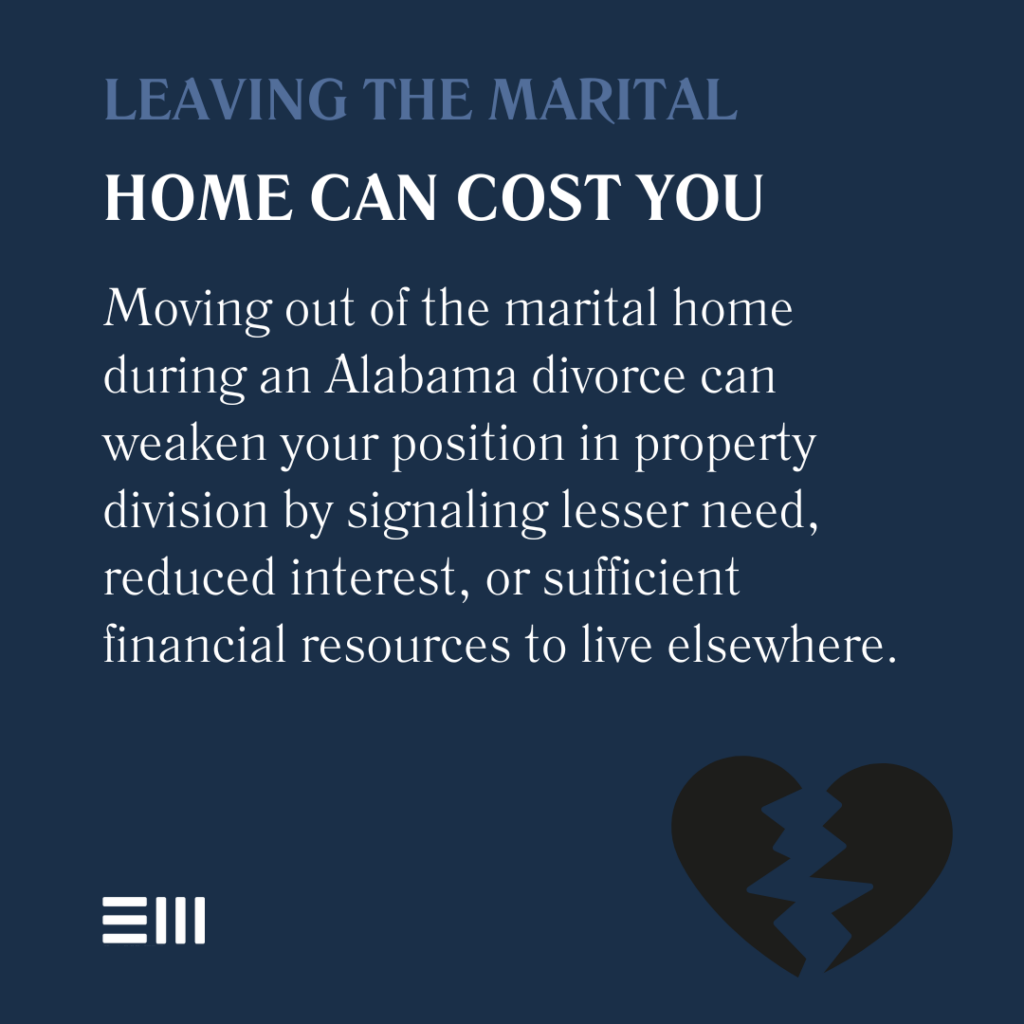
Voluntarily vacating the marital home can significantly impact how courts view your interest in one of your most valuable assets, and this decision may follow you through every negotiation and hearing.
Alabama follows equitable distribution principles, meaning marital property—including the family home—gets divided fairly based on multiple factors rather than automatically split 50/50.
The marital residence is often the largest asset couples own together, and courts consider numerous circumstances when determining who should retain it or how proceeds should be divided. Your actions during the divorce process become part of the evidence judges evaluate.
Leaving the home can affect property division in several ways:
- Perception of lesser need. Courts may decide you have a lesser need for the marital residence if you demonstrated the ability to afford setting up a separate household.
- Apparent abandonment of interest. By vacating the residence, individuals may unintentionally relinquish their claim to ownership or equity in the property during settlement negotiations.
- Weakened bargaining position. Remaining in the home gives you a “bargaining chip” that can be leveraged during negotiations for other assets or favorable terms.
- Demonstrated resources. Moving out signals to the court that you have financial resources sufficient to maintain separate housing, potentially affecting alimony determinations.
Understanding why moving out is the biggest mistake in a divorce often comes down to recognizing how courts interpret your voluntary departure.
The Custody Consequences of Moving Out
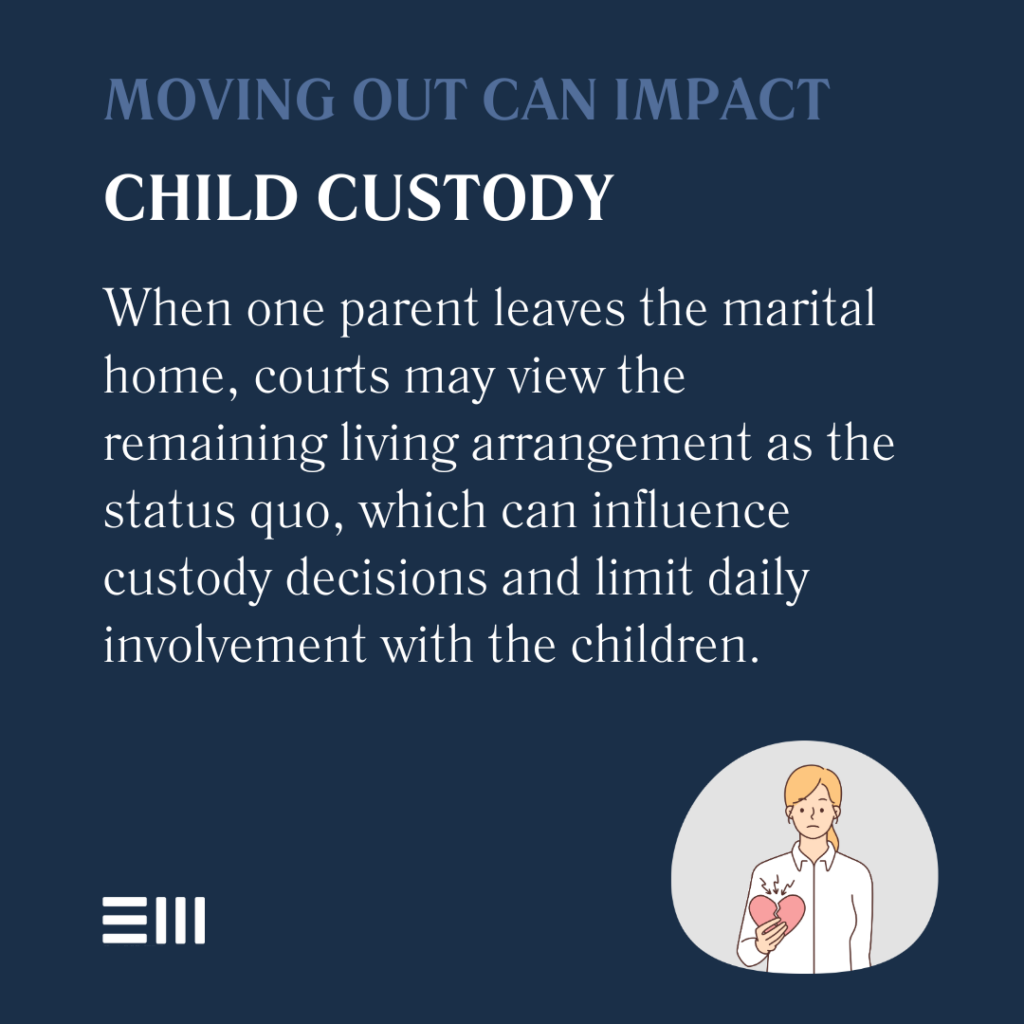
Leaving the marital home when children are involved creates immediate implications for custody proceedings, and the initial living arrangement often becomes the foundation for permanent orders.
Alabama courts prioritize the best interests of children when making custody determinations, and maintaining stability and continuity ranks among the most important factors judges consider.
When one parent leaves, and the other remains in the family home with the children, courts may view this arrangement as the established status quo worth preserving. The first custody plan often sets a precedent that influences everything that follows.
Custody-related consequences of moving out include:
- Status quo establishment. The parent who stays with the children in the family home may have a stronger claim to primary physical custody because courts prefer minimizing disruption to children’s routines.
- School district implications. If you move to a different area, you may inadvertently create arguments that keeping children in their current school requires them to live primarily with your spouse.
- Reduced daily involvement. Being physically absent from the home means missing the daily interactions—homework help, bedtime routines, morning preparations—that demonstrate active parenting.
- Visitation complications. Moving out transforms you from a resident parent into a visitor, fundamentally changing how courts view your role in your children’s daily lives.
The custody implications alone explain why moving out is the biggest mistake in a divorce for parents who want meaningful time with their children.
Legal Protections for Staying Put
Alabama law provides important protections for spouses who remain in the marital home, and understanding your rights helps you make informed decisions about your living situation.
Neither spouse can force the other to leave the marital home without court intervention. In Alabama, a spouse cannot be forced to leave without a court order, whether through a temporary pendente lite (PLR) order or an ex parte protection from abuse order.
This legal protection exists specifically because lawmakers recognized the importance of maintaining both parties’ rights until a judge can evaluate the circumstances and make an informed ruling.
Your legal protections include:
- Equal right to occupancy. Both spouses maintain equal rights to the marital home during divorce proceedings until a court orders otherwise, regardless of whose name appears on the title.
- Protection against lockouts. It is unlawful for spouses to change locks or use other tactics to exclude the other spouse without proper court orders.
- Temporary relief options. If remaining in the home creates genuine safety concerns, you can seek court orders for temporary exclusive possession rather than simply leaving.
- Maintained property interest. Even if a court orders you to temporarily vacate, you maintain your legal interest in the marital home as an asset subject to equitable distribution.
Knowing these protections exist helps explain why moving out is the biggest mistake in a divorce—you have legal rights worth exercising.
When Leaving May Be Necessary
Despite the general advice to stay, certain circumstances make remaining in the marital home dangerous or impractical, and recognizing these exceptions protects both your safety and your legal position.
Domestic violence presents the clearest exception to staying in the home. If you or your children face physical danger, your immediate safety takes priority over any property or custody considerations.
Alabama courts understand this reality and recognize domestic violence as a legitimate basis for temporary exclusive occupancy orders. The key is documenting the circumstances properly and seeking court protection rather than simply walking away.
Situations where leaving may be appropriate include:
- Physical safety threats. When domestic violence occurs, protecting yourself and your children comes first, and courts will not penalize you for fleeing genuine danger.
- Court-ordered departure. If a judge issues a temporary order requiring you to vacate, compliance is mandatory—but you maintain your property rights.
- Documented mental health crises. Situations involving serious mental health emergencies affecting safety may justify temporary separation.
- Mutual agreement with legal protection. If both parties agree on temporary living arrangements, documenting this agreement protects your interests.
Even when leaving becomes necessary, consulting with an attorney first helps ensure your departure doesn’t unnecessarily harm your legal position.
Frequently Asked Questions About the Marital Home
The following questions address concerns Alabama residents most commonly raise about living arrangements during divorce proceedings.
Can My Spouse Legally Force Me to Leave the House?
No. Both spouses have equal rights to the marital home until a court orders otherwise. Your spouse cannot change the locks, physically remove you, or otherwise force you out without obtaining a court order first. If your spouse attempts these tactics, you have legal remedies available.
Will I Lose My Property Rights if I Move Out?
You don’t automatically lose your legal claim to the home’s equity, but leaving can weaken your bargaining position and affect how courts view your need for the property. The home remains marital property subject to equitable distribution regardless of who lives there during the divorce.
What if Living Together Is Unbearable but Not Dangerous?
Many couples find cohabitation during divorce extremely uncomfortable. Options include establishing separate spaces within the home, creating detailed schedules to minimize contact, or negotiating temporary arrangements through your attorneys.
The legal and financial benefits of staying often outweigh the temporary discomfort.
How Long Should I Wait Before Moving Out?
Ideally, remain in the home until you have a court order or written agreement addressing property division, custody arrangements, and support obligations. Moving out before these issues are resolved leaves you negotiating from a weaker position.
What Should I Do if I’ve Already Moved Out?
If you’ve already left, consult with an attorney immediately about your options. Depending on circumstances, you may be able to return to the home or take legal steps to protect your interests despite the move.
These answers provide general guidance, but every situation requires individualized legal analysis.
Make Informed Decisions with Baxley Maniscalco
The decision to stay or leave the marital home during divorce affects nearly every aspect of your case.
Our experienced Alabama divorce attorneys here at Baxley Maniscalco help clients understand the full implications of their choices and develop strategies that protect their property rights and parental relationships.
Before you make any major decisions, contact us for a confidential consultation and let us help you navigate this difficult transition wisely.
Can't find what you're looking for? Search our site below.