
Unintentional falls are the leading cause of nonfatal injuries treated in American emergency rooms, sending more than nine million people to the hospital in a single recent year. A surprising share of those falls happen on camera, inside the store, parking lot, or lobby where they occurred.
The catch is that the recording rarely waits around for you.
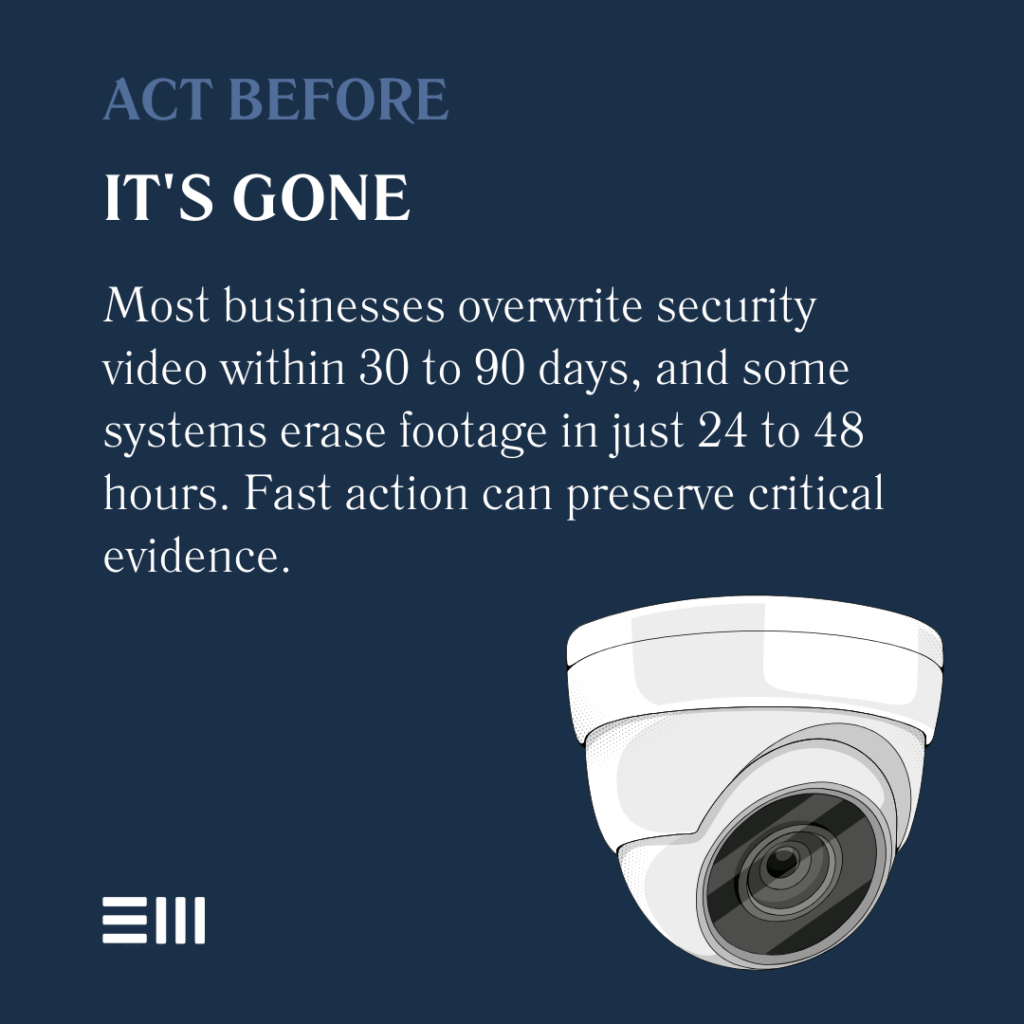
Most businesses overwrite their security video within 30 to 90 days, and some high-traffic systems loop over old footage in as little as 24 to 48 hours, so the strongest evidence in your case can vanish before you finish your first round of medical appointments.
In Alabama, where one percent of fault can end a claim, that footage often decides whether you recover anything at all.
Why Surveillance Footage Can Make Your Claim
Winning a premises liability case in Alabama usually comes down to notice, meaning you have to show that the property owner knew or should have known about the hazard and failed to fix it or warn you.
A spoken account of a wet floor is easy for a defense lawyer to pick apart, while a video that shows the spill sitting untouched for forty minutes settles the question. Footage turns your version of events into something a jury can watch for itself.
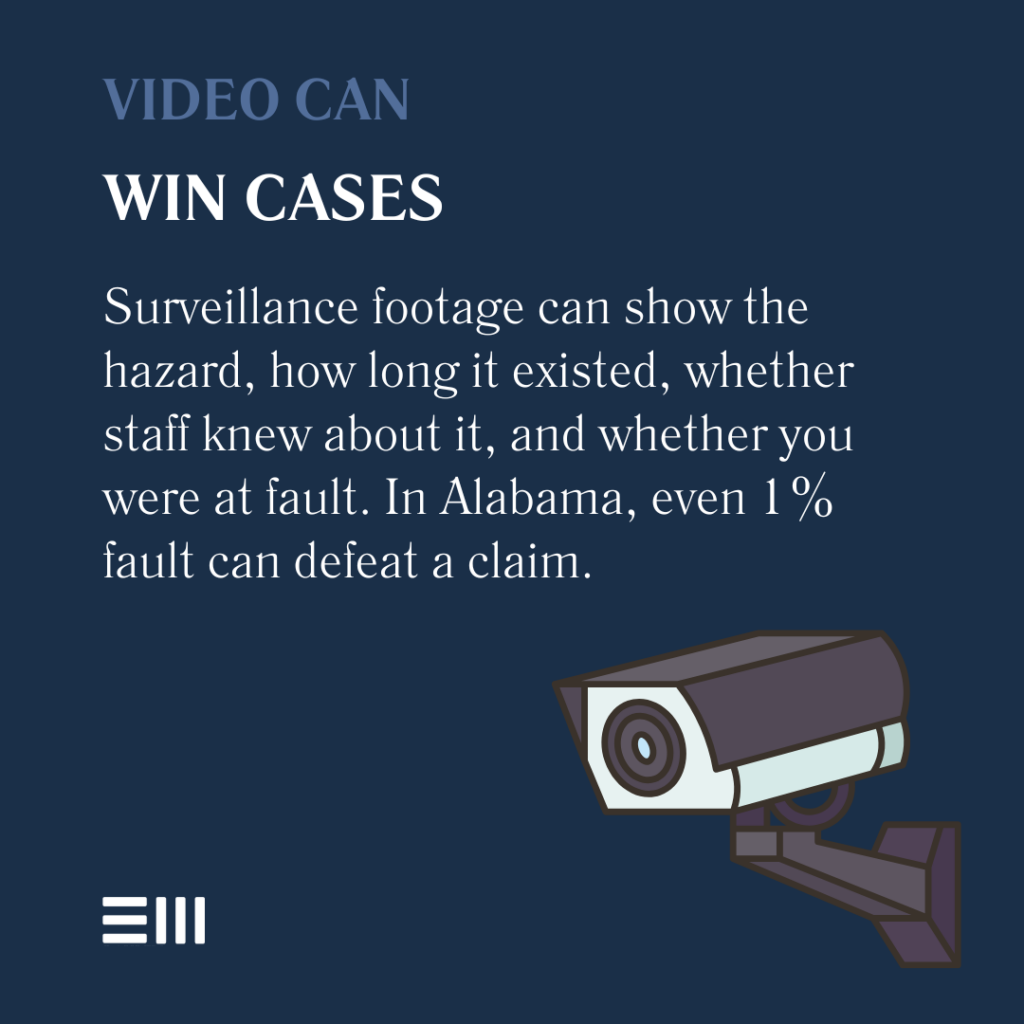
That same video also guards against Alabama’s harshest rule. Because the state follows pure contributory negligence, a property owner who pins even one percent of the blame on you can defeat the entire slip and fall claim. Clear footage answers a handful of the questions that decide a case.
- The hazard existed and looked exactly as you described when you fell.
- How long the danger sat there before anyone cleaned it up or posted a warning.
- That staff walked past it or knew about the condition and did nothing.
- That you were watching where you walked and did not cause your own fall, which matters under Alabama law.
A few seconds of recording can carry more weight than a stack of written statements. The trouble is keeping that recording alive long enough to use it.
How Fast the Footage Disappears
Security systems are built to record over themselves, not to preserve evidence for an injured customer.
A busy retailer running continuous loops may hold video for a month, while a small shop with limited storage can lose it within days, and almost no business volunteers to keep a copy unless someone asks.
The two-year window Alabama gives you to file a lawsuit means little when the footage is gone in the first few weeks.
That gap between how long you have to sue and how long the video survives is where most cases quietly fall apart. A few terms come up repeatedly once that race begins.
- Constructive Notice: A finding that an owner should have known about a hazard because it existed long enough to be discovered.
- Spoliation: The loss, destruction, or alteration of evidence that a party had a duty to preserve.
- Adverse Inference: A jury instruction allowing jurors to assume destroyed evidence would have hurt the party that lost it.
- Preservation Letter: A written demand that puts a business on notice to keep specific evidence such as video footage.
Understanding these terms is the difference between reacting too late and moving while the recording still exists. The next step is making sure the business cannot erase it.
What Happens When a Business Will Not Hand Over the Video?
Many companies refuse to share footage voluntarily, since the same video that helps you tends to hurt them.
The way to stop the loop from erasing it is a preservation letter, a written demand that tells the business to hold all video from the day of your fall, which also creates a record that the company was on notice. Once that letter lands, deleting the footage carries real legal risk.
Alabama treats the destruction of evidence seriously, defining spoliation as an attempt to suppress or destroy material evidence favorable to the other side.
When a business erases video after it had reason to anticipate a claim, a court can impose sanctions that range from instructing the jury to assume the footage would have helped you to limiting the defense or, in severe cases, entering judgment.
The Alabama Supreme Court weighs several factors when deciding, including the importance of the lost evidence and the culpability of the party that lost it, as laid out in Story v. RAJ Properties.
Protecting yourself starts with quick, concrete steps after the accident.
- Report the incident in writing so the business has a dated record that an injury occurred.
- Send a preservation letter that demands the company hold all video from the day of the fall.
- Note every camera you saw near the spot, since one angle often captures what another misses.
- Contact a lawyer quickly who can subpoena the footage once a claim is underway.
Each step closes a door that the defense might otherwise use to make the video disappear. Acting within days rather than weeks is what keeps that evidence in play.
Frequently Asked Questions About Video Surveillance in Alabama Injury Cases
The questions below come up often after a fall in a store or parking lot, and clear answers help you act before the footage is gone.
How Long Do Stores Keep Security Footage in Alabama?
Most businesses keep security video for 30 to 90 days, and some high-traffic systems overwrite it within 24 to 48 hours. No general law forces a private business to hold it longer, which is why a prompt written request matters.
Can Surveillance Footage Prove a Slip and Fall?
It often can, because video can show that the hazard existed, how long it sat there, and that you were not at fault. That last point carries extra weight in Alabama, where any fault on your part can bar your recovery.
What if a Business Will Not Give Me the Video after an Accident?
A preservation letter puts the company on notice to keep the footage, and once a claim is filed your attorney can subpoena it. If the business destroys it after being warned, a court can sanction the company for spoliation.
How Soon Should I Request Footage after an Injury?
As soon as possible, ideally within the first few days, since loop recording can erase the video long before your other evidence is ready. The sooner a preservation demand reaches the business, the better your odds of keeping it.
The Footage That Proves Your Case Is Already on a Countdown
Every day that passes after a fall is another day the recording that could prove your case edges closer to being erased, and no insurance company is going to remind you of that.
Our experienced personal injury attorneys here at Baxley Maniscalco move fast to send preservation demands, identify every camera that may have captured the incident, and secure the footage before a business can record over it.
We use that evidence to establish the property owner’s fault and to shut down the contributory negligence arguments that defeat so many Alabama claims.
Reach out today to schedule a free consultation while the video that supports your case still exists.
Can't find what you're looking for? Search our site below.