
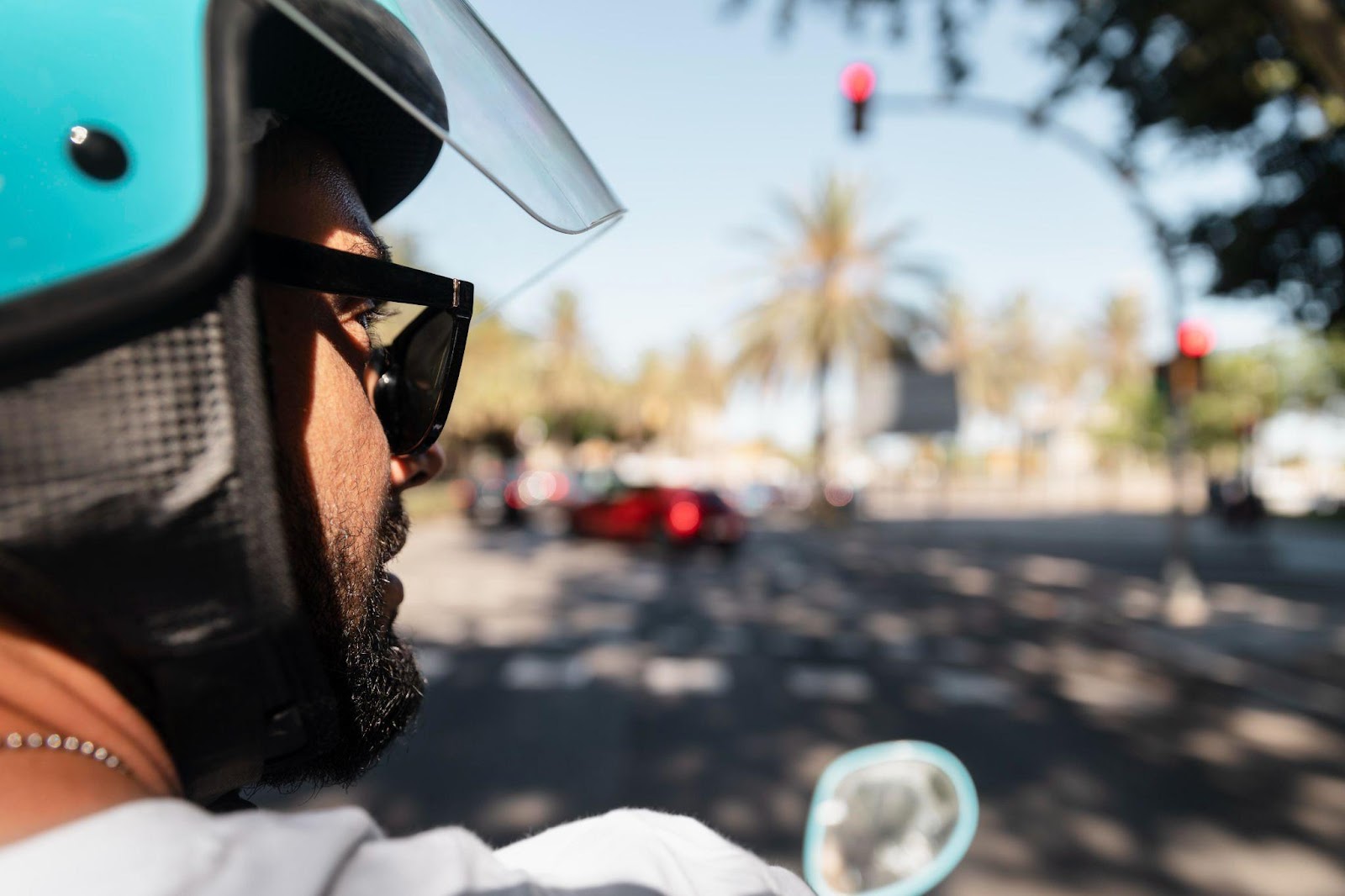
Alabama motorcyclists watch cars creep forward in gridlocked traffic while they sit idling in 95-degree heat, their engines adding warmth to already sweltering conditions.
The space between lanes beckons like an escape route, but taking it could cost riders hundreds in fines and create liability nightmares.
Understanding Lane Filtering Laws
Lane filtering refers to motorcycles moving between lanes of stopped or slow-moving traffic, typically at intersections or in heavy congestion. Unlike lane splitting at higher speeds, filtering occurs when traffic is essentially stationary.
Alabama law provides no explicit authorization for lane filtering, placing it in a legal gray area that effectively prohibits the practice.
The state’s traffic code requires all vehicles, including motorcycles, to remain within marked lanes except when passing according to standard rules.
This stance puts Alabama among the majority of states maintaining traditional lane requirements for all vehicles regardless of size.
Current Legal Status
The question “Is lane filtering legal in Alabama?” has a clear answer: no, the practice remains illegal under current state law.
Motorcyclists must follow the same lane usage rules as other vehicles.
- Traffic violations apply when riders filter.
- Reckless driving charges may result.
- Insurance complications arise after accidents.
- Liability issues increase for filtering riders.
- Citation costs range $100-$300.
- Point accumulations affect records.
These consequences reflect Alabama’s conservative approach to motorcycle regulations. Officers retain discretion but generally enforce lane rules consistently.
Understanding Alabama’s at-fault insurance system helps riders grasp liability implications.
Filtering Versus Splitting Differences
Understanding why “is lane filtering legal in Alabama” matters requires distinguishing between practices. These differ significantly in execution and risk.
- Speed limits keep filtering under 15 mph.
- Stopped traffic provides filtering environment.
- Intersection focus concentrates activity.
- Safety arguments drive advocacy.
- Temperature relief motivates riders.
Proponents argue these characteristics make filtering safer than remaining stationary, where rear-end risks exist.
Lane Splitting Distinctions
Splitting involves higher speeds and moving traffic. California remains the only state permitting splitting, though several states consider filtering separately.
When asking “Is lane filtering legal in Alabama?” remember these distinctions influence legislative discussions.
Safety Considerations
Safety data helps contextualize the ongoing debate. Research presents mixed findings on the impacts of filtering.
International studies show potential benefits, including reduced rear-end collisions and decreased congestion. However, American traffic patterns differ from those in countries where filtering is common.
This difference influences why “is lane filtering legal in Alabama” remains a no.
Alabama’s prohibition reflects concerns about driver awareness. Most drivers don’t anticipate motorcycles between lanes, creating dangerous situations when riders attempt illegal filtering.
Penalties for Violations
Alabama motorcyclists attempting lane filtering face consequences beyond citations. Understanding penalties helps make informed decisions.
- Moving violations appear permanently on records.
- Insurance increases follow citations.
- Legal liability shifts against filtering riders.
- Criminal charges possible for aggressive attempts.
- License points accumulate toward suspension.
- Court costs add to fines.
Accidents while filtering complicate situations. Under Alabama’s contributory negligence, any fault bars recovery, and illegal filtering guarantees fault assignment.
This reality makes “Is lane filtering legal in Alabama?” a critical question for riders. Understanding how contributory negligence affects damages is essential for motorcyclists.
Future Legislation Prospects
The motorcycle community continues discussing whether filtering should become legal. Several factors influence this conversation.
Advocacy groups highlight benefits including reduced rear-end exposure, decreased overheating, and improved traffic flow. Opponents cite safety concerns and enforcement challenges.
Other states’ attempts provide models for potential bills, typically including speed restrictions and safety requirements. However, no current Alabama legislation addresses filtering.
Frequently Asked Questions About Lane Filtering in Alabama
Riders frequently ask about filtering legality and related motorcycle laws when wondering, “Is lane filtering legal in Alabama?”
Can Motorcycles Filter at Red Lights?
No, filtering remains illegal at red lights where traffic stops completely. Motorcycles must maintain lane position like other vehicles, regardless of conditions.
What Should Riders Do in Heavy Traffic?
Remain in lane,s maintaining safe distances. Use proper hot-weather gear rather than attempting illegal filtering. Consider alternate routes during congestion.
Will Alabama Legalize Filtering Soon?
Future legislation remains possible but unlikely in the near term. No current bills address filtering, with past focus on helmet laws instead.
How Do Police Enforce Prohibitions?
Officers issue citations for improper lane usage or reckless driving. Enforcement varies but increases in high-traffic areas.
What About Rear-End Collision Risks?
Legal lane position strengthens injury claims compared to illegal filtering. Proper positioning preserves rights in accidents. Learn about what happens when both drivers share fault and why lane position matters.
Let Justice Roll
Understanding that lane filtering isn’t legal in Alabama helps riders avoid citations and preserve their legal rights. While laws seem restrictive, following them ensures a strong legal standing if accidents occur.
Our experienced motorcycle accident attorneys here at Baxley Maniscalco help riders navigate Alabama’s traffic laws and protect their rights after accidents.
Don’t let confusion about filtering laws compromise your position. Whether facing citations or accidents, our team understands motorcycle-specific issues and fights for riders’ rights.
If you’ve been injured in an accident because of illegal lane filtering, feel free to get in touch today for a free, confidential consultation about your concerns and to learn how we can secure the compensation you rightfully deserve.
Can't find what you're looking for? Search our site below.