

Nearly half of parents say they have read through their teenager’s text messages and call records, and about one in six use tools to track a child’s location.
Inside a single household, that’s ordinary parenting. When two parents share custody, the same phone turns into one of the most contested objects in the case.
A device meant to keep a child safe can quietly become a tool for watching the other parent, controlling contact, or building a case.
Alabama law draws real lines around what a parent may monitor, record, and use in court, and crossing them can damage the very custody position a parent hoped to protect.
When Monitoring Crosses into Control
A parent generally has the right to supervise their own minor child’s phone, set parental controls, and know where the child is.
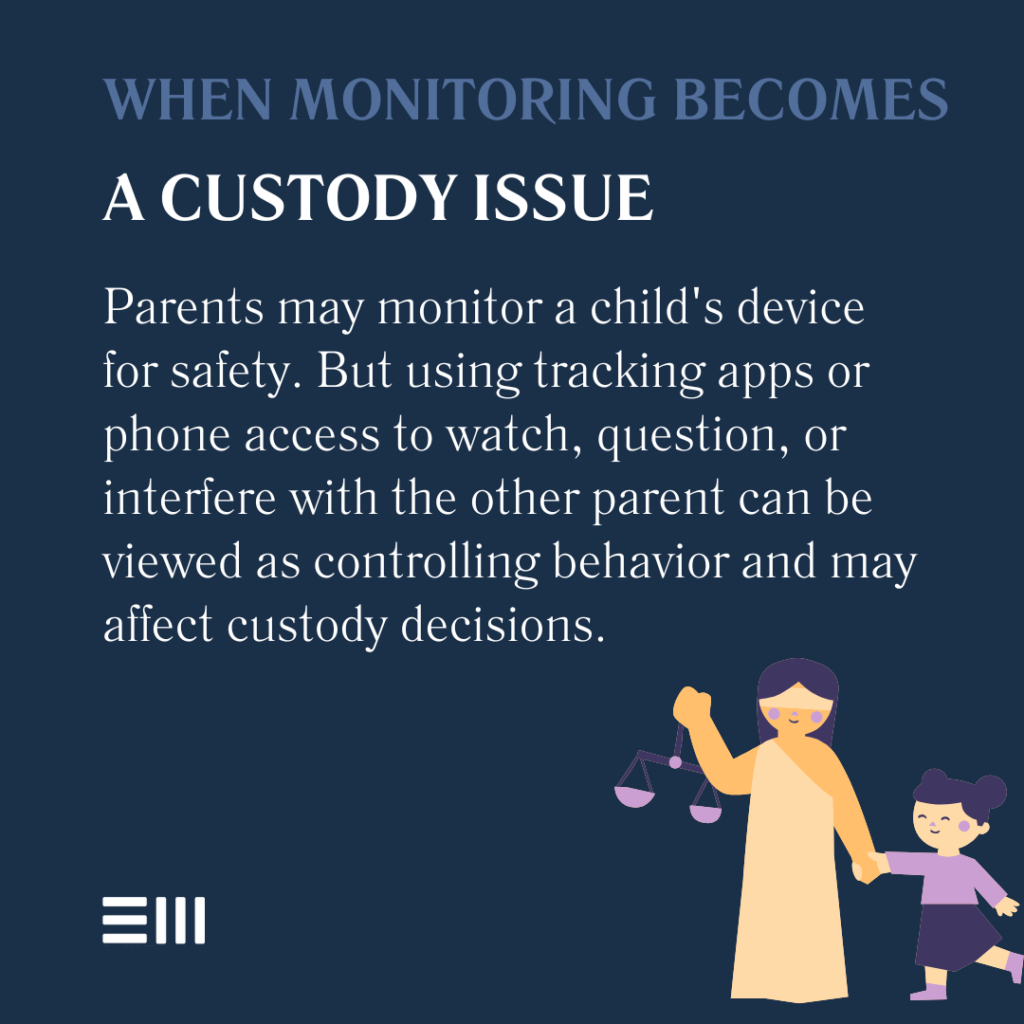
The problem starts when that oversight stops being about the child and starts being about the other household. Tracking a child’s location during the other parent’s time can function as surveillance of that parent, and courts notice the difference.
Alabama decides custody by the best interest of the child, and one factor judges weigh is each parent’s willingness to support the child’s relationship with the other parent.
A pattern of custody behavior that uses a phone to monitor, interrupt, or interfere can read as controlling rather than protective. The signals below tend to draw judicial concern.
- Tracking continues during the other parent’s time in a way that watches that parent rather than the child.
- The child is questioned about the other parent’s home, guests, or activities after every visit.
- Phone access is used to interrupt the child’s time or relationship with the other parent.
- The monitoring feeds conflict rather than any honest concern for the child’s safety.
A judge who sees a phone used as a leash often turns that conduct back on the parent responsible for it. Reasonable safety monitoring is one thing, while using a child’s device to manage the other parent is another.
Reading the Child’s Texts and Recording Calls
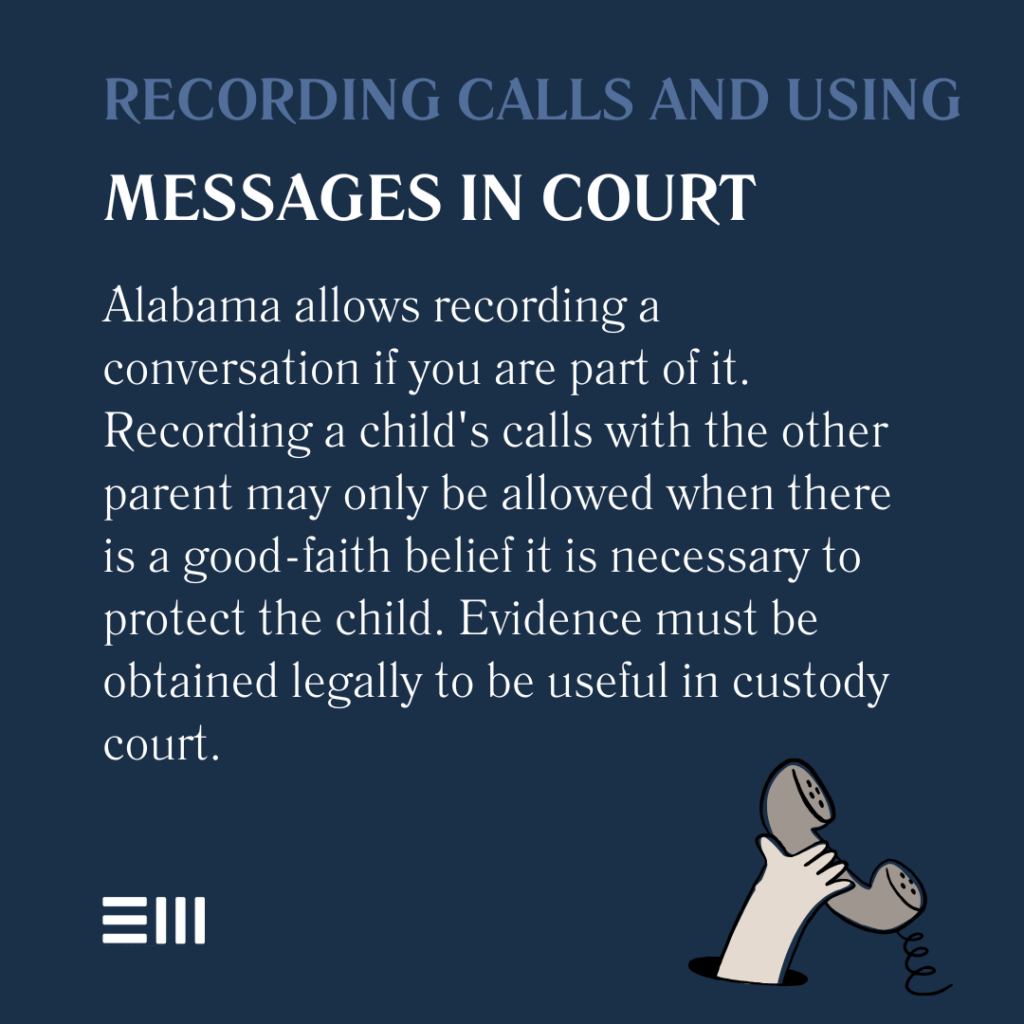
Recording is where parents most often step over a legal line without realizing it. Alabama is a one-party consent state under its criminal eavesdropping statute, which means you may lawfully record a conversation you are personally part of.
Recording or intercepting a conversation you are not part of, such as the child’s private calls with the other parent, is a different act that can carry criminal penalties.
There is a narrow exception that Alabama courts recognize, and it has limits.
In Stinson v. Larson, the Alabama Court of Civil Appeals applied the vicarious consent doctrine, allowing a custodial parent to consent on a child’s behalf to recording the child’s calls when the parent has a good faith, objectively reasonable belief that doing so is needed to protect the child.
Recording out of curiosity or to gather ammunition does not meet that bar. The factors below separate lawful monitoring from the kind that backfires.
- You are part of the conversation you record, which Alabama allows as a one-party consent state.
- You have a real reason to fear for the child rather than curiosity about the other parent.
- The recording protects the child’s welfare which is the test a court uses before admitting it.
- You avoid the other parent’s private accounts since accessing them without permission can be a crime.
A recording made for the right reason can help a child, while one made for the wrong reason can expose a parent to liability and damage their credibility. The motive behind the recording often matters as much as its contents.
Using Phone Records and Messages as Evidence in Court
Messages and call records can be powerful proof in a custody case, showing missed exchanges, hostile communication, or attempts to turn a child against the other parent.
Their value depends entirely on how they were obtained, since evidence gathered by breaking the law can be excluded and can shift a judge’s sympathy to the other side.
A custody modification built on illegally intercepted messages can collapse the moment that problem surfaces.
Understanding the vocabulary helps a parent gather evidence the right way and recognize when the other parent has not. A handful of terms come up repeatedly in these disputes.
- One Party Consent: An Alabama rule letting you record a conversation as long as you take part in it.
- Vicarious Consent: A doctrine allowing a parent to approve recording a child’s call to protect the child’s welfare.
- Parental Interference: Conduct that disrupts a child’s relationship or time with the other parent.
- Best Interest of the Child: The standard Alabama courts use to decide every custody question.
Legally obtained records that show a genuine problem can carry real weight with a judge. The safest path is to collect evidence with guidance rather than improvise and risk losing it.
Frequently Asked Questions About Devices in Alabama Child Custody Cases
The questions below are the ones parents search when a phone becomes a flashpoint, and clear answers help you avoid a costly misstep.
Can My Ex Track My Child during My Custody Time?
A parent can usually track their own minor child, but tracking that mainly watches you during your time can be viewed as surveillance and interference. A court weighing the best interest of the child may treat that conduct as controlling rather than protective.
Can a Parent Read All of a Child’s Texts?
A parent generally may monitor their own minor child’s device, since the child is not an adult with full privacy rights against a parent. Using that access to spy on or harass the other parent, or to access the other parent’s accounts, is where legal trouble begins.
Can Phone Records Be Used in Custody Court?
Yes, when they are obtained legally, messages and call records can serve as evidence of interference, manipulation, or missed parenting time. Records gathered through illegal interception can be excluded and can hurt the parent who collected them.
Is It Legal to Record My Child’s Calls with the Other Parent?
It can be, but only when you have a good faith, reasonable belief that recording is needed to protect the child. Alabama courts apply that test through the vicarious consent doctrine, and recording for other reasons risks both exclusion and liability.
When a Child’s Phone Becomes a Battleground, Strategy Matters
A smartphone can hold the best evidence in a custody case or the mistake that unravels it, and the difference often comes down to a few legal lines most parents never see.
Our experienced family law attorneys here at Baxley Maniscalco help you understand what you may lawfully monitor, how to gather evidence that a court will actually accept, and how to respond when the other parent uses a child’s device to surveil or interfere.
We keep the focus where Alabama law keeps it, on the best interest of your child rather than the conflict between two adults.
Reach out today to schedule a confidential consultation before a phone turns a hard situation into a harder one.
Can't find what you're looking for? Search our site below.