

The average couple waits six years before seeking help for marital problems—six years of growing distance, unresolved arguments, and mounting frustration.
By the time many couples finally sit down with a therapist, roughly one-third end counseling within the first few sessions because divorce has already become inevitable.
Alabama ranks among the states with the highest divorce rates nationally, with approximately 3 divorces per 1,000 residents each year.
Yet for every couple that files, many more remain uncertain whether their struggles represent normal challenges or signs you should get divorced.
Recognizing when a marriage has reached its breaking point requires honest evaluation of patterns, behaviors, and whether genuine repair remains possible.
Patterns That Signal Deeper Problems
Some marital difficulties reflect temporary stress, while others reveal fundamental incompatibilities that may never be resolved, and distinguishing between them helps couples make informed decisions about their future.
Every marriage experiences conflict and periods of disconnection. The question isn’t whether problems exist but whether underlying patterns point toward reconciliation or continued deterioration.
When certain behaviors become entrenched despite genuine efforts to change, they often represent signs you should get divorced rather than temporary rough patches.
Warning patterns that frequently precede divorce include:
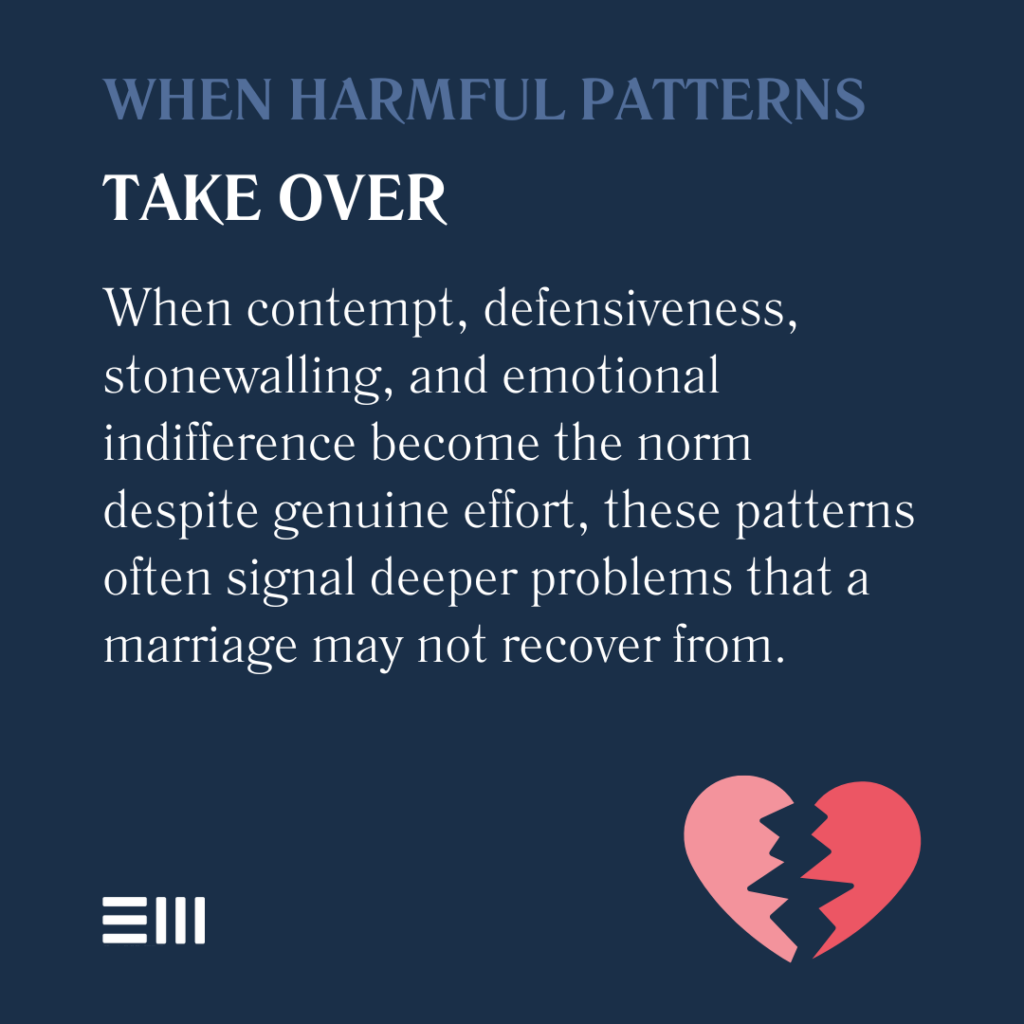
- Contempt has replaced respect. Eye-rolling, sarcasm, name-calling, and mockery indicate one or both partners no longer value the other as worthy of basic dignity.
- Defensiveness dominates every conversation. When discussions become about self-protection rather than understanding, productive communication becomes impossible.
- Stonewalling replaces engagement. Shutting down, refusing to discuss issues, or physically leaving during disagreements prevents any resolution.
- Indifference has set in. Anger suggests you still care, but complete emotional detachment often signals the relationship has already ended internally.
- Resentment has accumulated beyond repair. Years of unaddressed grievances create walls that even skilled therapists struggle to dismantle.
These patterns, identified by relationship researchers as particularly destructive, often indicate the marriage has moved past what couples can repair on their own.
When Professional Help Hasn’t Worked
Marriage counseling saves many relationships, but it cannot save all of them, and understanding when therapy has reached its limits helps couples recognize when divorce may be the healthier path forward.
Counseling works best when both partners remain committed to change and enter therapy before damage becomes irreversible.
Research indicates that even the most effective couples therapy achieves roughly a 70% success rate—meaning nearly one-third of couples who genuinely try cannot save their marriages.
When therapy fails despite sincere effort, that failure itself becomes one of the signs you should get divorced.
Indicators that counseling has reached its limits include:
- One partner refuses to participate. Effective therapy requires both people to engage honestly and work toward meaningful change.
- Six months of effort shows no improvement. Most therapists recommend evaluating progress after several months of consistent, weekly sessions.
- Core issues remain unchanged. If the same fundamental problems persist despite professional intervention, the relationship may lack foundation for repair.
- Sessions become battlegrounds. Counseling focused on blaming rather than solving problems rarely leads to lasting improvement.
- External factors are the only reason to stay. When motivation comes from fear, finances, or children rather than genuine desire to rebuild, the marriage may already be over emotionally.
Recognizing when you’ve given the marriage your best effort provides clarity about next steps, whether that means legal separation or moving toward filing for divorce.
Safety Concerns That Demand Immediate Action
Some situations make staying in a marriage dangerous, and recognizing these circumstances helps protect yourself and your children from harm.
While most unhappy marriages don’t involve physical danger, those that do require immediate attention rather than prolonged deliberation.
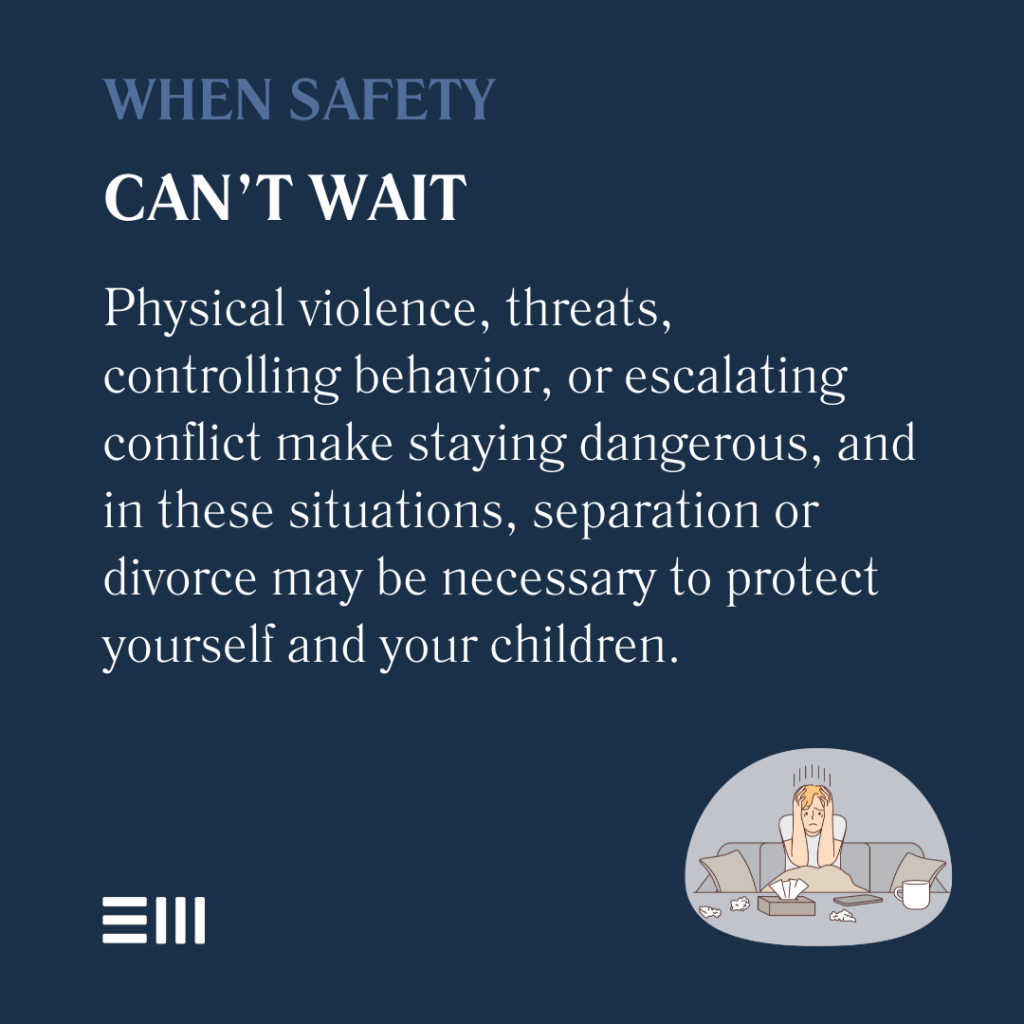
Abuse typically escalates over time, and waiting for improvement often puts victims at greater risk. Safety concerns represent the clearest signs you should get divorced—or at minimum, separate—without delay.
Situations requiring immediate action include:
- Physical violence of any kind. Hitting, pushing, choking, or any physical aggression signals danger that typically worsens without intervention.
- Threats against you, children, or pets. Verbal threats often precede physical violence and should always be taken seriously.
- Controlling behavior limiting your freedom. Monitoring movements, controlling finances, or isolating you from family and friends represents emotional abuse.
- Substance abuse creating unsafe conditions. Active addiction that endangers household members may require separation regardless of other circumstances.
- Escalating conflict patterns. Arguments that have become increasingly volatile suggest potential for eventual physical violence.
If you face any of these situations, prioritizing safety means seeking help immediately rather than hoping circumstances will change.
Financial and Practical Considerations
Beyond emotional factors, practical realities often influence divorce timing, and understanding these considerations helps you prepare for the transition ahead.
Deciding to divorce involves more than emotional readiness—it requires understanding how Alabama divides property, potential alimony obligations, and child custody implications.
While financial concerns shouldn’t trap you in a harmful marriage, realistic planning helps ensure you can support yourself and your children after separation.
Practical factors to evaluate include:
- Your financial independence. Assess whether you can support yourself and understand what spousal support might be available.
- Impact on children. Consider how divorce will affect your kids and what custody arrangement would serve their best interests.
- Housing options. Determine where you would live and understand the implications of moving out of the marital home.
- Career and health insurance. Evaluate how divorce might affect employment benefits and healthcare coverage.
- Debt and asset division. Understand how Alabama’s equitable distribution system would divide what you own and owe.
Addressing these practical matters doesn’t mean you’re giving up—it means you’re being responsible about a major life decision.
Frequently Asked Questions About Ending a Marriage
The following questions address concerns Alabama residents most commonly raise when considering whether divorce is the right choice.
How Do I Know if It’s Just a Rough Patch or Something More Serious?
Rough patches typically involve specific stressors—job loss, health issues, new baby—and both partners remain committed to working through difficulties together.
More serious problems involve persistent patterns like contempt, chronic disconnection, or fundamental value conflicts that don’t improve despite sincere effort over extended periods.
Should I Stay Together for the Children?
Children benefit from living in low-conflict households, whether that means two parents together or apart. The question isn’t simply whether to stay but whether staying creates a healthier environment than separating.
What if I’m Not Sure I’ve Tried Everything?
Consider whether you’ve genuinely engaged in professional counseling, honestly communicated your needs and concerns, and given efforts sufficient time to work. If you’ve done these things and problems persist, you may have reached the point where further effort won’t change outcomes.
Can I Get Divorced in Alabama if My Spouse Doesn’t Want To?
Yes. Alabama allows no-fault divorce based on irretrievable breakdown of the marriage. Your spouse’s agreement affects whether the divorce is contested or uncontested, but cannot prevent you from obtaining a divorce.
How Long Does the Divorce Process Take in Alabama?
Alabama requires a minimum 30-day waiting period. Uncontested divorces typically conclude within 2-3 months, while contested divorces involving disputes over property, custody, or support may take 6-12 months or longer.
These answers provide general guidance, but every situation involves unique circumstances requiring individualized analysis.
Your Next Chapter Starts with the Right Guidance
Recognizing signs you should get divorced is difficult, and taking action can feel overwhelming.
Our experienced family law attorneys here at Baxley Maniscalco provide compassionate guidance to help you understand your options, protect your interests, and navigate Alabama’s divorce process with confidence.
Whether you’re certain about your decision or still evaluating your situation, contact us for a confidential consultation.
Can't find what you're looking for? Search our site below.