
The most dangerous moment in a road debris crash is often the one where nothing hits you. A recent AAA Foundation study found that road debris was likely a factor in more than 319,000 crashes between 2018 and 2023, causing over 32,000 injuries and 433 deaths.
While nearly 90 percent of those crashes involved striking or being struck by an object, the drivers who swerved to avoid debris accounted for about 25 percent of injuries and 49 percent of the deaths.
An unsecured load of gravel, a mattress, a ladder, or a tire tread becomes a projectile at highway speed. When one of them changes your life, the question that decides your recovery is who put it there.
Alabama Law Requires Loads to Stay Put
Alabama does not leave cargo securement to common sense. Two statutes address it directly, and both can matter in a civil claim.
Under Section 32-5-76 of the Alabama Code, no vehicle may be driven or moved on any highway unless it is constructed or loaded to prevent any part of its load from dropping, sifting, leaking, or otherwise escaping.
The statute also makes willfully spilling gravel, rock, slag, or bricks onto a roadway a criminal offense. A companion provision, Section 32-5-75, requires that loads such as logs, lumber, pulpwood, baled cotton, and hay be fastened with cables or chains.
A violation does not automatically win your case, but proof that a driver hauled an unsecured load in breach of these rules is powerful evidence of negligence.
More Than One Party May Be Responsible
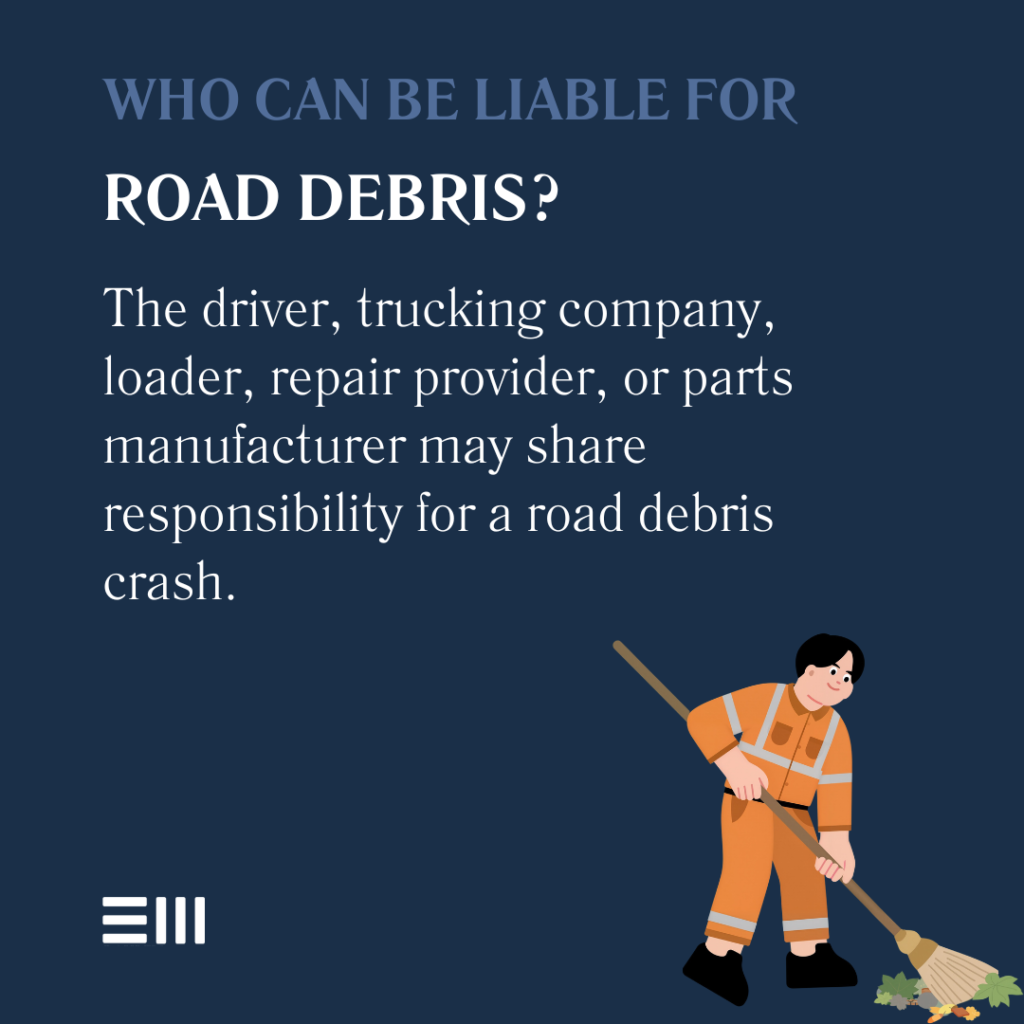
The driver hauling the load is the obvious defendant. In many debris cases, they are not the only one, and identifying every responsible party can make the difference between partial and full recovery.
Potentially liable parties include the following:
- The driver. The person operating the vehicle bears primary responsibility for confirming a load is secure before moving.
- The trucking or delivery company. An employer may be liable for a driver acting within the scope of employment, and for its own hiring, training, and supervision.
- A separate loading company. Warehouses, shippers, and third-party loaders that packed or strapped the cargo can be liable when they did it badly.
- A maintenance or repair provider. A shop that improperly mounted a wheel or serviced a trailer may answer for parts that come loose.
- A parts manufacturer. When a tie-down strap, hitch, latch, or tire fails, a product liability claim against the maker may exist.
Sorting out who is responsible for an unsecured load takes investigation, because the answer rarely appears on the crash report.
Commercial Trucks Bring Federal Rules Into Play
When the debris came off a commercial truck, the case changes character. Interstate motor carriers operate under federal cargo securement regulations that set specific requirements for tiedowns, working load limits, and inspection.
Those rules require drivers to inspect cargo and securement devices before driving and at intervals during a trip. Violations create a documented standard the carrier failed to meet, which is valuable evidence.
Commercial cases also generate records that ordinary crashes do not, including driver logs, bills of lading, inspection reports, maintenance files, and electronic data from the truck.
Those records are also the first things to disappear, which is why early legal action matters so much in trucking cases.
When the Vehicle That Dropped It Is Gone
Unsecured load cases share a frustrating trait with hit-and-run crashes. Often the load falls, the driver keeps going, and nobody gets a plate number.
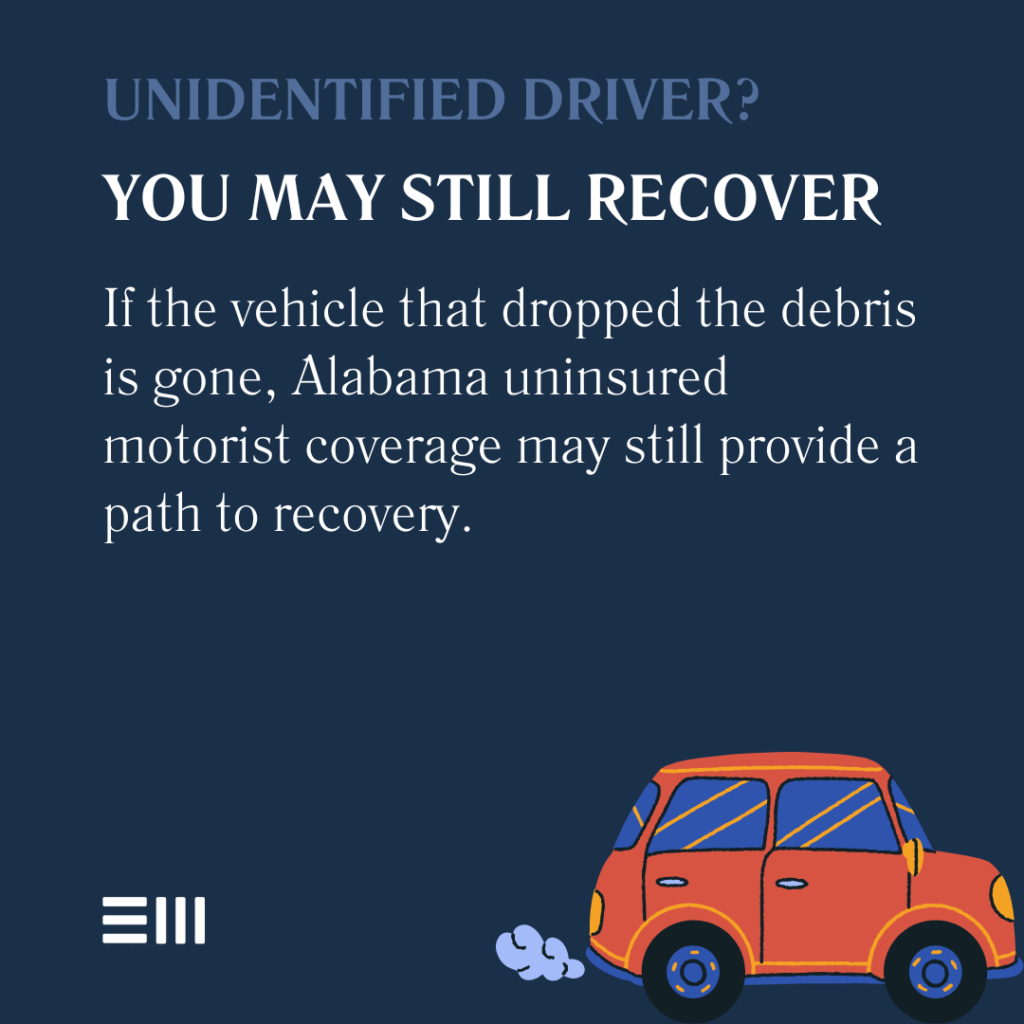
That does not necessarily end your claim. Recovery may come from your own uninsured motorist coverage, which in Alabama does not require physical contact with the unidentified vehicle.
Investigation can also identify the source, since cargo often carries labels, part numbers, or manufacturer markings, and nearby traffic and business cameras may have captured the vehicle.
A government entity responsible for the roadway may bear responsibility in narrow circumstances where a known hazard went unaddressed, though claims against governmental entities carry shorter notice deadlines and special procedures.
An unidentified driver is a reason to investigate quickly rather than a reason to give up.
The Alabama Rule That Threatens These Claims
Debris cases carry a specific vulnerability under Alabama law, and defendants know exactly how to use it. Alabama remains a contributory negligence state, meaning an injured person found even slightly at fault may recover nothing.
Expect the argument that you followed too closely, drove too fast for conditions, should have seen the object sooner, or overreacted by swerving.
That last one is particularly common, even though the AAA data shows evasive maneuvers account for a large share of deaths in these crashes.
Alabama also generally allows two years from the date of injury for a personal injury claim, while the physical evidence, the debris itself, the camera footage, and the vehicle, can be gone within days.
Preserving evidence early is what defeats these arguments later.
Steps to Take After a Debris Crash
What happens in the first hours often determines whether the responsible party is ever identified. A short checklist protects the claim.
- Call the police and report it. A report documenting the object and its position creates the foundation of the case.
- Photograph the debris itself. Capture labels, markings, part numbers, and any brand identifiers before the roadway is cleared.
- Preserve the object if you safely can. The debris may be the single most important piece of evidence you will have.
- Note the vehicle it came from. Record the color, type, company name, and any partial plate, even if it kept going.
- Look for cameras and witnesses. Nearby businesses and passing motorists may have footage that vanishes within days.
- Get medical care right away. A same-day record ties your injuries to the crash and forecloses an easy defense.
Each step builds the record that answers the question of where the object came from.
How Our Firm Builds Road Debris Cases
These claims are investigations before they are lawsuits. Someone has to trace an object back to the vehicle, the load, and the company that put it on the road.
Our experienced personal injury attorneys here at Baxley Maniscalco work to identify every responsible party, from the driver to the loader to a parts manufacturer, and we move quickly to preserve trucking records and camera footage before they are lost.
We handle serious injury and wrongful death claims across Alabama on a contingency basis, so there is no fee unless we recover for you. If falling cargo or road debris caused your crash, a free case review costs you nothing.
Questions Alabama Drivers Are Asking
Road debris crashes raise questions that ordinary collision claims do not. Here are the ones we hear most often.
What If I Never Found Out Whose Load It Was?
You may still recover through your own uninsured motorist coverage, which in Alabama does not require physical contact with the unidentified vehicle. Investigation can also trace debris through labels and part numbers.
Can Someone Other Than the Driver Be Liable?
Yes. A trucking company, a third-party loading company, a repair shop, or a parts manufacturer may share responsibility depending on how the object came loose.
Does It Matter That I Swerved Instead of Hitting the Object?
It should not defeat your claim. Evasive maneuvers are a normal reaction and account for a large share of serious debris crash outcomes, though insurers often argue the swerve was unreasonable.
Is an Unsecured Load Illegal in Alabama?
Yes. Hauling an unsecured load is unlawful because Alabama prohibits driving a vehicle unless it is loaded to prevent any part of the load from escaping, and separate rules require certain loads to be fastened with cables or chains.
How Long Do I Have to File?
Generally two years from the date of injury for a personal injury claim, though claims involving a governmental entity can carry much shorter notice deadlines. Evidence often disappears well before either.
Every crash is different, so reach out if your situation is not covered here.
That Object Came From Somewhere. Let Us Find Out Where.
Debris does not appear on a highway by itself. Someone loaded it, secured it, maintained it, or manufactured the part that failed, and that person or company can be held to account.
Our experienced personal injury attorneys here at Baxley Maniscalco are ready to review your crash and explain your options.
Call us at (256) 770-7232 or reach out through our contact form to schedule a free consultation today.
Can't find what you're looking for? Search our site below.