

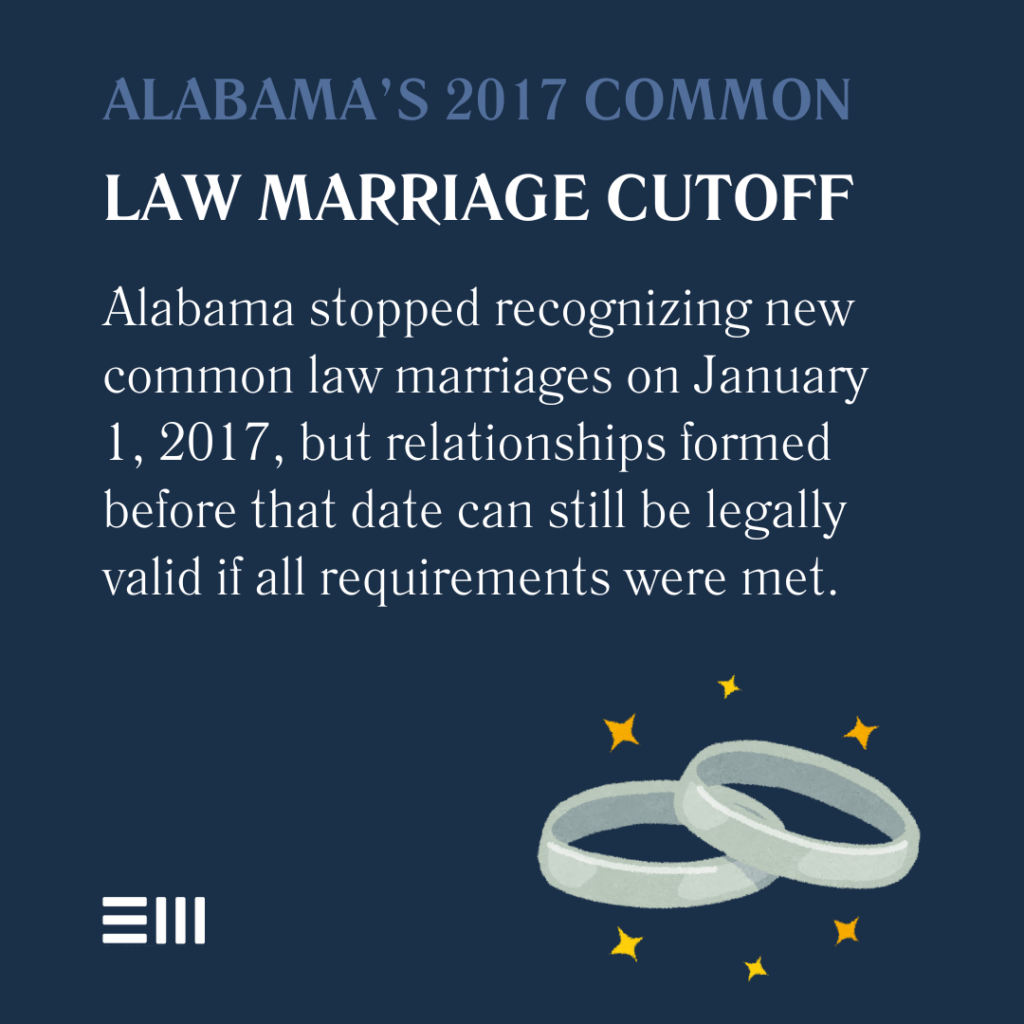
On January 1, 2017, Alabama drew a line in the sand. The state officially abolished the recognition of new common law marriages, joining the overwhelming majority of states that require formal documentation for legal marriage.
But for couples who established their relationships before that deadline, the questions remain complicated.
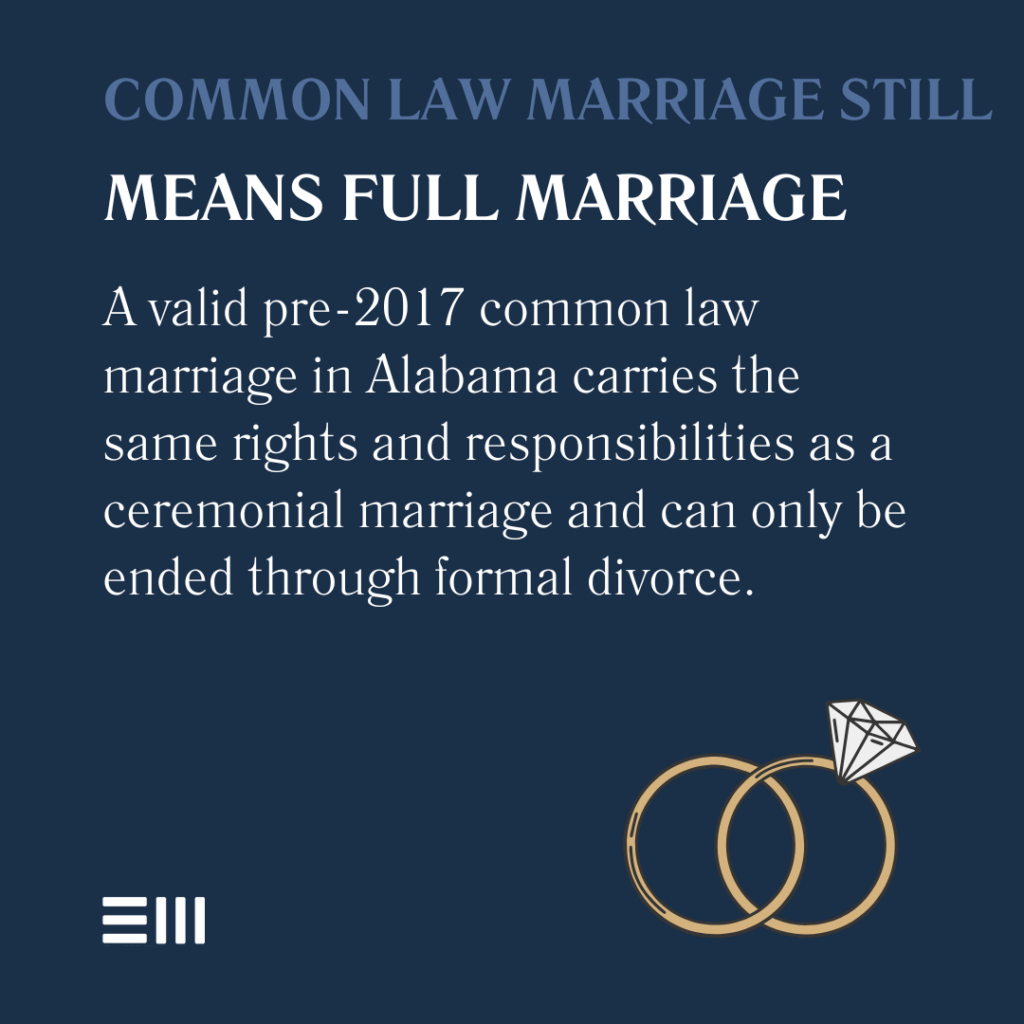
Common law marriages formed prior to 2017 continue to be fully recognized and carry all the same legal rights and responsibilities as ceremonial marriages—including the requirement for formal divorce to end them.
Alabama is now one of only about seven states that still recognize common law marriages in any form, and the 2017 cutoff creates a unique situation where proving when your relationship began matters as much as proving it existed at all.
Understanding common law marriage in Alabama requires navigating both historical requirements and current legal realities.
What Made a Valid Common Law Marriage Before 2017
Alabama courts developed specific criteria for recognizing common law marriages, and understanding these requirements helps couples determine whether their pre-2017 relationship qualifies for legal recognition.
Contrary to popular belief, simply living together—even for decades—never automatically created a common law marriage in Alabama.
The state required couples to meet multiple conditions simultaneously, and the burden of proof falls on whoever claims the marriage exists.
Courts examine the totality of circumstances rather than relying on any single factor.
The essential elements for a valid Alabama common law marriage included:
- Legal capacity to marry. Both partners had to be at least 19 years old (or have parental consent if younger), unmarried, mentally competent, and not closely related by blood.
- Present mutual agreement. Both people had to intend to be married to each other—not engaged, not planning to marry someday, but considering themselves married at that moment.
- Public recognition. The couple had to hold themselves out to family, friends, and the community as husband and wife, not as dating or living together.
- Cohabitation and consummation. The couple had to live together and consummate the relationship, though Alabama law never required any specific length of cohabitation.
Meeting all four elements before January 1, 2017, could establish a valid common law marriage in Alabama that remains legally binding today.
Common Myths About Common Law Marriage in Alabama
Misinformation about common law marriage leads many couples to incorrect assumptions about their legal status, and separating fact from fiction helps people understand their actual rights.
Many Alabamians believe myths about automatic marriage after living together for certain periods or having children together.
These misconceptions can lead to serious problems when relationships end or when one partner dies, leaving survivors without the legal protections they assumed they had.
False rumors about common law marriage are widespread and can cause significant harm.
Common misconceptions include:
- The seven-year myth. No specific time period of cohabitation ever created automatic marriage in Alabama; intent and public recognition mattered more than duration.
- Having children together. Bearing children with someone never established common law marriage; couples with multiple children and decades of cohabitation might still not qualify.
- Sharing a last name. Using the same surname provided evidence of intent but wasn’t required or sufficient on its own.
- Filing joint tax returns. Joint filing supported claims of common law marriage but didn’t create one independently.
- Current cohabitation creates rights. Since 2017, living together regardless of circumstances does not create marital rights in Alabama, no matter how long the relationship lasts.
Understanding what common law marriage in Alabama actually required prevents both false confidence and unnecessary concern about legal status.
Rights and Responsibilities of Common Law Spouses
Couples in valid pre-2017 common law marriages possess exactly the same legal rights and obligations as couples who married through formal ceremonies, and these protections extend across multiple areas of law.
A common law marriage in Alabama isn’t a lesser form of marriage—it’s legally identical to ceremonial marriage once established.
This means common law spouses have full access to Alabama’s family court system for divorce, property division, alimony, child custody, and child support. It also means couples cannot simply walk away from each other; ending a common law marriage requires formal divorce proceedings.
Legal rights available to common law spouses include:
- Property division in divorce. Marital assets acquired during the relationship are subject to equitable distribution under Alabama law.
- Spousal support eligibility. Common law spouses may seek alimony based on the same factors courts consider in any divorce.
- Inheritance rights. Surviving common law spouses can inherit under Alabama’s intestacy laws if their partner dies without a will.
- Social Security benefits. Valid common law marriages qualify for survivor benefits through Social Security, providing crucial financial protection.
- Medical decision-making. Common law spouses have the authority to make healthcare decisions for incapacitated partners.
These protections make proving a pre-2017 common law marriage in Alabama worth pursuing when evidence supports its existence.
How to Prove a Common Law Marriage Existed
When common law marriages must be established for legal purposes—whether for divorce, inheritance, or benefits claims—gathering appropriate evidence becomes critical to success.
Courts require clear and convincing proof that a common law marriage existed, which is a higher standard than typical civil cases.
Since common law marriages by definition lack marriage licenses and certificates, couples must compile other documentation demonstrating they met all required elements before the 2017 cutoff. The stronger the evidence, the more likely courts will recognize the marriage.
Evidence that supports common law marriage claims includes:
- Joint tax returns. Federal and state returns filed as married filing jointly demonstrate intent to be recognized as spouses.
- Shared property documents. Deeds, leases, and vehicle titles listing both partners support claims of marital unity.
- Insurance beneficiary designations. Naming each other as spouses on life insurance and retirement accounts shows mutual recognition.
- Witness testimony. Friends, family members, and community members can testify about how the couple presented their relationship.
- Affidavits of common law marriage. Notarized statements attesting to the marriage, while not creating the marriage, provide strong documentation.
Working with an attorney experienced in common law marriage in Alabama helps ensure you gather the right evidence and present it effectively.
Frequently Asked Questions About Common Law Marriage in Alabama
The following questions address concerns Alabama residents most commonly raise about common law marriage recognition and rights.
Can I Still Enter into a Common Law Marriage in Alabama?
No. Alabama Code § 30-1-20 abolished common law marriage effective January 1, 2017. Couples who began relationships after that date cannot establish common law marriages regardless of how long they live together or how they present themselves publicly.
Since 2019, Alabama has allowed couples to marry by filing a marriage certificate without requiring a ceremony or license.
What if We Started Living Together Before 2017 but Didn’t Consider Ourselves Married Until Later?
Timing matters significantly. The mutual intent to be married must have existed before January 1, 2017, not just cohabitation. If you lived together before the cutoff but didn’t consider yourselves married until afterward, you likely don’t have a valid common law marriage under Alabama law.
Do I Need a Divorce to End a Common Law Marriage?
Yes. A valid common law marriage in Alabama requires formal divorce proceedings to dissolve, just like any other marriage. Simply separating or moving apart doesn’t end the legal relationship, and you would technically remain married until a court grants a divorce.
Will Other States Recognize My Alabama Common Law Marriage?
Generally, yes. Under the Full Faith and Credit Clause of the U.S. Constitution, other states typically recognize valid marriages from Alabama, including common law marriages. However, you may need to prove the marriage existed if questions arise after relocating.
What Rights Do Unmarried Couples Have in Alabama Today?
Couples who don’t have valid pre-2017 common law marriages and haven’t formally married have limited legal protections. They may wish to consider cohabitation agreements, wills, healthcare directives, and other legal documents to protect their interests.
These answers provide general guidance, but each situation requires individualized legal analysis.
Protect Your Rights with Baxley Maniscalco
Whether you need to prove a common law marriage exists, navigate divorce from a common law spouse, or understand your rights as an unmarried couple, our experienced family law attorneys here at Baxley Maniscalco can help.
We understand Alabama’s unique history with common law marriage and know how to gather evidence, present cases effectively, and protect our clients’ interests.
Contact us today for a confidential consultation, and let us help you understand your legal options.
Can't find what you're looking for? Search our site below.