

For most married couples, the family home is not just where they live — it is the single largest financial asset they share.
The median home value in Alabama sits around $230,000, and for many households, the equity tied up in that property represents years of mortgage payments, renovations, and accumulated wealth.
When a marriage ends, the question of who keeps the house — or whether it must be sold — can shape each spouse’s financial future for a decade or more.
Understanding what happens to the family home during a divorce in Alabama starts with knowing how the state’s courts approach property division.
Equitable Distribution and Why It Doesn’t Mean a 50/50 Split
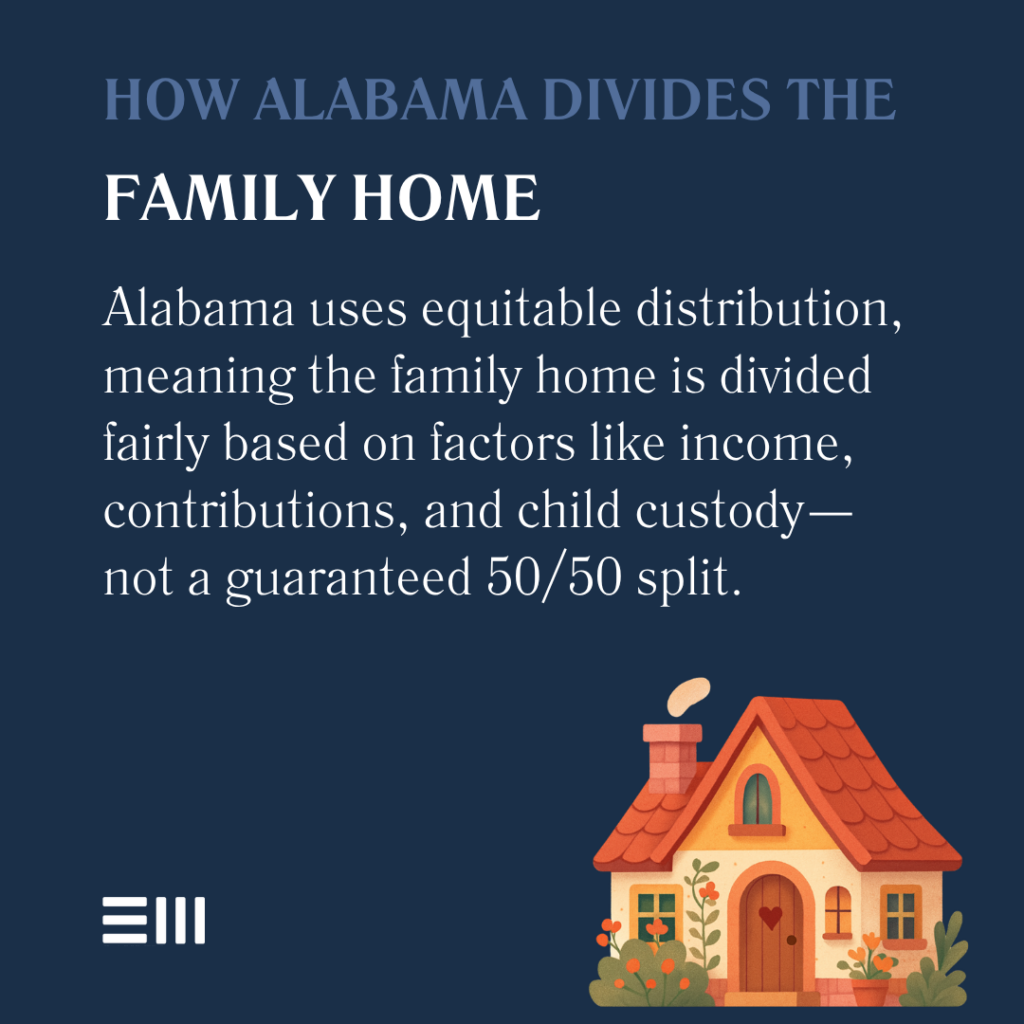
Alabama is an equitable distribution state, which means a judge divides marital property in a manner that is fair — but not necessarily equal. The family home is subject to this standard just like any other asset acquired during the marriage.
Unlike community property states that default to a strict half-and-half split, Alabama courts have broad discretion to weigh a range of factors before deciding what happens to the house.
Those factors typically include the length of the marriage, each spouse’s income and earning potential, contributions to the home (including non-financial contributions like homemaking and childcare), the custody arrangement for minor children, and whether either spouse engaged in marital misconduct such as adultery or abandonment.
Because no two marriages are identical, no two outcomes look exactly the same.
Three Common Outcomes for the Family Home
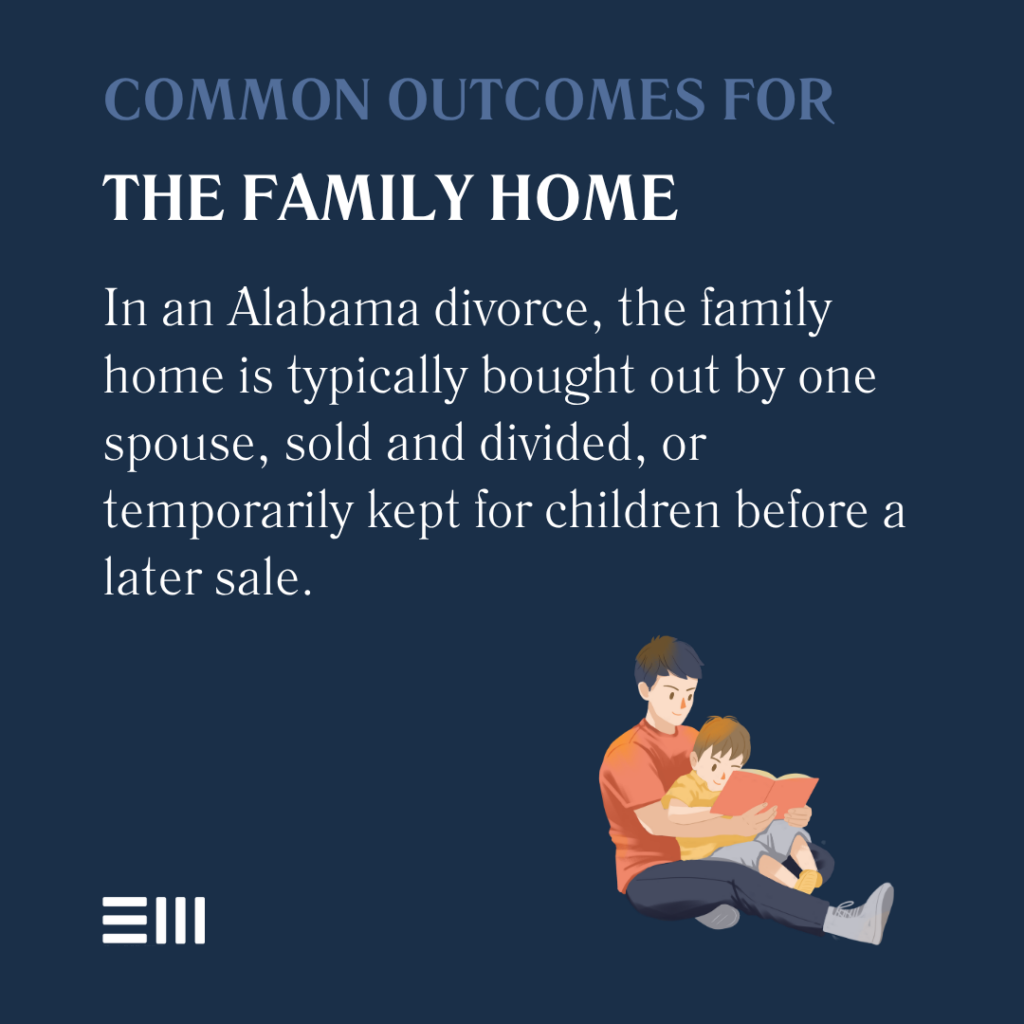
When determining what happens to the family home during a divorce in Alabama, courts and divorcing couples generally arrive at one of three resolutions. Each option carries its own financial and practical trade-offs, and the right choice depends on the specific circumstances of the marriage.
- One spouse buys out the other. The spouse who wants to remain in the home refinances the mortgage in their name alone and compensates the other spouse for their share of the equity, often by trading other marital assets like retirement accounts or cash savings.
- The home is sold and the proceeds divided. If neither spouse can afford to maintain the property independently, or if a clean financial break is preferred, the court may order the house sold and the net proceeds split according to the equitable distribution factors.
- Deferred sale with continued co-ownership. In cases involving minor children, a judge may allow the custodial parent to remain in the home until the youngest child reaches a certain age, at which point the property is sold and the equity divided.
The buyout route is the most common when one spouse has the income or assets to take over the mortgage. However, if neither party can qualify for refinancing on a single income, a sale often becomes the most practical path forward.
When One Spouse Owned the Home Before the Marriage
Not every family home is automatically considered marital property. If one spouse purchased the house before the wedding and kept it titled solely in their name, it may qualify as separate property — meaning the other spouse has no claim to it.
However, the line between separate and marital property blurs quickly in Alabama.
If both spouses contributed to the mortgage during the marriage, paid for renovations with joint funds, or commingled marital income with the property’s upkeep, a court may treat some or all of the home’s value as marital property.
Even a home that started as one spouse’s separate asset can become subject to equitable distribution once marital dollars flow into it. Documenting the source of funds used toward the property is one of the most important steps in protecting a separate property claim.
Can One Spouse Force the Sale of the Home?
This is one of the most common questions that arises when couples disagree about what happens to the family home during a divorce in Alabama. The short answer is that neither spouse can unilaterally force a sale — but the court can.
If the spouses cannot reach an agreement and a judge determines that selling the home is the most equitable solution, the court has the authority to order a sale regardless of whether both parties consent.
On the other hand, a spouse who wants to keep the home can strengthen their position by demonstrating the financial ability to maintain mortgage payments, property taxes, and upkeep on a single income.
Showing that remaining in the home serves the best interests of the children — particularly when it preserves school enrollment and neighborhood stability — also carries significant weight with Alabama judges.
Frequently Asked Questions About the Family Home in an Alabama Divorce
The family home raises more practical questions than almost any other aspect of divorce. Below are answers to the concerns we hear most often from clients navigating this process.
Who Keeps the House in a Divorce in Alabama?
There is no automatic rule granting either spouse the house. The court considers factors like income, custody of minor children, each spouse’s contributions, and overall fairness.
In many cases, the custodial parent receives the home — but only if they can demonstrate the financial ability to maintain it.
Do You Have to Sell the House in a Divorce?
No. Selling is one option, but not the only one. Spouses can negotiate a buyout, agree to a deferred sale, or trade the home’s equity for other assets of equivalent value.
A sale typically happens when neither spouse can afford the home individually or when the couple cannot agree on any other arrangement.
How Is Home Equity Calculated During a Divorce?
Home equity is determined by subtracting the outstanding mortgage balance from the property’s current fair market value. Courts usually rely on a professional appraisal to establish value. Both spouses have the right to request their own appraisal if they disagree on what the home is worth.
What if My Name Is Not on the Deed?
In Alabama, the name on the deed does not determine ownership for purposes of divorce. If the home was purchased during the marriage with marital funds, it is generally classified as marital property regardless of whose name appears on the title.
The court will include it in the equitable distribution analysis.
Can I Protect the Home with a Prenuptial Agreement?
Yes. A valid prenuptial agreement that specifically addresses the family home can override Alabama’s default equitable distribution rules.
However, the agreement must have been entered into voluntarily, with full financial disclosure, and without terms that a court would consider unconscionable.
If your situation involves additional complexities — such as inherited property, a family business tied to the home, or a spouse who has already moved out — consulting with an attorney is the best way to understand your specific options.
Make Sure Your Largest Asset Is Protected
The family home is more than a line item on a balance sheet — it represents stability, memories, and a significant portion of your financial future.
Our experienced divorce attorneys here at Baxley Maniscalco help Alabama families navigate every aspect of property division, from home appraisals and buyout negotiations to courtroom advocacy when agreement is not possible.
We understand how much is at stake, and we are committed to helping you reach an outcome that protects both your interests and your children’s well-being.
Contact us today for a confidential consultation and take the first step toward securing your future.