

Class action settlements in the United States topped $42 billion in 2024 — the third consecutive year they surpassed the $40 billion mark.
From defective products and data breaches to wage theft and environmental contamination, these cases have become one of the most powerful tools available to ordinary people holding corporations accountable.
Yet most people who receive a class action notice in the mail have no idea what it actually means or what their options are.
If you’re wondering what a class action lawsuit is and whether it applies to your situation, the answer depends on the specifics — who harmed you, how many others were affected, and what kind of legal remedy makes sense.
Alabama courts handle class actions under both state and federal procedural rules, and the path forward looks different depending on how a case is filed and certified.
The Mechanics Behind a Class Action Lawsuit
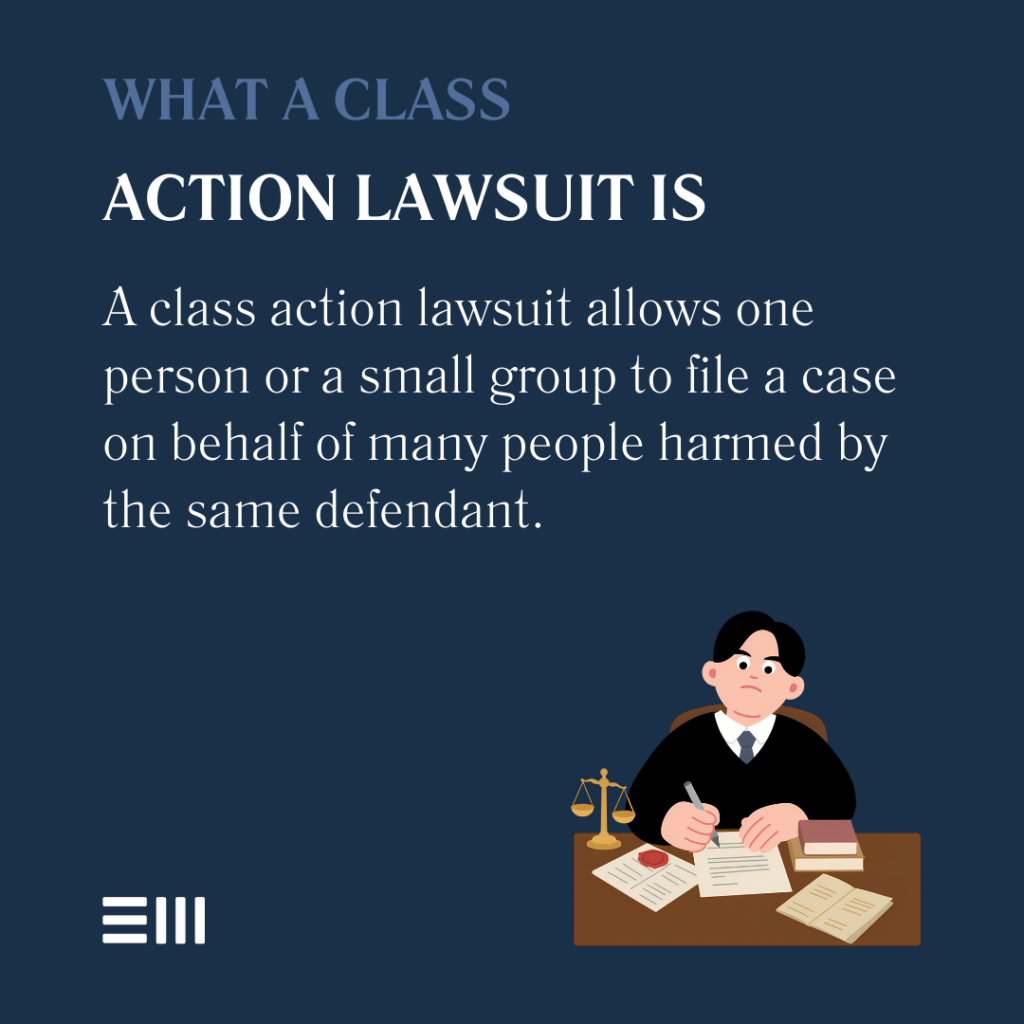
At its core, a class action lawsuit is a legal proceeding where one person — or a small group of people — files a lawsuit on behalf of a much larger group that suffered the same type of harm from the same defendant.
Instead of hundreds or thousands of individuals each filing separate cases, the court allows a single action to resolve the claims collectively.
Several elements must be present before a court will certify a case as a class action:
- Numerosity — the group must be large enough. Courts generally require that the number of affected individuals is so large that joining them all as individual plaintiffs would be impractical. There’s no fixed minimum, but classes typically involve dozens to thousands of members.
- Commonality — the claims must share legal or factual questions. The class members’ injuries must stem from the same conduct or policy by the defendant, and the legal issues must overlap significantly.
- Typicality — the lead plaintiff’s claims must mirror the group’s. The named plaintiff’s situation should be representative of the class as a whole, not an outlier.
- Adequacy — the lead plaintiff and their counsel must fairly represent the class. The court evaluates whether the named plaintiff has any conflicts of interest and whether the attorneys have the resources and experience to handle the case.
If a court determines these requirements are met, it certifies the case as a class action, and all qualifying individuals become part of the class unless they choose to opt out. This certification step is often the most contested phase of the entire lawsuit.
Common Types of Class Action Lawsuits in Alabama
Class actions span a wide range of legal areas, and Alabama residents may encounter them in several contexts. Understanding which category your situation falls into helps clarify what remedies may be available and what the legal process typically looks like.
- Defective products and consumer fraud. When a manufacturer sells a product that injures consumers or misrepresents what it does, affected buyers may band together in a single lawsuit rather than filing individual claims.
- Data breaches and privacy violations. Companies that fail to protect customer data — or that share personal information without consent — have faced a growing wave of class action litigation in recent years.
- Wage and hour violations. Employers who systematically underpay workers, deny overtime, or misclassify employees as independent contractors can face class-wide claims from affected staff.
- Environmental contamination. Communities exposed to toxic substances through polluted water, soil, or air may file class actions against the responsible corporations, as seen in the recent wave of PFAS “forever chemicals” litigation.
- Dangerous pharmaceuticals. When medications cause widespread harm that wasn’t adequately disclosed, patients may pursue collective legal action against the drug manufacturer.
These categories are not exhaustive. Any situation where a company’s actions or negligence cause the same type of harm to a large group of people can potentially give rise to a class action.
How a Class Action Differs from a Mass Tort
People often confuse class actions with mass torts, and while they share similarities, the legal distinction matters.
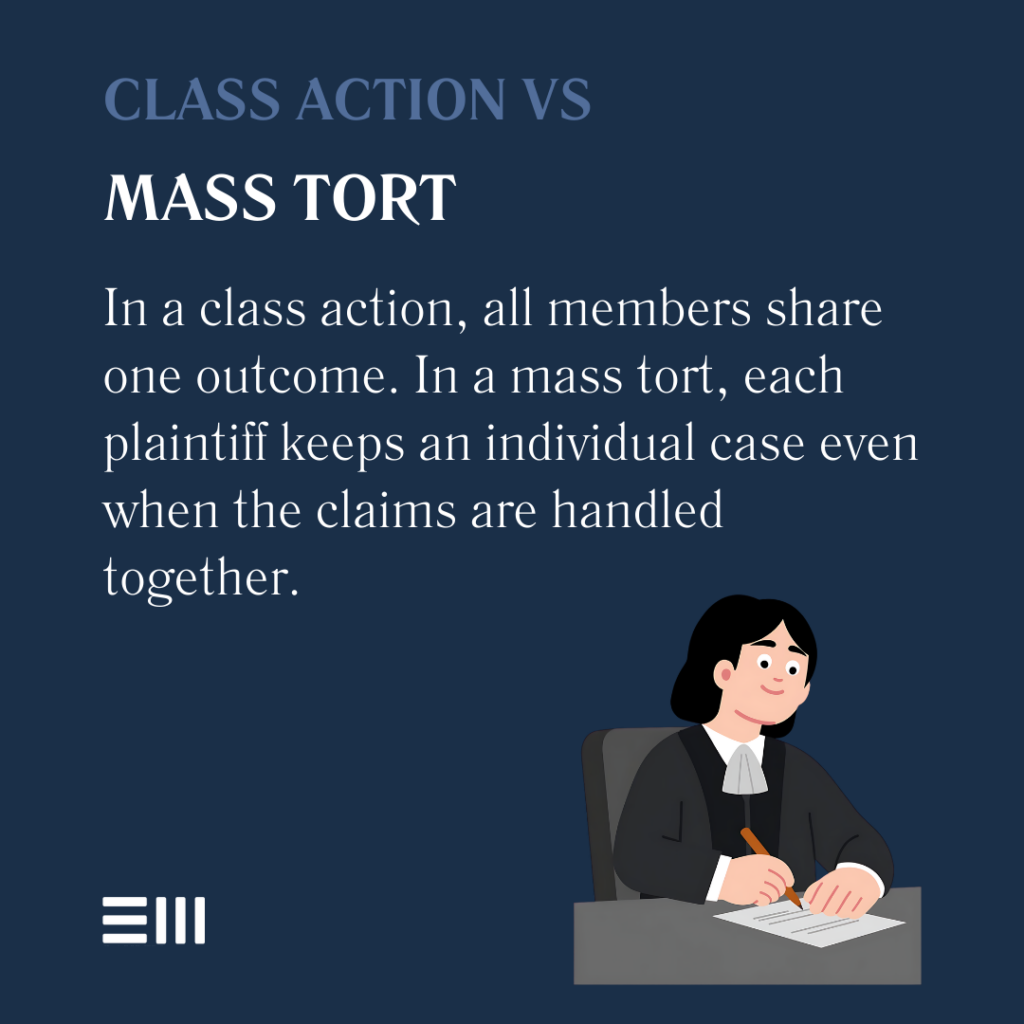
In a class action, the court treats all members as a single group with a shared outcome — one settlement or verdict applies to everyone. In a mass tort, each plaintiff maintains an individual case, even though the cases are consolidated for efficiency.
The key difference comes down to how individualized the injuries are. If everyone suffered essentially the same harm in the same way — like being overcharged the same fee — a class action is typically appropriate.
If the injuries vary significantly from person to person — like different side effects from a defective drug — a mass tort structure may be more suitable. A qualified attorney can help you determine which path applies to your circumstances.
Frequently Asked Questions about Class Action Lawsuits
Alabama residents considering joining or filing a class action lawsuit often have practical questions about how the process works and what it means for them personally.
Here are answers to the most common ones.
How Do I Know if I’m Part of a Class Action?
If a court certifies a class action that includes you, you’ll typically receive a notice by mail or email. That notice explains the lawsuit, identifies the class, and outlines your options — including the right to opt out or object to a proposed settlement.
If you haven’t received a notice but believe you may qualify, an attorney can help you investigate whether an active case applies to your situation.
What Does It Cost to Join a Class Action Lawsuit?
In most cases, nothing. Class action attorneys typically work on a contingency fee basis, meaning their compensation comes from the settlement or verdict — not from individual class members out of pocket. If the case is unsuccessful, you generally owe nothing.
Can I Opt out of a Class Action and File My Own Lawsuit?
Yes. Class members typically have the right to exclude themselves from the class and pursue an individual claim instead.
This may make sense if your damages are substantially larger than what the class settlement would provide, though it also means taking on the cost and risk of individual litigation.
How Long Do Class Action Lawsuits Typically Take?
Timelines vary widely. Some class actions resolve within a year through settlement negotiations, while complex cases involving extensive discovery, certification battles, and appeals can stretch on for several years.
The scope of the class, the defendant’s resources, and the complexity of the underlying claims all influence the timeline.
These questions represent a starting point. The specifics of your situation will determine what role — if any — a class action plays in your path to compensation.
Your Claim May Be Bigger Than You Think — Let’s Talk About It
If you’ve been harmed by a company’s conduct and suspect others have been too, you may have more legal options than you realize. Understanding what a class action lawsuit is is the first step — but knowing whether one applies to your situation requires a closer look at the facts.
Our experienced personal injury attorneys here at Baxley Maniscalco have represented clients across Alabama in complex litigation involving defective products, dangerous pharmaceuticals, corporate negligence, and more.
We know how to evaluate whether your case fits within an existing class action or whether individual litigation better serves your interests.
Your initial consultation is free, confidential, and comes with no obligation. We’ll listen to what happened, explain your options under Alabama law, and give you an honest assessment of the best path forward.
Call or text us today at (256) 770-7232 to schedule your confidential consultation.
Can't find what you're looking for? Search our site below.