
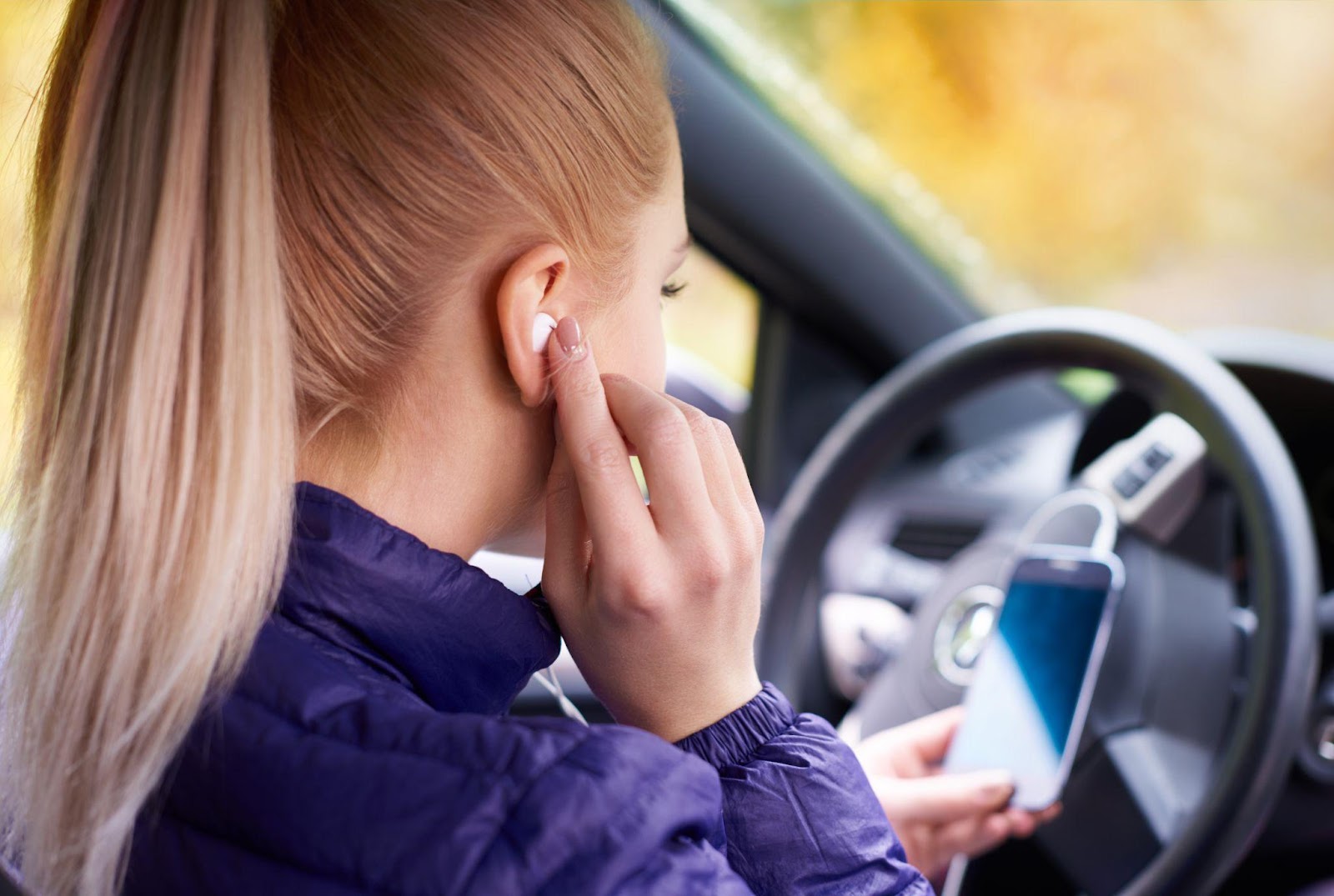
Distracted driving fatalities in Alabama climbed nearly 70% over a five-year span, and a texting driver is 23 times more likely to crash than one who keeps their phone down.
Those numbers drove Alabama to join more than 30 states in passing a hands-free law — what many people now call the “no touch law.” If you’ve heard the term and aren’t sure exactly what it means or how it applies to you, you’re not alone.
So what is the no touch law? In Alabama, it refers to the hands-free driving statute (Alabama Code § 32-5A-350.1) that took effect on June 15, 2023, with enforcement beginning in June 2024.
The law prohibits drivers from physically holding or supporting a cell phone or any electronic device while operating a vehicle.
That includes at stoplights, in traffic, and in drive-through lanes. You can still use your phone — but only through voice commands, Bluetooth, dashboard mounts, or a single touch or swipe to answer a call.
What Alabama’s No Touch Law Prohibits
The scope of Alabama’s no touch law goes well beyond texting. Many drivers are surprised to learn how broadly the restrictions apply. Here’s a breakdown of what the law specifically makes illegal while driving:
- Holding a phone or electronic device in your hand. Even if you’re not actively using it, physically supporting a device with any part of your body while driving violates the law.
- Writing, sending, or reading text-based communications. Texts, emails, instant messages, and social media messages are all covered — regardless of the app or platform.
- Watching or recording video. Streaming video, recording content, or broadcasting live from your phone while driving is prohibited, with a narrow exception for GPS navigation data.
- Using more than one touch to initiate a call. You may use a single button press or finger swipe to answer or place a call, but anything beyond that crosses the line.
- Reaching for a device in a way that takes you out of driving position. If retrieving your phone requires you to lean, stretch, or unbuckle your seatbelt, you’re in violation.
Hands-free technology — Bluetooth, speakerphone, Apple CarPlay, Android Auto, earpieces, and wireless headsets — remains fully legal. The law targets the physical act of holding and manually interacting with devices, not the devices themselves.
Penalties for Violating the No Touch Law in Alabama
Alabama’s hands-free law carries escalating penalties designed to discourage repeat offenses. While the fines start relatively low, the points added to your driving record can have lasting consequences — including insurance rate increases and potential license suspension.
Here’s how the penalty structure works:
- First offense. A $50 fine and one point added to your driving record.
- Second offense within 24 months. A $100 fine and two points on your record.
- Third and subsequent offenses. A $150 fine and three points on your record.
It’s worth noting that Alabama’s no touch law is currently classified as a secondary offense. That means law enforcement cannot pull you over solely for holding your phone — they must first observe another traffic violation, such as swerving, speeding, or running a stop sign.
However, once you’re stopped, a phone-in-hand citation can be added to whatever primary violation triggered the stop.
How the No Touch Law Affects Car Accident Claims
For people injured in crashes caused by distracted drivers, the no touch law has changed the landscape. A driver who was violating the hands-free statute at the time of a collision has essentially handed the other party a powerful piece of evidence.
Here’s why it matters from a legal standpoint:
- A citation creates evidence of negligence. If the at-fault driver received a hands-free violation at the scene, that citation can be used to support your personal injury claim.
- Phone records can be subpoenaed. An attorney can obtain the other driver’s phone records to show they were actively using their device at the time of the crash.
- Juries take distracted driving seriously. Violating a specific law designed to prevent the exact type of harm that occurred strengthens your case in front of a jury.
- Insurance companies recognize the leverage. Insurers know that a documented hands-free violation makes their policyholder’s position difficult to defend, which can lead to faster and higher settlement offers.
If you were hit by a driver who was on their phone, the no touch law didn’t just make their behavior illegal — it gave you a concrete tool for proving fault under Alabama’s strict contributory negligence standard.
Frequently Asked Questions About Alabama’s No Touch Law
Alabama drivers and accident victims alike have questions about how the no touch law works in practice. Below are straightforward answers to the ones that come up most often.
Can I Use My Phone at a Red Light or in Stopped Traffic?
No. Alabama’s no touch law applies any time you are operating a vehicle on a public road, including while stopped at red lights, stop signs, or in congested traffic. If your vehicle is in a travel lane and not parked, holding your phone is a violation.
Does the No Touch Law Apply to GPS and Navigation?
You can use GPS navigation, but only through hands-free methods — such as a dashboard mount with voice-activated directions. You cannot hold your phone to program or view a navigation app while driving. Set your destination before you start moving.
Are There Exceptions to Alabama’s No Touch Law?
Yes. The law includes exceptions for first responders — police officers, firefighters, and EMS workers — performing official duties. Drivers reporting an emergency to 911 are also exempt. Additionally, utility workers performing certain field operations have limited exceptions under the statute.
What Should I Do if a Distracted Driver Hit Me?
Document everything at the scene, including photos of the other driver’s behavior if possible. Request a police report, as officers may note a hands-free violation. Then contact an attorney who can subpoena phone records and build your case around the distracted driving evidence.
Understanding what is the no touch law and how it intersects with Alabama accident claims can make a significant difference in the outcome of your case.
Hit by a Distracted Driver? Your Case May Be Stronger Than You Think
Alabama’s no touch law exists because distracted driving kills. If someone broke that law and injured you in the process, you have legal options — and more evidence to work with than accident victims had before this statute existed.
Our experienced car accident attorneys here at Baxley Maniscalco have represented clients across Alabama in distracted driving cases, and we know how to use hands-free violations, phone records, and witness testimony to build the strongest possible claim on your behalf.
Your initial consultation is free, confidential, and carries no obligation. We’ll review the details of your accident, explain how Alabama law applies, and give you an honest assessment of your path forward.
Call or text us today at (256) 770-7232 to schedule your consultation.
Can't find what you're looking for? Search our site below.