

Alabama processes thousands of divorce filings every year, and in a significant number of those cases, one spouse simply refuses to participate. They ignore the paperwork, dodge the process server, or flatly declare they will never agree.
The good news is that Alabama law does not give one person the power to trap the other in a marriage indefinitely.
If you are stuck wondering what to do if your spouse won’t sign divorce papers in Alabama, the answer is straightforward: your divorce can still move forward — it just follows a different path.
Why a Spouse’s Refusal Does Not Stop the Process
Alabama does not require both parties to consent to a divorce. The state recognizes no-fault grounds such as irretrievable breakdown and incompatibility, and neither ground requires the other spouse’s agreement to proceed.
Once you file your complaint for divorce with the circuit court in your county, the legal process begins, whether your spouse cooperates or not.
Your spouse’s refusal typically changes the type of divorce you are pursuing — converting what could have been a quick, uncontested divorce into either a contested case or a default proceeding — but it does not change your right to obtain one.
Understanding the difference between these two outcomes is the first step toward deciding what to do if your spouse won’t sign divorce papers in Alabama.
The Default Divorce: What Happens When Your Spouse Simply Ignores the Papers
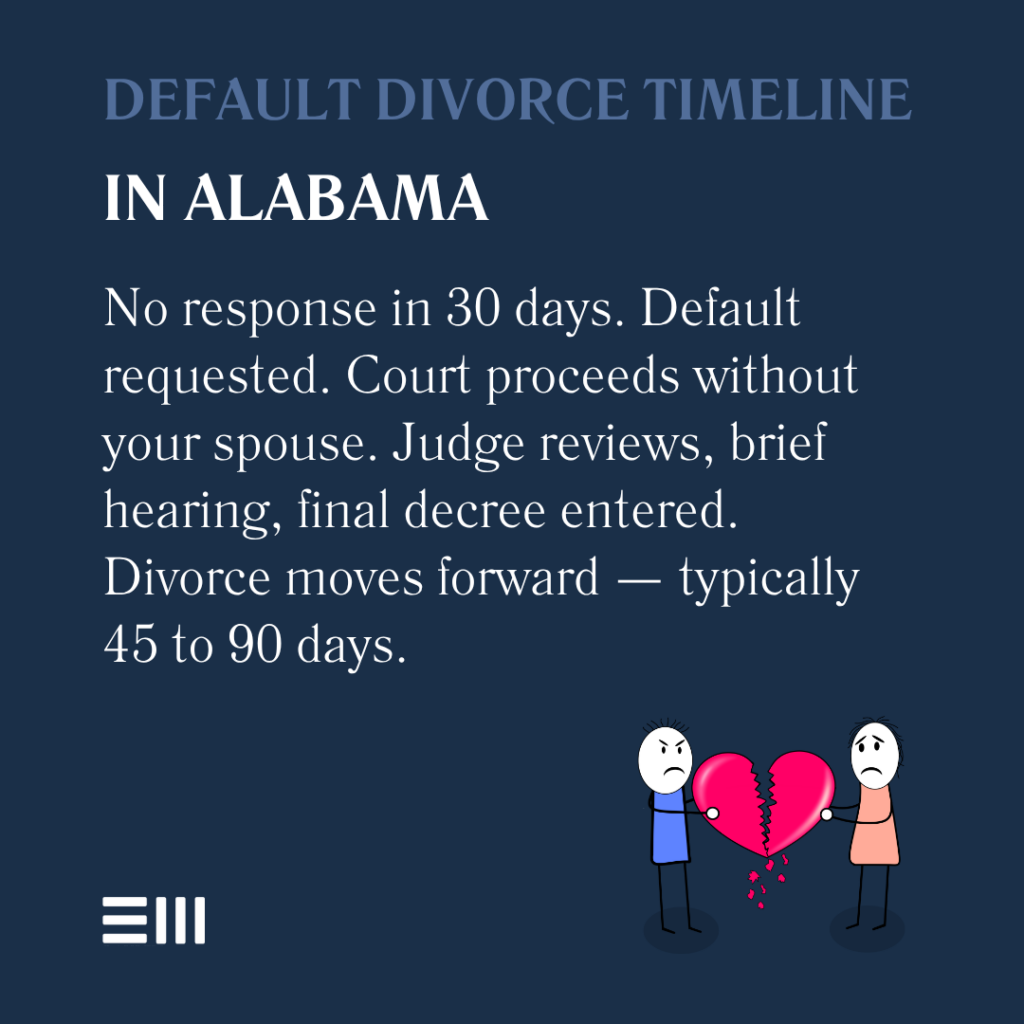
After you file for divorce, your spouse must be formally served with the complaint and summons. From the date of service, they have 30 days to file a response with the court. If they fail to respond within that window, you can request a default judgment.
A default divorce allows the court to proceed without your spouse’s input. Here is how the process typically unfolds.
- File your complaint and serve your spouse. The complaint must be delivered through proper legal channels — personal service by a sheriff or private process server, or in some cases, certified mail.
- Wait the 30-day response window. Alabama law gives your spouse a full month to file an answer or other responsive pleading with the court after being served.
- Request entry of default. If 30 days pass with no response, you file a request for default with the court clerk, officially documenting your spouse’s failure to participate.
- Attend a brief hearing. A judge will review your complaint, hear testimony confirming the grounds for divorce, and enter a final decree based on the terms you requested.
Because your spouse chose not to respond, the court generally grants the relief outlined in your original filing — including property division, custody arrangements, and support requests.
Default divorces in Alabama typically resolve within 45 to 90 days, making them faster than most contested proceedings.
When Your Spouse Actively Contests the Divorce
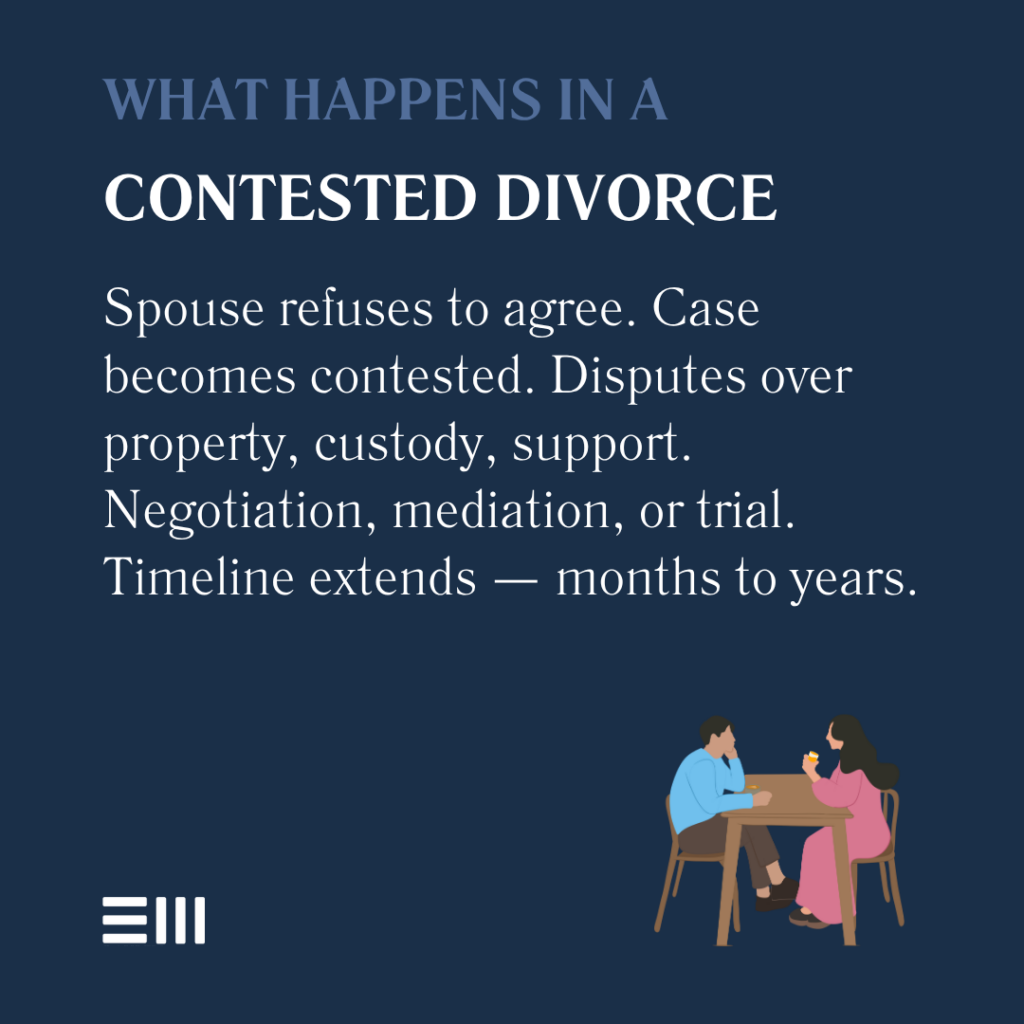
Refusing to sign is not the same as refusing to respond. Some spouses will not sign your proposed agreement but will file their own answer disputing the terms — triggering a contested divorce.
In this scenario, the marriage will still end, but the court will need to resolve the disputed issues through negotiation, mediation, or trial.
Contested divorces in Alabama typically take six months to two years, depending on the complexity of the disagreements.
Common sticking points include the division of the family home and other marital assets, child custody and visitation schedules, spousal support or alimony, and responsibility for marital debts.
Even in a contested case, Alabama courts can issue temporary orders covering custody, support, and use of the marital home while the divorce is pending, so you are not left in limbo while the dispute works its way through the system.
Serving a Spouse Who Cannot Be Found
One of the trickiest scenarios when figuring out what to do if your spouse won’t sign divorce papers in Alabama involves a spouse who has disappeared or is actively avoiding service. Alabama law provides a backup option called service by publication.
- Exhaust all reasonable efforts to locate your spouse. This includes checking known addresses, contacting family members, searching public records, and using social media or other available resources.
- File an affidavit with the court. You must swear under oath that you have been unable to locate your spouse despite diligent efforts.
- Publish notice in a local newspaper. The court will order the divorce complaint to be published once a week for four consecutive weeks in a newspaper in the county where the case is filed.
- Proceed to default after the publication period. If your spouse still does not respond after the notice runs, the court can enter a default judgment.
Service by publication adds several weeks to the process, but it ensures that a missing or evasive spouse cannot indefinitely prevent the divorce from going through.
Frequently Asked Questions About a Spouse Refusing to Sign Divorce Papers
When one spouse refuses to cooperate, the other is often left with urgent questions about their rights and options. Below are answers to the concerns people raise most often.
Can You Get Divorced if Your Spouse Refuses?
Yes. Alabama does not require mutual consent to end a marriage. Whether your spouse ignores the papers entirely or actively contests the filing, the court has the authority to grant a divorce as long as you meet the legal requirements for residency and grounds.
What Happens if Someone Ignores Divorce Papers in Alabama?
If your spouse is properly served and fails to respond within 30 days, you can pursue a default divorce.
The court will move forward without their participation and will typically grant the terms you requested in your original complaint. However, the default can be set aside if your spouse later shows good cause for failing to respond.
Can a Divorce Proceed Without Agreement on the Terms?
Absolutely. Disagreement on terms like property division or custody does not prevent the divorce from happening — it simply means those issues will be resolved by a judge rather than through a negotiated settlement.
The court will apply Alabama’s equitable distribution principles and the best-interests-of-the-child standard to reach a decision on all disputed matters.
How Long Does a Divorce Take When One Spouse Won’t Cooperate?
A default divorce can be finalized in roughly 45 to 90 days. A contested divorce where your spouse actively disputes the terms typically takes six months to two years. The timeline depends on the number of unresolved issues, the court’s docket, and whether mediation or trial is required.
Will My Spouse’s Refusal Affect How Property Is Divided?
If your spouse defaults by failing to respond, the court often accepts the property division you proposed in your complaint.
In a contested case, the judge decides based on Alabama’s equitable distribution factors — including each spouse’s contributions, earning capacity, and the length of the marriage.
If your situation involves complications beyond what is addressed here, consulting with an attorney is the fastest route to clear, specific guidance.
Don’t Let One Person’s Refusal Hold Your Future Hostage
A spouse who refuses to sign divorce papers may slow the process, but they cannot stop it.
Our experienced divorce attorneys here at Baxley Maniscalco have guided hundreds of Alabama clients through default filings, contested proceedings, and every scenario in between.
From navigating service requirements to protecting your interests at trial, we handle the legal complexity so you can focus on moving forward.
Contact us today for a confidential divorce consultation, and take the first step toward the fresh start you deserve.
Can't find what you're looking for? Search our site below.