

Imagine winning a hard-fought injury settlement, only to open a letter weeks later saying your ex-spouse wants a share of it. For many Alabamians, that scenario is not hypothetical. It is the moment two very different areas of law collide.
A personal injury settlement is meant to make an injured person whole. But when that person pays or receives child support, owes alimony, or is going through a divorce, the money can raise questions that reach well beyond the accident itself.
Whether a settlement counts as income, whether an ex can claim part of it, and whether support obligations change all depend on the details.
Here is how Alabama law approaches these overlaps, and why the breakdown of your settlement matters so much.
Can Your Settlement Be Taken for Past-Due Child Support?
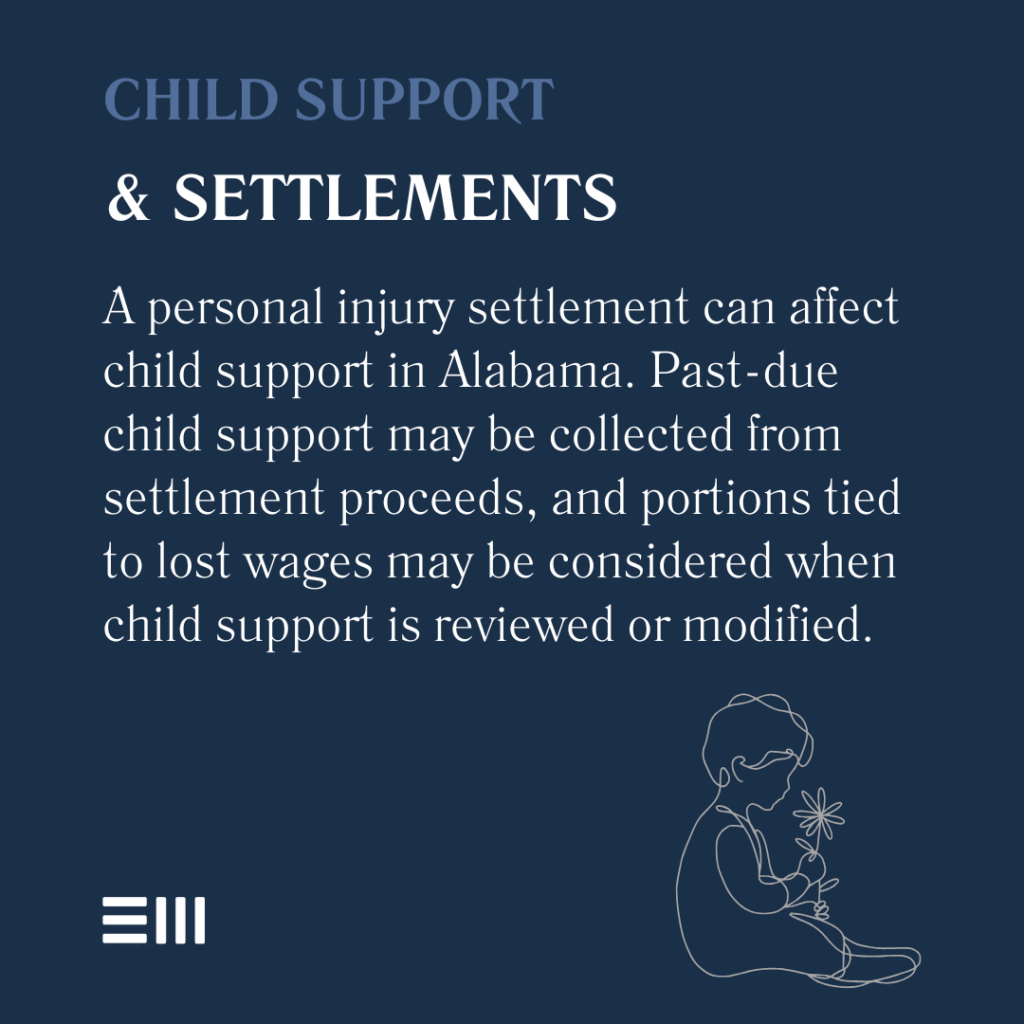
This is the area where Alabama law is most direct. If you owe back child support, your personal injury settlement is not untouchable. The state’s Child Support Enforcement Division has tools to collect what is owed, and a settlement can be a target.
A parent with child support arrears may face a lien on assets or a claim against settlement proceeds. In practice, that can mean part of your settlement is intercepted to satisfy the debt before the money ever reaches you.
This is one of the first issues our family law team looks at when a client receiving a settlement also has a support history, because resolving it early prevents an unwelcome surprise later.
Does a Settlement Count as Income for Child Support?
Whether a personal injury settlement counts as income for child support is less black and white, and it often comes down to what the settlement is compensating you for.
- Lost wages. The portion replacing income you would have earned is the most likely to be treated as income for support purposes.
- Pain and suffering. Compensation for the physical and emotional toll of an injury is generally personal to you and less likely to count as income.
- Future medical costs. Money earmarked for ongoing treatment is meant for your care, not for support calculations.
- Lump sum versus structured. A large one-time payment can affect a calculation differently than a settlement paid out over time.
Alabama calculates child support using an income shares model under Rule 32 of the Alabama Rules of Judicial Administration.
Because a substantial settlement can shift the financial picture, an ex-spouse may ask a court to revisit a support order, particularly where lost wages make up a large share of the award.
Under Alabama law, a support award can be modified when a change in a parent’s income would alter the obligation by 10 percent or more.
Can an Ex-Spouse Claim Part of Your Settlement in a Divorce?
If you were injured during your marriage, part of your settlement may be considered marital property, and Alabama’s equitable distribution rules would then apply. Equitable distribution does not mean a 50/50 split.
It means a court divides marital property in a way it considers fair, given each spouse’s circumstances, something our attorneys address regularly in divorce cases involving complex assets.
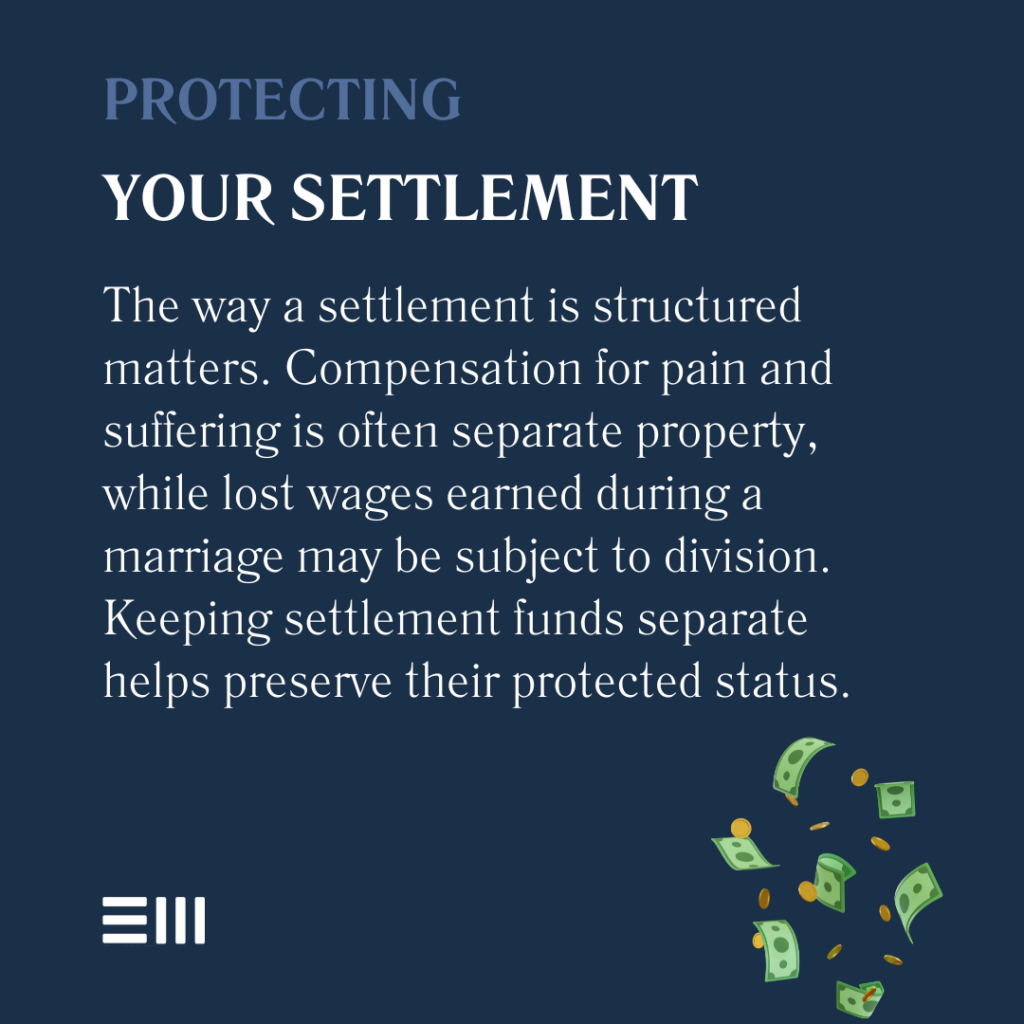
The classification turns on what the money represents. Compensation for pain and suffering is generally treated as the injured spouse’s separate property, because a spouse cannot share in that personal experience.
Compensation for lost wages earned during the marriage, by contrast, is often considered marital property, since wages themselves would have been marital. Money for future medical care or post-divorce earnings is usually separate.
One major caveat can undo all of this. If settlement funds are co-mingled with marital money, such as being used to pay down a shared mortgage or buy a family vehicle, a court may treat the entire amount as marital.
Keeping settlement proceeds clearly separate is what preserves their protected status.
Can Alimony Change After a Settlement?
A settlement can affect alimony in two directions, and both are worth understanding before you finalize anything.
- Modification of existing alimony. A large settlement that meaningfully improves your finances can prompt an ex-spouse to seek a change to your support arrangement.
- Settlement classified during divorce. If your injury occurred during the marriage, the marital portion of the award can factor into how alimony and property are decided.
- Lost income compensation. Because alimony often hinges on earning capacity, an award that replaces lost wages can influence the analysis.
- Documentation matters. A clearly itemized settlement helps separate what is genuinely yours from what a court might consider shared.
Alabama recognizes several types of alimony under its statutes, and courts weigh each spouse’s full financial situation when setting or revisiting an award. A settlement that changes that picture can become part of the conversation.
Why an Itemized Settlement Protects You
A recurring theme runs through every one of these questions. The way your personal injury settlement is broken down can determine how much of it stays yours.
When a settlement is itemized, separating pain and suffering from lost wages from medical costs, a court can see exactly which portions are personal and which might be subject to support or division.
When a settlement is a single undivided sum, those lines blur, and more of the money may be exposed. This is precisely why coordinating your injury claim and your family law situation early can make a real difference in the outcome.
Frequently Asked Questions
Below are answers to questions Alabamians most often ask when an injury settlement meets a family law issue.
Will My Whole Settlement Be Counted as Income?
Not usually. Courts look at what each portion compensates. Lost wages are the most likely to be treated as income, while pain and suffering and future medical costs generally are not.
Can the State Take My Settlement if I Owe Child Support?
If you have past-due child support, yes, a portion of your settlement can be claimed to satisfy that debt through a lien or enforcement action.
Is My Settlement Safe if I Keep It Separate?
Keeping settlement funds in a separate account, rather than co-mingling them with marital money, helps preserve the portions that qualify as separate property.
Does It Matter When the Injury Happened?
Yes. An injury that occurred during the marriage is more likely to involve marital property questions than one that happened before the marriage or after separation.
What if Children Are Involved in a Custody Case Too?
A settlement can intersect with child custody matters when it changes a parent’s financial circumstances. Disclose it to your attorney so it can be addressed properly.
Should I Tell My Attorney About Both Issues?
Always. Disclosing a settlement to your family law attorney, or a divorce to your injury attorney, early lets them coordinate and protect what is rightfully yours.
Your Rights and Next Steps With Baxley Maniscalco
A personal injury settlement should help you move forward, not become a source of new disputes. Because these cases sit at the intersection of two areas of law, having a team that understands both sides is what keeps your recovery protected.
Our experienced personal injury and family law attorneys here at Baxley Maniscalco serve clients across the state of Alabama from our office in Oxford, reaching clients in Anniston, Gadsden, and surrounding communities.
We work hard to protect what our clients have earned, and we aren’t afraid to take a case to trial when that is what it takes.
Call (256) 770-7232 or reach out through our contact form to schedule a consultation.
Can't find what you're looking for? Search our site below.