

Most American adults are on social media, with 71% using Facebook alone, and for someone with an open injury claim that ordinary habit carries an unusual risk.
The same posts that keep you connected can land in a claims adjuster’s file, right next to the public records from your divorce or custody case.
Insurance companies fight injury claims on more than medical evidence, since a claim’s value often rests on whether the person bringing it seems believable.
A photo, a comment, or a sworn statement from a separate case can hand the other side a reason to doubt you, and in Alabama, that doubt can be expensive.
How Social Media Becomes the Insurer’s Evidence
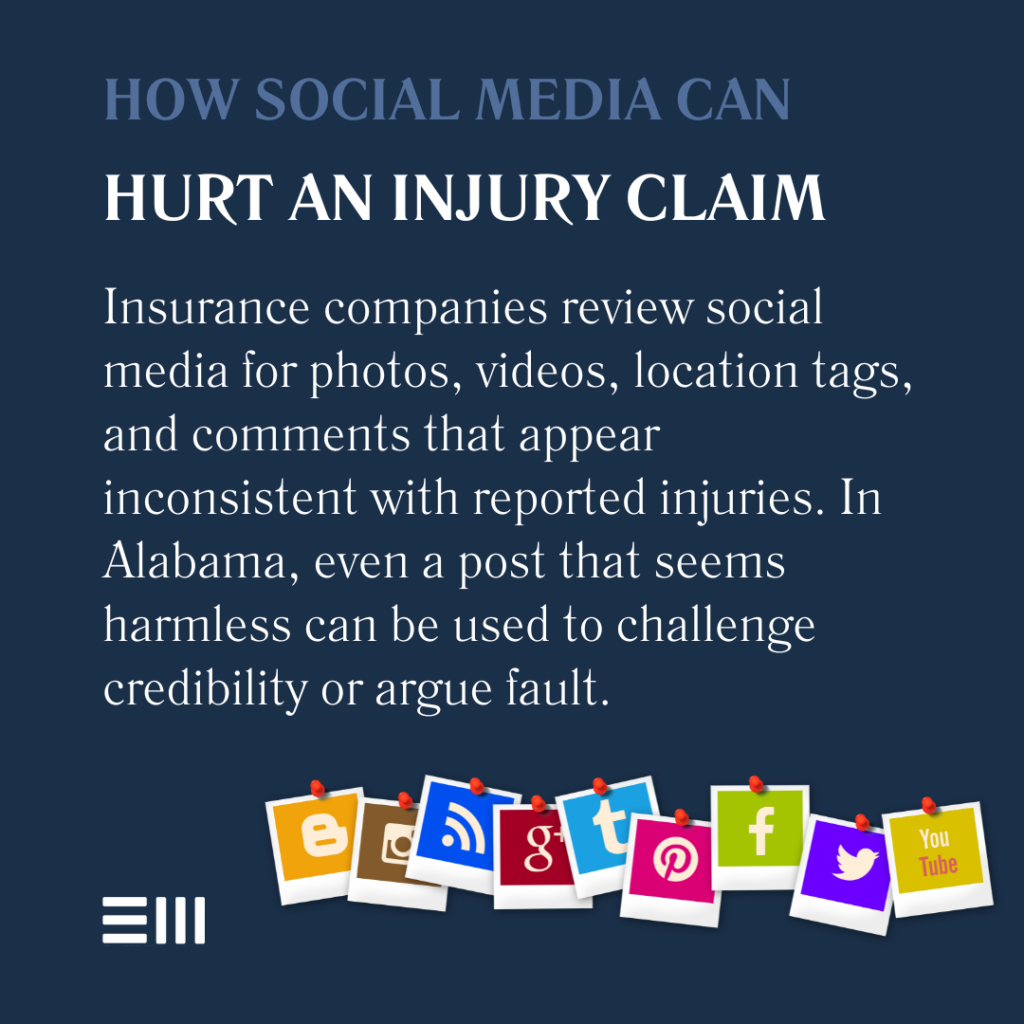
Reviewing a claimant’s public profiles is now a routine part of investigating an injury claim, and adjusters often build a file before you ever speak with them.
They scan for any activity that seems to clash with what you have reported, then save it to use during negotiations or at trial. A personal injury claim leans heavily on credibility, so a single misread post can do real damage.
The trouble is that social media shows a highlight reel rather than the hours spent in pain that never make it online. Innocent content gets stripped of context, and the items below are what the other side hunts for.
- Photos or videos of physical activity that seem to clash with the injuries you describe.
- Location tags that place you at the gym, a trip, or an event.
- Comments about the accident that can be read as admitting fault or downplaying harm.
- Posts and tags from friends that reference your condition or show you out and about.
Privacy settings offer less protection than people assume, because a court can order you to produce even private posts once you put your physical condition at issue.
Alabama’s strict contributory negligence rule raises the stakes further, since a careless online admission of fault can bar your recovery entirely.
How Your Divorce or Custody Case Can Be Used against You
A family law case running alongside your injury claim creates a second set of records, and many of them are public.
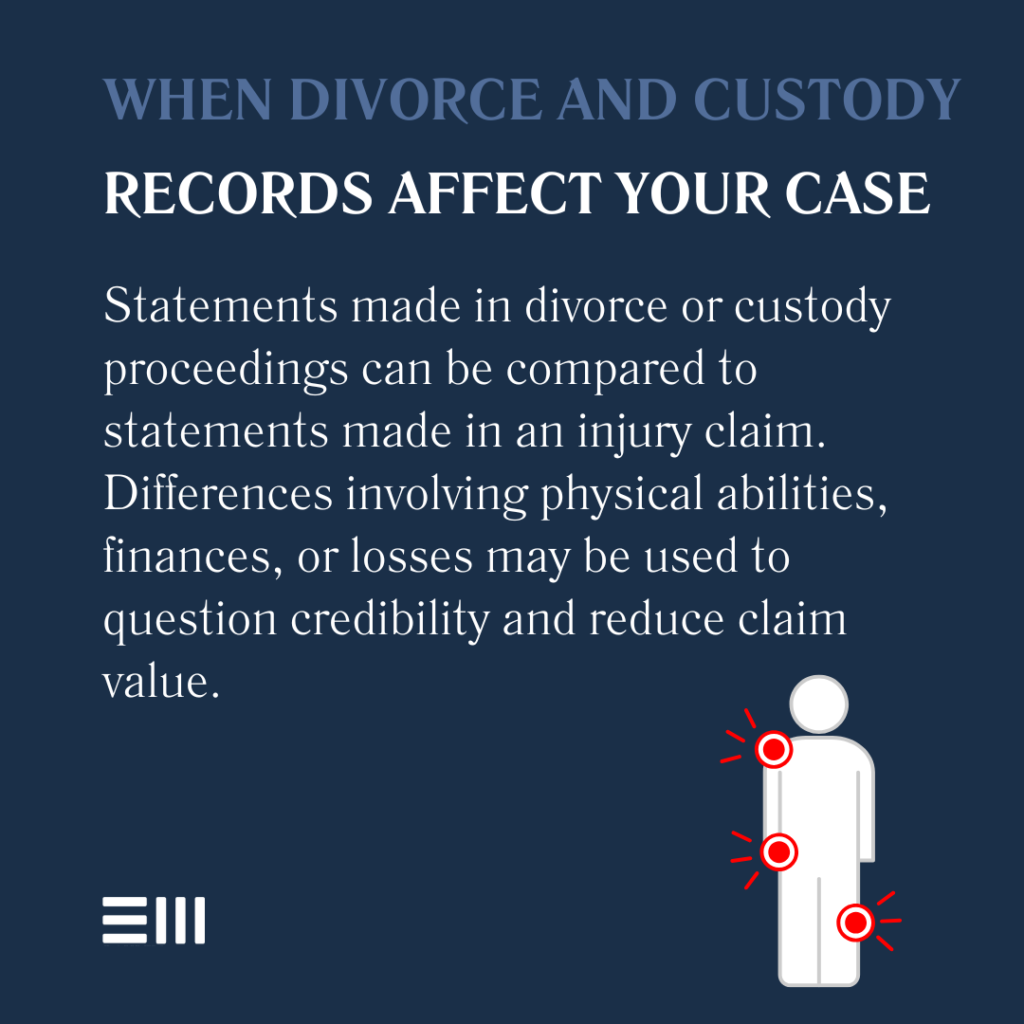
Statements you make under oath in a divorce or custody matter can be pulled and compared against what you tell the insurance company, and contradictions between the two become a weapon.
The legal tool behind this is impeachment by prior inconsistent statement, which lets the other side use your own earlier words to undercut you.
The conflicts often hide in plain sight, especially in a custody dispute where you may have argued how active and capable a parent you are. The situations below are where two cases collide.
- Sworn statements about your abilities in a custody case that contradict your injury claim.
- Financial disclosures filed in a divorce that conflict with your claimed losses.
- Public court filings that an insurer can pull and read without your knowledge.
- A pattern of inconsistency across cases that lets the defense question everything you say.
Telling a custody judge you can do anything for your children and then telling an adjuster you can barely move is the kind of gap a defense lawyer lives for. Coordinating what you say across every case keeps one matter from quietly sinking the other.
Protecting Your Claim and Your Credibility
The good defense against all of this is consistency paired with caution, and most of it is within your control. The aim is to avoid handing the other side material in the first place, since the strongest evidence against a claimant is usually their own words.
Working with a lawyer who handles both your family law matter and your injury claim keeps your accounts aligned.
A few habits protect both your case and your credibility while everything is pending. Following them steadily matters more than any single post.
- Stop posting about your injuries, your activities, or the case while it is pending.
- Do not delete old posts since removing evidence after a claim can count as spoliation.
- Ask friends and family not to tag you or share photos that could be taken out of context.
- Keep your statements consistent across your injury case, your divorce, and every doctor visit.
That second point surprises people, but deleting content once a claim exists can expose you to sanctions for destroying evidence. The safer move is to go quiet rather than to clean up.
Frequently Asked Questions About Insurance Companies and Injury Claims
The questions below are the ones people search for when two parts of their life start to overlap, and clear answers help you protect both.
Can Insurance Use My Divorce against Me?
Yes, since divorce filings are often public and can contain sworn statements that contradict your injury claim. The other side can use those inconsistencies to attack your credibility.
Can Custody Court Records Affect My Injury Claim?
They can, because statements about your physical abilities or finances in a custody case may conflict with what you tell the insurer. A defense lawyer can use that gap to argue you are exaggerating.
Can Social Media Hurt My Accident Case?
Often, yes, since adjusters review public profiles for photos, check-ins, and comments that seem to undercut your injuries. Even an innocent post taken out of context can lower the value of your claim.
Should I Delete My Social Media after an Accident?
No, because deleting posts once a claim exists can be treated as destroying evidence and lead to sanctions. The better approach is to stop posting and let your attorney advise you.
Your Injury Case Does Not Exist in a Vacuum, and Neither Should Your Defense
A divorce, a custody fight, and a few ordinary posts can quietly reshape what an insurance company is willing to pay for a serious injury, and most people never see the connection until it is used against them.
Our experienced personal injury and family law attorneys here at Baxley Maniscalco handle both sides of your situation together, so the statements in one case do not undermine the other, and your online presence does not become the adjuster’s best exhibit.
We help you manage what you share, keep your accounts consistent, and answer the credibility attacks the defense is preparing.
Reach out today to schedule a free personal injury consultation and protect your claim before your personal life becomes evidence.
Can't find what you're looking for? Search our site below.