

You can divide the furniture. You can close the joint account. But neither of you wants to say goodbye to the dog waiting by the front door.
For many couples, this is one of the most emotional parts of separating. The legal framework may feel surprisingly impersonal.
We help clients address the practical details of contested divorce in Alabama and other family law matters. A pet deserves a clear plan, even when the law doesn’t treat the dispute like child custody.
The useful conversation starts with ownership, records, and a realistic arrangement for daily care. “We’ll work it out later” often leaves too much unresolved.
Worried about what happens to your pet during divorce? Contact us to discuss your options or call (256) 770-7232.
The Starting Point Is Property, Not Child Custody
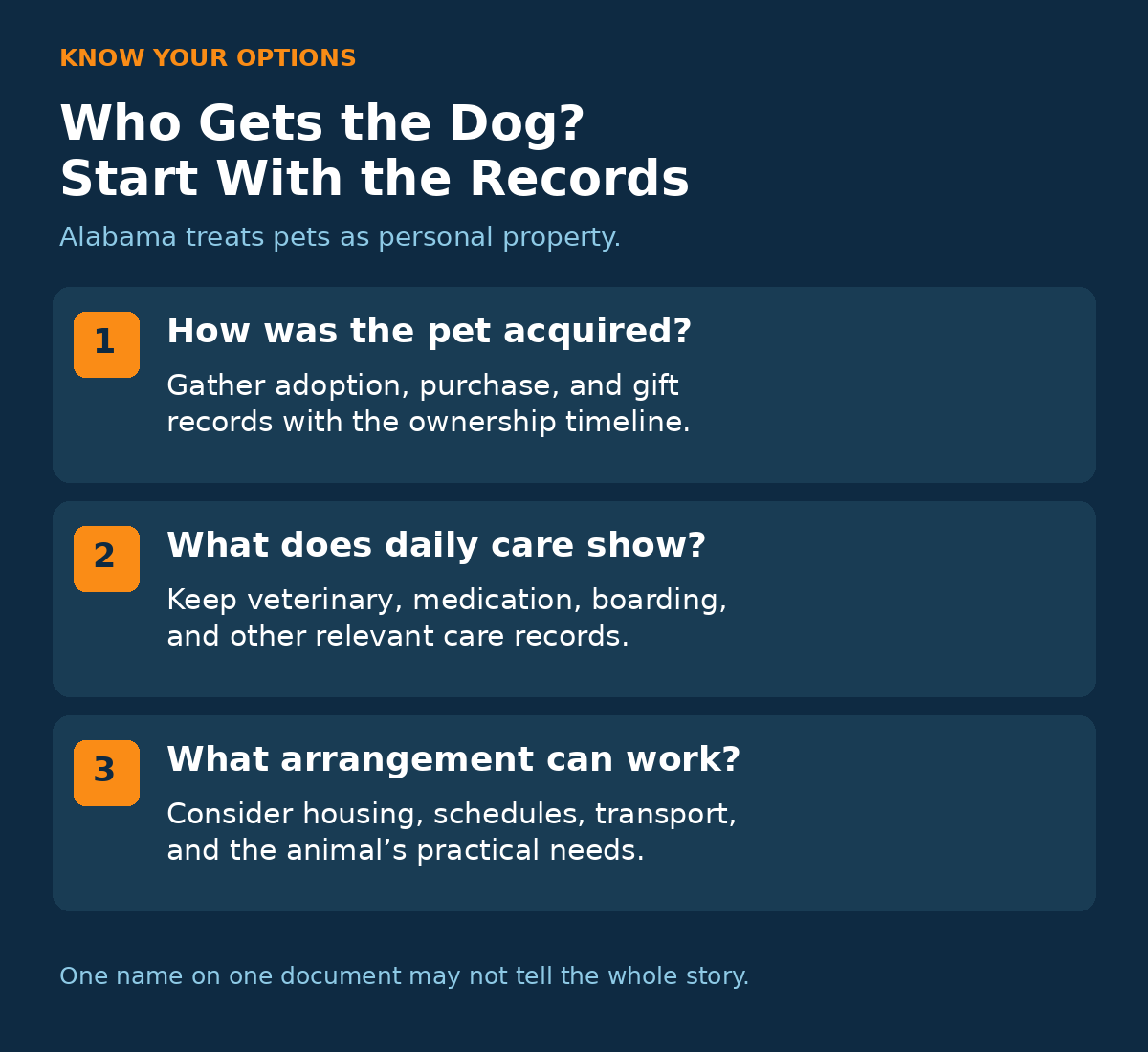
Alabama treats pets as personal property. That doesn’t reflect what your dog means to you, but it does affect how the legal question is framed.
Don’t assume that child-custody rules create a right to shared time, visitation, or a pet-support award. A proposal for your dog needs its own legal and practical review.
The distinction also changes how we prepare. Instead of starting with a parenting-plan template, we ask how the pet was acquired, who claims ownership, and what records support each position.
You can still explain the routines and relationships that matter. The point is to connect that information to a workable resolution, rather than assume the court will apply a child-custody test.
Whose Name Is on the Adoption Paperwork?
It’s a sensible first question. It isn’t always the last one.
In Placey v. Placey, an Alabama appeals court considered ownership of a dog in a protection-from-abuse dispute between a mother and daughter. It was not a divorce case.
The court upheld an ownership determination despite adoption paperwork naming the daughter. The evidence included the mother’s care of the dog, veterinary expenses, and the animal’s living circumstances.
The takeaway is limited but useful: one document may not tell the whole ownership story. Placey doesn’t create a general divorce rule awarding pets through a child-style best-interests analysis.
Bring the paperwork, then help us understand what happened afterward. Who acquired the animal, who paid, and whether there was a gift or transfer may all need explanation.
What if You Had the Pet Before the Marriage?
Tell us when and how you acquired the animal. A premarital purchase, an individual gift, and a joint adoption during marriage present different questions.
Alabama Code § 30-2-51 addresses property division and the treatment of certain premarital, inherited, or gifted property, including a common-benefit exception.
Don’t turn that into a blanket statement that the person who first met the dog automatically wins. Classification and ownership need to be evaluated against the actual facts and applicable law.
Likewise, paying the most recent vet bill doesn’t necessarily settle ownership. It is evidence to preserve, not a reason to throw away everything that came before it.
Build a Small, Useful File
You don’t need hundreds of screenshots proving that you love your pet. A clear collection of existing records is usually more useful than a flood of emotional messages.
Start with these materials:
- Acquisition records: Adoption agreements, purchase documents, payment records, and messages about any gift or transfer.
- Identification records: Microchip registration, licenses, insurance information, and the names recorded with the veterinarian.
- Care history: Veterinary invoices, medication records, boarding receipts, and information about the pet’s usual routine.
- Current circumstances: Housing rules, work schedules, transportation, and any special medical or behavioral needs.
Keep originals or reliable copies. Don’t change registration records to manufacture a stronger position while ownership is disputed.
If something is inaccurate, tell us what needs correcting and why. An explanation supported by records is more helpful than a sudden administrative change with no context.
A Temporary Arrangement Isn’t the Final Answer
One spouse may stay in the house while the other moves into a short-term rental. The dog may remain where there is a fenced yard, medication, or familiar care.
That practical arrangement should be discussed carefully. Don’t assume that leaving the dog temporarily resolves permanent ownership, or that possession gives you permission to ignore an existing order.
A written temporary understanding can identify who provides care, who pays routine expenses, and whether the arrangement is intended to remain temporary. We can help review the wording.
If there are restrictions on contact or entry into the home, follow them. A pet-related disagreement isn’t a reason to violate a court order or force an encounter.
If One Person Keeps the Pet, Make the Handoff Complete
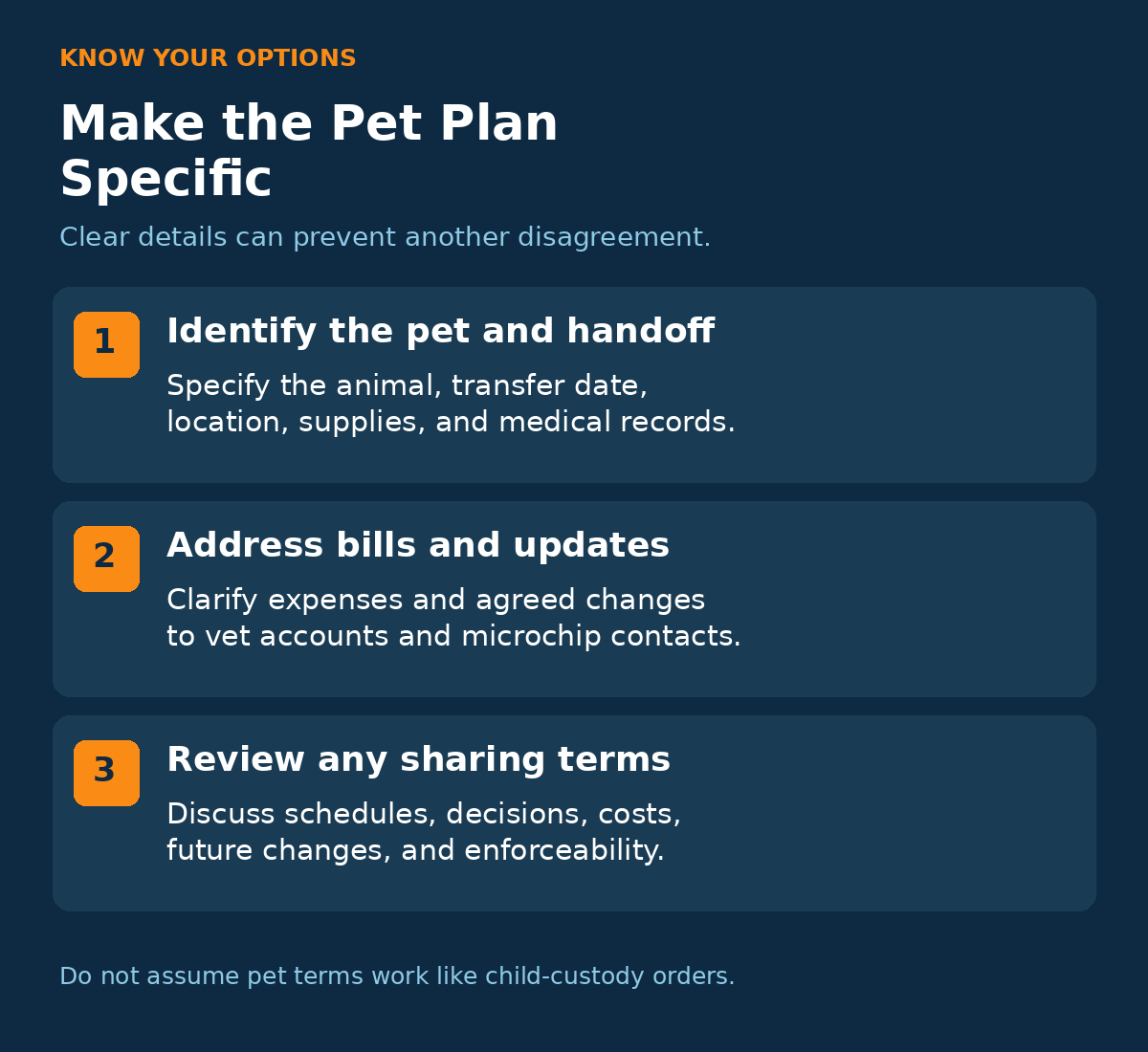
A settlement that only says “Alex gets the dog” may leave avoidable problems. Which dog? When does the transfer happen? Who has the medication and veterinary records?
Think through the details before signing:
- Identify the animal: Include its name and reliable identifying information, such as a microchip number when appropriate.
- Set the transfer arrangements: Specify the date, location, supplies, medication, and records to be provided.
- Address administrative updates: Explain how veterinary accounts, microchip contacts, and insurance information will be handled after the agreement takes effect.
- Allocate existing expenses: Clarify responsibility for outstanding bills and any agreed reimbursement.
A calm handoff is easier when nobody has to negotiate at the curb. If direct contact is difficult or restricted, discuss a lawful alternative in advance.
Should You Agree to Share Time With the Dog?
Sometimes people want an ongoing arrangement. Before agreeing, ask whether you can communicate reliably and whether both homes can meet the animal’s needs.
A vague promise of “reasonable visits” can generate the same argument every month. Dates, transportation, veterinary decisions, costs, and cancellation rules should be clear if sharing is being considered.
Also think about what happens when life changes. A move, new work schedule, medical problem, or repeated missed handoff can make the original arrangement unworkable.
Have the proposed terms reviewed for enforceability and the court’s authority. Don’t assume pet-sharing terms operate like a child-custody order or can be modified through the same process.
The emotional appeal of sharing is real. So is the burden of maintaining a long-term connection with someone you’re divorcing. It’s okay to examine both before committing.
Keep Children Out of the Negotiation
Children may be deeply attached to the family pet. Their routines and feelings deserve attention, but they shouldn’t become the messengers or decision-makers in an adult property dispute.
Avoid asking a child to report which parent is “better” with the dog. Don’t promise that the pet will always travel with the child before an arrangement has been reached.
If you hope to coordinate pet time with a parenting schedule, discuss the logistics separately. Confirm that the proposal is practical and consistent with the actual court orders.
A child’s attachment can help explain why a thoughtful transition matters. It shouldn’t become leverage over support, parenting time, or unrelated settlement terms.
Frequently Asked Questions
Does Alabama Have Child-Style Custody Rules for Pets?
Pets are treated as property. Don’t assume child-custody standards, visitation rights, or support rules automatically apply to a dispute over an animal.
Does the Person on the Adoption Contract Always Keep the Dog?
Not necessarily. The contract matters, but other evidence can matter too. Placey illustrates why an ownership dispute may require more than reading the name on one document.
What if the Dog Was a Gift to Me?
Tell us who made the gift, when it happened, and what records support that account. A claimed gift should be evaluated alongside the ownership history and applicable property-division rules.
Can We Put a Pet-Sharing Agreement in Our Settlement?
You can discuss proposed terms with us. We need to review their clarity, enforceability, and fit with the court’s authority. Don’t assume a pet schedule has the same legal treatment as a parenting plan.
Should I Change the Microchip Registration Before Filing?
Don’t change records to gain an advantage in a disputed ownership situation. Preserve the current information and get advice about any legitimate correction or agreed transfer.
What if My Ex Won’t Return the Pet?
Bring us the agreement, any court orders, and the relevant communications. The appropriate response depends on ownership, the existing terms, and the circumstances. Avoid a confrontation or self-help that violates an order.
Give the Hardest Detail a Clear Plan
For you, this isn’t just another item on a property list. We understand why a pet can be central to the conversation about life after divorce.
We can help you sort the evidence, discuss realistic options, and put important details into clear terms. Contact our team or call (256) 770-7232 to talk about your next steps.
Can't find what you're looking for? Search our site below.