

According to the Alabama Department of Transportation, the state recorded 140,118 traffic crashes in 2024, producing more than 36,600 injuries. Most of those drivers walked away from the scene believing the wreck was minor. Many of them were wrong.
A fender bender that looks manageable at the scene can grow into a major legal problem within weeks. Pain that did not exist at the time can appear days later.
The other driver’s story can shift between the scene and the claim file. Insurance adjusters can use the smallest detail to argue you were partly at fault, and under Alabama law, partly is all it takes.
For Alabama drivers, understanding why a minor car accident is rarely as minor as it appears can be the difference between a fair recovery and walking away with nothing.
The Hidden Reason Minor Crashes Are Risky in Alabama
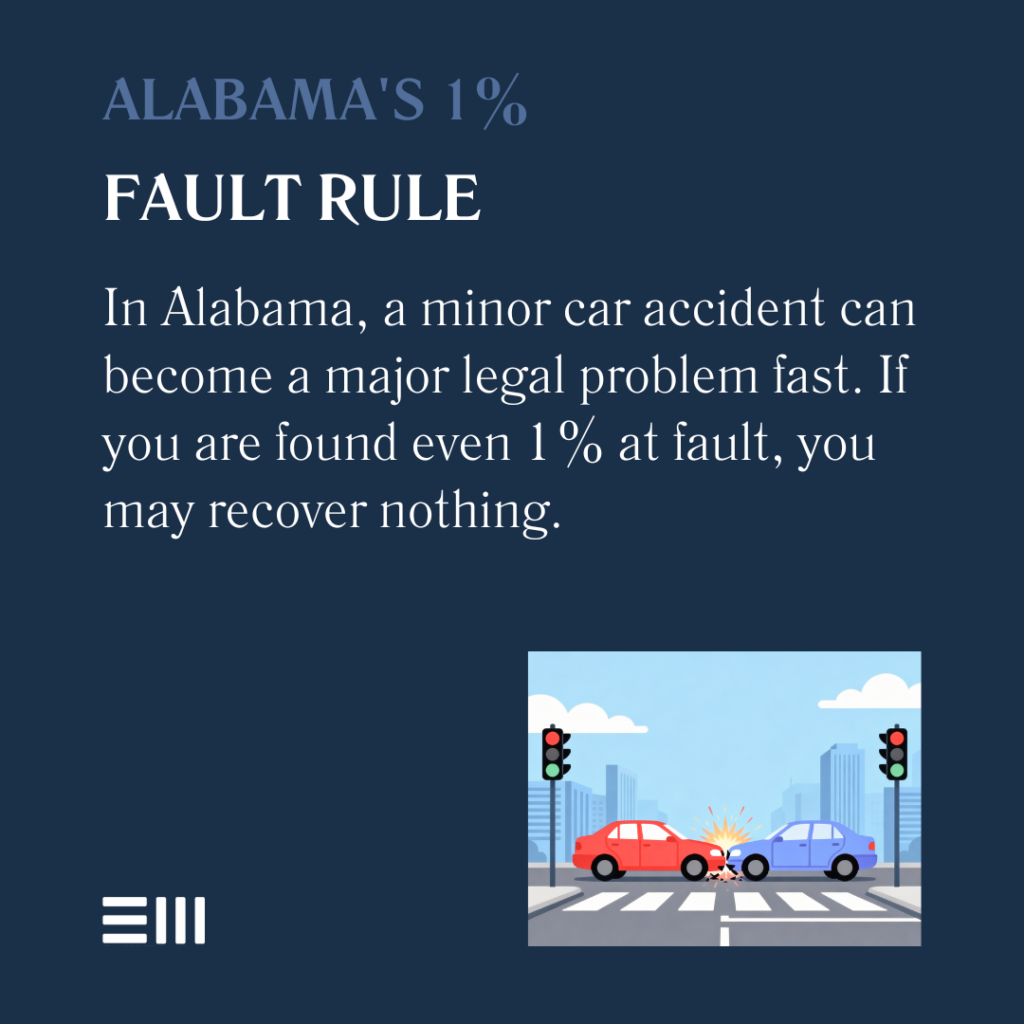
Most states use a system called comparative negligence, where a driver who is partly at fault still recovers a reduced share of damages. Alabama operates under a much harsher rule, and that rule reshapes how every minor car accident in the state plays out.
- Pure contributory negligence. Alabama is one of only four states (plus the District of Columbia) that still applies this doctrine in personal injury cases.
- The 1% rule. If you are found even 1% at fault for the crash, you can be barred from recovering any compensation.
- No proportional reduction. Unlike comparative fault states, there is no partial recovery for partial fault in Alabama.
- Insurance company strategy. Adjusters know the rule and look for any small detail that could shift even minimal blame onto the injured driver.
This single legal feature is why a minor car accident in Alabama deserves more attention than most drivers give it. Even a small misstep at the scene or in early communications can become the basis for a denied claim.
How Delayed Injuries Change the Picture
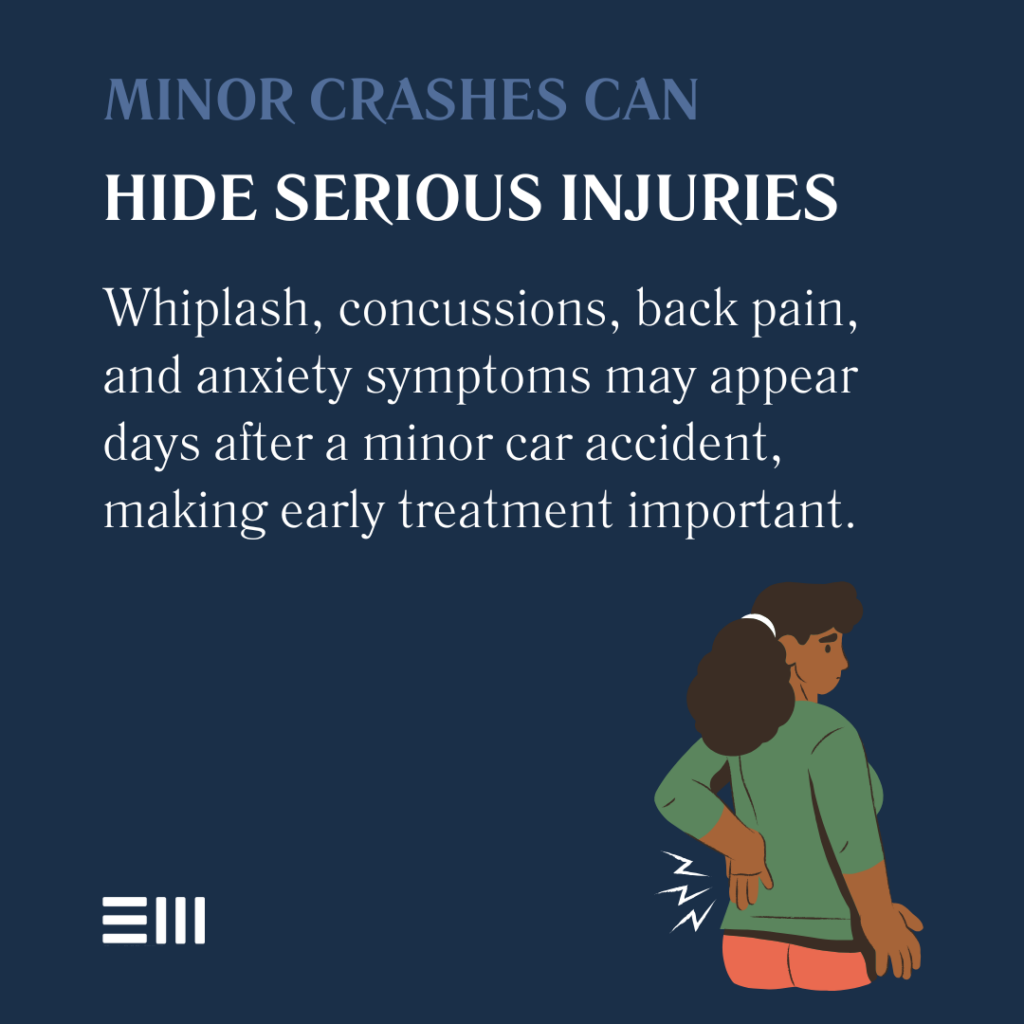
One of the most common patterns in minor car accident cases is the delayed onset of symptoms. The body’s response to a sudden collision can mask injuries for hours or even days, and that delay creates real legal problems.
- Whiplash and soft tissue injuries. Symptoms often appear 24 to 72 hours after the crash as inflammation develops.
- Concussions. Mild traumatic brain injuries can cause headaches, brain fog, and sleep disruption days later.
- Back and spinal pain. Disc injuries may not produce noticeable pain until normal movement triggers them.
- Psychological symptoms. Anxiety, sleep loss, and panic responses can emerge weeks after a minor crash.
If you decline medical attention at the scene because you feel fine and then seek treatment four days later, insurance adjusters will use that gap to argue your injuries were caused by something else.
The longer you wait, the harder it becomes to connect what you are feeling now to the crash that caused it.
Why the Other Driver’s Story Can Change
At the scene of a minor car accident, the other driver may apologize, admit fault, or simply seem cooperative. By the time their insurance company gets involved, that story can look very different.
- Coaching from adjusters. Insurance representatives often advise their insured drivers to avoid admitting fault in any form.
- Memory shifts over time. Honest people can genuinely remember events differently when they revisit them later.
- Self-protective recall. The temptation to minimize one’s own role grows when financial consequences are at stake.
- Strategic ambiguity. Some drivers deliberately offer vague accounts to give insurers room to maneuver.
The driver who said “I’m so sorry, I didn’t see you” at the scene may later tell their insurer that the light was yellow and they couldn’t be sure what happened.
Without independent documentation, the case can come down to one word against another, and Alabama’s contributory negligence rule favors the side raising doubt.
The Lowball Settlement Trap
Insurance companies often move fast after a minor car accident, sometimes calling within days with what sounds like a reasonable offer. That speed is rarely about helping you. It is usually about closing the file before you understand what you are actually owed.
- Quick offers undervalue claims. Early settlements rarely account for ongoing medical care or delayed injuries.
- Releases bar future claims. Signing a release ends your right to pursue additional compensation later, even if new symptoms develop.
- Recorded statements create risk. Adjusters may ask for a recorded statement that can later be used to argue contributory negligence.
- Pressure tactics are common. Some adjusters imply that the offer is time-limited or that an attorney will only reduce the amount you receive.
Once you sign a release, the file is closed. If your back pain turns into a herniated disc that needs surgery six months later, no amount of additional treatment will reopen the case. That is why early conversations with an insurance adjuster after a minor car accident deserve a careful pause.
Why Documentation Wins or Loses Cases
In a state with pure contributory negligence, the side with better documentation almost always has the upper hand. Every photo, witness name, and dated medical record becomes a building block in proving the other driver was entirely at fault.
- Photos of the scene. Vehicle positions, damage from multiple angles, traffic signals, weather, and visible injuries.
- Same-day medical records. A documented exam on the day of the crash anchors the timeline of your injuries.
- Witness contact information. Independent witnesses can break a he-said-she-said tie.
- Written timeline of events. A timestamped note on your phone preserves your memory before it fades.
- Preserved communications. Texts, emails, and voicemails from the other driver or their insurer.
Documentation does more than help prove your case. It also closes the door on the small details that insurance adjusters use to argue contributory negligence. Even a minor car accident benefits from the kind of paper trail that leaves nothing to interpretation.
Frequently Asked Questions About Minor Car Accidents in Alabama
Many Alabama drivers underestimate how complicated a minor car accident claim can become. Here are some of the most common questions we hear from clients.
Should I Report a Minor Car Accident to Police?
Yes. A police report creates an independent record that becomes important if the other driver later changes their account. Alabama law requires reporting any crash that involves injury, death, or property damage of $250 or more.
Do I Need to See a Doctor if I Feel Fine?
Yes. Many soft tissue injuries take 24 to 72 hours to produce symptoms. A same-day medical exam protects both your health and your legal claim.
What if the Other Driver Apologized at the Scene?
A verbal apology is not enforceable, and the other driver may walk it back later. Independent documentation, including photos and witness statements, matters far more than what was said.
Can I Still Recover if I Was Slightly at Fault?
Possibly, but the path is narrow. Alabama’s contributory negligence rule can bar recovery for as little as 1% fault. Exceptions like the last clear chance doctrine and the sudden emergency doctrine exist, but require careful legal argument.
Should I Accept the First Settlement Offer?
Almost never. Early settlement offers rarely reflect the full value of a minor car accident claim, especially when delayed injuries or ongoing treatment may still be ahead.
How Long Do I Have to File a Claim in Alabama?
The general statute of limitations for personal injury claims in Alabama is two years from the date of the crash. Wrongful death claims also follow a two-year window.
Your Rights and Next Steps With Baxley Maniscalco
A minor car accident in Alabama is rarely as simple as it looks at the scene. Between the contributory negligence rule, the timing of delayed injuries, and the strategies insurance companies use to limit payouts, the legal path forward deserves more care than most drivers expect.
Our experienced car accident attorneys here at Baxley Maniscalco serve clients across the state of Alabama from our office in Oxford, with additional reach into Anniston, Birmingham, Huntsville, and surrounding communities.
We work hard to get the results our clients need, and we aren’t afraid to take a case to trial if that’s what it takes.
Call (256) 770-7232 or reach out through our contact form to schedule a free and confidential personal injury consultation.
Can't find what you're looking for? Search our site below.