
Life rarely follows the script written during divorce proceedings. The stable job disappears, the reliable parent relocates, or the child's needs evolve beyond what anyone anticipated.
In Alabama courtrooms, judges sign divorce decrees based on circumstances frozen in time—yet those circumstances inevitably shift, sometimes dramatically.
When yesterday's solutions no longer fit today's reality, Alabama law provides pathways to modify divorce decrees, but only for those who understand which changes qualify and how to prove them.
For those navigating family law matters, modification represents just one aspect of post-divorce life.
Understanding Modifiable vs. Non-Modifiable Provisions
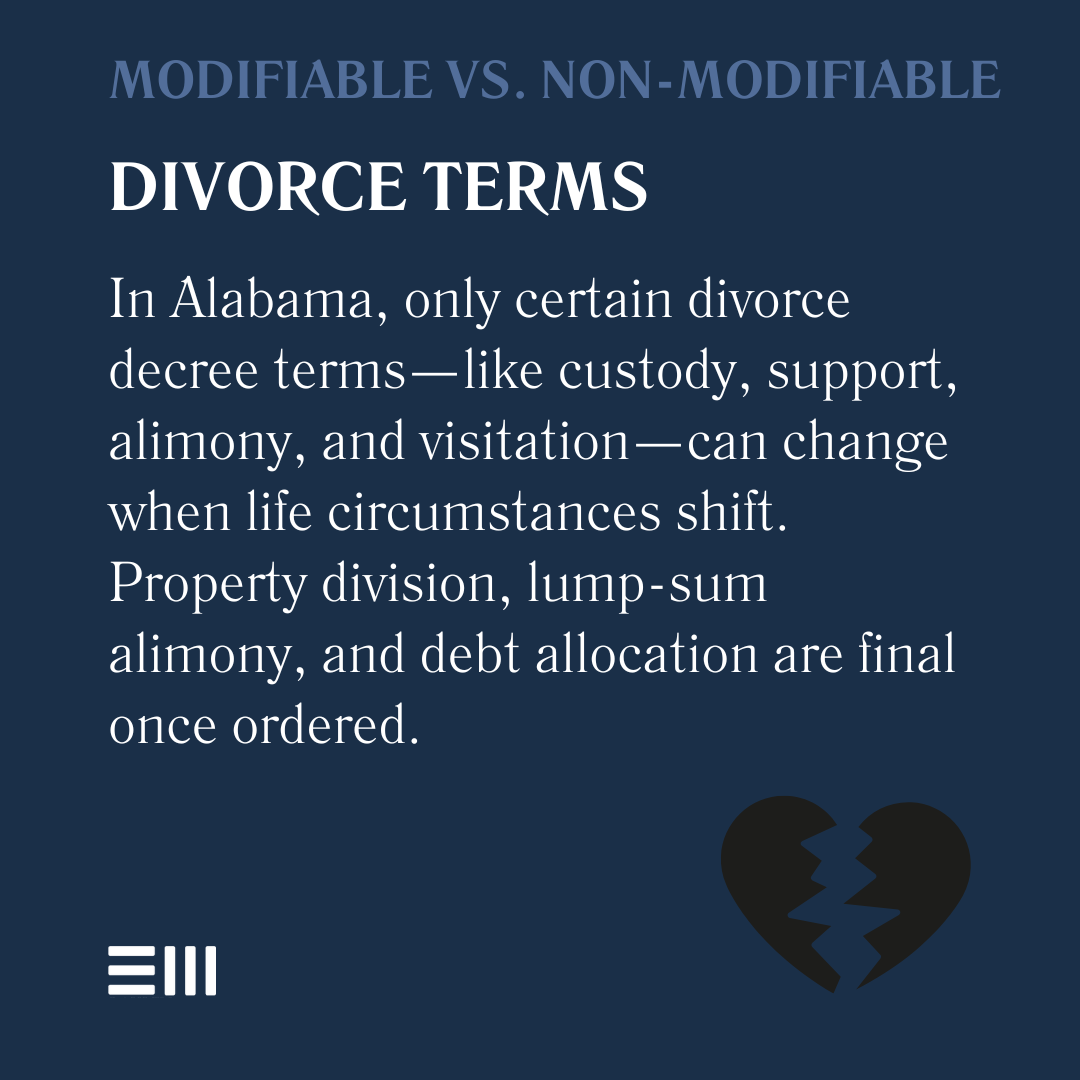
Not all aspects of a divorce decree carry equal flexibility under Alabama law. The distinction between modifiable and non-modifiable provisions fundamentally shapes what relief courts can provide when circumstances change.
Modifiable provisions typically include:
- Child custody arrangements: Physical and legal custody can adapt to children's evolving needs.
- Child support obligations: Payment amounts adjust based on income changes.
- Alimony payments: Certain types of spousal support remain open to modification.
- Visitation schedules: Parenting time can be restructured as situations change.
- Health insurance responsibilities: Coverage obligations may shift with employment changes.
- Educational expense allocations: College funding arrangements sometimes allow updates.
Non-modifiable provisions generally include:
- Property division: Asset distributions are final once the decree is entered.
- Debt allocations: Responsibility for marital debts typically cannot be shifted.
- Lump-sum alimony: One-time payment obligations remain fixed.
- Attorney fee awards: Past legal fee responsibilities stay unchanged.
Understanding these distinctions prevents wasted efforts seeking impossible changes while identifying legitimate opportunities for modification when life takes unexpected turns.
Grounds for Modifying Child Custody and Support
Alabama courts prioritize children's best interests when evaluating modification requests, but require substantial evidence that changes serve those interests.
Simply preferring different arrangements won't suffice—petitioners must demonstrate genuine need.
Valid grounds for custody modifications include:
- Parental relocation: Moving significant distances affecting current arrangements.
- Substance abuse issues: New or recurring problems endangering children.
- Domestic violence: Threats to child safety in current environment.
- Child's preferences: Older children's wishes gain consideration.
- Parental fitness changes: Improvements or deterioration in caregiving ability.
- Educational needs: Special requirements not met under current custody.
For comprehensive information about child custody modification in Alabama, understanding these grounds is essential.
Child support modifications require showing:
- Income changes: Job loss, promotion, or disability affecting earning capacity.
- Child's needs: Medical conditions or educational requirements increasing costs.
- Additional children: New family obligations impacting available resources.
- Custody changes: Shifts in physical custody affecting support calculations.
- Insurance changes: Loss or acquisition of health coverage.
- Emancipation: Children reaching majority or becoming self-supporting.
Courts examine whether changes are substantial, material, and continuing rather than temporary fluctuations.
Learn more about how child support is calculated in Alabama to understand modification impacts.
Alimony Modification Requirements
Modifying alimony in Alabama depends heavily on the type of support ordered and specific language in the original decree. Different alimony categories face varying modification standards.
Rehabilitative alimony modifications consider:
- Educational progress: Whether the recipient completed planned training.
- Employment status: Success or failure in becoming self-supporting.
- Health changes: Conditions preventing anticipated rehabilitation.
- Economic shifts: Job market changes affecting employment prospects.
Periodic alimony modifications examine:
- Payor's ability: Income changes affecting capacity to pay.
- Recipient's needs: Changed living expenses or income sources.
- Cohabitation: Recipient's romantic relationships potentially reducing need.
- Retirement: Payor reaching retirement age with reduced income.
- Remarriage: Automatic termination upon recipient's remarriage.
Alabama law requires proving both changed circumstances and continued need for support. Courts won't modify alimony simply because paying it becomes inconvenient or receiving it seems unfair.
Understanding Alabama divorce laws regarding spousal support helps frame modification expectations.
The Legal Process for Seeking Modifications
Pursuing decree modifications requires following specific procedural steps that vary slightly between counties but maintain consistent core requirements. Understanding this process helps set realistic expectations.
The modification process typically involves:
- Filing a petition: Submit formal request detailing sought changes and justifications.
- Serving the other party: Ensure proper legal notice of modification proceedings.
- Financial disclosures: Provide updated income and expense documentation.
- Mediation attempts: Many courts require mediation before hearing contested modifications.
- Discovery process: Exchange relevant information about changed circumstances.
- Court hearing: Present evidence supporting modification to the judge.
Throughout this process, the existing decree remains in effect. Changes only occur after court approval, making continued compliance essential even while seeking modifications.
Strategic preparation and compelling evidence presentation often determine success.
Evidence Needed to Support Changes
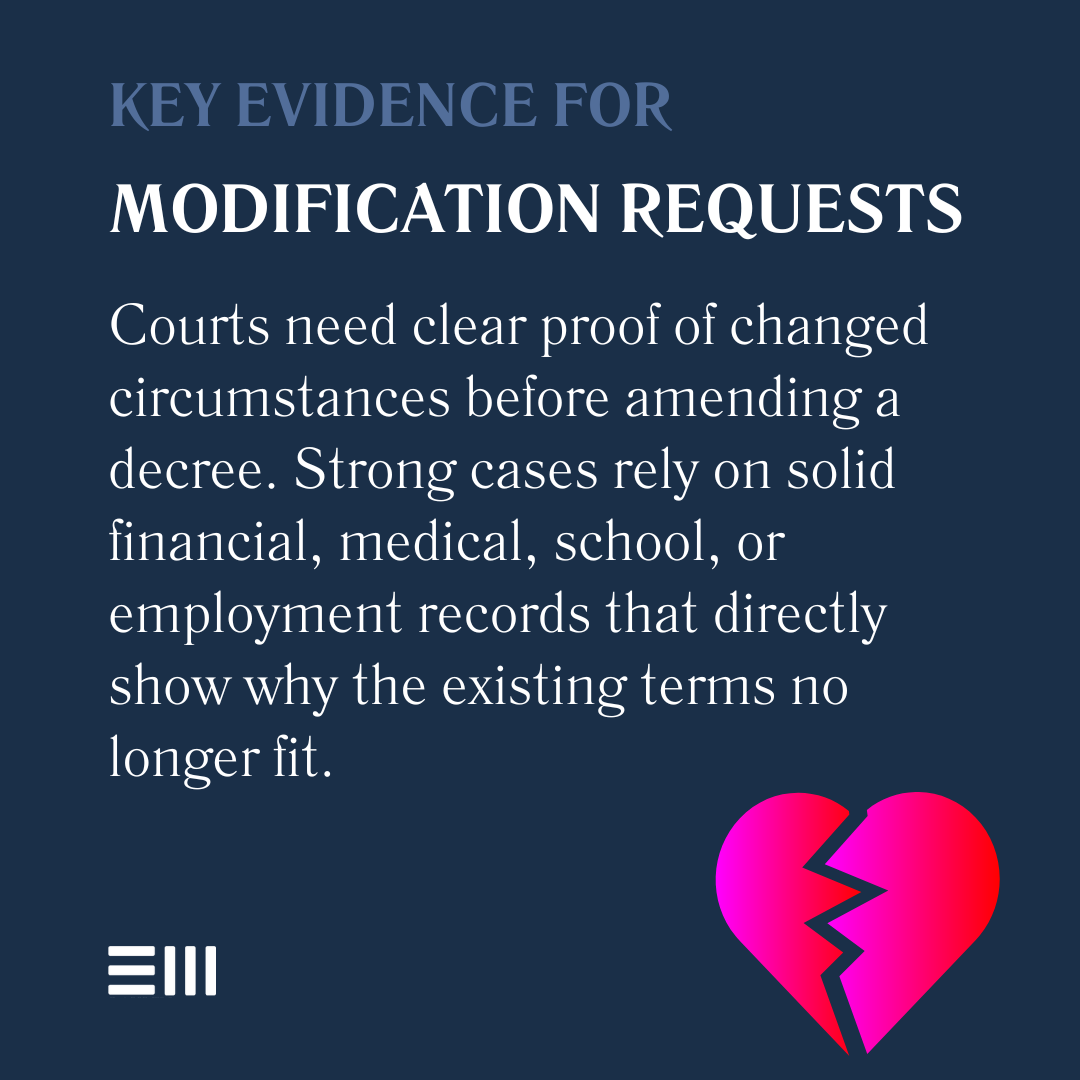
Courts require concrete proof of changed circumstances rather than mere allegations. Building a strong modification case demands thorough documentation and credible evidence.
Essential evidence types include:
- Financial records: Tax returns, pay stubs, bank statements showing economic changes.
- Medical documentation: Records proving health conditions affecting work or parenting.
- Employment verification: Termination letters, job offers, disability determinations.
- School records: Report cards, disciplinary actions, special education assessments.
- Police reports: Documentation of domestic violence or substance abuse incidents.
- Witness testimony: Teachers, counselors, or others observing changed circumstances.
Quality matters more than quantity—courts value clear, relevant evidence directly supporting claimed changes. Organizing documentation chronologically and highlighting specific changes strengthens modification requests.
Frequently Asked Questions About Divorce Decree Amendments in Alabama
Understanding divorce decree modifications in Alabama raises numerous questions for those facing changed circumstances after their divorce.
How Soon After Divorce Can I Request Modifications?
Alabama law doesn't mandate waiting periods for modification requests, but courts expect substantial time between modifications absent emergency circumstances.
Requesting changes immediately after divorce suggests buyer's remorse rather than genuine changed circumstances. Most attorneys recommend waiting at least six months unless urgent safety issues arise.
Can My Ex and I Agree to Changes Without Court Involvement?
While parents can informally adjust day-to-day arrangements, only court-approved modifications carry legal force. P
rivate agreements about custody, support, or alimony lack enforceability if disputes arise. Courts must approve modifications to ensure children's interests are protected and agreements comply with Alabama law.
What If My Ex Refuses to Follow the Modified Order?
Modified orders carry the same legal weight as original decrees. Violations can result in contempt proceedings, wage garnishment, or other enforcement actions.
Document all violations carefully and consult an attorney about enforcement options. Courts take modification order violations seriously.
How Much Does It Cost to Modify a Divorce Decree?
Costs vary based on case complexity and whether parties agree on changes. Uncontested modifications may cost several hundred dollars in filing fees and minimal attorney time.
Contested modifications involving custody evaluations or financial experts can cost thousands. Many attorneys offer payment plans for modification cases.
Can Modifications Be Temporary?
Yes, courts can order temporary modifications for specific time periods. Common examples include temporary support reductions during unemployment or temporary custody changes during military deployment.
Temporary orders automatically expire, returning parties to original decree terms unless further modified.
These questions reflect common concerns facing those considering divorce decree modifications in Alabama.
Navigate Your Path to Modified Divorce Terms
Changed circumstances shouldn't trap you in outdated divorce arrangements that no longer serve your family's needs. Whether facing job loss, relocation, health challenges, or evolving children's needs, Alabama law recognizes that yesterday's solutions may not fit today's reality.
Understanding which provisions can be modified, what evidence courts require, and how to navigate the legal process empowers you to seek necessary changes while avoiding costly mistakes.
Our friendly attorneys here at Baxley Maniscalco bring extensive experience guiding clients through divorce decree modifications.
We understand that seeking changes often coincides with stressful life transitions, and we're here to shoulder the legal burden while you focus on your family. From evaluating whether your circumstances warrant modification to presenting compelling cases in court, we fight for arrangements that reflect your current reality.
Contact us today to discuss how changed circumstances affect your divorce decree.