
When a military deployment arrives unexpectedly or medical emergencies strike, Alabama families often need immediate childcare arrangements that go beyond simple babysitting.
The gap between informal care and full legal guardianship creates confusion for grandparents watching grandchildren during a parent's rehabilitation, aunts caring for nieces during family crises, or family friends stepping in when both parents face sudden hospitalization.
Understanding Alabama's Guardianship Requirements
Alabama law strictly regulates who can make legal decisions for children, creating a framework that protects minors while recognizing practical family needs. The state distinguishes between casual caregiving and legal authority to make educational, medical, and financial decisions on a child's behalf.
Traditional guardianship requires court proceedings, including:
- Filing formal petitions with probate court.
- Providing notice to all interested parties.
- Attending court hearings with evidence.
- Obtaining judicial approval and orders.
- Completing guardian training requirements.
- Filing annual reports with the court.
These procedures protect children's interests but can take weeks or months to complete. For families facing immediate needs, understanding alternatives to formal guardianship becomes essential for ensuring children receive proper care without legal complications.
Power of Attorney for Minor Children in Alabama
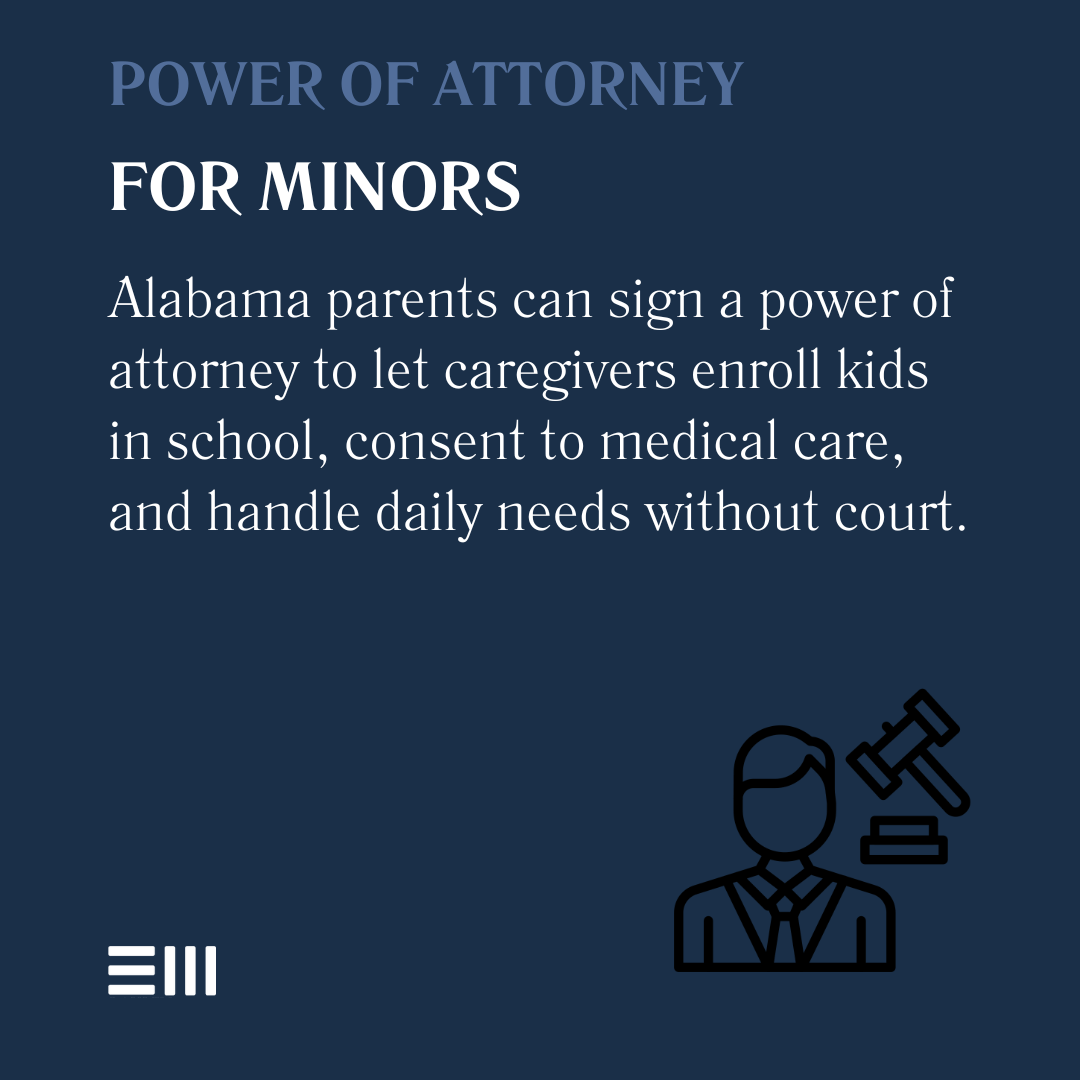
Alabama recognizes power of attorney documents as one method for parents to temporarily delegate authority without court involvement. This legal tool allows parents to grant specific powers to caregivers while retaining their fundamental parental rights.
A properly executed power of attorney for minors can authorize caregivers to:
- Enroll children in school or daycare.
- Consent to routine medical treatment.
- Access school and medical records.
- Make day-to-day parenting decisions.
- Apply for benefits on the child's behalf.
- Travel with the child domestically.
However, significant limitations exist. Powers of attorney cannot override existing custody orders, consent to adoption, or make permanent life-altering decisions.
Alabama law also limits their duration—typically six months to one year—preventing their use as permanent guardianship substitutes.
Parents must sign these documents voluntarily while mentally competent, and both parents with legal rights should participate when possible.
Emergency Situations and Immediate Care
Crisis situations don't wait for court schedules, leading Alabama to recognize certain emergency exceptions for child care.
When parents become suddenly incapacitated or unavailable, relatives and family friends may need to act quickly to ensure children's safety and well-being.
Emergency care provisions allow temporary decision-making in specific circumstances:
- Medical emergencies requiring immediate treatment.
- Parents hospitalized or incarcerated unexpectedly.
- Abandonment situations requiring protective custody.
- Natural disasters displacing families.
- Domestic violence necessitating safe placement.
- Sudden military deployment of single parents.
These emergency provisions typically last only until parents can make arrangements or courts can intervene.
Caregivers should document the emergency circumstances and seek legal authority as soon as practicable. Medical providers and schools may accept emergency caregivers temporarily but will require proper documentation for ongoing care.
When Court Intervention Becomes Necessary
Despite alternatives for temporary care, many situations ultimately require formal court proceedings to protect both children and caregivers.
Alabama courts must intervene when parental rights need modification or when temporary arrangements prove insufficient.
Court intervention becomes mandatory when:
- Parents cannot or will not sign power of attorney documents.
- Both parents are deceased or permanently incapacitated.
- Existing custody orders need modification.
- Child protective services becomes involved.
- Duration exceeds power of attorney limitations.
- Major medical decisions or surgery required.
- Divorce proceedings impact custody arrangements.
Attempting to avoid court when legally required can create serious problems. Caregivers may face liability for unauthorized decisions, children might lose access to benefits or services, and insurance companies could deny coverage for medical treatment.
Schools may refuse enrollment without proper guardianship papers, leaving children's education disrupted.
Alternative Legal Arrangements
Beyond traditional guardianship and powers of attorney, Alabama families can explore several legal arrangements that provide varying levels of authority without full court proceedings.
Each option serves specific situations and comes with distinct advantages and limitations.
Standby guardianship allows parents with deteriorating health conditions to designate future guardians who automatically assume responsibility upon the parents' incapacity or death.
This proactive approach requires initial court approval but avoids delays during crisis moments. Military families particularly benefit from standby arrangements before deployments.
Kinship care agreements formalize existing family relationships when relatives assume primary caregiving roles. While not replacing legal guardianship, these agreements can facilitate school enrollment, medical care, and benefit applications.
Alabama's kinship care policies recognize the importance of keeping children within extended family networks whenever possible.
Risks of Informal Arrangements
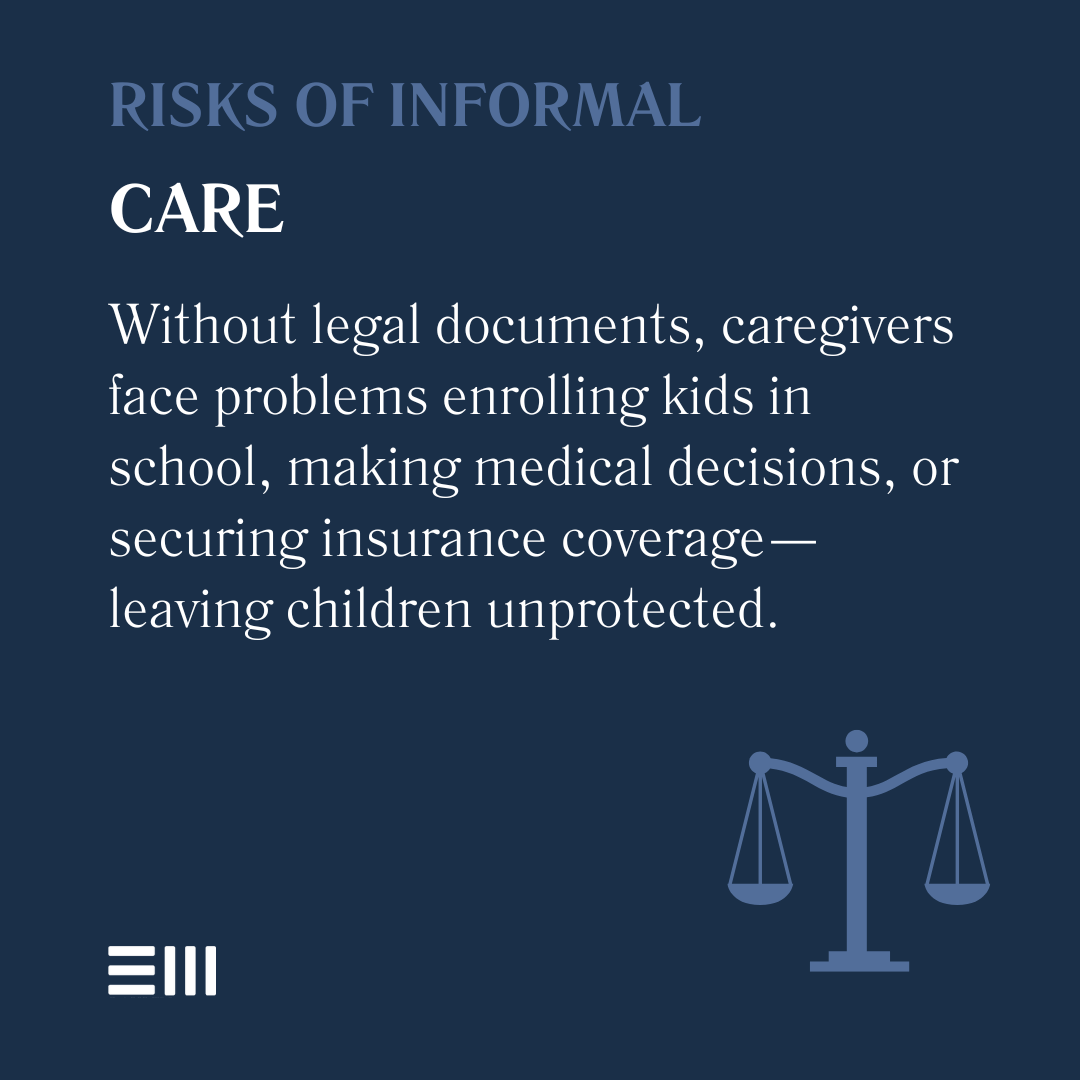
While avoiding court might seem simpler, informal childcare arrangements without proper legal documentation create substantial risks for everyone involved.
These dangers extend beyond mere inconvenience to potentially serious legal and financial consequences.
Significant risks of informal arrangements include:
- Inability to make emergency medical decisions.
- School enrollment complications or denials.
- Insurance coverage disputes for medical care.
- Challenges accessing government benefits.
- Potential kidnapping or custodial interference charges.
- Lack of legal recourse if parents change minds.
- Financial liability for unauthorized decisions.
Caregivers operating without legal authority remain vulnerable to parental whims and system barriers.
Even well-meaning relatives can face criminal charges if parents later dispute the arrangement. Children suffer most when informal arrangements collapse, leaving them without stable care or access to necessary services.
Frequently Asked Questions About Temporary Guardianship in Alabama
Families considering temporary guardianship arrangements in Alabama often share common concerns about legal requirements and practical implications.
These answers address typical questions about alternatives to formal court proceedings.
How Long Can a Power of Attorney for a Minor Last in Alabama?
Alabama generally limits power of attorney documents for minors to six months, with possible extensions up to one year in specific circumstances. Military families may receive longer durations during deployments. Documents exceeding these timeframes typically become invalid, requiring either renewal or formal guardianship proceedings.
Can Grandparents Make Medical Decisions Without Guardianship?
Grandparents can make routine medical decisions with a properly executed power of attorney from the parents. However, major medical procedures, surgeries, or psychiatric treatment often require either parental consent or court-appointed guardianship. Emergency medical treatment follows different rules, allowing providers to treat children when parents cannot be reached.
What Documents Do Schools Require for Non-Parent Enrollment?
Alabama schools typically require notarized power of attorney documents or court orders for non-parent enrollment. Some districts accept kinship affidavits for relatives. Documentation must clearly authorize educational decision-making and specify the arrangement's duration. Schools may request additional proof of residence and immunization records.
Can Both Parents Sign Over Temporary Guardianship?
Yes, when both parents have legal custody rights, both should sign power of attorney documents to avoid future disputes. If one parent has sole legal custody through court order, only that parent's signature is required. Disagreeing parents cannot use power of attorney to circumvent existing custody arrangements.
What Happens If Parents Want Their Children Back?
Parents retain the right to revoke power of attorney arrangements at any time unless court orders state otherwise. Caregivers must return children upon parental request, regardless of concerns about the children's well-being. If safety concerns exist, caregivers should contact child protective services rather than refusing to return children.
Navigate Alabama Guardianship Laws with Confidence
Temporary care arrangements for children require careful navigation of Alabama's legal requirements to protect everyone involved.
At Baxley Maniscalco, our experienced family law attorneys understand the urgency of childcare crises and the complexity of guardianship laws.
We help families explore all options—from power of attorney documents to emergency guardianship petitions—ensuring children receive proper care while maintaining legal compliance. Don't risk your family's future with informal arrangements.
Call (256) 770-7232 today to discuss your situation and create a legally sound plan that protects the children you love.