
Every day, Alabama drivers wonder whether the settlement offer they received fairly compensates them for their injuries, medical bills, and life disruption after a crash.
Insurance companies often present initial offers within days of an accident, counting on victims not knowing the true value of their claims.
Understanding how settlement amounts are determined in Alabama—and what factors can dramatically increase or decrease compensation—empowers accident victims to make informed decisions about their financial recovery.
Factors That Determine Settlement Values
Car accident settlements in Alabama vary widely based on numerous interconnected factors that paint a complete picture of how the crash impacted the victim's life.
Insurance adjusters and attorneys evaluate these elements to arrive at a fair compensation amount that addresses both economic and non-economic damages.
Key factors influencing settlement amounts include:
- Severity of injuries: More serious injuries requiring extensive treatment result in higher settlements.
- Medical expenses: All past and future medical costs directly related to the accident.
- Lost wages: Income lost during recovery and potential future earning capacity reduction.
- Property damage: Vehicle repair or replacement costs.
- Pain and suffering: Physical pain and emotional distress caused by the accident.
- Liability determination: The degree of fault assigned to each party.
- Insurance coverage limits: Available policy limits from all applicable insurance sources.
These factors work together to create a comprehensive valuation of each unique case.
A minor fender-bender with soft tissue injuries might settle for a few thousand dollars, while catastrophic injuries involving permanent disability can result in settlements reaching hundreds of thousands or even millions of dollars.
Types of Damages in Alabama Settlements
Alabama law recognizes multiple categories of damages that accident victims can recover through settlement negotiations or litigation. Understanding these distinct types helps victims ensure all losses are properly documented and included in their claims.
Economic damages include:
- Medical bills: Emergency treatment, surgeries, medication, physical therapy, and ongoing care.
- Lost income: Wages lost during recovery and reduced future earning potential.
- Property damage: Vehicle repairs, replacement, and personal property destroyed in the crash.
- Out-of-pocket expenses: Transportation to medical appointments, home modifications, and medical equipment.
Non-economic damages encompass:
- Pain and suffering: Physical discomfort and emotional trauma from the accident.
- Mental anguish: Anxiety, depression, and psychological impact.
- Loss of enjoyment: Inability to participate in previously enjoyed activities.
- Loss of consortium: Impact on marital relationships.
Alabama also allows punitive damages in cases involving particularly reckless behavior, such as drunk driving.
These damages punish the wrongdoer and deter similar conduct, potentially adding substantial amounts to settlements.
Alabama's Contributory Negligence Impact
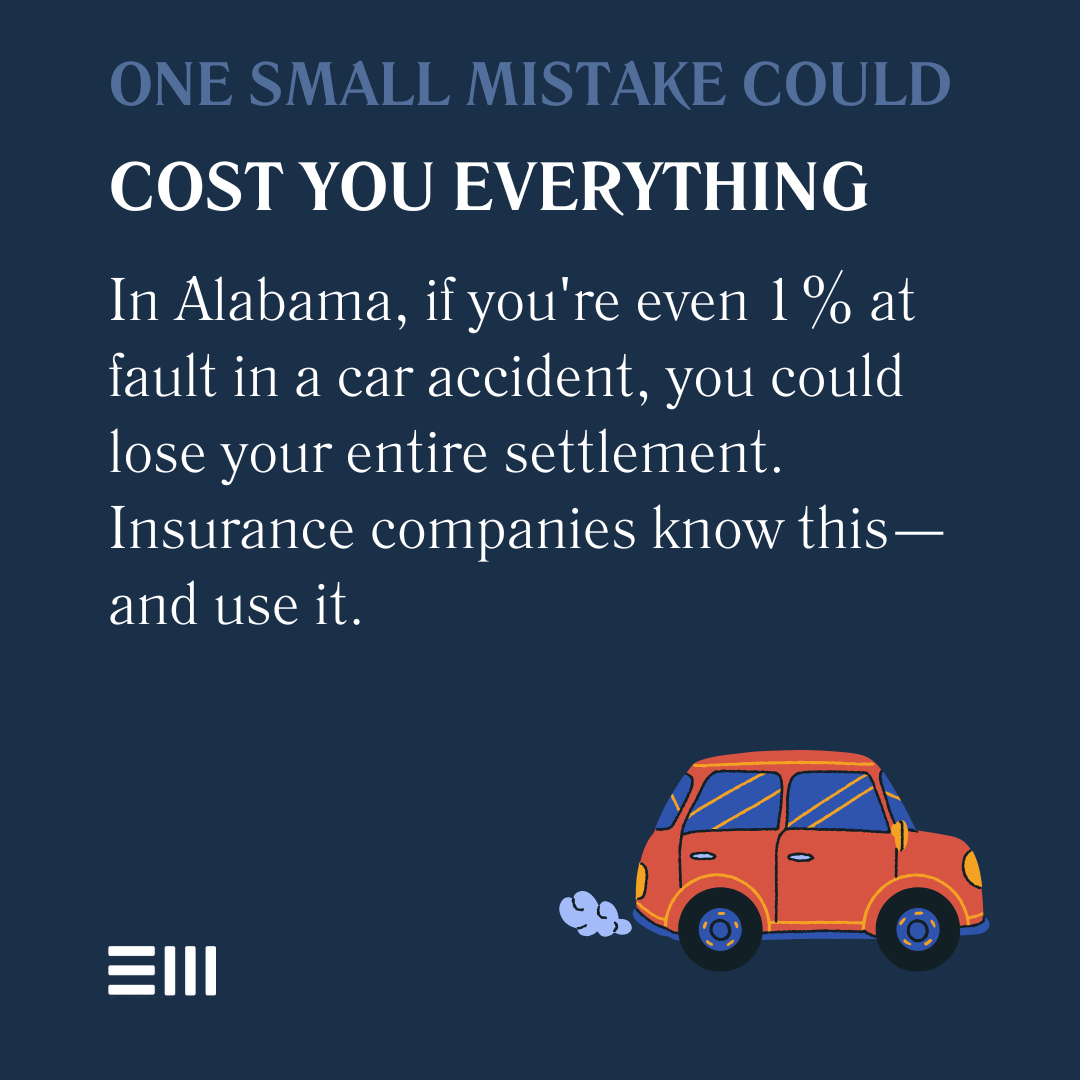
Alabama follows the harsh contributory negligence doctrine, which dramatically affects settlement negotiations and potential compensation.
This legal principle sets Alabama apart from most other states and creates unique challenges for accident victims seeking fair settlements.
Under contributory negligence:
- Victims who are even 1% at fault cannot recover any damages.
- Insurance companies aggressively investigate any possible victim fault.
- Minor actions like slightly exceeding the speed limit can bar recovery.
- Settlement negotiations often focus heavily on fault allocation.
- Cases require stronger evidence to overcome fault allegations.
This doctrine gives insurance companies significant leverage in settlement negotiations. They know that if they can prove any contributory negligence at trial, the victim receives nothing.
As a result, settlement offers may be lower than in states with more favorable comparative fault rules. Understanding this reality helps victims and their attorneys develop strategies to maximize recovery despite this challenging legal landscape.
Timeline for Receiving Settlements
The path from accident to settlement check involves multiple stages, each affecting how quickly victims receive compensation. While some cases settle within months, others may take years to reach resolution, depending on various factors.
Typical settlement timeline stages:
- Initial investigation: 30-60 days for insurance companies to investigate claims.
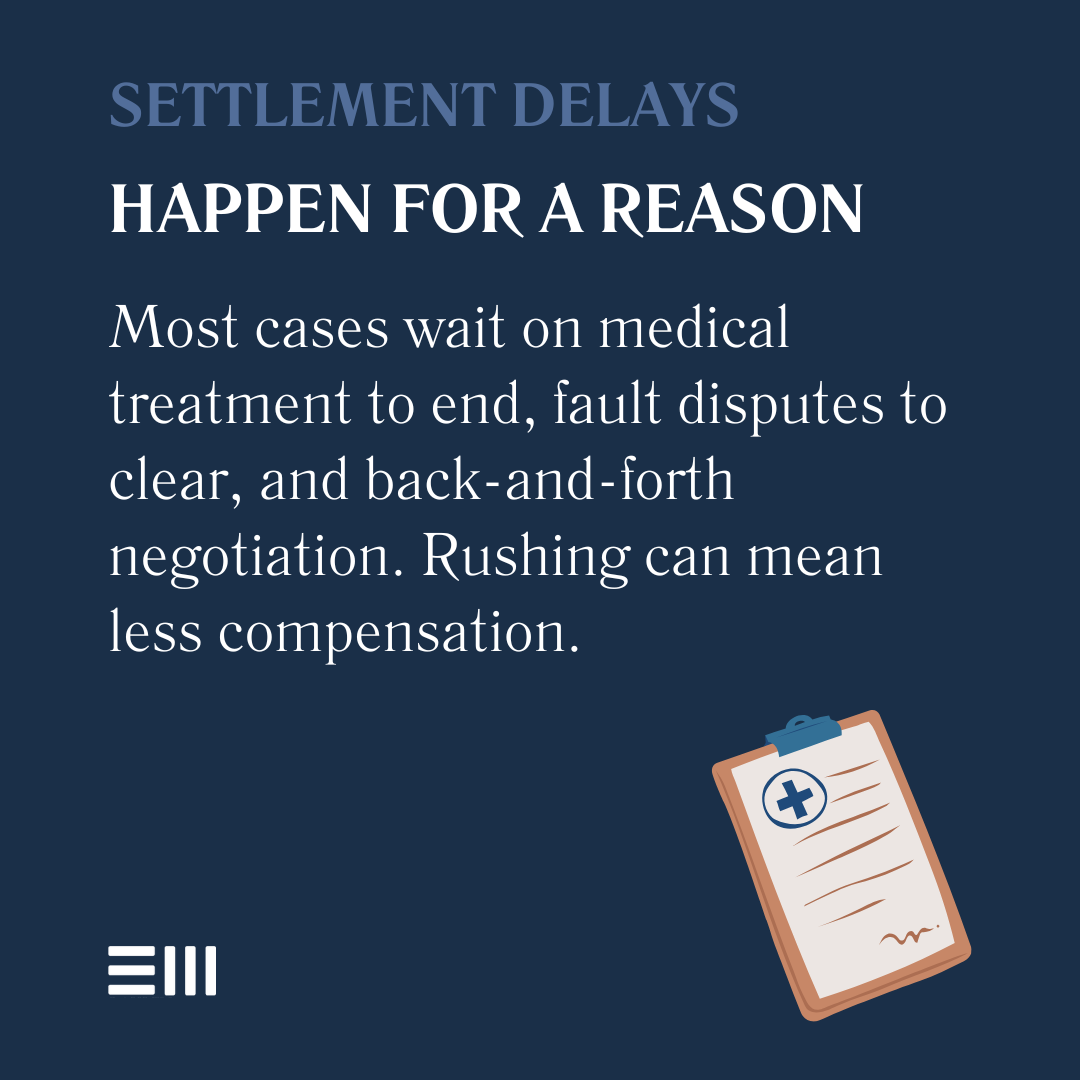
- Medical treatment completion: Settlements often wait until treatment concludes.
- Demand letter: Attorney preparation and insurance company response takes 30-90 days.
- Negotiation period: Back-and-forth negotiations may last weeks or months.
- Settlement finalization: Documentation and fund disbursement requires 2-6 weeks.
Several factors can extend these timelines, including disputed liability, severe injuries requiring lengthy treatment, multiple parties involved, and insurance company delays. Cases involving litigation rather than pre-suit settlement typically take 12-24 months or longer. Understanding realistic timelines helps victims plan financially and avoid accepting premature lowball offers out of desperation.
Common Settlement Ranges by Injury Type
While every case is unique, certain injury patterns tend to result in predictable settlement ranges in Alabama.
These ranges provide general guidance but should not be considered guarantees, as individual circumstances significantly impact final values.
Settlement ranges often fall within:
- Soft tissue injuries: Whiplash, strains, and sprains may settle between modest amounts for minor cases to substantial sums for severe, long-lasting injuries.
- Broken bones: Fractures typically result in higher settlements, especially if surgery is required.
- Head injuries: Traumatic brain injuries command significant settlements due to long-term impacts.
- Spinal injuries: Back and neck injuries requiring surgery or causing permanent limitations see major settlements.
- Permanent disabilities: Paralysis, amputations, and other catastrophic injuries result in the highest settlements.
These ranges assume clear liability and adequate insurance coverage. Cases with disputed fault or limited insurance may settle for less, while those involving commercial vehicles or drunk drivers might exceed typical ranges.
Each case requires individual evaluation to determine appropriate compensation.
Frequently Asked Questions About Car Accident Injury Settlement Amounts in Alabama
Understanding car accident settlements raises numerous questions for Alabama accident victims navigating the claims process.
How Long After an Accident Can I Still File a Claim in Alabama?
Alabama's statute of limitations gives accident victims two years from the crash date to file a personal injury lawsuit. However, insurance claims should be filed much sooner—ideally within days or weeks of the accident. Delays can result in lost evidence and skepticism about injury claims.
Will My Settlement Be Taxed?
Personal injury settlements for physical injuries are generally not taxable under federal law. This includes compensation for medical bills, pain and suffering, and lost wages. However, punitive damages and interest earned on settlements may be taxable. Consult a tax professional for specific guidance.
What If the Settlement Offer Seems Too Low?
Initial settlement offers from insurance companies are often significantly below fair value. You have the right to reject offers and negotiate for appropriate compensation. Document all damages thoroughly and consider legal representation to level the playing field with insurance companies.
Can I Still Receive a Settlement If I Was Partially at Fault?
Alabama's contributory negligence rule bars recovery if you're found even slightly at fault. However, fault determination is often disputed and negotiable. Strong legal representation can help challenge fault allegations and potentially secure compensation despite initial fault claims.
How Are Future Medical Costs Calculated?
Future medical expenses require expert testimony from doctors and life care planners. They evaluate your injuries, necessary future treatments, and associated costs. These projections become part of settlement negotiations to ensure long-term needs are covered.
These questions reflect common concerns accident victims face when evaluating potential settlement amounts.
Let Justice Roll
Understanding car accident settlement amounts empowers you to make informed decisions, but knowledge alone doesn't guarantee fair compensation.
Insurance companies employ teams of adjusters and attorneys working to minimize payouts, while you're trying to recover from injuries and rebuild your life.
The difference between accepting a quick offer and fighting for full compensation can mean tens of thousands of dollars—money you need for medical bills, lost wages, and securing your family's future.
The attorneys at Baxley Maniscalco know how to properly value car accident claims in Alabama and have the experience to counter insurance company tactics. We'll thoroughly investigate your accident, document all damages, and aggressively negotiate for maximum compensation.
Don't settle for less than you deserve.
Contact us today for a free consultation about your car accident claim. Let us handle the insurance companies while you focus on healing.