When Alabama's attorney general announced a $45 million settlement with the company behind Cash App, the headline number sounded like good news for the millions of people who use the app.
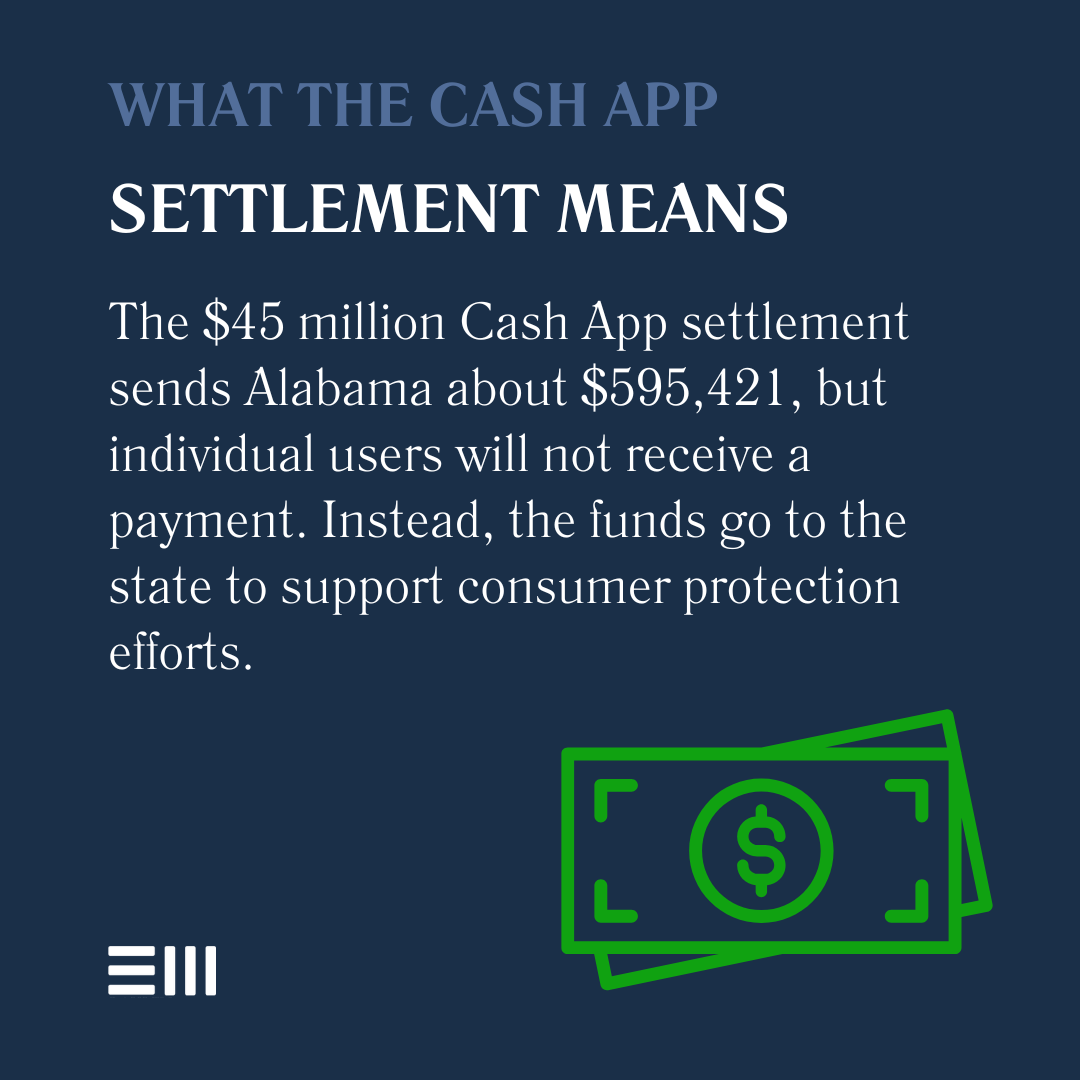
Then came the fine print. Alabama's $595,421 share goes to the state, not to the users who were harmed.
That gap between a big settlement and an empty consumer pocket catches a lot of people off guard. Understanding what the Cash App settlement actually does, and what it does not, can help you protect your own money on any payment app.
What the Settlement Was About
The $45 million multistate settlement, joined by 46 states and led by Oregon and Texas, resolved allegations that Block, Inc., the parent of Cash App, misled its users and left them exposed to fraud. The state's account of what went wrong is blunt.
Investigators pointed to a few core failures:
- A false sense of safety. Block told users their money was safe, suggesting Cash App carried the same protections as a bank when it did not.
- Fraud that outpaced the safeguards. As fraud on the platform grew, the company kept expanding its marketing rather than fixing the problem, according to the states.
- Little help when things went wrong. Users hit with account lockouts or unauthorized charges often struggled to reach anyone or recover their money.
In the attorney general's words, the company failed to help people when things went wrong. That failure, repeated across millions of accounts, is what the settlement set out to address.
Why You Will Not Get a Check
Here is the part that surprises people. The money from the Cash App settlement flows to the participating states, not to individual users, so Alabamians who use Cash App should not expect a payment from it.
That does not mean consumers were forgotten everywhere. In a separate federal action in early 2025, the Consumer Financial Protection Bureau reached its own settlement with Block that included up to $120 million in refunds to consumers.
This state settlement is a different matter, and its dollars are meant to fund the states and their consumer protection work rather than to repay individual victims.
So while the headline promises a payout, the benefit to everyday users comes mostly from the changes Block is now required to make.
What Block Has to Change
The most lasting part of the settlement may not be the money at all. Block agreed to a set of reforms designed to keep the next wave of users from getting stuck the way earlier ones did.
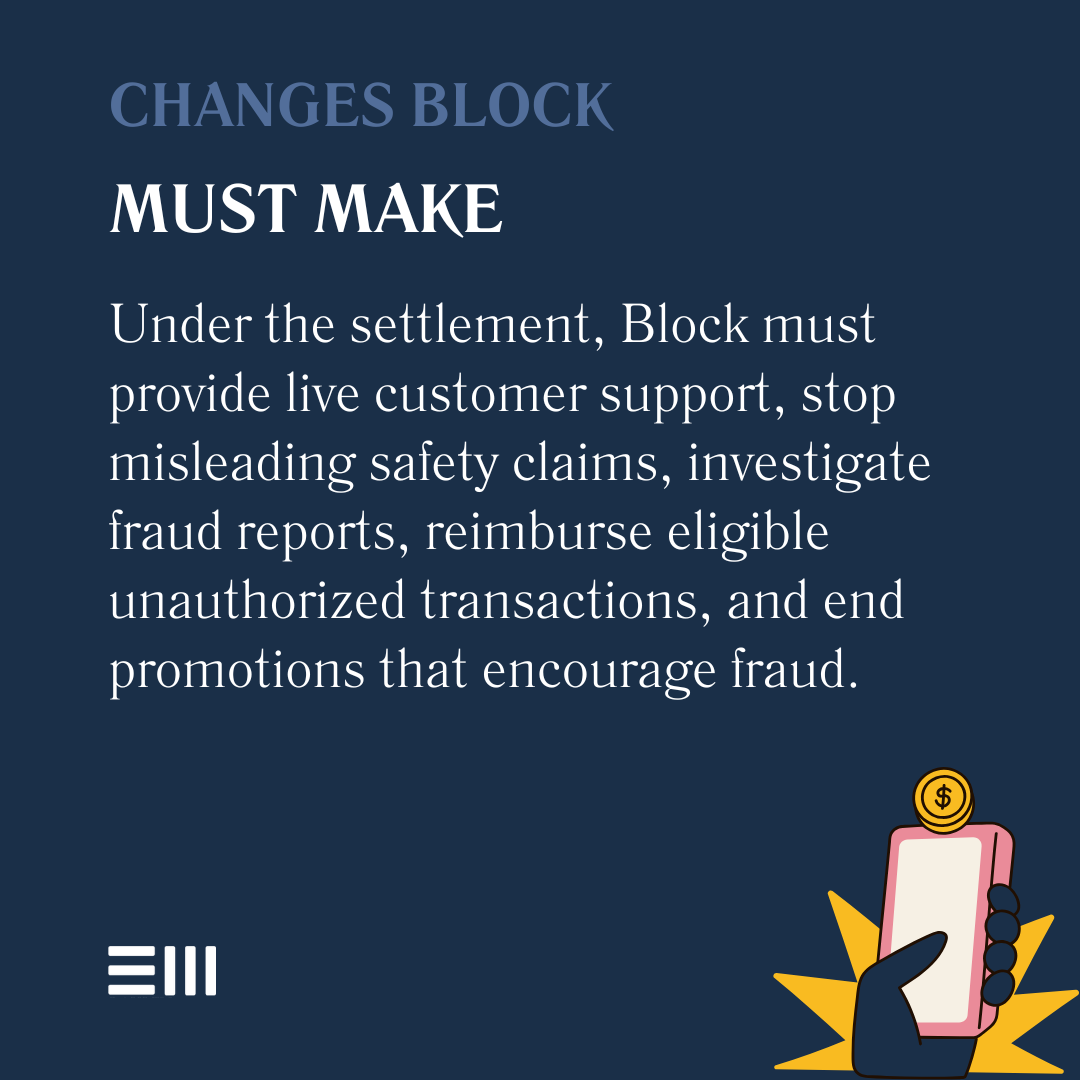
Under the agreement, the company must do the following:
- Provide real customer support. Block has to offer live help by phone and chat for much of each day, so users can reach a person when fraud strikes.
- Market honestly. The company must stop making false or misleading claims about how safe Cash App is.
- Drop risky promotions. Marketing known to invite fraud, such as pushing users to post their Cash App names publicly for giveaways, has to end.
- Investigate fraud and issue refunds. Block must look into fraud claims and reimburse users for unauthorized transactions when the law requires it.
These changes will not undo past losses, but they aim to close the gaps that let so much fraud through in the first place.
Protecting Yourself From Payment App Fraud
Payment apps are fast and convenient, and that is exactly what makes them a target for scammers. A few habits go a long way toward keeping your money where it belongs.
- Treat a transfer like cash. Once money leaves your account on a payment app, it can be nearly impossible to recover, so send only to people you actually know.
- Confirm the recipient every time. Double check the name, the handle, and the number before you hit send.
- Turn on every security feature. Use a PIN, a fingerprint lock, and transaction alerts so you catch anything unusual fast.
- Act quickly if something is wrong. Report an unauthorized charge to the app and your bank right away, and keep a record of every message.
No app is fraud proof, but these steps put you in a far stronger position if a scammer ever comes calling.
When Fraud or Deception Costs You Money
A state settlement can change how a company behaves, yet it rarely puts money back in the pocket of the person who was defrauded. When deceptive practices or a company's failure to act causes real financial harm, Alabamians still have options.
Our experienced consumer protection attorneys here at Baxley Maniscalco help people harmed by deceptive financial practices understand their rights, whether that means a class action alongside others harmed the same way or a claim over the financial exploitation of an older family member.
If fraud or a broken promise cost you or a loved one real money, a case review is a good place to start.
Questions Alabama Consumers Are Asking
The Cash App settlement raised a lot of practical questions for people who use the app every day. Here are answers to the ones coming up most often.
What Is the Cash App Settlement About?
It resolves state allegations that Block, the parent of Cash App, misled users about the app's safety, let fraud grow unchecked, and failed to help customers who lost money. Block agreed to pay $45 million and to change how it handles fraud and support.
Will Cash App Users in Alabama Get Any Money?
No. Alabama's $595,421 share goes to the state, not to individual users. A separate federal settlement in 2025 was the one that included consumer refunds.
What Does Block Have to Change?
The company must offer live phone and chat support for much of the day, stop misleading claims about safety, end promotions that invite fraud, and investigate fraud claims while reimbursing users for unauthorized charges when the law requires it.
What Should I Do If I Was Defrauded on Cash App?
Report the transaction to Cash App and your bank right away, document everything, and file a complaint with the Alabama Attorney General's office. If the loss was significant, a lawyer can help you weigh your options.
Can I Still Take Legal Action Over Payment App Fraud?
Possibly. Depending on the facts, people harmed by deceptive practices may have individual or class action claims. An attorney can review what happened and explain whether you have a path forward.
These answers cover the basics, but every situation is different, so reach out if yours is not addressed here.
Lost Money to Fraud or a Broken Promise? Let Us Help.
A company that misleads its customers should answer for it, and you should not have to absorb the loss alone. If deceptive practices or unchecked fraud cost you or someone you love real money, you deserve to know your options.
Our experienced consumer protection attorneys here at Baxley Maniscalco are ready to review what happened.
Call us at (256) 770-7232 or reach out through our contact form to schedule a consultation today.