
When children suffer injuries due to someone else's negligence, Alabama law provides special protections and procedures that differ significantly from adult personal injury cases.
These unique legal frameworks recognize that minors cannot advocate for themselves and need additional safeguards to ensure fair compensation for their injuries.
Understanding Child Injury Laws in Alabama
Child accident claims in Alabama operate under unique legal frameworks designed to protect minors' interests throughout the legal process. Unlike adult claims, child injury cases involve court oversight, special statutes of limitations, and restrictions on settlements to ensure fair compensation reaches the injured child.
Alabama recognizes that children cannot legally make decisions about their own claims. Parents or legal guardians must file lawsuits on behalf of injured minors, acting as "next friends" in legal proceedings.
The court maintains oversight authority to ensure any settlements truly benefit the child rather than adult interests.
These protective measures create additional procedural requirements but ultimately safeguard children's rights to fair compensation for their injuries.
Common Types of Child Accidents
Alabama children face injury risks in numerous everyday environments, from schools and playgrounds to roads and private properties. Understanding common accident types helps parents recognize when negligence may have contributed to their child's injuries.
Frequent child accident scenarios include:
- Motor vehicle collisions as passengers or pedestrians;
- Playground equipment failures or inadequate supervision;
- Dog bites and animal attacks;
- Swimming pool accidents and drownings;
- Bicycle and scooter accidents;
- Daycare negligence and abuse;
- Sports and recreational injuries; and
- Defective toys and product injuries.
Each accident type requires specific evidence and legal approaches to prove negligence and establish liability for the child's damages.
Proving Negligence in Child Injury Cases
Establishing negligence in child accident claims requires demonstrating that the responsible parties failed to exercise reasonable care toward the minor. Alabama law recognizes children's limited ability to protect themselves, often holding defendants to higher safety standards when children are involved.
Essential elements for proving negligence include:
- Duty of care owed to the child;
- Breach of that duty through action or inaction;
- Direct causation between breach and injury;
- Actual damages suffered by the child;
- Foreseeability of harm to children; and
- Failure to implement age-appropriate safety measures.
Courts consider whether defendants should have anticipated children's presence and taken extra precautions to prevent foreseeable accidents.
Special Considerations for Minor Settlements
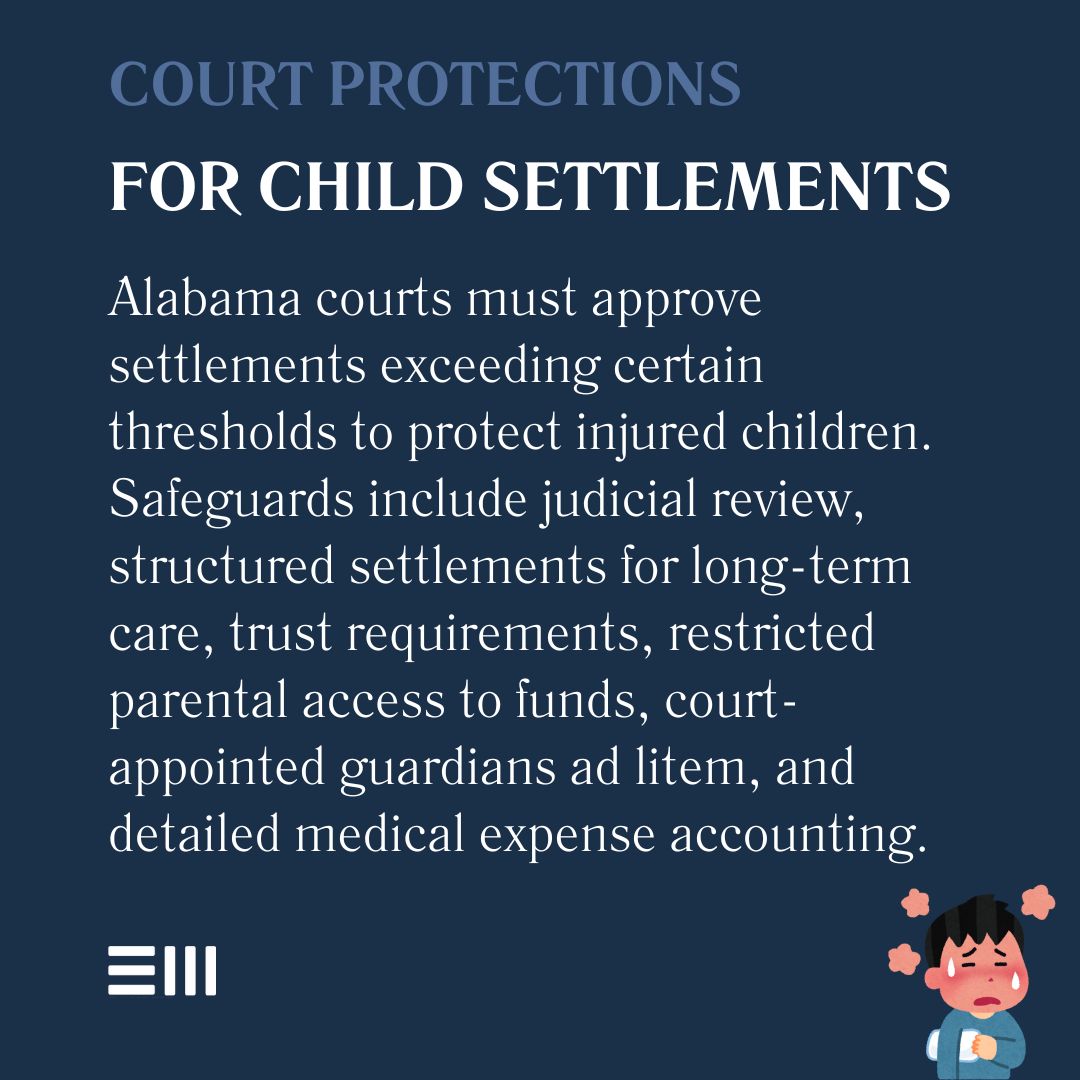
Alabama law imposes strict requirements on settlements involving injured children to prevent exploitation and ensure fair compensation. Courts must approve all settlements exceeding certain thresholds, reviewing terms to verify they serve the child's best interests.
Key settlement protections include:
- Judicial review of settlement amounts;
- Structured settlement options for long-term care;
- Trust requirements for settlement proceeds;
- Restrictions on parental access to funds;
- Court-appointed guardians ad litem;
- Detailed accounting of medical expenses; and
- Future care cost projections.
These safeguards ensure settlement funds remain available for the child's medical care, education, and future needs rather than being depleted prematurely.
Statute of Limitations for Child Claims
Alabama provides extended filing deadlines for child accident claims, recognizing that injuries may not manifest immediately and that minors cannot initiate legal action independently. Understanding these timelines prevents families from losing their right to compensation.
The statute of limitations for child injury claims extends until two years after the child's 19th birthday, giving families until the child turns 21 to file most personal injury lawsuits. However, claims against governmental entities require notice within six months and filing within two years of the injury.
Parents should pursue claims promptly despite extended deadlines, as evidence deteriorates and witnesses become unavailable over time.
Damages Available in Child Accident Cases
Child accident claims in Alabama can recover comprehensive damages addressing both immediate needs and long-term impacts on the child's life.
Courts consider how injuries affect children differently than adults, particularly regarding future earning capacity and quality of life.
Recoverable damages include:
- Current and future medical expenses;
- Physical therapy and rehabilitation costs;
- Psychological counseling for trauma;
- Educational support and special needs;
- Lost future earning capacity;
- Pain and suffering compensation;
- Permanent disability accommodations; and
- Scarring and disfigurement impacts.
Calculating these damages requires expert testimony about the injury's long-term effects on the child's development and opportunities.
Frequently Asked Questions About Child Accident Claims in Alabama
Parents navigating child accident claims in Alabama often share similar concerns about the legal process and protecting their children's interests.
Who Can File a Lawsuit for an Injured Child in Alabama?
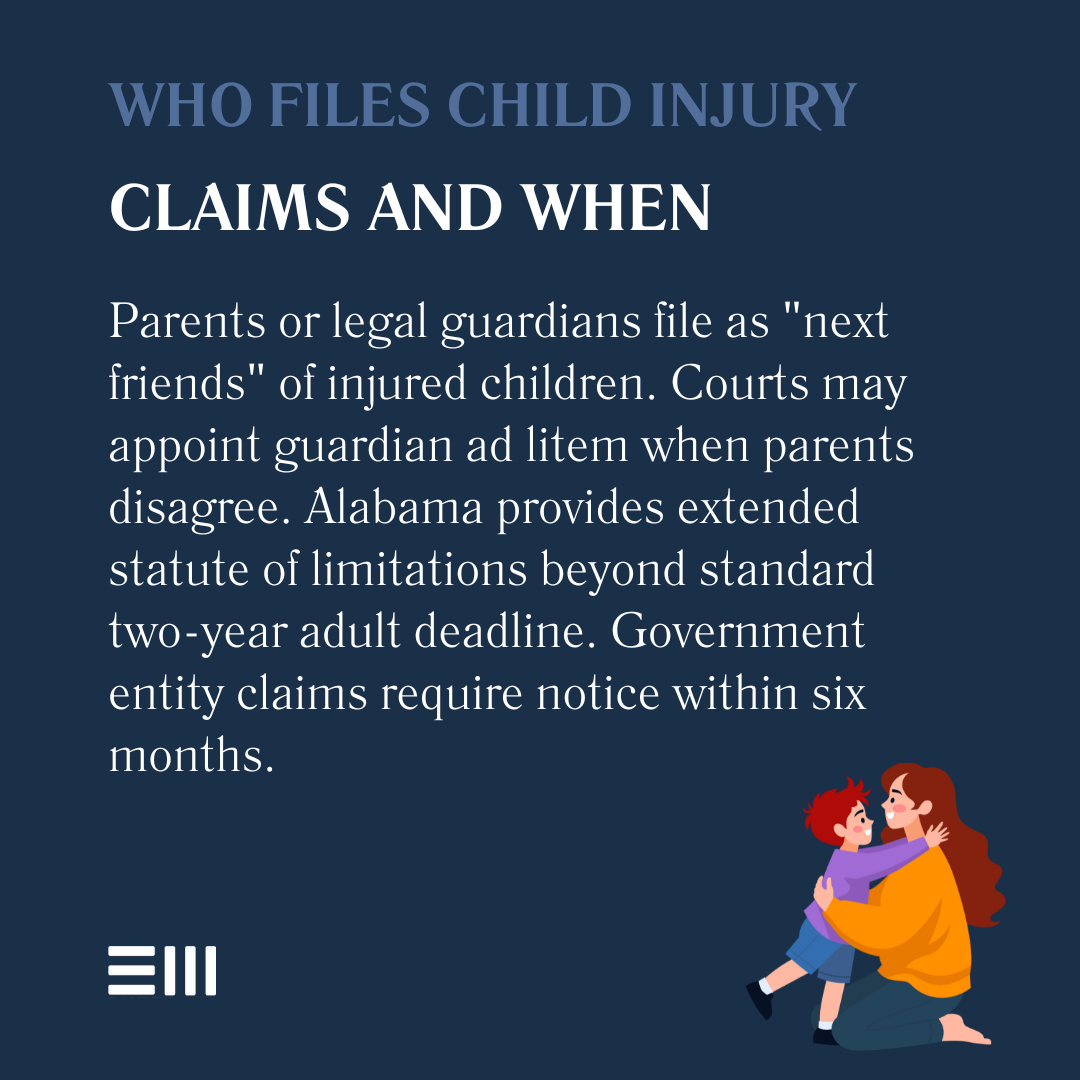
Parents or legal guardians typically file lawsuits as "next friends" of injured children. When parents disagree about pursuing claims or have conflicts of interest, courts may appoint guardian ad litem representatives to protect the child's interests independently.
How Long Do Parents Have to File Child Accident Claims?
Alabama allows claims to be filed until two years after the child's 19th birthday for most accidents. However, claims against government entities require notice within six months. Parents should consult attorneys promptly to preserve evidence and meet all applicable deadlines.
What Happens to Settlement Money for Children?
Courts oversee settlements exceeding $5,000, often requiring funds be placed in restricted accounts or trusts until the child reaches adulthood. These protections ensure money remains available for the child's medical care, education, and future needs rather than being accessed prematurely.
Can Children Be Found Partially at Fault?
Alabama's contributory negligence laws apply to children but consider age and maturity levels. Courts recognize young children cannot exercise adult judgment. Children under seven are typically considered incapable of negligence, while older children face age-appropriate standards.
Do Child Accident Cases Go to Trial?
Most child injury cases settle out of court after negotiations. However, cases proceed to trial when parties cannot agree on liability or fair compensation. Courts take special measures to protect child witnesses from trauma during testimony.
Let Justice Roll, With Baxley Maniscalco
When negligence injures a child, the physical and emotional impacts can last a lifetime. Alabama law provides special protections for injured children, but navigating these complex cases requires experienced legal guidance.
At Baxley Maniscalco, we combine compassionate support with aggressive advocacy to ensure injured children receive the compensation they need for medical care, education, and future opportunities.
Our attorneys understand the unique aspects of child accident claims and work tirelessly to protect young clients' interests. Don't let your child's future be compromised by inadequate compensation.
Contact our Oxford office at (256) 770-7232 to schedule your free consultation and learn how we can help secure your child's recovery and future.