
Your settlement check arrives for $50,000, but you owe $30,000 in medical bills, and your attorney takes their 33% fee—suddenly, that life-changing amount shrinks to barely enough to cover expenses.
The order of payment from personal injury settlements follows specific legal requirements that can dramatically impact how much money actually reaches your pocket, making it essential to understand who gets paid first and why.
Understanding Settlement Distribution Order
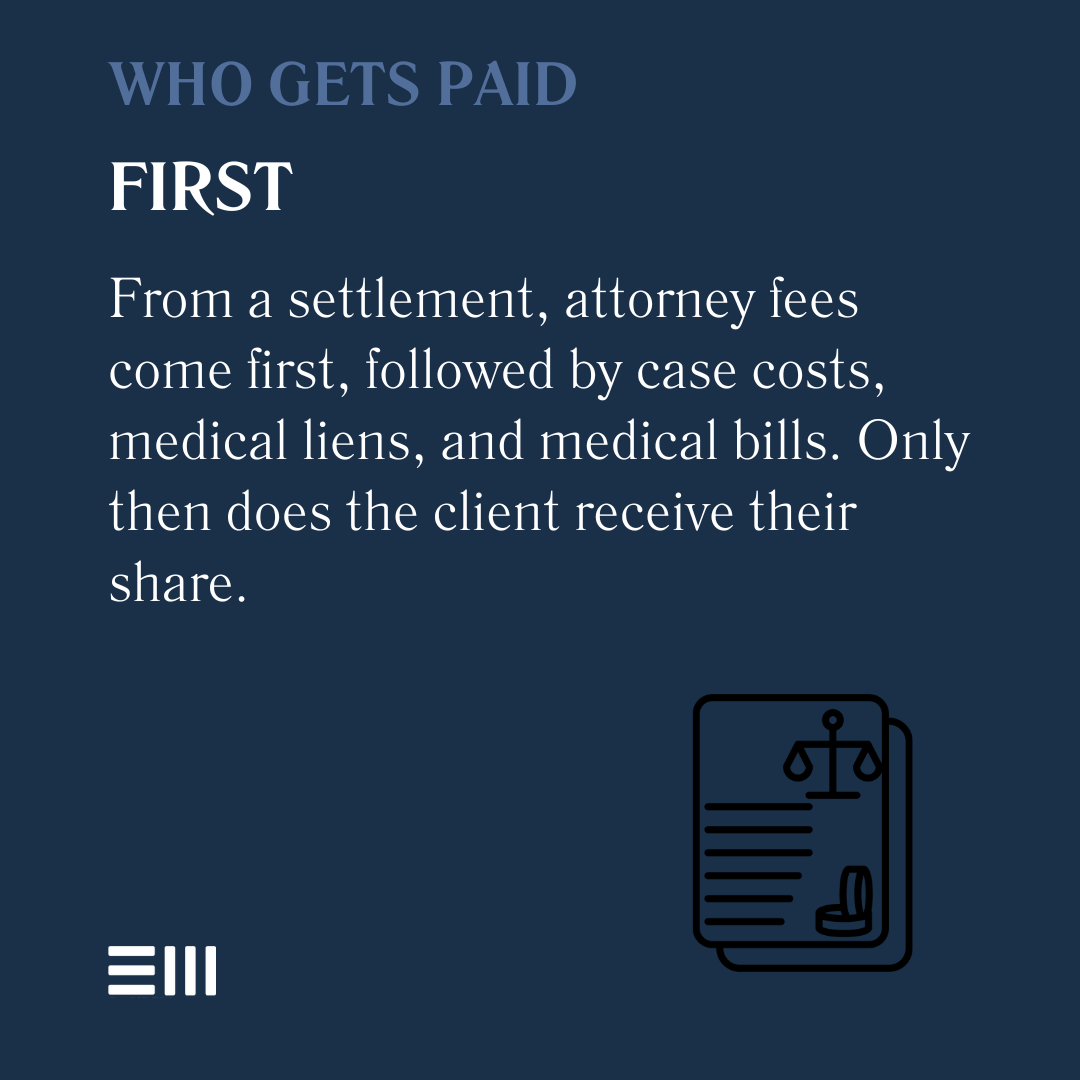
Personal injury settlements follow a structured distribution hierarchy mandated by law and contractual obligations.
This payment order protects the interests of various parties who contributed to your recovery or provided services during your case.
The typical payment priority includes:
- Attorney fees per contingency agreement.
- Case expenses advanced by attorney.
- Medical liens and subrogation claims.
- Outstanding medical bills.
- Other case-related debts.
- Client's net recovery.
This structured approach ensures all parties with legal claims receive payment while preventing disputes over settlement funds.
Understanding this hierarchy helps clients anticipate their actual recovery amount.
Attorney Fees and Contingency Agreements
Contingency fee arrangements allow injured parties to pursue claims without upfront costs, with attorneys receiving payment only from successful recoveries.
These agreements specify percentage fees and payment timing, typically placing attorney compensation at the top of the distribution hierarchy.
Standard contingency fee structures generally involve:
- 33.33% for pre-litigation settlements.
- 40% for cases requiring lawsuit filing.
- Higher percentages for appeals.
- Fees calculated on gross settlement.
- Payment before other deductions.
- Written agreements outlining terms.
Attorneys receive payment first because they assume financial risk by advancing case costs and working without guaranteed compensation.
This priority ensures continued access to legal representation for those unable to afford hourly fees.
Medical Liens and Their Priority
Medical providers often hold powerful liens against personal injury settlements, creating legal obligations that must be satisfied before distributing remaining funds.
These liens vary in strength and priority based on their origin and applicable laws.
Common medical lien types include:
- Hospital liens for emergency treatment.
- Health insurance subrogation rights.
- Medicare and Medicaid claims.
- Workers' compensation liens.
- Private medical provider liens.
- Letters of protection agreements.
Federal liens like Medicare typically take precedence over other claims, while state law governs priority among remaining lienholders. Ignoring valid liens can create personal liability extending beyond settlement amounts.
The Settlement Check Process
Settlement funds flow through a specific process designed to ensure proper distribution and legal compliance. Understanding this process helps explain why clients don't receive settlement checks immediately after the agreement.
The distribution process typically follows:
- Insurance company issues settlement check.
- Attorney deposits check in trust account.
- Funds clear (5-10 business days).
- Attorney negotiates and pays liens.
- Attorney deducts fees and expenses.
- Client receives remaining balance.
This process usually takes 2-6 weeks, depending on lien complexity and negotiation requirements. Attorneys have fiduciary duties to properly handle settlement funds and ensure all obligations are satisfied.
Negotiating Medical Bills
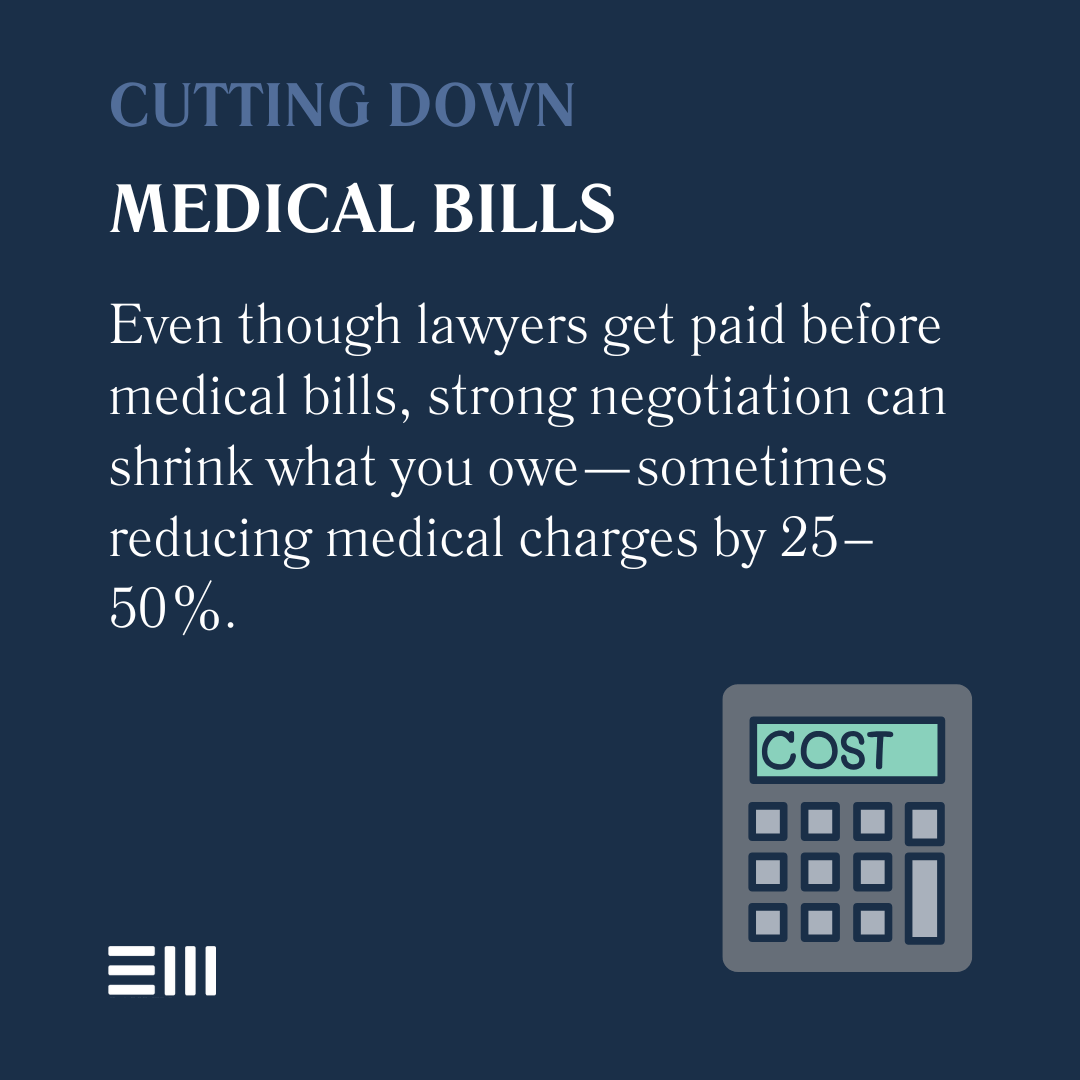
While payment order remains fixed, the amounts paid often prove negotiable, particularly for medical bills. Skilled attorneys frequently reduce medical obligations, increasing client recovery despite payment priorities.
Negotiation strategies include:
- Identifying billing errors or overcharges.
- Leveraging bulk payment discounts.
- Highlighting limited settlement funds.
- Demonstrating financial hardship.
- Negotiating statutory reduction rights.
- Coordinating health insurance benefits.
Successful negotiations can reduce medical bills by 25-50%, significantly improving net client recovery.
These reductions occur after attorney fees, making professional representation valuable despite payment priority.
Protecting Your Settlement
Clients can take specific steps to maximize their net recovery despite the fixed payment hierarchy. Understanding available protections helps preserve more settlement funds for personal use.
Protection strategies include:
- Using health insurance when available.
- Avoiding unnecessary treatment inflation.
- Documenting all medical expenses.
- Understanding lien validity requirements.
- Requesting detailed billing statements.
- Coordinating benefits properly.
Proactive management throughout your case prevents surprise deductions and ensures maximum recovery within legal constraints.
Working closely with your attorney identifies opportunities for increasing net settlement amounts.
Frequently Asked Questions About Settlement Distributions
Clients often have specific questions about settlement distribution and payment priorities.
Understanding these common concerns helps set realistic expectations about personal injury recoveries.
Can I Negotiate Attorney Fees After Settlement?
Most contingency agreements specify non-negotiable percentages, though some attorneys voluntarily reduce fees in cases with minimal recovery. Fee agreements signed at representation typically control, making pre-case negotiation important. Courts rarely modify reasonable contingency fees absent extraordinary circumstances.
What Happens If Medical Bills Exceed My Settlement?
When medical bills exceed settlement amounts, providers receive proportional payment based on available funds. You typically cannot be held personally liable for balances beyond settlement proceeds if your attorney properly handles distribution. However, this protection requires compliance with lien laws and proper documentation.
Do All Medical Providers Have Lien Rights?
Not all medical providers hold automatic lien rights. Hospital liens require statutory compliance, while private providers need written agreements. Understanding which providers have valid liens helps identify negotiation opportunities and payment obligations.
Can Medicare Take My Entire Settlement?
Medicare cannot take your entire settlement but has powerful recovery rights for conditional payments. Federal law requires Medicare reimbursement before other distributions, though attorneys can exclude non-related charges and negotiate reductions based on procurement costs.
How Long Before I Receive My Settlement Money?
After settlement agreement, expect 30-60 days before receiving your portion. This timeline includes check processing, lien resolution, and distribution preparation. Complex medical liens or multiple providers can extend this timeline, though attorneys should provide regular updates.
Let Justice Roll
Understanding settlement payment priorities empowers you to make informed decisions, but experienced legal representation remains essential for maximizing your actual recovery.
At Baxley Maniscalco, our skilled personal injury attorneys combine aggressive settlement negotiation with strategic medical bill reduction to increase what you actually take home.
We fight not just for larger settlements but for smart distributions that put more money in your pocket despite payment priorities.
Don't let medical bills and liens consume your entire recovery. Contact us today to learn how strategic representation can significantly increase your net settlement amount.