
Behind the cheerful facades of many nursing homes lies a darker reality—vulnerable elderly residents suffering in silence from abuse and neglect. In Alabama, where families trust facilities to care for their loved ones, the betrayal cuts deep when that trust is violated.
Every unexplained bruise, sudden behavioral change, or mysterious financial transaction could signal a crisis requiring immediate intervention.
Understanding Alabama's legal framework for addressing elder abuse empowers families to recognize warning signs and take decisive action to protect those who can no longer protect themselves. For comprehensive information about nursing home neglect and abuse in Alabama, knowing your rights is the first step.
Types of Elder Abuse in Alabama Nursing Homes
Elder abuse manifests in various forms within nursing home settings, each causing distinct harm to vulnerable residents.
Alabama law recognizes multiple categories of abuse, ensuring comprehensive protection for elderly individuals who depend on institutional care.
Common forms of elder abuse include:
- Physical abuse: Hitting, pushing, improper restraint use, or rough handling.
- Emotional abuse: Verbal harassment, threats, humiliation, or isolation.
- Sexual abuse: Any non-consensual sexual contact or exploitation.
- Financial exploitation: Theft, fraudulent use of funds, or coerced financial transactions.
- Neglect: Failure to provide basic needs like food, water, medication, or hygiene.
- Medical neglect: Withholding necessary medical care or mismanaging medications.
Each type of abuse violates Alabama law and creates grounds for both civil and criminal action. Recognizing these different forms helps families identify problems early and seek appropriate legal remedies to protect their loved ones from continued harm.
Recent insights on elder abuse, including nursing home neglect and financial exploitation, highlight how these abuses often occur together.
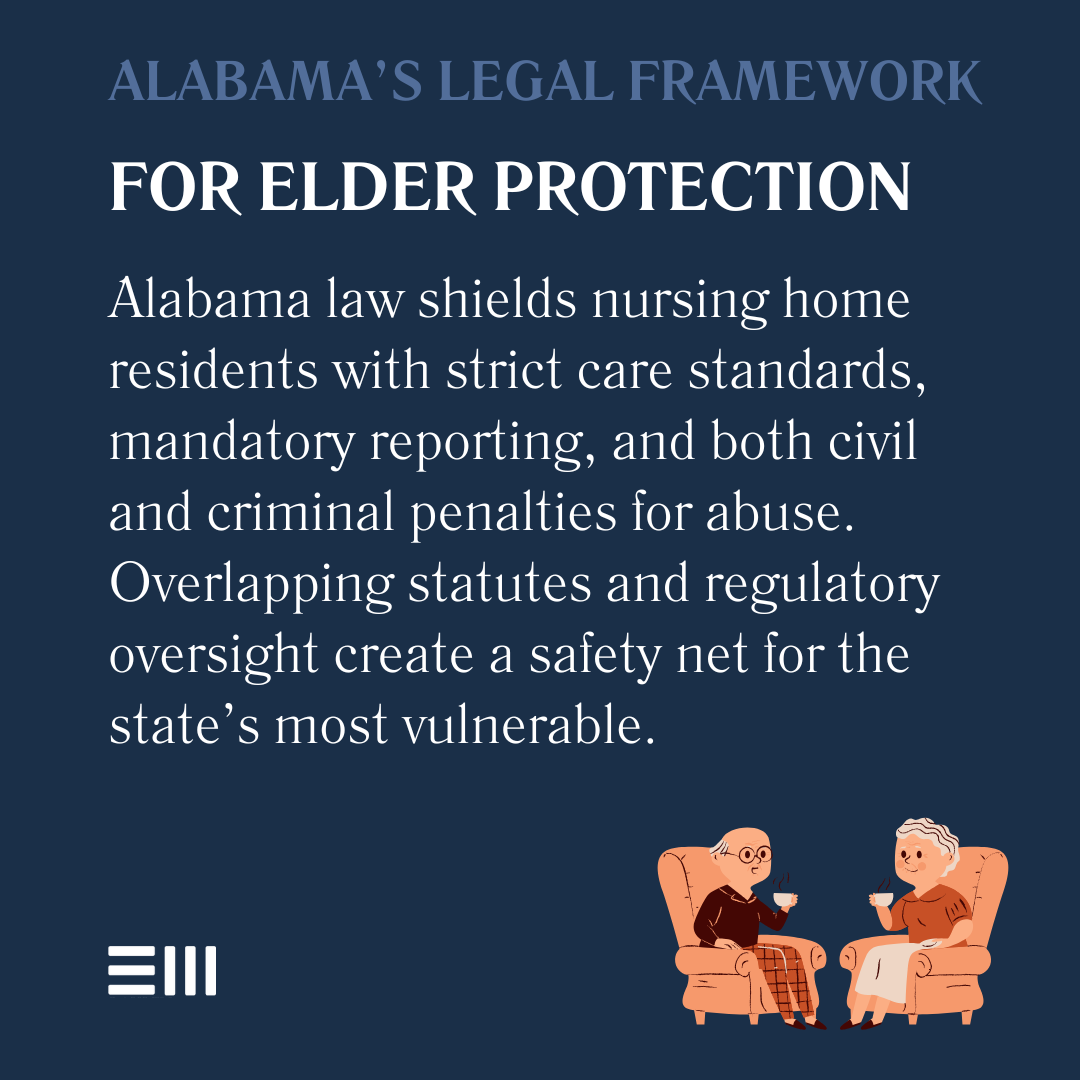
Alabama's Legal Framework for Elder Protection
Alabama has established comprehensive laws specifically designed to protect nursing home residents from abuse and neglect. These statutes create clear standards for care facilities and provide multiple avenues for enforcement when violations occur.
Key legal protections include:
- Adult Protective Services Act: Mandates reporting and investigation of suspected abuse.
- Nursing Home Care Act: Establishes minimum standards for facility operations.
- Criminal penalties: Felony charges for certain types of elder abuse.
- Civil liability: Allows victims to seek compensation through lawsuits.
- Regulatory oversight: Department of Public Health licensing and inspections.
- Medicaid fraud provisions: Additional penalties for facilities defrauding government programs.
These overlapping legal frameworks work together to create a safety net for vulnerable elderly residents.
Understanding how each component functions helps families navigate the system effectively when abuse occurs.
Warning Signs of Nursing Home Abuse
Detecting elder abuse requires vigilance, as many victims cannot or will not report mistreatment due to fear, cognitive impairment, or dependence on their abusers.
Families must watch for both obvious and subtle indicators that something is wrong.
Physical warning signs include:
- Unexplained injuries: Bruises, cuts, burns, or fractures without a clear cause.
- Medication issues: Over-sedation, missed doses, or unexplained changes.
- Hygiene problems: Poor grooming, soiled clothing, or untreated bedsores.
- Weight loss: Rapid or unexplained changes in weight or appetite.
- Mobility changes: Sudden difficulty walking or unexplained restraint marks.
Behavioral and emotional indicators:
- Withdrawal: Becoming isolated, fearful, or refusing visitors.
- Agitation: Increased anxiety, anger, or emotional outbursts.
- Depression: Loss of interest in activities or communication.
- Fear responses: Flinching, cowering, or showing fear around specific staff.
- Financial irregularities: Missing items, unusual transactions, or changed documents.
These signs often appear in combination and may develop gradually. Documentation of any concerning changes provides crucial evidence for investigations and legal action.
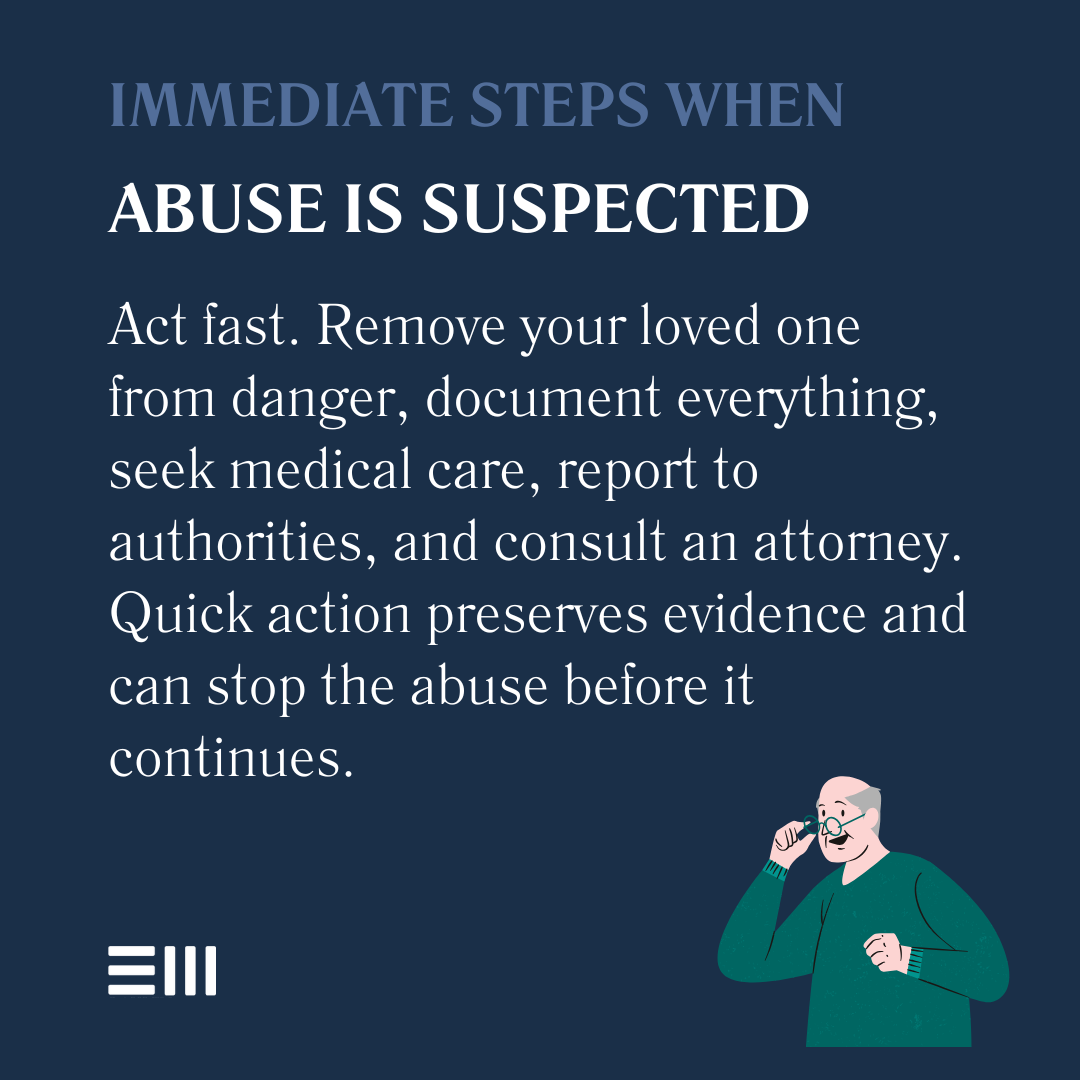
Immediate Steps to Take When Abuse Is Suspected
Time is critical when elder abuse is suspected, as delays can result in continued harm and loss of evidence.
Taking prompt, appropriate action protects the victim while preserving legal options for accountability and compensation.
Essential immediate actions:
- Ensure safety: Remove the resident from immediate danger if possible.
- Document evidence: Photograph injuries, keep detailed notes, preserve documents.
- Seek medical attention: Obtain professional medical evaluation and treatment.
- Report to authorities: Contact Adult Protective Services and law enforcement.
- Notify facility administration: Create written record of concerns.
- Consult an attorney: Understand legal rights and preservation requirements.
Following these steps creates a paper trail that strengthens any subsequent legal action. Acting quickly also demonstrates the seriousness of the situation to authorities and facility management, potentially prompting immediate corrective measures.
Reporting Requirements and Procedures
Alabama law establishes clear reporting obligations for suspected elder abuse, with specific procedures designed to trigger swift investigation and intervention.
Understanding these requirements ensures proper compliance and maximizes the chances of effective response.
Mandatory reporting obligations:
- Healthcare providers: Must report suspected abuse within 24 hours.
- Facility employees: Required to report immediately to supervisors and authorities.
- Financial institutions: Must report suspected financial exploitation.
- General public: Encouraged but not required to report concerns.
Reporting procedures involve:
- Adult Protective Services hotline: Primary reporting mechanism for abuse allegations.
- Law enforcement notification: Criminal conduct requires police involvement.
- Department of Public Health: Regulatory complaints about facility conditions.
- Long-term care ombudsman: Advocacy and investigation services.
- Written documentation: Follow-up reports detailing allegations.
Proper reporting triggers official investigations and creates legal protections for good-faith reporters.
These procedures ensure allegations receive appropriate attention from multiple agencies with oversight responsibilities.
Understanding the complete process of reporting elder abuse in nursing homes helps ensure swift intervention.
Frequently Asked Questions About Elder Abuse in Alabama
Understanding elder abuse laws and procedures raises important questions for families dealing with these difficult situations in Alabama nursing homes.
What Is the Statute of Limitations for Elder Abuse Cases in Alabama?
Alabama generally allows two years from the discovery of abuse to file civil lawsuits. However, different limitations may apply to criminal charges or cases involving financial exploitation.
Some circumstances, like ongoing abuse or concealment, may extend these deadlines. Consulting an attorney quickly ensures you don't miss critical filing deadlines.
Can Nursing Homes Be Held Liable for Employee Actions?
Yes, nursing homes face liability for employee abuse under several legal theories. Facilities must properly screen, train, and supervise staff.
They also bear responsibility for maintaining safe environments and reporting suspected abuse. Corporate liability may extend beyond individual employee actions to include systemic failures.
What Compensation Is Available for Elder Abuse Victims?
Victims may recover medical expenses, pain and suffering, and punitive damages in severe cases.
Families can also seek compensation for emotional distress and, in wrongful death cases, funeral expenses and loss of companionship. Alabama law allows enhanced damages for particularly egregious conduct.
How Can I Protect My Loved One During an Investigation?
You can request increased monitoring, camera installation in rooms (where permitted), and frequent visits during investigations.
Document all interactions and maintain regular communication with investigators. Consider temporary relocation if the facility cannot ensure safety during the investigation process.
What If the Resident Has Dementia and Cannot Testify?
Alabama courts accept various forms of evidence beyond victim testimony, including medical records, witness statements, and physical evidence.
Video recordings, photographs, and expert testimony can establish abuse even when victims cannot communicate effectively. The law recognizes the vulnerability of cognitively impaired residents.
These questions reflect common concerns families face when confronting potential elder abuse situations in Alabama nursing homes.
Let Justice Roll
Elder abuse in nursing homes represents a profound betrayal of trust that demands an immediate and forceful response. Your loved one deserves safety, dignity, and quality care…not suffering in silence at the hands of those entrusted with their well-being.
Whether you've witnessed clear signs of abuse or simply feel something isn't right, taking action now can prevent further harm and hold wrongdoers accountable. The attorneys at Baxley Maniscalco understand the urgency and sensitivity of elder abuse cases.
We know Alabama's elder protection laws inside and out, and we're committed to fighting for justice for vulnerable nursing home residents.
Our team will investigate thoroughly, preserve crucial evidence, and pursue maximum compensation while you focus on your loved one's immediate needs. Contact us today for a confidential consultation about your elder abuse concerns.