
Parents often plan their financial futures around a specific date when child support payments will end, but Alabama's laws contain nuances that can extend or shorten this timeline unexpectedly.
While most states end support at 18, Alabama's age of majority at 19 creates a different landscape for both paying and receiving parents. Understanding exactly how long child support lasts—and what can change that duration—helps families make informed decisions and avoid costly surprises.
Standard Duration of Child Support in Alabama
Alabama law establishes clear guidelines for child support duration, though the standard rules serve as a starting point rather than absolute endpoints.
The state's approach reflects a balance between ensuring children receive adequate support and recognizing when parental obligations should conclude.
The primary duration rules include:
- Age of majority: Support continues until the child reaches 19 years old.
- High school graduation: If the child graduates before turning 19, support may end at graduation.
- Still in high school at 19: Support continues if the child is still enrolled in high school at age 19.
- Maximum age limit: Support must end when the child turns 19, regardless of high school enrollment.
- Death of child or parent: Support obligations terminate upon death.
- Legal emancipation: Court-ordered emancipation ends support obligations.
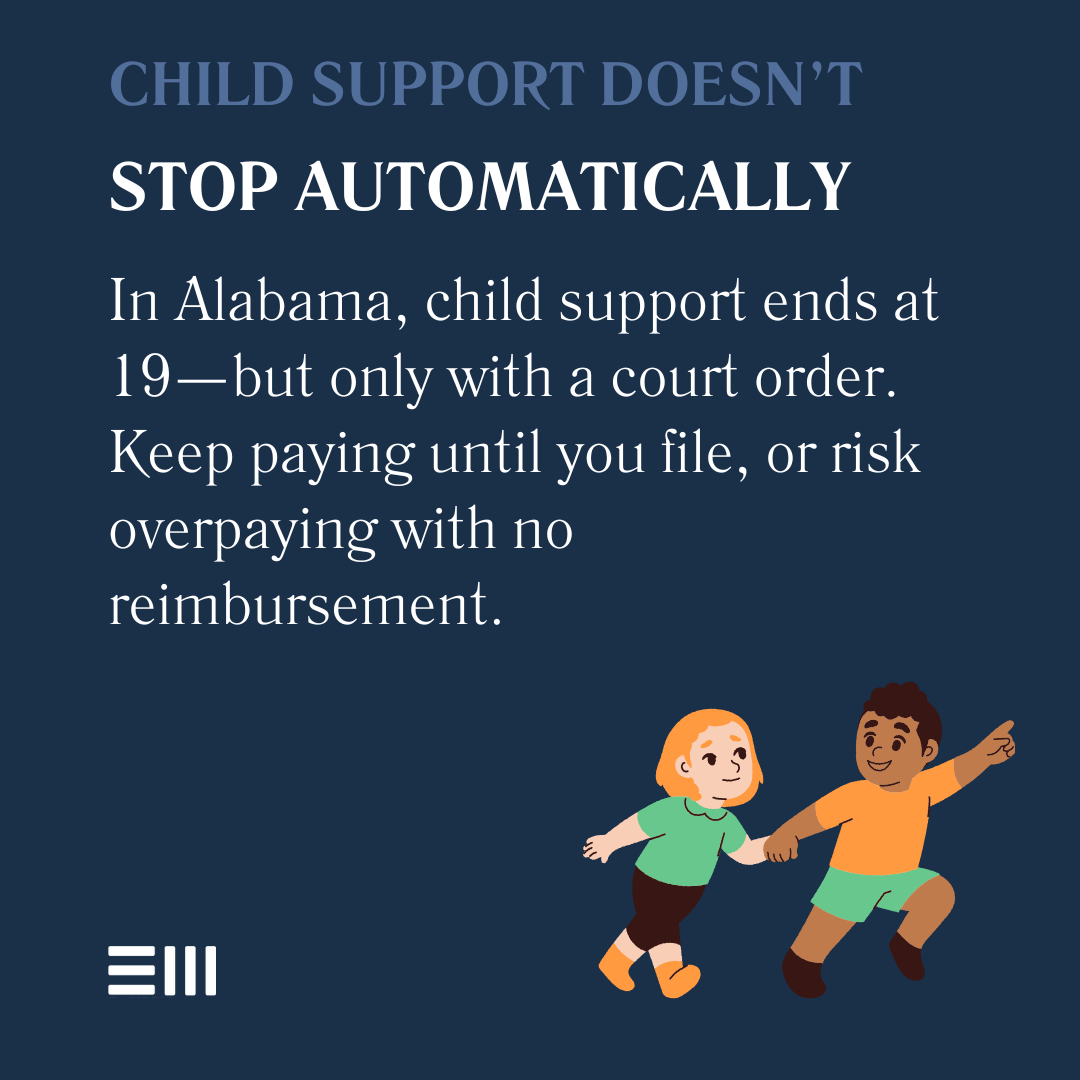
These standard timeframes apply to most child support cases in Alabama. However, parents must remember that support doesn't automatically stop when these milestones occur—formal legal action is required to terminate the obligation.
This requirement protects both parents and ensures proper documentation of when financial responsibilities end.
Factors That Can Extend Support Duration
While Alabama's standard rules provide a framework, several circumstances can extend child support beyond the typical endpoints.
These exceptions recognize that some children require continued financial support due to special circumstances or parental agreements.
Situations that may extend support include:
- Children with disabilities: Physical or mental disabilities preventing self-support can extend obligations indefinitely.
- Divorce agreement provisions: Parents may agree to support through college or beyond age 19.
- Post-secondary education: Some agreements require support during college attendance.
- Medical needs: Ongoing medical conditions may justify extended support.
- Court discretion: Judges may order extended support in exceptional circumstances.
Parents considering divorce should carefully review any agreements regarding extended support. Once incorporated into a divorce decree, these provisions become legally binding and enforceable beyond statutory minimums.
Understanding these potential extensions helps parents plan for long-term financial obligations and avoid unexpected continuation of support payments.
Early Termination Circumstances
Just as certain factors can extend support, specific circumstances may end child support obligations before the standard timeline.
These early termination of child support events reflect situations where the child no longer needs parental support or where the parent-child relationship fundamentally changes.
Events triggering early termination include:
- Marriage of the child: A child who marries before age 19 becomes emancipated.
- Military enlistment: Active military service typically emancipates minors.
- Court-ordered emancipation: Formal emancipation proceedings can end support.
- Self-supporting status: Children who become financially independent may qualify.
- Adoption by another person: Legal adoption terminates the biological parent's obligations.
- Graduation before 19: Completing high school before age 19 may end support.
Each early termination circumstance requires proper documentation and court approval.
Parents cannot simply stop paying based on their belief that an event has occurred. Following proper legal procedures protects paying parents from accusations of non-payment and ensures receiving parents understand when support legitimately ends.
Multiple Children and Staggered Endings
Families with multiple children face unique challenges in determining child support duration.
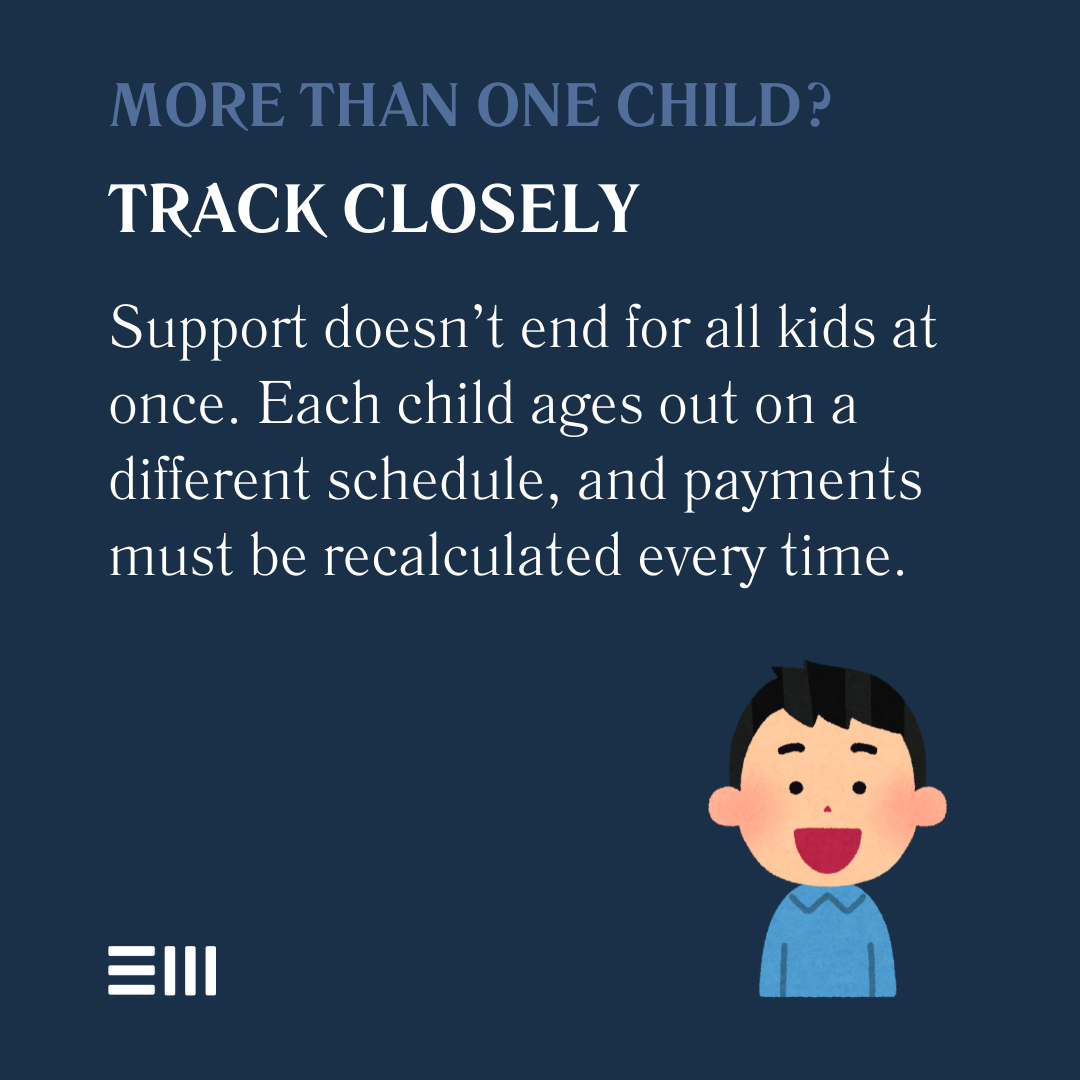
Support obligations don't end all at once but rather decrease as each child reaches the age of termination or experiences a qualifying event.
Managing multiple children involves:
- Separate tracking for each child's eligibility status;
- Partial termination as older children age out;
- Recalculation of support amounts after each child exits;
- Maintaining records for different termination dates;
- Understanding how each child's circumstances affect total obligations; and
- Potential for overlapping college and minor child support.
Parents must file for modification each time a child ages out to adjust the support amount for remaining children.
This process requires attention to detail and proper timing to avoid overpayment or underpayment. Courts don't automatically adjust amounts, making parental diligence essential for proper support calculations.
Post-Majority Support Obligations
Even after children reach Alabama's age of majority, certain financial obligations may continue. These post-majority responsibilities stem from divorce agreements, special circumstances, or separate legal principles beyond basic child support.
Continuing obligations may include:
- Health insurance coverage: Many agreements require coverage through college or age 26.
- College expenses: Divorce decrees may mandate contribution to higher education costs.
- Unpaid arrearages: Past-due support remains collectible indefinitely.
- Life insurance requirements: Obligations to maintain policies may extend beyond support.
- Special needs trusts: Funding requirements for disabled children often continue.
These obligations exist separately from basic child support and may have different enforcement mechanisms.
Parents should review all divorce-related documents to understand the full scope of their financial responsibilities beyond monthly support payments. A clear understanding prevents disputes and ensures compliance with all court orders.
Frequently Asked Questions About Child Support Duration in Alabama
Understanding how long child support lasts in Alabama raises important questions for both paying and receiving parents navigating these obligations.
Does Child Support Automatically Stop at Age 19 in Alabama?
No, child support does not automatically terminate when a child turns 19. Parents must petition the court for a termination order. Continuing to pay without seeking termination may result in overpayments that are difficult to recover.
What If My Child Is Still in High School After Turning 19?
Alabama law clearly states that child support must end at age 19, even if the child remains in high school. Unlike some states that extend support through high school graduation regardless of age, Alabama's cutoff is absolute at 19.
Can Parents Agree to End Child Support Early?
Parents cannot privately agree to terminate court-ordered child support. Any changes to the support duration require court approval. Informal agreements provide no legal protection and may result in enforcement actions despite mutual consent.
How Does College Enrollment Affect Support Duration?
Standard child support ends at 19, regardless of college enrollment. However, divorce agreements may include separate provisions for college support. These provisions are enforceable but distinct from basic child support obligations.
What Happens If I Have Children from Different Relationships?
Each child support order operates independently with its own termination timeline. Parents may have overlapping obligations with different end dates, requiring careful tracking and separate legal actions for each case.
These questions highlight the complexity of determining exactly how long child support obligations last in Alabama.
Take Control of Your Child Support Timeline
Understanding how long you'll pay or receive child support in Alabama requires more than knowing the basic age limit—it demands careful attention to exceptions, proper legal procedures, and your specific circumstances.
Whether you're approaching a termination date, dealing with special circumstances that might extend support, or navigating multiple children with different timelines, having experienced legal guidance ensures you handle these transitions correctly.
Our child support attorneys here at Baxley Maniscalco understand Alabama's child support duration laws and can help you plan for and properly execute changes to your support obligations.
We'll review your specific situation, identify applicable exceptions or extensions, and guide you through the legal process to protect your interests.
Contact us today to discuss your child support timeline and ensure you're prepared for every phase of your obligations.