
Every year in Alabama, families face life-altering consequences from medical errors, with successful medical malpractice verdicts averaging $1,484,309 when plaintiffs prevail at trial.
Behind these numbers are stories of preventable tragedies, families seeking justice, and a complex legal system that makes winning these cases particularly challenging.
Understanding Medical Malpractice Success Rates in Alabama
Medical malpractice cases in Alabama present unique challenges for plaintiffs seeking justice. The statistics reveal a sobering reality about the difficulty of winning these cases, but also demonstrate the potential for substantial compensation when negligence is proven.
Victory Statistics and Settlement Amounts
Recent data from Alabama courts reveals important patterns in medical malpractice case outcomes that every potential plaintiff should understand.
The following statistics highlight both the challenges and opportunities in pursuing these cases:
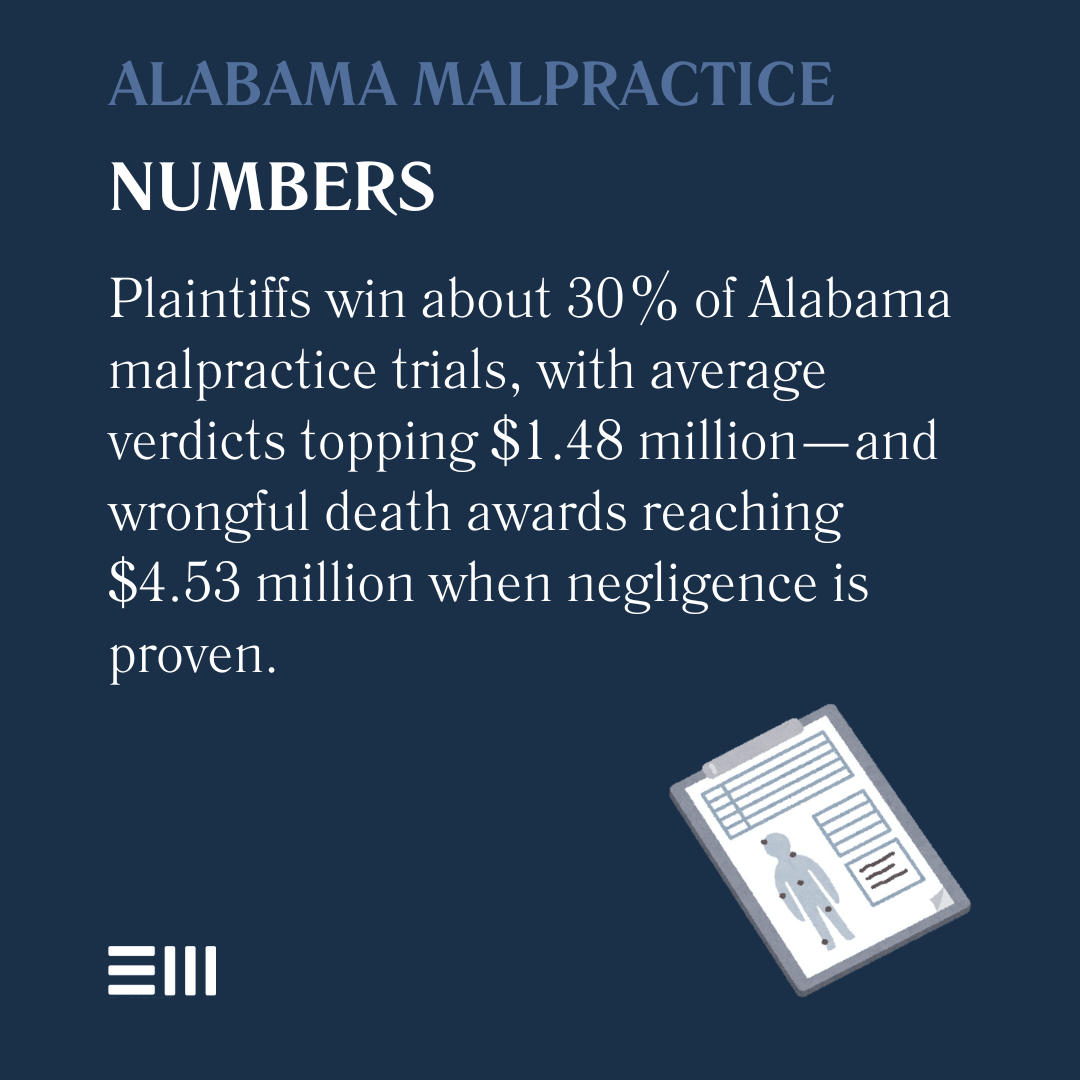
- Plaintiffs win approximately 30.3% of medical malpractice cases that go to trial.
- Average verdict for successful cases reaches $1,484,309.
- Wrongful death cases average $4,536,111 when plaintiffs prevail.
- Living plaintiffs succeed in 44.7% of cases compared to only 13.6% for wrongful death claims.
- In 2022, the National Practitioner Data Bank reported 78 medical malpractice payments in Alabama.
These statistics demonstrate that while medical malpractice cases face significant hurdles, successful claims can result in substantial compensation that reflects the serious nature of injuries and losses involved.
Notable Medical Malpractice Cases Won in Alabama
Alabama has seen several significant medical malpractice verdicts that have shaped the legal landscape and provided justice for affected families.
These cases demonstrate both the potential for recovery and the types of negligence that can lead to successful claims.
Recent High-Value Verdicts
In 2022, Alabama saw one of its largest medical malpractice verdicts when a jury awarded $21 million to the family of an infant who died from sepsis.
The child was born with Hirschsprung's Disease and presented to an emergency room with signs of colonic obstruction. The lawsuit successfully proved that emergency room staff deviated from the standard of care by failing to timely diagnose and treat the obstruction, negligently diagnosing the infant with simple constipation instead.
Another significant case resulted in an $11 million settlement for a maritime worker who suffered severe complications from misdiagnosed pneumonia.
The urgent care facility prescribed the wrong antibiotic and cleared him to fly, leading to multiple amputations of his fingers, right foot, and left leg. This case highlighted how employer liability can extend to medical facilities they choose for employee treatment.
Birth Injury Verdicts
Birth injury cases represent a substantial portion of successful medical malpractice claims in Alabama. These cases often involve devastating, lifelong consequences for children and their families.
Recent verdicts have included multi-million dollar awards for children who suffered brain damage, cerebral palsy, and other permanent disabilities due to medical negligence during delivery.
One notable trend in birth injury cases involves failures to perform timely cesarean sections when fetal distress is evident. These delays can cause oxygen deprivation, leading to permanent brain damage, with verdicts reflecting the lifetime care costs these children will require.
Common Types of Medical Malpractice Cases That Succeed
Understanding which types of medical malpractice cases tend to succeed in Alabama can help potential plaintiffs evaluate their situations. Certain patterns emerge from successful verdicts and settlements.
Misdiagnosis and Delayed Diagnosis
Misdiagnosis represents the most common pathway to successful medical malpractice verdicts in Alabama courts. These cases typically involve clear failures to identify serious conditions when warning signs were present:
- Cancer misdiagnosis, particularly breast, lung, and colorectal cancers.
- Heart attack symptoms dismissed as indigestion or anxiety.
- Stroke signs misinterpreted as less serious conditions.
- Infections like sepsis or meningitis diagnosed too late for effective treatment.
- Appendicitis mistaken for stomach flu or other gastrointestinal issues.
- Pulmonary embolism overlooked despite classic symptoms.
The key to winning these cases often lies in demonstrating that standard diagnostic protocols were not followed or that obvious symptoms were ignored, leading to preventable harm or death.
Surgical Errors
Surgical mistakes represent some of the most clear-cut medical malpractice cases in Alabama, often involving undeniable deviations from standard care.
The following types of surgical errors frequently result in successful verdicts:
- Wrong-site surgery performed on incorrect body parts or spinal levels.
- Surgical instruments or sponges left inside patients after procedures.
- Damage to adjacent organs or structures during surgery.
- Anesthesia errors causing brain damage or death.
- Post-operative infections due to improper sterilization protocols.
- Unnecessary surgeries performed due to misdiagnosis.
The documentation inherent in surgical procedures often provides compelling evidence for plaintiffs, making these cases particularly strong when negligence can be clearly demonstrated through operative reports and imaging.
Birth Injuries and Obstetric Negligence
Birth trauma cases present unique challenges and opportunities in Alabama medical malpractice litigation, with specific patterns of negligence leading to successful outcomes.
Common factors in winning birth injury cases include:
- Failure to perform timely cesarean sections when fetal distress is evident.
- Improper use of forceps or vacuum extractors causing brain damage.
- Delayed response to umbilical cord complications.
- Mismanagement of high-risk pregnancies including preeclampsia.
- Failure to monitor fetal heart rate during labor.
- Inadequate response to shoulder dystocia during delivery.
These cases often result in substantial verdicts because juries understand the lifetime impact on innocent children and the preventable nature of many birth injuries when proper protocols are followed.
Key Factors That Influence Case Outcomes
Several critical factors determine whether a medical malpractice case will succeed in Alabama.
Understanding these elements, including the standard of care and medical negligence requirements, can help plaintiffs and their attorneys build stronger cases.
Quality of Expert Testimony
The selection and preparation of expert witnesses often determines the outcome of medical malpractice cases in Alabama courts.
Expert testimony must meet specific requirements and effectively communicate complex medical issues:
- Experts must have similar training and specialty as the defendant healthcare provider.
- Multiple expert witnesses agreeing on standard of care violations strengthen cases significantly.
- Clear explanations of medical concepts in layman's terms improve jury comprehension.
- Demonstrative evidence and visual aids help experts illustrate negligence.
- Local or regional experts may carry more credibility than out-of-state witnesses.
- Expert testimony must specifically address how the breach of care caused the plaintiff's injuries.
Successful cases typically feature experts who can not only establish negligence but also connect emotionally with juries by explaining how proper care would have prevented tragedy.

Severity of Injuries and Damages
The extent and documentation of injuries play a critical role in determining both case success and verdict amounts in Alabama medical malpractice cases.
Successful plaintiffs typically present comprehensive evidence of the following damages:
- Past and future medical expenses with detailed cost projections.
- Lost wages and diminished earning capacity calculations.
- Physical pain and suffering documented through medical records.
- Emotional distress and mental anguish requiring psychological treatment.
- Loss of enjoyment of life and inability to perform daily activities.
- Need for long-term care, home modifications, and medical equipment.
- Impact on family relationships and loss of consortium claims.
Cases with well-documented severe injuries, supported by life care plans and economic expert testimony, consistently achieve higher verdicts and settlements than those with poorly quantified damages.
Strength of Medical Evidence
Clear medical records documenting the negligent act and resulting injuries strengthen cases considerably. Successful plaintiffs often have objective evidence such as imaging studies, laboratory results, or surgical reports that clearly show errors or omissions in care.
Cases where medical records have been altered or where documentation is sparse face additional challenges. Electronic health records have made it easier to track changes and identify potential cover-ups, which can significantly impact case outcomes.
Alabama's Legal Framework for Medical Malpractice
The Alabama Medical Liability Act governs medical malpractice cases in the state, establishing specific requirements that affect case outcomes. Understanding this legal framework, including informed consent requirements, helps explain why some cases succeed while others fail.
Statute of Limitations
Alabama imposes a two-year statute of limitations for medical malpractice claims, starting from the date of the alleged malpractice. However, the discovery rule can extend this deadline if the injury could not reasonably have been discovered within the initial two-year period.
Plaintiffs relying on this exception must prove they could not have reasonably discovered the malpractice earlier.
For children under four years old at the time of malpractice, special rules apply, allowing claims to be filed until the child's eighth birthday. This extended timeline recognizes the difficulty in identifying certain injuries in very young children.
No Damage Caps
Unlike many states, Alabama does not cap damages in medical malpractice cases. The state's supreme court struck down previous statutory caps, meaning plaintiffs can recover full compensation for all proven damages. This absence of caps has contributed to some of the larger verdicts seen in recent years.
The lack of damage caps makes Alabama potentially more favorable for plaintiffs with severe injuries, as there is no artificial limit on pain and suffering or other non-economic damages.
Heightened Pleading Requirements
Alabama requires detailed pleading in medical malpractice complaints. Plaintiffs must provide specific descriptions of each negligent act, including dates, times, and locations where feasible. This requirement aims to give defendants fair notice of claims against them but also raises the bar for initiating lawsuits.
Recent cases suggest courts may be moving toward even stricter pleading standards, potentially adopting federal court requirements. This trend could make it more difficult to file cases without substantial pre-suit investigation and evidence.
Challenges in Winning Medical Malpractice Cases
Despite some notable successes, medical malpractice plaintiffs in Alabama face significant obstacles. Understanding these challenges helps explain the relatively low overall success rate and emphasizes the importance of strong legal representation.
Higher Burden of Proof
Medical malpractice cases require proving negligence to a higher standard than typical personal injury cases. Plaintiffs must establish that the healthcare provider's actions fell below the accepted standard of care, not merely that a mistake occurred.
This burden becomes particularly challenging in cases involving judgment calls or multiple treatment options. Defendants often argue that adverse outcomes resulted from recognized complications rather than negligence, making causation difficult to prove.
Complex Medical Evidence
The technical nature of medical evidence can overwhelm juries and make it difficult to establish clear negligence. Successful cases typically involve obvious errors or simplified presentations of complex medical issues.
Defense attorneys often introduce conflicting medical opinions and emphasize the inherent risks in medical procedures. This strategy can create reasonable doubt about whether negligence actually occurred or whether the injury was an unavoidable complication.
Jury Sympathy for Healthcare Providers
Healthcare providers often benefit from positive public perception, making it challenging to convince juries of negligence. This is particularly true in smaller communities where local doctors may be well-known and respected.
Successful plaintiffs often need to demonstrate patterns of negligence or particularly egregious errors to overcome this inherent bias. Cases involving clear documentation of mistakes or admissions of error tend to fare better than those relying solely on expert interpretation.
Frequently Asked Questions About Medical Malpractice in Alabama
Understanding medical malpractice cases in Alabama requires addressing common concerns that potential plaintiffs often have about the process, requirements, and potential outcomes.
What Types of Healthcare Providers Can Be Sued for Malpractice in Alabama?
The Alabama Medical Liability Act covers a broad range of healthcare providers. This includes physicians, surgeons, dentists, hospitals, nursing homes, nurses, physician assistants, and emergency medical service providers. Recent amendments specifically added EMS personnel to ensure comprehensive coverage of all medical professionals who might commit malpractice.
How Long Do I Have to File a Medical Malpractice Lawsuit in Alabama?
Generally, you have two years from the date of the malpractice to file your lawsuit. However, if you couldn't reasonably have discovered the injury within that time, you may have six months from the date of discovery. There's also an absolute four-year statute of repose, meaning no claims can be filed more than four years after the malpractice occurred, regardless of when it was discovered.
What Damages Can Be Recovered in Successful Medical Malpractice Cases?
Successful plaintiffs can recover economic damages including medical expenses, lost wages, and future earning capacity. Non-economic damages for pain and suffering, emotional distress, and loss of enjoyment of life are also available. In cases involving particularly egregious conduct, punitive damages may be awarded. Alabama's lack of damage caps means there's no artificial limit on recovery amounts.
How Important Is Expert Testimony in Medical Malpractice Cases?
Expert testimony is essentially mandatory in Alabama medical malpractice cases. Experts must establish the appropriate standard of care, explain how the defendant breached that standard, and demonstrate how the breach caused the plaintiff's injuries. The quality and credibility of expert witnesses often determine case outcomes, making their selection crucial to success.
What Makes Birth Injury Cases Different from Other Medical Malpractice Claims?
Birth injury cases involve unique considerations including the lifetime impact on the child, extensive future medical costs, and often clearer standards of care during delivery. These cases may also involve both the child and mother as plaintiffs with separate damages. The emotional impact of birth injuries often resonates strongly with juries, though proving causation can be challenging when defendants argue that injuries resulted from natural complications.
Let Justice Roll
Medical malpractice cases in Alabama demand immediate attention and experienced legal guidance. With strict time limits and complex legal requirements, delaying action can jeopardize your right to recovery.
If you or a loved one has suffered due to medical negligence, now is the time to protect your rights and pursue the compensation you deserve.
Our team at Baxley Maniscalco has the experience, resources, and dedication needed to navigate Alabama's challenging medical malpractice landscape.
Don't let the statute of limitations expire on your claim – contact our attorneys today for a comprehensive evaluation of your case and learn how we can fight for the justice and compensation your family needs to move forward.