
A massive ground beef recall is raising food safety alarms across the country, and Alabama families who regularly stock up on meat should take notice.
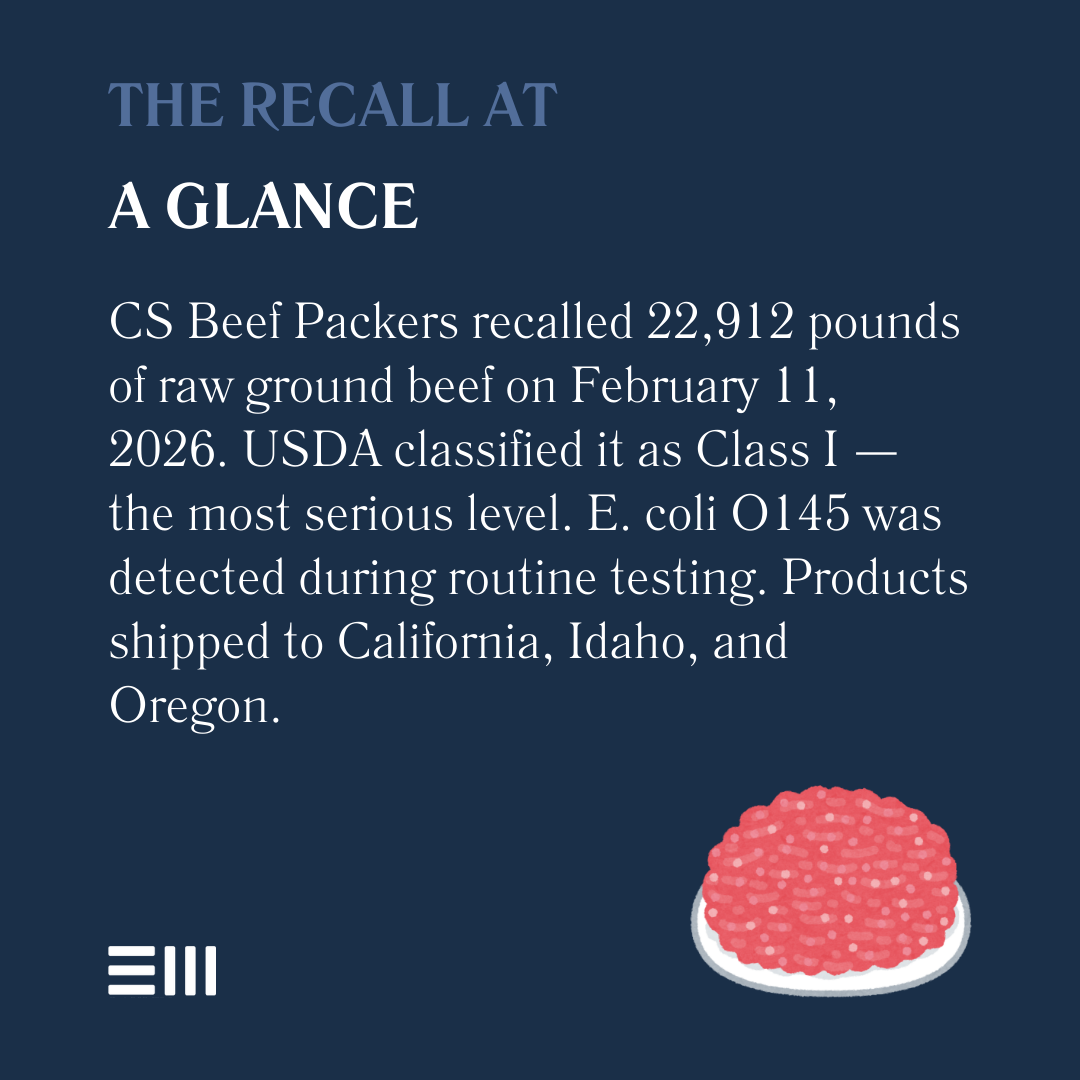
On February 11, 2026, the U.S. Department of Agriculture's Food Safety and Inspection Service (FSIS) announced that Idaho-based CS Beef Packers, LLC was pulling approximately 22,912 pounds of raw ground beef from distribution due to possible E. coli O145 contamination.
The recall was classified as Class I — the most serious category the USDA assigns — meaning the agency believes the affected products carry a reasonable chance of causing severe health consequences or even death if consumed.
How the Contamination Was Discovered
The issue came to light through routine government testing. FSIS inspectors conducting sampling at a downstream customer facility detected E. coli O145 in the beef products.
That particular strain belongs to the Shiga toxin-producing family of E. coli (STEC), which is known for causing especially dangerous infections in humans.
While the contaminated meat was produced on January 14, 2026, and officially shipped to distributors in California, Idaho, and Oregon, food safety experts caution that distribution chains can carry products far beyond their initial destinations.
That reality makes it important for consumers in every state — including Alabama — to stay informed.
As of the recall announcement, no confirmed illnesses had been reported in connection with the affected products.
Which Products Are Affected?
All of the recalled items were produced at the CS Beef Packers facility in Kuna, Idaho, and bear the establishment number "EST. 630" inside the USDA mark of inspection.
The affected products include:
- Cardboard cases containing eight 10-lb. chubs of "BEEF, COARSE GROUND, 73 L" with case code 18601 and a "Use/Freeze By: 02/04/26" date with time stamps between 07:03 and 08:32.
- Cardboard cases containing four 10-lb. chubs of "FIRE RIVER FARMS CLASSIC BEEF FINE GROUND 73L" with case code 19583 and matching date and time stamp details.
- Cardboard cases containing four 10-lb. chubs of "FIRE RIVER FARMS CLASSIC BEEF FINE GROUND 81L" with case code 19563, also sharing the same date and time stamp range.
The date and time stamps can be found printed directly onto the clear packaging of the meat, as well as on two stickers affixed to the outside of the cardboard cases.
Anyone who has ground beef stored in a home freezer or commercial kitchen should check the packaging carefully against these identifiers.
Understanding the Health Risks
E. coli O145 is not as widely recognized as the more common O157:H7 strain, but it poses similar dangers.
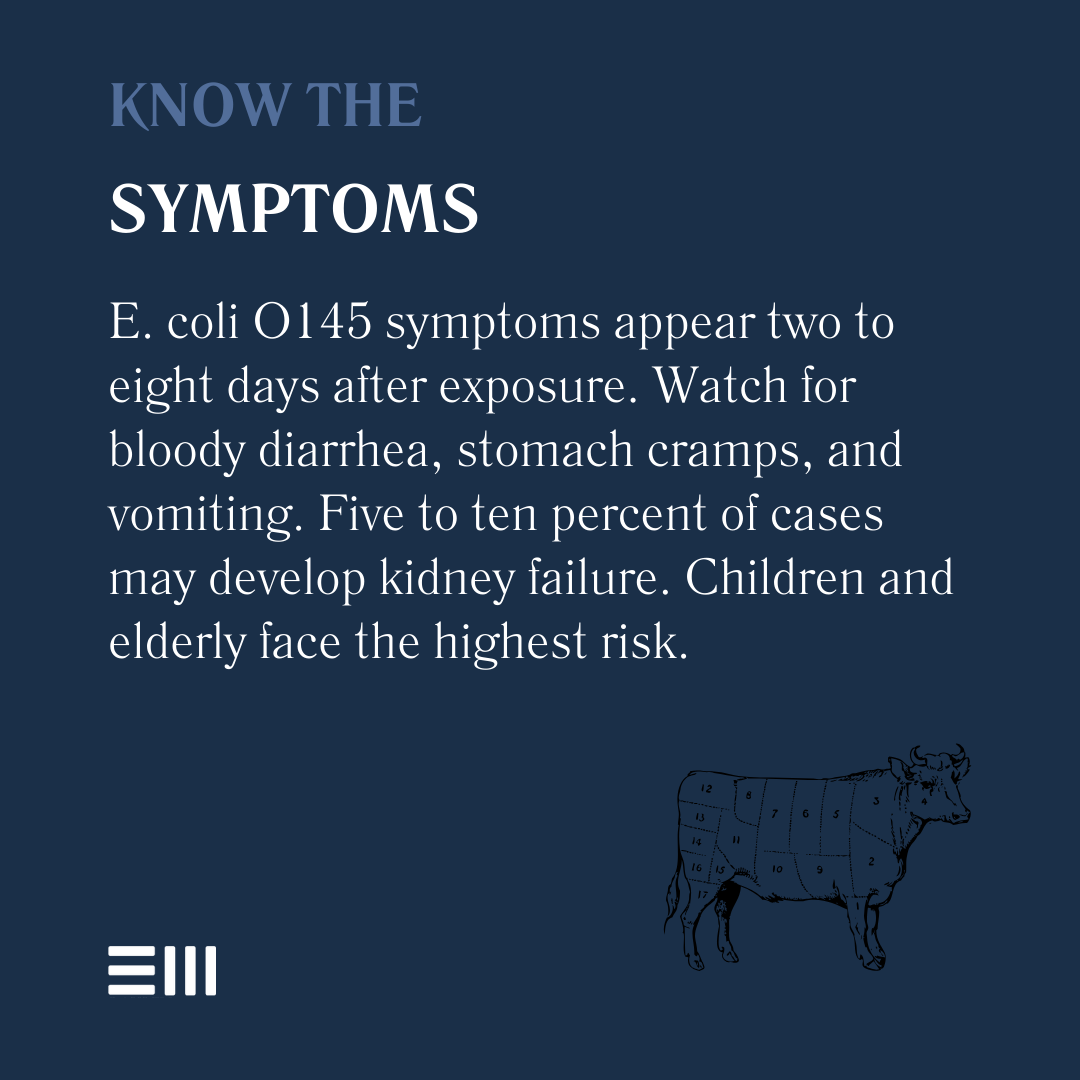
People who become infected with STEC strains typically begin experiencing symptoms anywhere from two to eight days after exposure, with most cases showing up around three to four days.
Common symptoms include:
- Severe stomach cramping that can persist for several days.
- Diarrhea that is frequently bloody, which distinguishes STEC infections from milder gastrointestinal illnesses.
- Vomiting and nausea, particularly in the early stages of infection.
Most healthy adults recover within a week, but certain groups face elevated risk. Young children, elderly individuals, and anyone with a weakened immune system may develop hemolytic uremic syndrome (HUS), a potentially life-threatening complication that can lead to kidney failure.
An estimated 5 to 10 percent of people diagnosed with STEC infections go on to develop HUS.
Anyone who suspects they may have consumed the recalled products and is experiencing symptoms should seek medical attention promptly and inform their healthcare provider about the possible exposure.
What to Do If You Have the Recalled Beef
The FSIS guidance on this recall is straightforward. If you find any of the affected products in your refrigerator or freezer, do not cook or consume them.
Cooking contaminated meat does not eliminate the risk. Instead, either dispose of the product immediately or return it to the place of purchase for a refund.
Consumers who have questions about the recall can reach Roger Cooper, operations manager at CS Beef Packers, LLC, at 208-810-7510 ext. 7531 or by email at ro**********@****ef.com. The USDA Meat and Poultry Hotline is also available at 888-674-6854.
A Broader Reminder About Food Safety
This recall is part of a string of ground beef safety incidents in recent months. In late December 2025, Mountain West Food Group, LLC recalled roughly 2,855 pounds of Forward Farms Grass-Fed Ground Beef over E. coli O26 contamination, affecting products distributed to six states.
Taken together, these events serve as a reminder that contamination can happen at any stage of the supply chain, regardless of brand or price point.
The USDA recommends that consumers always cook ground beef to an internal temperature of 160°F and verify the temperature with a meat thermometer — the only reliable way to confirm harmful bacteria have been destroyed.
Protecting Your Family When Products Cause Harm
Food recalls can result in more than just inconvenience. When contaminated products cause illness or lasting health effects, affected individuals and families may have the right to pursue compensation for medical expenses, lost income, and other damages through a personal injury claim.
Our experienced personal injury attorneys here at Baxley Maniscalco understand how overwhelming it can be when a product you trusted ends up causing harm.
If you or a family member has been affected by a contaminated food product in Alabama, we are here to help you understand your options.
Talk to Our Team Today
If a defective or contaminated product has caused injury to you or someone you love, you do not have to navigate the legal process alone.
Contact Baxley Maniscalco today to schedule a consultation and learn how our team can fight for the compensation your family deserves.