A nationwide recall of nearly 90,000 bottles of children's ibuprofen is prompting parents across Alabama and the rest of the country to take a closer look at what is sitting in their medicine cabinets.
The FDA announced the recall in March 2026 after the manufacturer received multiple consumer complaints about foreign substances found inside the liquid medication, raising immediate concerns about the safety of a product that millions of families rely on to manage fevers and pain in young children.
What Was Recalled and Why
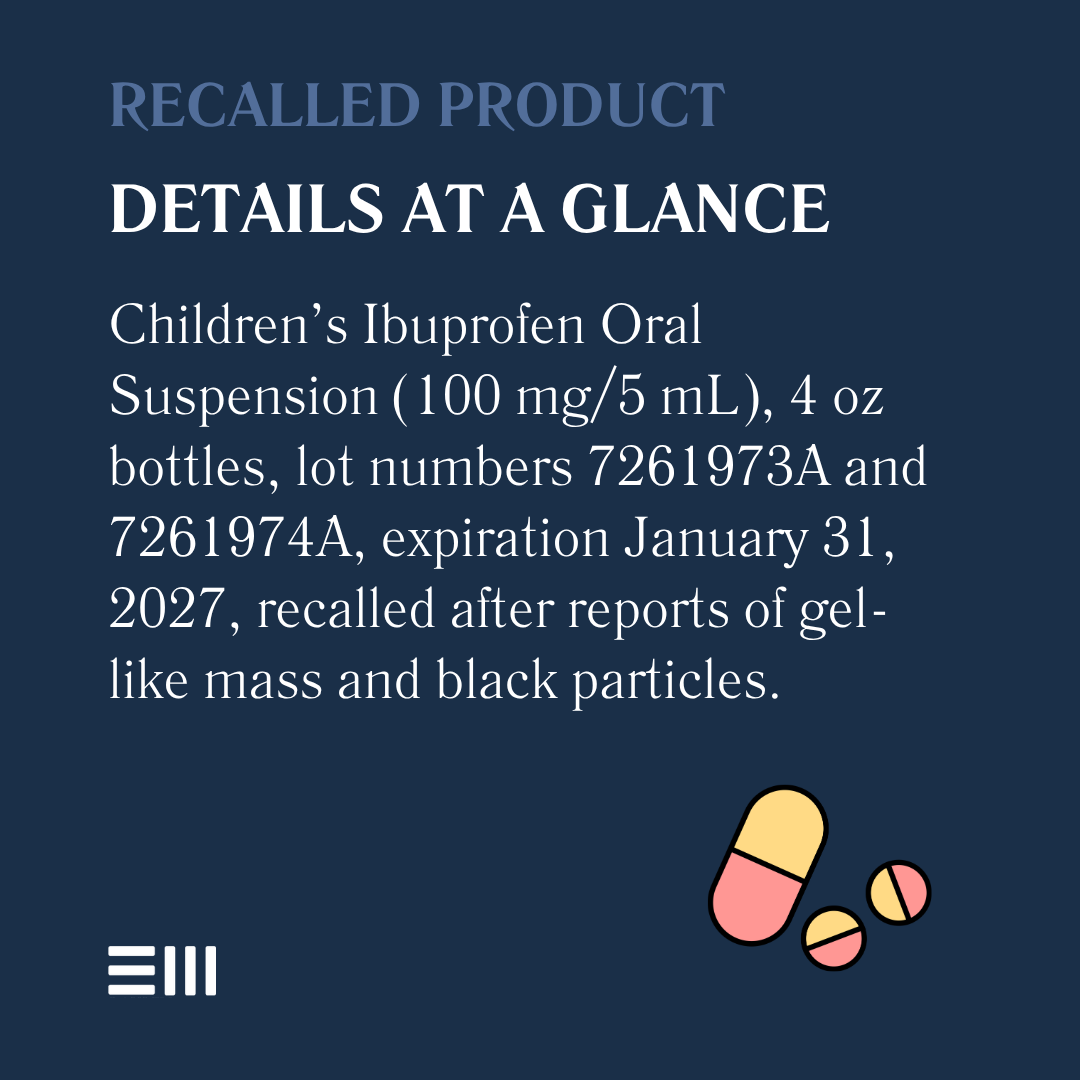
Strides Pharma Inc. initiated a voluntary recall of Children's Ibuprofen Oral Suspension, USP (100 mg per 5 mL) sold in 4-ounce bottles.
The product was manufactured for Taro Pharmaceuticals USA and distributed to retailers across the entire United States, meaning affected bottles could be in medicine cabinets anywhere in the country.
The recall was triggered after consumer complaints reported finding a "gel-like mass and black particles" inside the suspension liquid. In total, 89,592 bottles are included in the recall.
Parents and caregivers should check the following details on any children's ibuprofen bottle currently in their home.
- Product name: Children's Ibuprofen Oral Suspension, USP, 100 mg per 5 mL.
- Bottle size: 4 fluid ounces (120 mL).
- Affected lot numbers: 7261973A and 7261974A.
- Expiration date: January 31, 2027.
If your bottle matches any of these identifiers, stop using the medication immediately and set it aside for reference.
How the FDA Classifies This Recall
The FDA designated this as a Class II recall, which is the agency's second-highest classification level.
Under FDA guidelines, a Class II designation means that exposure to the product may cause temporary or medically reversible health consequences, or that the probability of serious adverse effects is considered remote but not eliminated entirely.
This classification sits just below the most severe Class I designation, which is reserved for situations where there is a reasonable probability of serious health consequences or death.
While no serious injuries have been publicly reported in connection with this recall as of late March 2026, any contamination in a medication formulated specifically for children warrants a cautious response.
Young children are more susceptible to adverse reactions than adults, and parents trust over-the-counter medications like ibuprofen to be safe straight out of the bottle.
The discovery of unidentified foreign matter inside a children's product undermines that trust and highlights the importance of strict manufacturing quality controls in pharmaceutical production.
What Parents and Caregivers Should Do Right Now
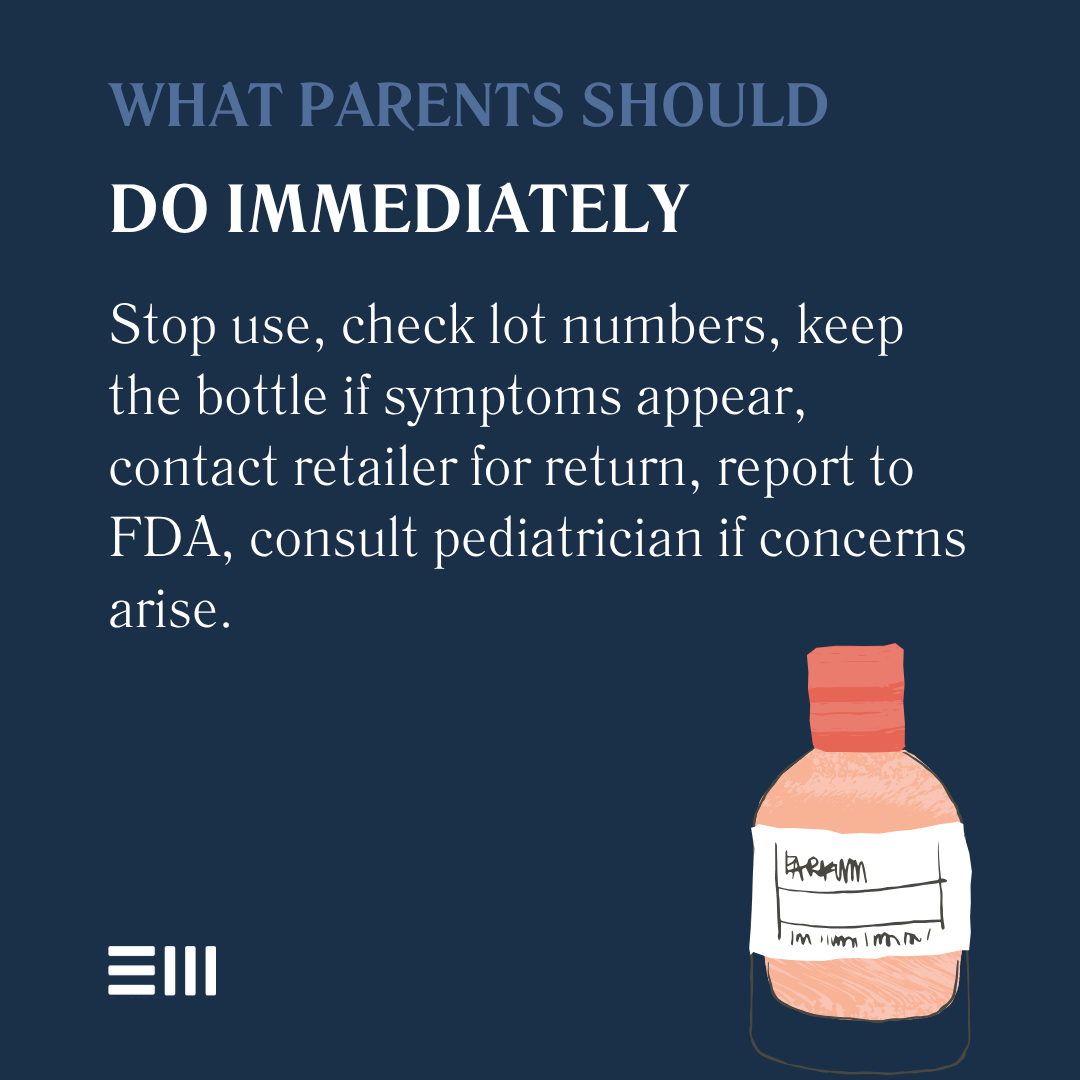
If you have children's ibuprofen at home, the most important step is to check the lot number and expiration date on the bottle immediately. Beyond that, health officials and consumer safety experts recommend taking the following actions.
- Stop using the affected product. Do not administer any medication from a bottle that matches the recalled lot numbers, even if you do not see visible contamination in the liquid.
- Do not throw the bottle away if your child has taken the medication and experienced symptoms. The product may serve as important evidence if health issues arise or if you decide to pursue a legal claim.
- Contact the retailer where you purchased it. Many stores will accept returns of recalled products and issue a refund or exchange for an unaffected alternative.
- Report any adverse effects to the FDA. If your child experienced unusual symptoms after taking the recalled ibuprofen, you can submit a report through the FDA's MedWatch safety reporting system online or by phone.
- Consult your child's pediatrician. If your child consumed ibuprofen from one of the affected lots and you have any concerns about their health, schedule an appointment with their doctor for an evaluation.
Taking these steps promptly protects your child and creates a record that may be valuable if further action becomes necessary.
Understanding the Bigger Picture on Children's Product Recalls
This ibuprofen recall is not an isolated event. Federal regulators have flagged hundreds of product recalls in 2026 alone across categories including food, medication, baby gear, and household items.
For parents, keeping track of recall notices can feel overwhelming, but the stakes are too high to ignore — particularly when the products involved are designed for children.
The FDA's recall database and the Consumer Product Safety Commission's website are both searchable by product name, brand, and category.
Checking these resources periodically, especially for medications and food products you keep on hand, is one of the simplest ways to stay ahead of potential hazards.
Understanding how product recalls interact with liability law can also help you recognize when a recall might give rise to a legal claim.
When a Recall Becomes a Legal Issue
Product recalls are issued because something went wrong during the manufacturing, packaging, or distribution process.
When a recalled product causes injury — particularly to a child — the manufacturer, distributor, or retailer may bear legal responsibility under product liability law.
Alabama law allows consumers to pursue claims against companies that place defective or dangerous products into the marketplace, and a recall can sometimes strengthen a claim by serving as evidence of the defect itself.
Manufacturers also have a legal duty to provide adequate warnings about known risks associated with their products.
When contamination reaches consumers despite quality control processes, questions about the adequacy of those safeguards become central to any resulting legal action.
If your child experienced adverse effects after consuming the recalled ibuprofen, or if you have questions about your legal rights following any product recall, our experienced personal injury attorneys here at Baxley Maniscalco can help you evaluate your situation.