
Physical pain from an accident may fade with time, but the sleepless nights, lost opportunities, and emotional trauma can last for years.
In Alabama courtrooms and insurance negotiations, these intangible losses translate into pain and suffering damages—compensation that often exceeds medical bills and lost wages combined.
Yet, unlike economic damages with clear receipts and calculations, pain and suffering settlements vary dramatically based on factors many accident victims never consider until it's too late.
Understanding Pain and Suffering Damages
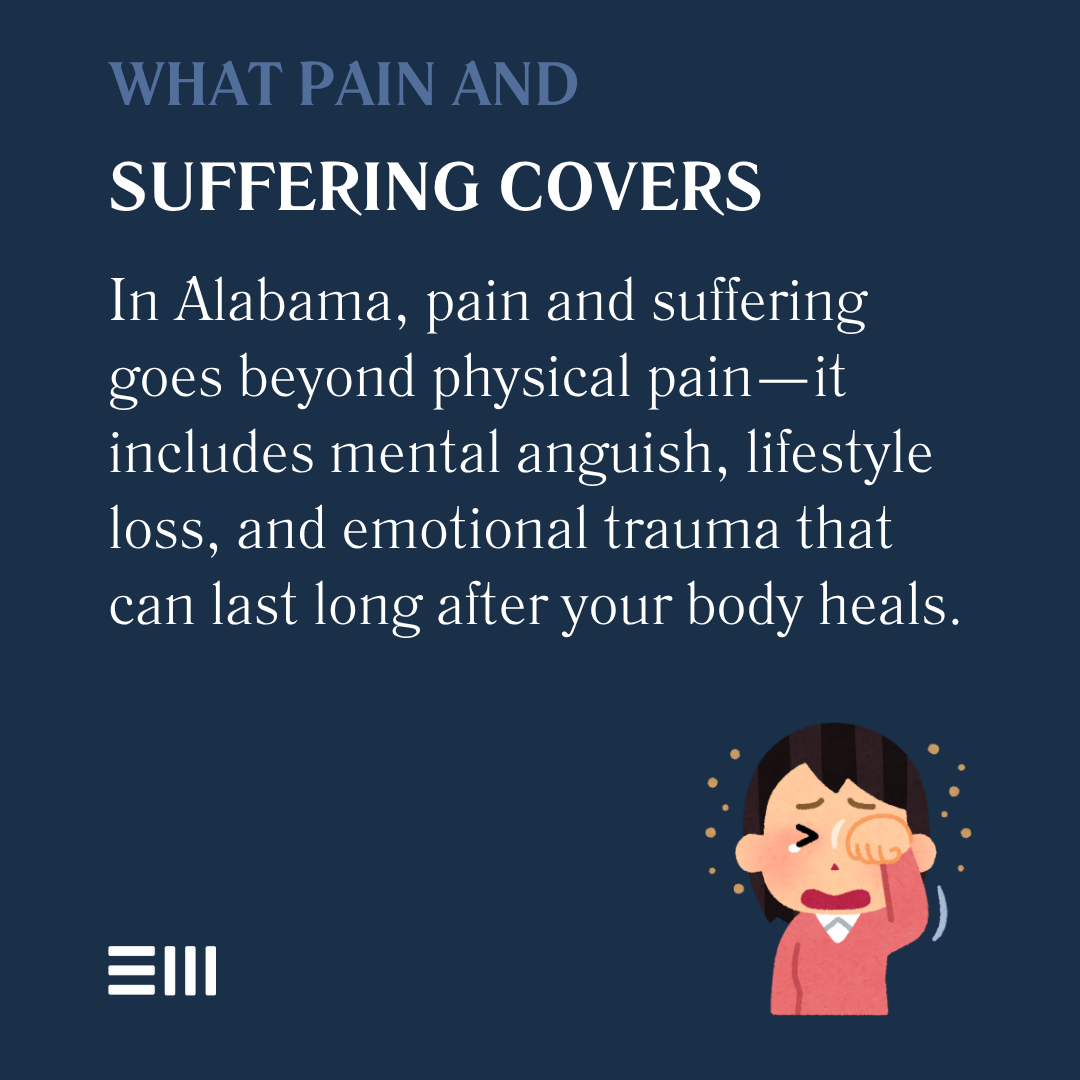
Pain and suffering damages compensate accident victims for the physical discomfort and emotional distress caused by their injuries, representing a critical component of personal injury settlements in Alabama.
These non-economic damages acknowledge that injuries impact victims beyond mere financial losses.
Pain and suffering encompasses:
- Physical pain: Actual bodily discomfort from injuries and medical treatment.
- Mental anguish: Emotional distress, anxiety, and psychological trauma.
- Loss of enjoyment: Inability to participate in previously enjoyed activities.
- Disfigurement: Scarring or permanent physical changes affecting appearance.
- Loss of consortium: Impact on marital and family relationships.
- Future suffering: Anticipated ongoing pain and limitations.
Alabama law recognizes that these losses deserve compensation even though they lack precise monetary values.
Insurance adjusters and juries must evaluate subjective experiences and assign dollar amounts based on evidence, testimony, and established legal principles. This subjective nature makes pain and suffering calculations both complex and highly variable between similar cases.
Factors Affecting Settlement Values
Multiple interconnected factors influence pain and suffering settlement amounts in Alabama, creating wide variations even among seemingly similar injuries.
Understanding these factors helps accident victims recognize what drives compensation levels and how to strengthen their claims.
Key factors determining values include:
- Injury severity: More serious injuries with longer recovery periods command higher compensation.
- Medical treatment duration: Extended treatment indicates greater suffering.
- Impact on daily life: Documented lifestyle changes and activity limitations.
- Age of victim: Younger victims may receive more for longer-term impacts.
- Pre-existing conditions: How injuries affected previous health issues.
- Credibility: Consistency between claimed suffering and medical evidence.
- Insurance coverage: Available policy limits cap potential recovery.
These factors work together to create an overall picture of how injuries affected the victim's life.
Strong documentation linking injuries to specific impacts strengthens claims, while gaps or inconsistencies can significantly reduce settlement values. Each case requires individual evaluation based on its unique combination of factors.
Calculation Methods Used in Alabama
Alabama doesn't mandate specific formulas for calculating pain and suffering damages, leaving insurance companies, attorneys, and juries to use various methods for determining appropriate compensation.
Understanding common calculation approaches helps victims evaluate whether settlement offers fairly value their suffering.
Common calculation methods include:
- Multiplier method: Multiplying economic damages by a factor typically between 1.5 and 5.
- Per diem method: Assigning a daily rate for pain and multiplying by recovery days.
- Precedent comparison: Reviewing similar case settlements and jury verdicts.
- Severity scaling: Rating pain levels and applying corresponding compensation ranges.
- Hybrid approaches: Combining multiple methods for comprehensive valuation.
Insurance companies often use computer programs that analyze claim data to suggest settlement ranges, while attorneys may emphasize comparable jury verdicts to support higher valuations.
The chosen method significantly impacts final settlement amounts, making it important to understand which approach best captures your specific suffering and losses.
Documenting Your Pain and Suffering
Successful pain and suffering claims require compelling evidence that transforms subjective experiences into objective proof of damages.
Thorough documentation throughout recovery provides the foundation for maximizing compensation in Alabama personal injury cases.
Essential documentation includes:
- Pain journals: Daily records describing pain levels, limitations, and emotional impacts.
- Medical records: Physician notes documenting reported symptoms and observed distress.
- Photographs: Visual evidence of injuries, scarring, and physical limitations.
- Witness statements: Family and friends describing personality and activity changes.
- Mental health records: Counseling or therapy documentation for emotional trauma.
- Activity logs: Detailed accounts of missed events and abandoned hobbies.
Consistent, contemporaneous documentation carries more weight than after-the-fact recollections.
Starting documentation immediately after an accident and maintaining detailed records throughout recovery creates powerful evidence supporting pain and suffering claims. This evidence helps insurance adjusters and juries understand the true impact of injuries on daily life.
Alabama's Contributory Negligence Impact
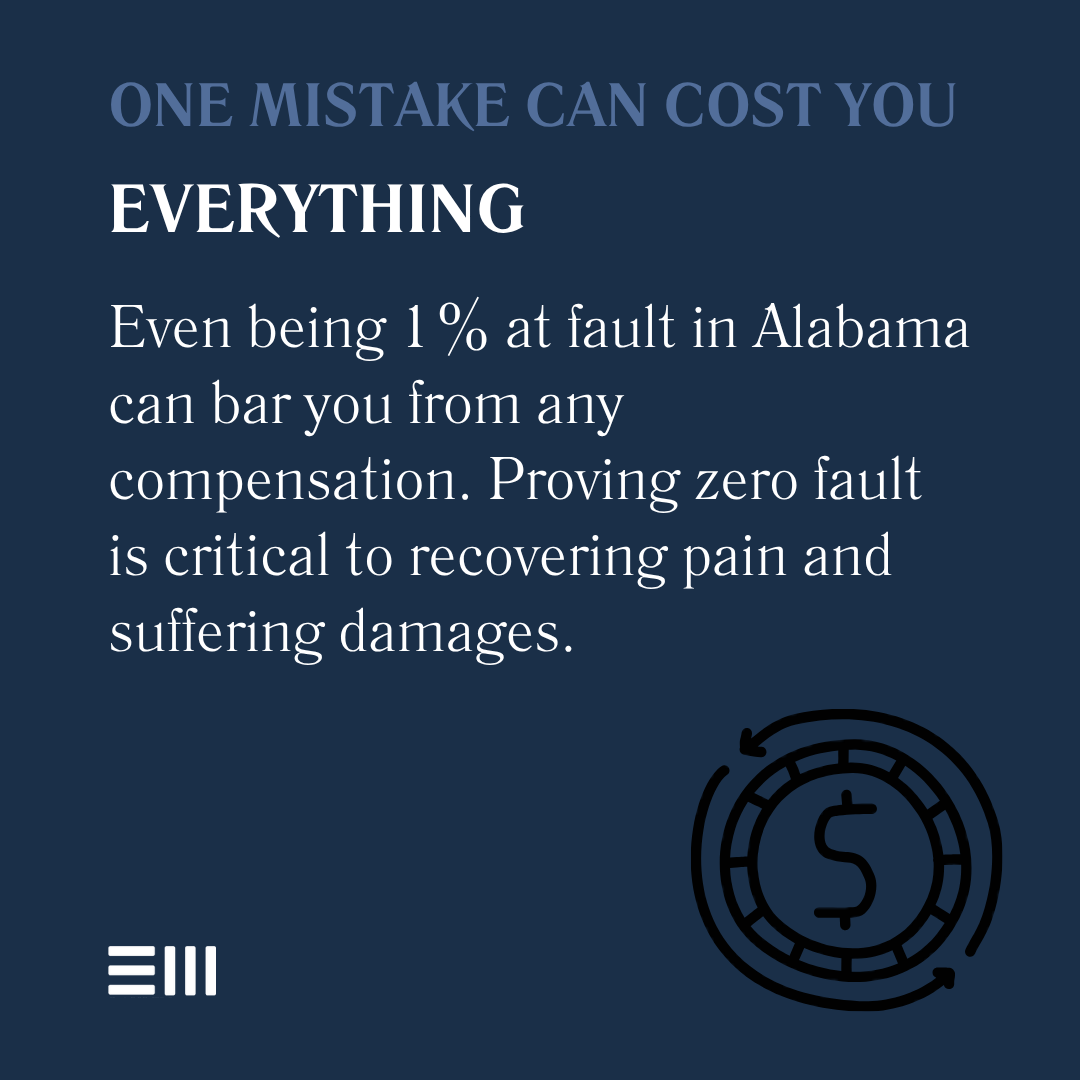
Alabama's strict contributory negligence doctrine profoundly affects pain and suffering settlements, creating unique challenges absent in most other states. This legal principle can eliminate all compensation, including pain and suffering damages, based on minimal victim fault.
How contributory negligence affects settlements:
- Any victim fault bars all recovery, including pain and suffering;
- Insurance companies aggressively investigate potential victim negligence;
- Settlement negotiations focus heavily on liability disputes;
- Even 1% fault eliminates rights to any compensation;
- Defendants use this leverage to reduce settlement offers; and
- Cases require stronger evidence to overcome negligence allegations.
This harsh rule gives insurance companies significant negotiating power, often resulting in lower settlement offers than comparable cases in other states.
Victims must present compelling evidence of zero fault while thoroughly documenting their pain and suffering. Understanding this reality helps set appropriate expectations and develop strategies to maximize recovery despite this challenging legal landscape.
Frequently Asked Questions About Pain and Suffering Settlements in Alabama
Understanding pain and suffering settlements raises important questions for Alabama accident victims seeking fair compensation for their injuries.
Is There a Cap on Pain and Suffering Damages in Alabama?
Alabama does not impose caps on pain and suffering damages in most personal injury cases. Unlike some states with statutory limits, Alabama allows juries to award whatever amount they deem appropriate based on evidence. However, medical malpractice cases face different rules with specific caps.
How Long Do I Have to File a Claim for Pain and Suffering?
Alabama's statute of limitations gives accident victims two years from the injury date to file personal injury lawsuits seeking pain and suffering damages. Missing this deadline typically bars all recovery. Earlier action often strengthens claims by preserving evidence and witness memories.
Can I Receive Pain and Suffering Compensation Without Physical Injuries?
Alabama law generally requires physical injuries to support pain and suffering claims. Pure emotional distress without physical manifestations rarely qualifies for compensation unless involving specific circumstances like intentional infliction of emotional distress or witnessing immediate family injury.
How Do Pre-Existing Conditions Affect My Settlement?
Pre-existing conditions don't bar pain and suffering recovery if accidents aggravated or worsened them. However, compensation only covers the additional suffering caused by the accident. Clear medical documentation distinguishing new injuries from pre-existing issues becomes critical.
Will My Pain and Suffering Settlement Be Taxed?
Pain and suffering settlements for physical injuries typically receive tax-free treatment under federal law. However, punitive damages and interest portions may be taxable. Consulting tax professionals ensures proper handling of settlement proceeds.
These questions reflect common concerns victims face when pursuing pain and suffering compensation in Alabama.
Let Justice Roll
Pain and suffering settlements represent more than numbers on paper—they acknowledge the real human cost of accidents that disrupt lives, destroy peace of mind, and forever change how victims experience the world.
While insurance companies use formulas and precedents to minimize these damages, your suffering deserves recognition and fair compensation. Don't let adjusters diminish your pain or pressure you into accepting inadequate settlements that ignore the true impact of your injuries.
The attorneys at Baxley Maniscalco understand how to document, present, and negotiate pain and suffering claims that capture the full extent of your losses. We know Alabama law, understand insurance tactics, and fight to maximize compensation for our clients' suffering.
Contact us today for a free consultation about your pain and suffering claim.