
Roundup remains one of the most widely used weed killers in the country. It has been sprayed on farms, used by landscapers and groundskeepers, and applied in backyards for decades. Today, lawsuits continue nationwide alleging that long-term exposure to Roundup’s active ingredient, glyphosate, can cause non-Hodgkin lymphoma and other blood cancers.
Roundup litigation is ongoing nationwide. Courts continue to handle new filings, and people who are being diagnosed today are still coming forward. A cancer diagnosis years after exposure does not automatically mean your rights are lost.
For families in Alabama, Georgia, and across the Southeast, understanding whether you qualify is an important first step.
Who May Qualify for a Roundup Claim?
You may be eligible to pursue a claim if you:
- Used Roundup regularly at home, at work, or in agricultural settings.
- Were later diagnosed with non-Hodgkin lymphoma.
- Were diagnosed with a related blood cancer such as B-cell leukemia, T-cell leukemia, or chronic lymphocytic leukemia (CLL).
- Have not previously resolved a Roundup claim through settlement.
Many individuals used Roundup believing it was safe. If you later developed one of these cancers, your case may be worth reviewing.
What Is Roundup?
Roundup is an herbicide first introduced in 1974 by Monsanto and later acquired in 2018 by Bayer. Its active ingredient, glyphosate, kills weeds by blocking essential plant growth processes.
It is sold in numerous consumer and commercial formulations, including:
- Roundup Ready-to-Use
- Roundup for Lawns
- Roundup Max Control
Glyphosate use has increased dramatically over the last several decades, particularly after the introduction of genetically engineered crops designed to tolerate herbicides. Today, more than 1.4 billion pounds of glyphosate are applied globally each year, with roughly 100 million pounds used annually in the United States.
Does Glyphosate Cause Cancer?
In 2015, the International Agency for Research on Cancer (IARC), part of the World Health Organization, classified glyphosate as “probably carcinogenic to humans.” That determination was based on research linking exposure to non-Hodgkin lymphoma in agricultural workers and others with repeated contact.
Jury verdicts across the country have found that exposure to Roundup contributed to plaintiffs’ cancer diagnoses. At the same time, the United States Environmental Protection Agency (EPA) has taken the position that glyphosate is not likely to be carcinogenic when used as directed. Critics argue the agency relied heavily on industry-supported research rather than independent studies. Litigation over glyphosate’s safety is still ongoing.
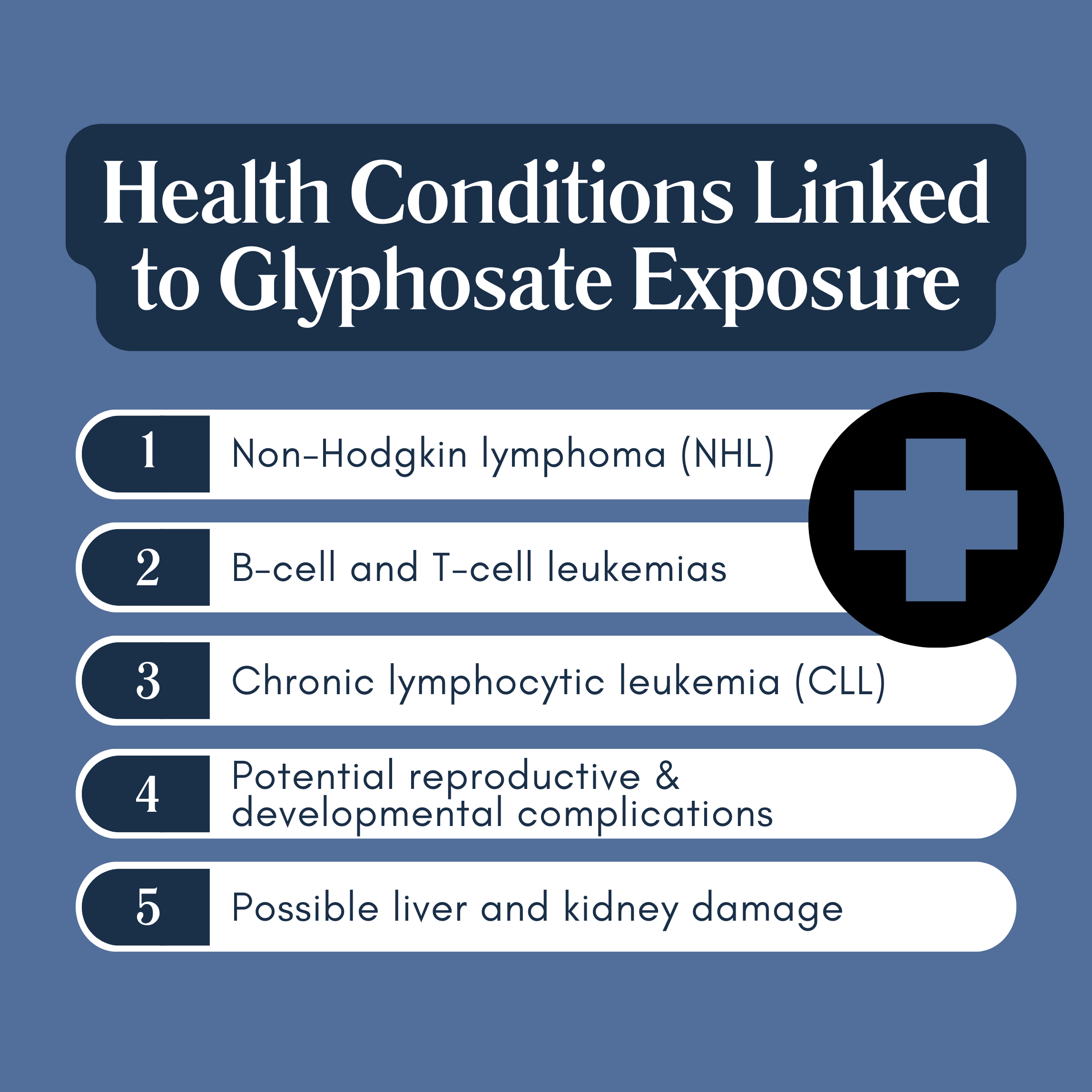
Health Conditions Linked to Glyphosate Exposure
Scientific studies and litigation focus on a number of serious conditions, including:
- Non-Hodgkin lymphoma (NHL)
- B-cell and T-cell leukemias
- Chronic lymphocytic leukemia (CLL)
- Potential reproductive and developmental complications
- Possible liver and kidney damage
Cancer diagnoses often occur years after repeated exposure, particularly among farm workers, landscapers, groundskeepers, and individuals who mixed or applied the product themselves.
Is Roundup Still Being Sold?
Yes. Roundup products remain on the market, and glyphosate continues to be widely used. While some formulations have changed in recent years, exposure concerns persist, and new cancer diagnoses continue to surface.
Exploring Your Legal Options
If you or a loved one used Roundup and were later diagnosed with non-Hodgkin lymphoma or a related blood cancer, you may still have the right to pursue a claim.
Each case depends on exposure history, medical documentation, and timing under applicable state law.
Contact us for a careful case review to determine whether you qualify.