
Ultra-processed foods make up more than half of the average American diet, and for children, the numbers are even higher.
Frozen meals, packaged snacks, sugary cereals, and fast food products have replaced whole foods in millions of households across Alabama and the rest of the country.
Now, a growing wave of lawsuits alleges that the companies behind these products knew they were contributing to serious health conditions and kept selling them anyway.
Litigation is building nationwide against major food manufacturers. Families whose children developed type 2 diabetes or non-alcoholic fatty liver disease (NAFLD) after years of consuming these products are coming forward.
A diagnosis does not have to be recent for a case to be worth reviewing.
For families in Alabama and across the Southeast, understanding whether you qualify is an important first step.
Who May Qualify for an Ultra-Processed Food Claim?
You may be eligible to pursue a claim if the following applies to your family's situation.
- Your child consumed ultra-processed foods regularly. This includes packaged snacks, sugary cereals, frozen meals, fast food, and other heavily processed products that made up a significant portion of their diet over a sustained period.
- Your child was diagnosed with type 2 diabetes before age 18. Research has linked diets high in ultra-processed foods to insulin resistance and early-onset type 2 diabetes in children and teenagers.
- Your child was diagnosed with non-alcoholic fatty liver disease (NAFLD). Studies indicate that heavy consumption of ultra-processed foods contributes to poor diet quality, high saturated fat intake, and the metabolic conditions that drive NAFLD in young people.
- You were not adequately warned about the health risks. Manufacturers marketed these products as convenient and, in many cases, as part of a balanced diet, without disclosing the growing evidence of harm.
Many parents fed their children these foods in good faith, trusting the brands on grocery store shelves. If your child later developed one of these conditions, your case may be worth a closer look.
What Are Ultra-Processed Foods?
Ultra-processed foods are products that have been significantly altered from their original, whole-food form through industrial techniques.
Unlike minimally processed items like canned vegetables or freshly baked bread, ultra-processed foods are assembled from extracted ingredients, chemical additives, preservatives, and artificial flavors designed to extend shelf life and maximize taste appeal.
Common examples include sugary breakfast cereals, packaged cookies and chips, frozen pizza and microwavable meals, soft drinks and energy drinks, instant noodles, hot dogs, and many fast food menu items.
These products are engineered to be convenient, inexpensive, and difficult to stop eating.
Today, roughly 70 percent of the U.S. food supply consists of ultra-processed products. For many American children, these foods account for the majority of their daily caloric intake, crowding out fruits, vegetables, whole grains, and other nutrient-dense options.
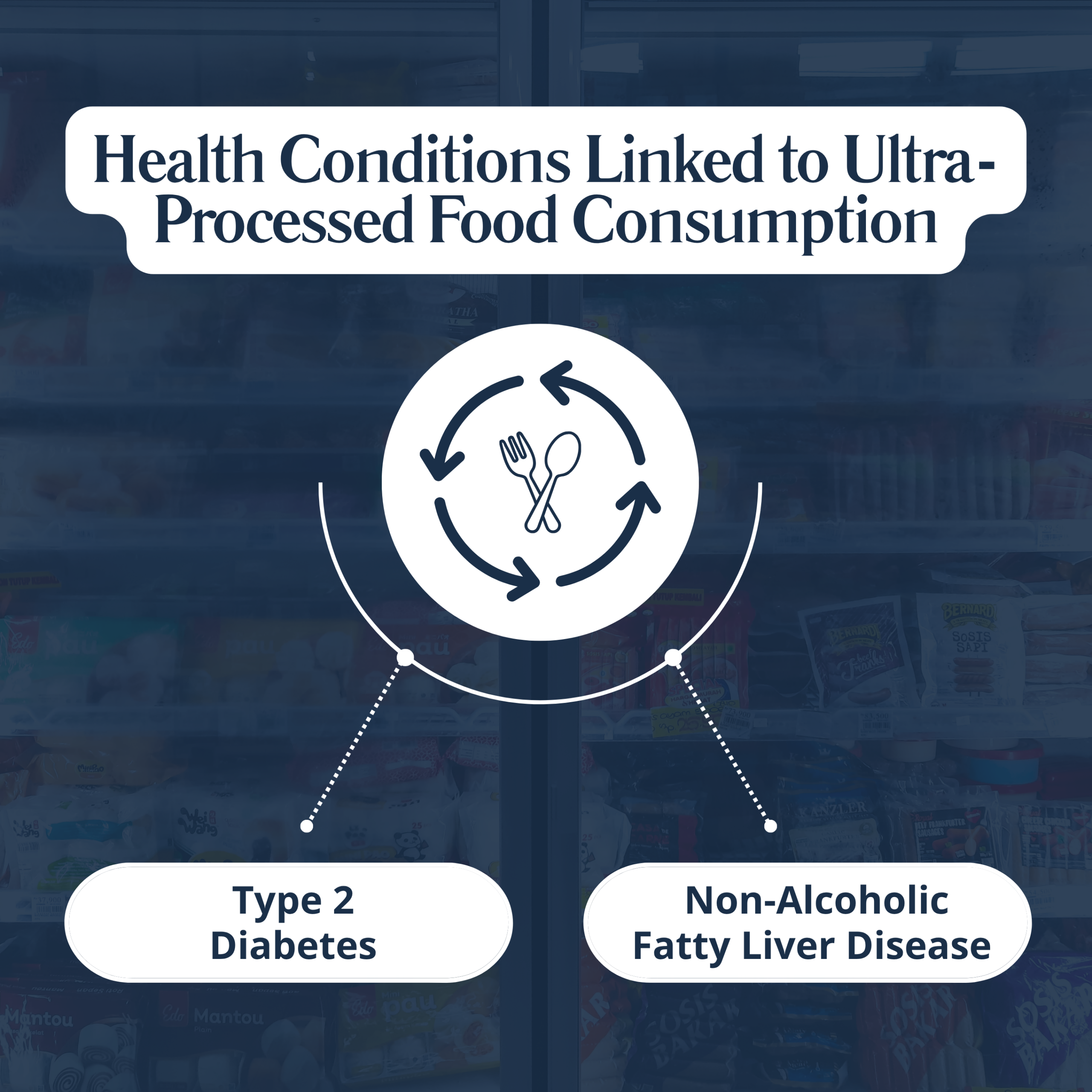
Health Conditions Linked to Ultra-Processed Food Consumption
Scientific research and ongoing litigation focus on two primary conditions affecting children and adolescents who consume diets heavy in ultra-processed foods.
- Type 2 Diabetes: Diets high in ultra-processed foods are associated with elevated levels of added sugars and unhealthy fats, which lead to rapid blood sugar spikes and insulin resistance over time. Type 2 diabetes was once rare in children, but diagnoses have risen sharply in recent years alongside the increase in ultra-processed food consumption.
- Non-Alcoholic Fatty Liver Disease (NAFLD): Higher consumption of ultra-processed foods is linked to poor overall diet quality, excessive saturated fat intake, and the metabolic dysfunction that drives fat accumulation in the liver. Pediatric NAFLD cases often begin with inflammation in the portal regions of the liver, meaning children can develop significant scarring before standard tests detect the problem.
Beyond these two conditions, researchers have also identified associations between heavy ultra-processed food consumption and obesity, cardiovascular disease, certain cancers, and mental health issues. The body of evidence continues to grow.
Why Children Are Especially at Risk
Ultra-processed foods are everywhere, and many are marketed directly to children through colorful packaging, cartoon mascots, and advertising campaigns designed to build brand loyalty from an early age.
While these products may look fun and harmless, they are engineered to keep kids reaching for more, often at the expense of their long-term health.
The numbers paint a troubling picture. Childhood obesity rates have tripled over the past several decades.
Type 2 diabetes diagnoses in young people have climbed steadily. Fatty liver disease, a condition once associated almost exclusively with adults, is now appearing in children at rates that would have been unthinkable a generation ago.
Many of the companies behind these products have ties to the tobacco industry.
When major tobacco manufacturers expanded into the food business in the 1960s and beyond, they brought with them the same strategies they had used to make cigarettes addictive and to suppress public awareness of the health consequences.
Plaintiffs in current lawsuits allege that these practices carried over directly into how ultra-processed foods were developed, marketed, and sold.
The Growing Wave of Ultra-Processed Food Litigation
In December 2025, the city of San Francisco filed a first-of-its-kind government lawsuit against some of the largest ultra-processed food manufacturers in the country, including Kraft Heinz, Coca-Cola, PepsiCo, General Mills, Nestle, Kellogg, Mars, and others.
The complaint alleges that these companies used deceptive marketing practices, knew their products were contributing to serious health conditions, and prioritized profits over public safety.
Individual and family lawsuits have also been filed across the country.
Parents allege that their children developed type 2 diabetes, NAFLD, and other conditions after years of consuming products that were aggressively marketed to young people without adequate health warnings.
At the federal level, the FDA has launched its own investigation into the health effects of ultra-processed foods and has begun the process of formally defining what qualifies as "ultra-processed" for regulatory purposes.
The 2025 Dietary Guidelines for Americans, released in January 2026, encourage consumers to reduce consumption of "highly processed foods" for the first time.
Litigation is still in its early stages, and new cases continue to be filed. Families affected by these products should not assume that the window for action has closed.
Exploring Your Legal Options
If your child consumed ultra-processed foods as a regular part of their diet and was later diagnosed with type 2 diabetes or non-alcoholic fatty liver disease before age 18, your family may have the right to pursue a claim.
Each case depends on dietary history, medical documentation, and the timing of the diagnosis under applicable state law.
Our experienced product liability attorneys here at Baxley Maniscalco are reviewing cases for Alabama families affected by ultra-processed foods.
We understand the science behind these claims, the companies involved, and the legal strategies that give families the best chance at holding manufacturers accountable.
Contact us today for a free and confidential case review to determine whether you qualify.