
Many Alabama parents believe their 14-year-old can simply decide where to live after divorce, but the reality proves far more complex.
Alabama law contains no magic age where children gain the power to choose their custodial parent, leaving judges to weigh multiple factors, including, but never controlled by, a child's preferences.
Understanding Alabama's Approach to Child Preferences
Alabama courts approach child custody decisions through the lens of the child's best interests, not the child's stated preferences. Unlike some states that specify ages when children's wishes carry more weight, Alabama grants judges complete discretion in determining how much consideration to give a child's custodial preferences.
The absence of a statutory age threshold means that a mature 12-year-old's reasoned preferences might receive more weight than an easily influenced 16-year-old's wishes. Judges evaluate each child individually, considering their unique circumstances, maturity level, and reasoning abilities rather than relying on arbitrary age cutoffs.
This individualized approach protects children from bearing the burden of choosing between parents while still allowing their voices to be heard appropriately.
How Courts Evaluate Children's Preferences
When Alabama judges consider a child's custodial preferences, they examine far more than just what the child wants. The evaluation process focuses on understanding why children express certain preferences and whether those reasons align with their best interests.
Factors judges consider include:
- The child's emotional and intellectual maturity;
- Reasoning behind the stated preference;
- Evidence of parental influence or coaching;
- Consistency of the child's wishes over time;
- The child's understanding of each living situation;
- Potential impact on siblings and family relationships;
- The child's adjustment to current arrangements; and
- Any history of manipulation or alienation.
Courts recognize that children's preferences can change based on temporary conflicts, promises of fewer rules, or material incentives that don't reflect long-term best interests.
The Role of Age and Maturity
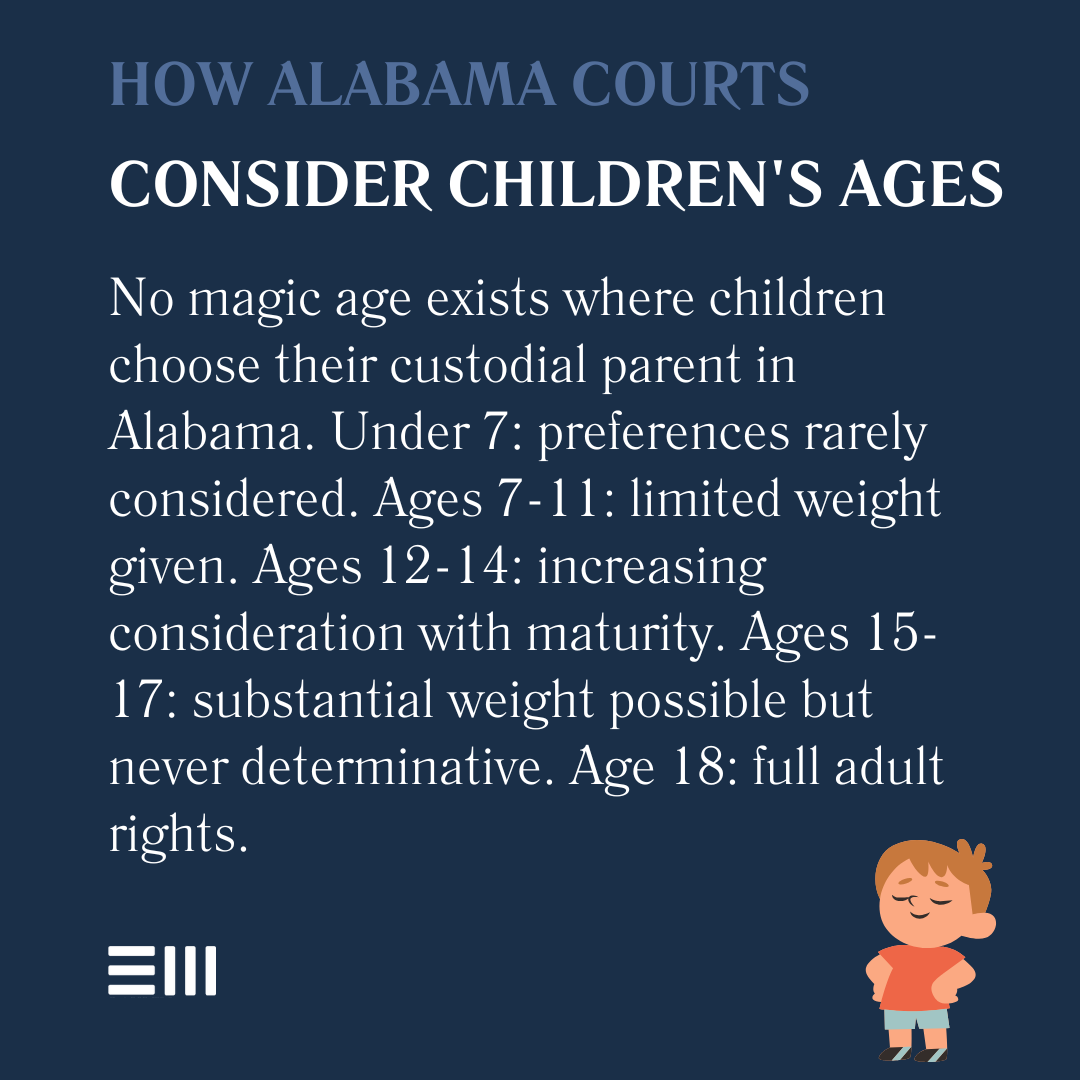
While Alabama law doesn't establish specific ages for consideration, judges naturally give more weight to older children's preferences when accompanied by demonstrated maturity.
The correlation between age and influence isn't automatic but depends on individual assessment.
Typical judicial considerations by age group:
- Under 7: Preferences rarely considered due to developmental limitations.
- Ages 7-11: Limited weight given, depending on maturity and circumstances.
- Ages 12-14: Increasing consideration with demonstrated reasoning ability.
- Ages 15-17: Substantial weight possible, though never determinative.
- Age 18: Full adult rights to choose residence.
These general patterns provide guidance but never guarantee outcomes, as judges retain complete discretion based on individual circumstances.
Methods Courts Use to Determine Preferences
Alabama courts employ various methods to ascertain children's genuine preferences while protecting them from the stress of formal proceedings.
Judges carefully balance the need for information against potential harm to children from direct involvement in parental disputes.
Common approaches include:
- In-camera interviews in judge's chambers;
- Guardian ad litem investigations and reports;
- Child custody evaluations by mental health professionals;
- Family court counselor assessments;
- Review of the child's statements to neutral parties;
- Observation of parent-child interactions; and
- Teachers' and counselors' input.
These methods allow courts to gather authentic information while shielding children from courtroom testimony and cross-examination.
Factors That Outweigh Child Preferences
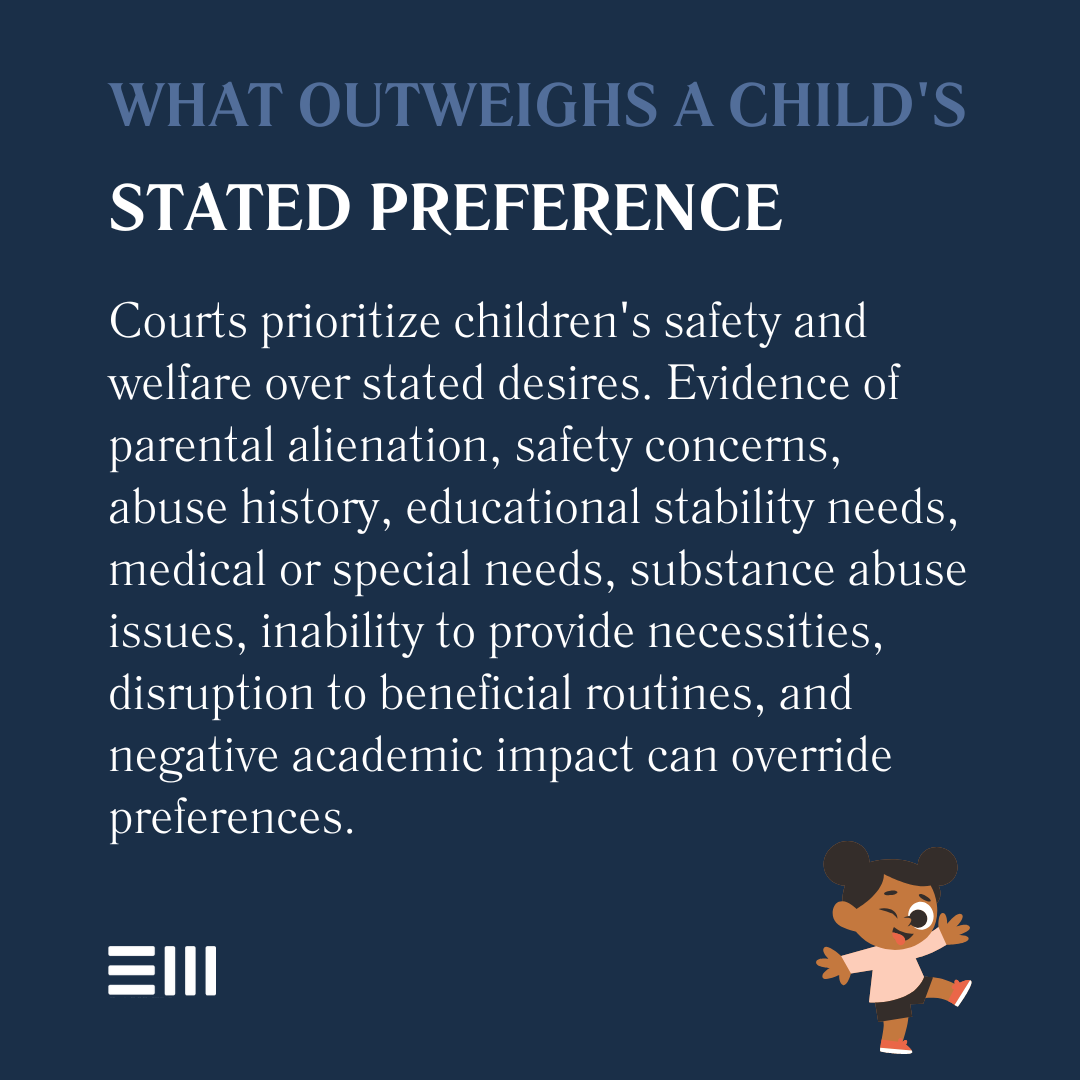
Even when children express strong preferences, Alabama courts may disregard those wishes if other factors indicate a different arrangement better serves the child's interests. Judges must balance subjective preferences against objective evidence of each parent's ability to provide proper care.
Circumstances overriding preferences include:
- Evidence of parental alienation or coaching;
- Safety concerns or history of abuse;
- Educational stability and opportunities;
- Medical or special needs considerations;
- Substance abuse or mental health issues;
- Parent's inability to provide basic necessities;
- Disruption to established beneficial routines; and
- Negative influence on academic performance.
Courts prioritize children's safety and welfare over their stated desires when conflicts arise between preferences and best interests.
Common Misconceptions About Age and Choice
Several persistent myths about children choosing custody in Alabama create unrealistic expectations for families navigating divorce. Understanding these misconceptions helps parents approach custody matters with accurate information.
The most common misconception involves the belief that children gain decision-making power at age 14. This myth likely stems from other states' laws or outdated information, but Alabama has never established such an age threshold.
Another misconception assumes that teenagers' preferences automatically control custody decisions, when judges actually retain full discretion regardless of the child's age.
Parents must understand that custody decisions remain judicial determinations based on comprehensive factors, not children's choices.
Frequently Asked Questions About Child Custody in Alabama
Parents navigating custody disputes often seek clarity about how their children's preferences factor into Alabama custody decisions.
Can a 14-Year-Old Decide Which Parent to Live With?
No, 14-year-olds cannot unilaterally decide their living arrangements in Alabama. While judges may give substantial weight to a mature 14-year-old's preferences, the court makes the final determination based on the child's best interests, not their desires alone.
Do Judges Always Interview Children About Preferences?
Judges have discretion about whether to interview children directly. Many judges prefer receiving information through guardian ad litem reports or custody evaluations rather than subjecting children to direct questioning, especially for younger children or contentious cases.
What if Siblings Have Different Preferences?
When siblings express different custodial preferences, courts strive to keep siblings together unless compelling reasons exist for separation. Judges weigh the importance of sibling relationships against individual children's needs and preferences when making these difficult decisions.
Can Parents Agree to Let Children Choose?
Parents can consider children's preferences when creating custody agreements, but courts must still approve arrangements as serving children's best interests. Judges won't enforce agreements that delegate custody decisions entirely to children, regardless of parental consensus.
How Can Children Express Preferences Without Court?
Children can share preferences through counselors, guardian ad litems, or custody evaluators without appearing in court. These professionals can convey children's wishes while protecting them from direct involvement in legal proceedings between their parents.
Navigate Child Custody with Compassionate Legal Support
Understanding how Alabama courts consider children's preferences in custody decisions helps families set realistic expectations during difficult transitions.
At Baxley Maniscalco, our experienced family law attorneys guide parents through custody disputes while protecting children's interests and relationships with both parents. We help you present your case effectively while ensuring your children's voices are heard appropriately.
Our team understands the delicate balance between respecting children's feelings and advocating for their best interests.
Contact our Oxford office at (256) 770-7232 to discuss your custody situation and learn how we can help protect your family's future while minimizing conflict and stress for your children.