
Alabama's alimony laws underwent major reform in 2017, introducing new categories of spousal support and changing how courts approach these critical financial decisions.
For divorcing couples, understanding these laws can mean the difference between financial stability and years of uncertainty.
Understanding Alabama's Spousal Support Framework
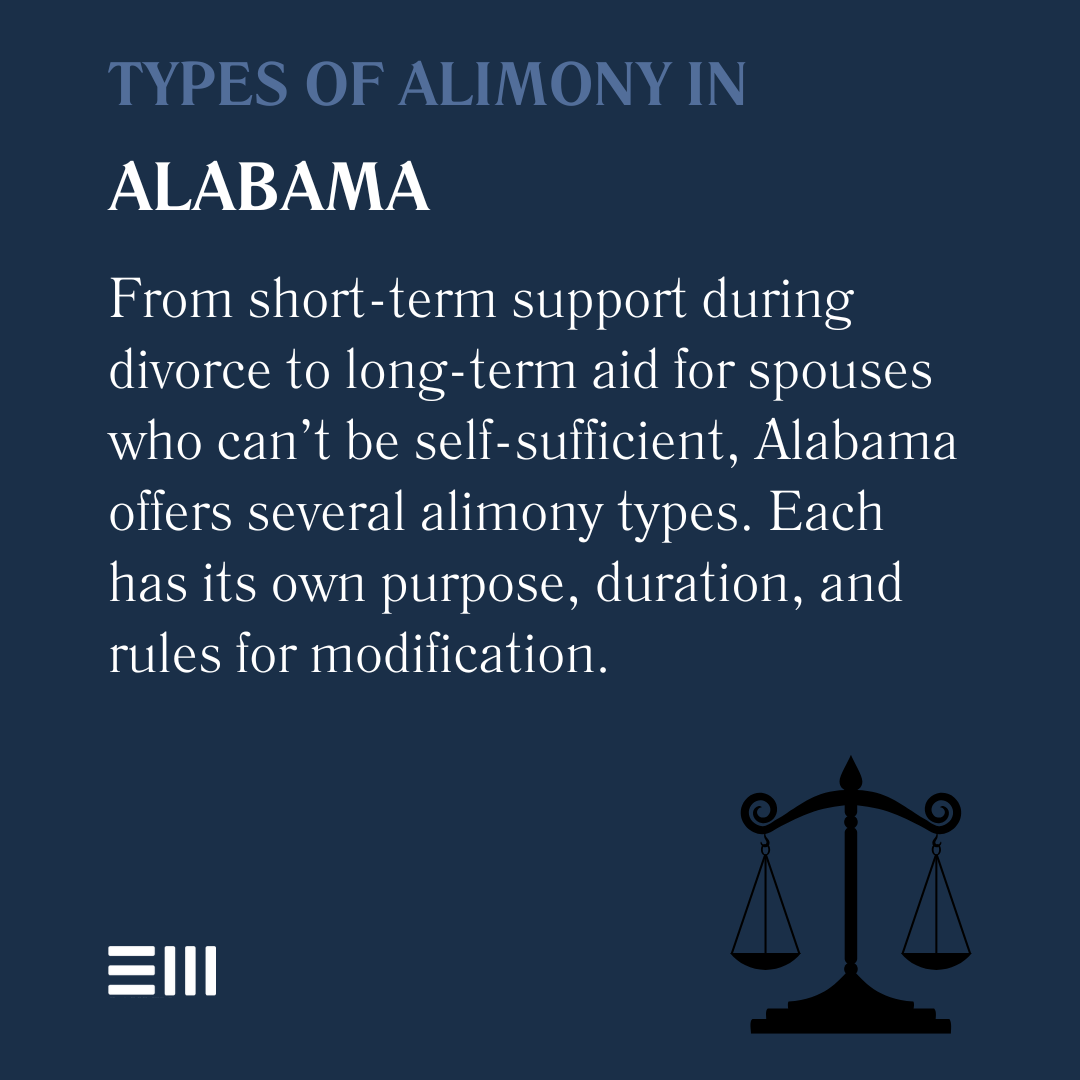
Alabama recognizes multiple forms of alimony, each designed to address different circumstances and financial needs.
The state's approach to spousal support reflects a balance between supporting a dependent spouse and recognizing the financial capabilities of both parties.
The courts consider numerous factors when determining alimony awards, including the length of the marriage, each spouse's earning capacity, and the standard of living established during the marriage.
Unlike child support, which follows specific guidelines, alimony determinations involve considerable judicial discretion.
Types of Alimony Available in Alabama
Alabama law provides for several distinct categories of spousal support, each serving different purposes and durations. Understanding these categories helps divorcing spouses anticipate potential outcomes and plan accordingly.
- Temporary Alimony (Pendente Lite): This support provides financial assistance during the divorce proceedings. It ensures the dependent spouse can maintain basic living standards while the case progresses through the court system.
- Rehabilitative Alimony: The most common form awarded in Alabama, rehabilitative alimony helps a spouse become self-supporting through education or job training. Courts typically limit this support to five years, though exceptions exist for extraordinary circumstances.
- Permanent Alimony: Reserved for long-term marriages where one spouse cannot achieve self-sufficiency due to age, disability, or other factors. Recent legislative changes have made permanent alimony less common, particularly for marriages under 20 years.
- Interim Alimony: A newer category introduced in 2017, interim alimony bridges the gap between temporary support and other forms. It typically lasts no more than two years and helps with the transition to financial independence.
Each type serves specific needs and comes with different duration limits and modification possibilities. The court's choice depends heavily on the unique circumstances of each case.
Factors Courts Consider When Awarding Alimony
Alabama judges evaluate multiple elements when determining spousal support awards. These considerations ensure fair outcomes based on each couple's specific situation.
Primary factors include:
- Length of the marriage and ages of both parties.
- Current and future earning capacities.
- Contributions to the marriage, including homemaking and child-rearing.
- Health conditions affecting employment ability.
- Property division outcomes.
- Conduct during the marriage, including fault grounds for divorce.
The court also examines the dependent spouse's genuine financial needs versus the paying spouse's ability to provide support while maintaining their own reasonable standard of living.
This balancing act requires careful documentation and presentation of financial evidence.
How Much Alimony Can You Expect in Alabama?
Alabama lacks a specific formula for calculating alimony amounts, leaving considerable discretion to judges. However, patterns emerge from court decisions that provide general guidance.
Typically, alimony payments range from 20% to 35% of the paying spouse's gross income, though this varies significantly based on circumstances. For marriages lasting less than 10 years, support rarely exceeds one-third of the marriage length. Marriages between 10 and 20 years often result in support lasting half the marriage duration.
Long-term marriages exceeding 20 years may warrant indefinite support, particularly when the dependent spouse is over 55 or has limited earning capacity. However, even permanent alimony faces potential modification or termination under certain conditions.
The actual amount depends on detailed financial affidavits, tax considerations, and the interplay with property division. Many couples find negotiated settlements provide more predictable outcomes than court determinations.
Modifying or Terminating Alimony
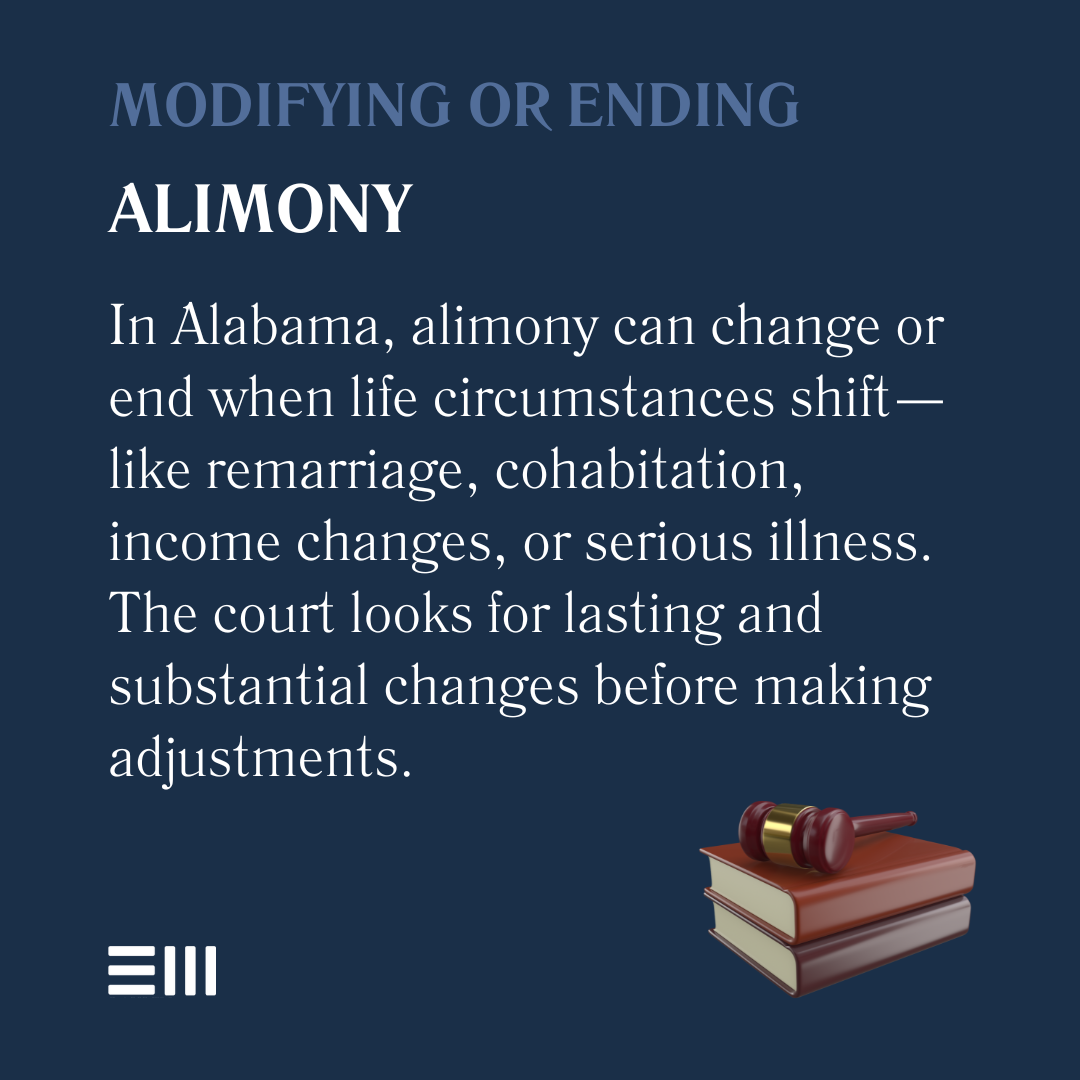
Life changes often necessitate alimony adjustments, and Alabama law provides mechanisms for modification or termination. Understanding these provisions helps both paying and receiving spouses plan for the future.
Alimony automatically terminates upon the remarriage of the receiving spouse or the death of either party. Cohabitation with a romantic partner may also trigger termination, though proving cohabitation requires substantial evidence.
Material changes in circumstances can justify modification requests. These include:
- Significant income changes for either party.
- Retirement of the paying spouse.
- Disability or serious illness.
- Completion of education or job training by the receiving spouse.
The party seeking modification must demonstrate that circumstances have substantially and permanently changed since the original order. Temporary setbacks rarely justify permanent modifications.
Tax Implications of Alimony in Alabama
Recent federal tax law changes dramatically altered alimony's tax treatment, affecting both payers and recipients. These changes apply to all divorce agreements finalized after December 31, 2018.
Under current law, alimony payers cannot deduct payments from their taxable income, and recipients don't report alimony as income. This shift from previous rules significantly impacts negotiation strategies and net payment calculations.
Pre-2019 agreements maintain the old tax treatment unless specifically modified. This grandfather provision creates two distinct tax regimes for alimony, depending on the divorce date. Parties must carefully consider these implications when negotiating support amounts.
The tax changes often result in higher gross alimony payments to achieve the same net benefit for recipients. Financial planning becomes even more critical under the new framework.
Frequently Asked Questions About Alabama Alimony
Understanding common concerns helps individuals navigate Alabama's spousal support system more effectively.
Can Alimony Be Waived in a Prenuptial Agreement?
Alabama generally enforces prenuptial agreements that waive or limit alimony rights, provided the agreement meets legal requirements. Courts scrutinize these waivers for fairness, full disclosure, and voluntary execution. However, extreme circumstances at divorce may override even valid waivers.
How Does Adultery Affect Alimony Awards?
Adultery and other fault grounds can influence alimony determinations in Alabama. While not automatically disqualifying, proven adultery by the dependent spouse may reduce or eliminate support. Conversely, adultery by the paying spouse might increase the award amount.
What Happens If Someone Stops Paying Alimony?
Non-payment of court-ordered alimony constitutes contempt of court in Alabama. Enforcement options include wage garnishment, asset seizure, and even jail time. Recipients should document missed payments and seek legal assistance promptly to enforce their rights.
Can Same-Sex Couples Receive Alimony in Alabama?
Following federal marriage equality rulings, Alabama treats same-sex marriages identically to opposite-sex marriages for alimony purposes. The same factors and types of support apply regardless of the spouses' genders.
How Long Does the Alimony Process Take?
Temporary alimony determinations often occur within weeks of filing, while final orders depend on the overall divorce timeline. Contested cases involving complex financial issues may take months or even years to resolve fully.
These questions represent just a sampling of the complexities surrounding Alabama's alimony laws. Each situation presents unique challenges requiring careful legal analysis.
Take Control of Your Financial Future Today
Navigating Alabama's spousal support laws requires experienced legal guidance to protect your interests and secure a fair outcome. Whether you're seeking alimony or may be required to pay it, understanding your rights and obligations is the first step toward financial stability post-divorce.
The attorneys at Baxley Maniscalco bring decades of combined experience in Alabama family law, helping clients achieve favorable alimony arrangements through skilled negotiation and aggressive courtroom advocacy when necessary.
Don't leave your financial future to chance – contact our office today for a confidential consultation and learn how we can help you move forward with confidence.