The chemical behind this recall is not some exotic poison. Nitrosamines turn up in cured and grilled meats, dairy, vegetables, and even drinking water, and the FDA notes that everyone takes in some amount every day.
The concern is rarely their presence alone. It is the dose, and how much builds up over many years.
That is the line a widely used medication crossed this spring.
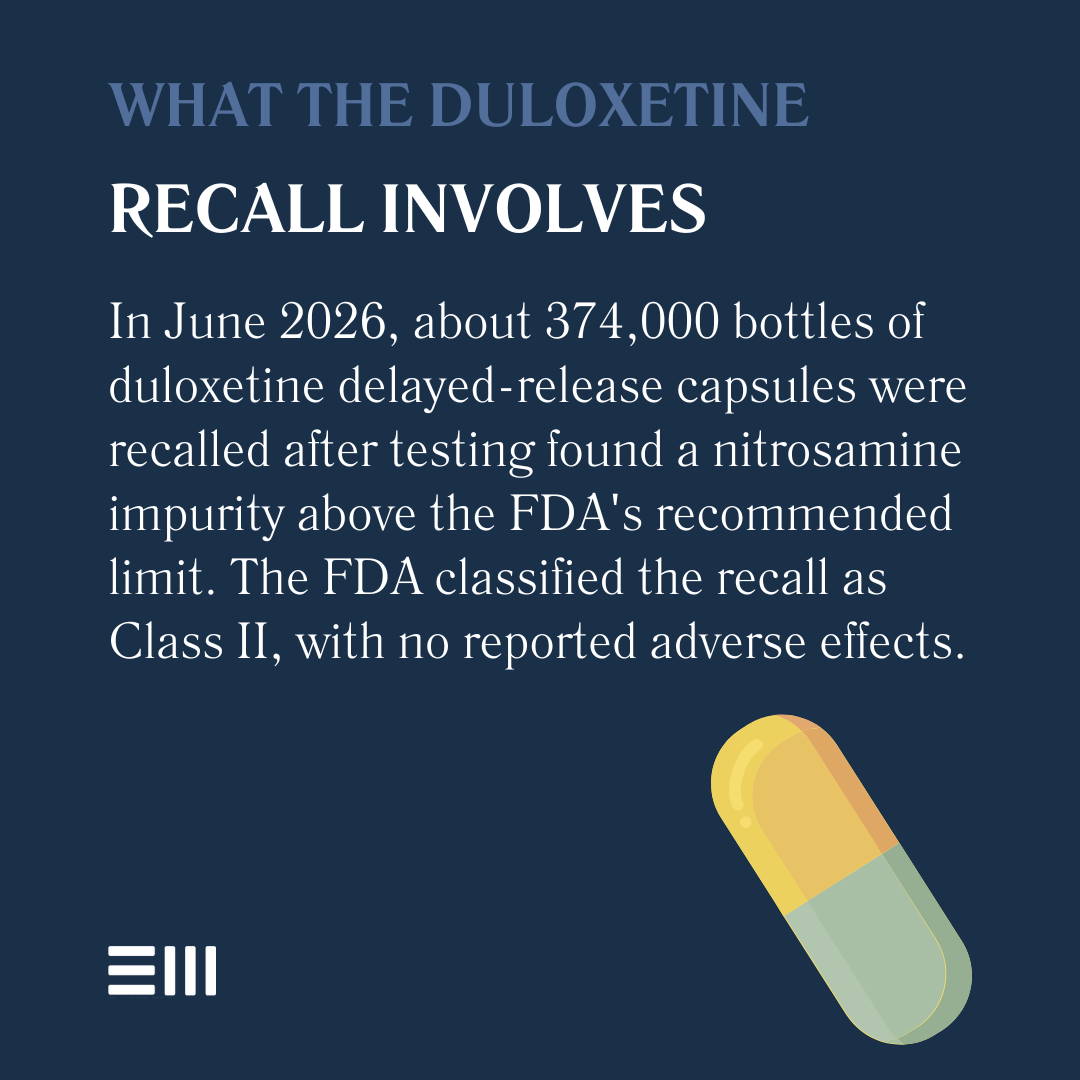
In June 2026, roughly 374,000 bottles of duloxetine, the generic version of Cymbalta, were pulled from shelves nationwide after testing found a nitrosamine impurity above the level federal regulators allow.
The duloxetine recall has left many Alabama patients wondering whether the medicine in their cabinet is safe and what they should do next.
What Was Recalled and Why
The duloxetine recall actually covers two related actions, both tied to the same flaw in how the drug was produced. Here is what the manufacturer and regulators have reported.
The key details include the following:
- The medication. Duloxetine delayed-release capsules, the generic form of Cymbalta, prescribed for depression, anxiety, fibromyalgia, and nerve pain.
- The companies. The capsules were made in Spain by Towa Pharmaceutical Europe and distributed in the United States by Breckenridge Pharmaceutical.
- The reason. Testing found a nitrosamine impurity above the FDA's recommended limit, along with a manufacturing practice violation.
- The scope. Two recalls cover roughly 374,000 bottles distributed across the country, with no adverse effects reported so far.
- The classification. The FDA labeled both actions Class II, meaning any health effects would most likely be temporary or reversible.
For most patients, those last two points carry real weight, since they point to a quality failure rather than an immediate emergency.
Understanding the Cancer Concern
The phrase cancer-causing chemical understandably rattles anyone who takes the drug, so it helps to know what the science actually says.
Nitrosamines are a family of compounds, and several of them are considered probable human carcinogens.
Even so, the FDA is clear that the risk comes from long-term exposure above safe limits, not from a single dose. By the agency's own measure, taking a medication at or below the acceptable daily limit every day for 70 years is not expected to raise a person's cancer risk.
There is also no specific evidence tying this particular impurity to cancer in people. The concern rests on the compound's chemical family rather than on proven harm. None of that excuses the violation, since drug makers are responsible for keeping impurities like this out of the bottle in the first place.
What Patients Should Do Now
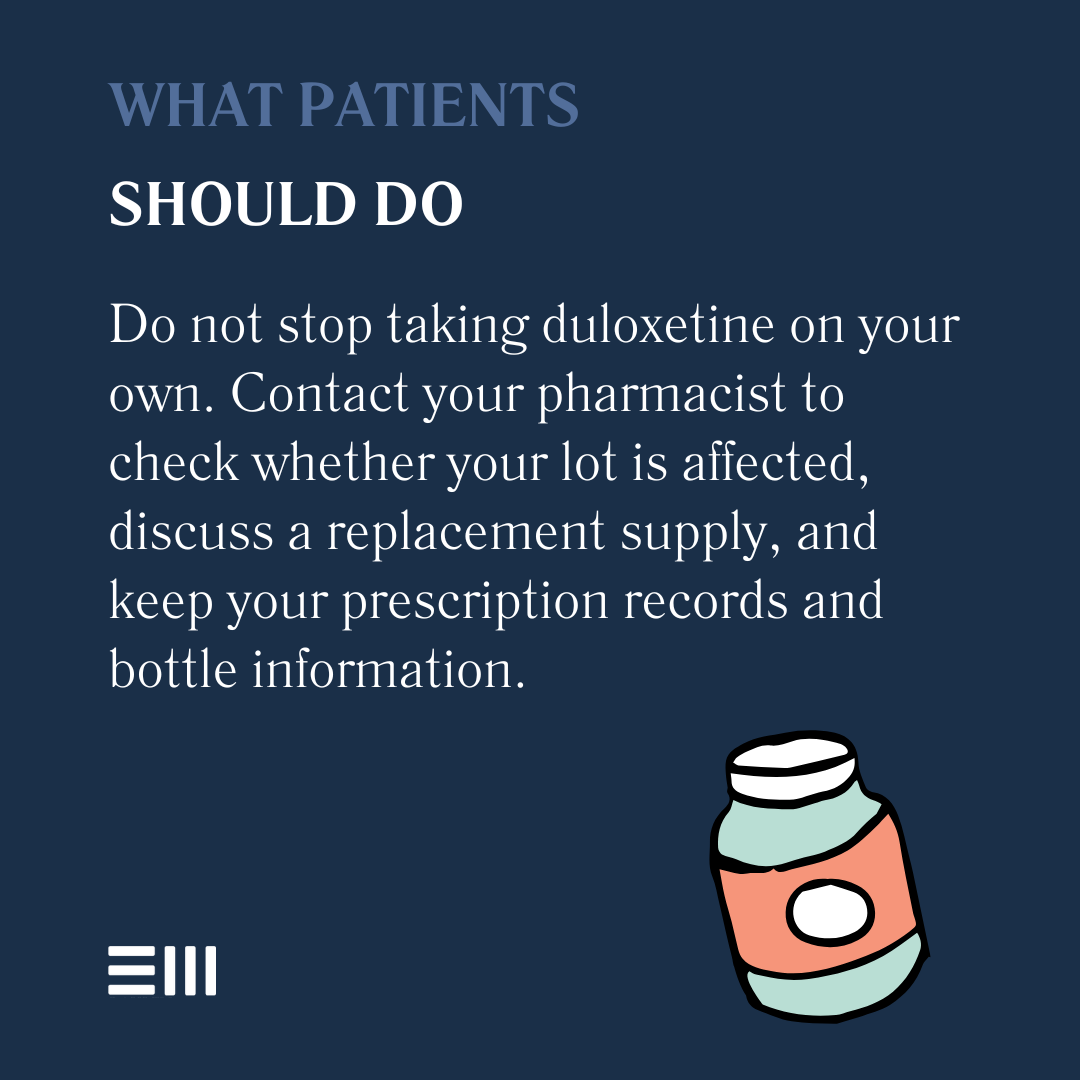
If your prescription might be part of the duloxetine recall, the most important step is also the simplest, do not stop taking it on your own. Stopping an antidepressant suddenly can bring on serious problems of its own.
Here is how to handle a bottle that may be affected:
- Keep taking it until told otherwise. Never stop a prescribed medication without first speaking to your doctor.
- Call your pharmacist. A pharmacist can confirm whether your specific lot is included and help arrange a replacement.
- Ask about a different lot or maker. Duloxetine is sold by several companies, so switching to a supply that was not recalled is usually straightforward.
- Save your records. Keep the bottle, the label, and your pharmacy paperwork in case you need them later.
Taking these steps protects both your mental health and your legal options, without trading one risk for another.
When a Defective Medication Becomes a Legal Matter
The duloxetine recall is a safety step, not compensation, and it does nothing to address harm that a defective medication may already have caused. When a drug reaches patients in a condition it never should have, Alabama law gives those who are hurt a way to hold the makers accountable.
Claims involving a contaminated or defective drug often rest on a few legal theories:
- Manufacturing Defect. The drug left the plant in an unsafe condition, which can help show an impurity above the legal limit.
- Failure to Warn. The maker did not adequately disclose a known risk to patients or their doctors.
- Breach of Warranty. The medication fell short of the basic promise of safety that comes with selling it.
These cases turn on technical proof, and Alabama generally sets a two-year window to file.
Our experienced dangerous drug attorneys here at Baxley Maniscalco help families look into whether a defective or recalled medication caused real harm.
If you believe a recalled drug injured you or someone you love, learning where you stand is the best first step.
Questions Alabama Patients Are Asking
The duloxetine recall has raised a lot of practical questions for patients and their families. Here are answers to the ones coming up most often.
Which Duloxetine Products Are Part of the Recall?
The recall covers specific lots of duloxetine delayed-release capsules in 30 milligram and 60 milligram strengths, made by Towa Pharmaceutical Europe and distributed by Breckenridge. A pharmacist can confirm whether your exact lot number is included.
Should I Stop Taking My Duloxetine?
No. Federal health officials advise patients not to stop taking the medication without first talking to a doctor. Stopping an antidepressant on your own can cause withdrawal effects and a return of symptoms.
Is Duloxetine Going to Give Me Cancer?
For nearly everyone, the added risk is very small. The concern is based on long-term exposure above safe limits, and the FDA says intake at or below the acceptable level is not expected to raise cancer risk. Speak with your doctor if you are worried.
How Do I Know If My Bottle Is Affected?
Check the manufacturer and lot number on the label against the recall notice, or simply ask your pharmacist. They can verify your bottle and coordinate a replacement from a supply that was not recalled.
Do I Have a Legal Claim Over the Duloxetine Recall?
Most patients who switch to a clean supply will not have a claim. If you suffered a documented injury that may be linked to a contaminated medication, an attorney can review the facts and explain whether you have options.
These answers cover the common ground, but every patient's situation is different, so reach out if your circumstances are not addressed here.
Harmed by a Medication You Trusted? Let Us Help.
A drug recall puts the problem on the record, but it does not undo harm or make anyone whole. If a recalled or contaminated medication hurt you or someone you love, you deserve answers and, where the law allows, fair compensation.
Our experienced dangerous drug attorneys here at Baxley Maniscalco are ready to review your situation and explain your options.
Call us at (256) 770-7232 or reach out through our contact form to schedule your consultation today.