
Every shift, Alabama workers face hazards that can change their lives in an instant—from construction site falls to factory equipment malfunctions to repetitive strain injuries that develop over time.
When workplace accidents strike, injured workers often find themselves navigating a complex system of claims, medical treatments, and legal requirements while trying to heal and support their families.
Understanding your rights under Alabama's workers' compensation laws and knowing how to properly pursue work accident claims can mean the difference between receiving full benefits and struggling with denied claims.
Understanding Alabama Workers' Compensation
Alabama's workers' compensation system provides a no-fault framework for addressing workplace injuries, meaning injured workers can receive benefits regardless of who caused the accident.
This system balances employee protection with employer liability limitations, creating specific rules both parties must follow.
Key aspects of Alabama's system include:
- Mandatory coverage: Most employers with five or more employees must carry workers' compensation insurance.
- No-fault benefits: Workers receive benefits without proving employer negligence.
- Exclusive remedy: Workers' compensation is typically the only remedy against employers.
- Medical treatment: Employers provide necessary medical care through approved providers.
- Wage replacement: Partial wage compensation during recovery periods.
- Vocational rehabilitation: Training assistance for workers unable to return to previous jobs.
The system aims to provide prompt medical care and financial support while protecting employers from costly lawsuits. However, navigating this system requires understanding specific procedures, deadlines, and requirements that can significantly impact claim outcomes.
Types of Work-Related Injuries Covered
Alabama workers' compensation covers a broad range of injuries and illnesses arising from employment, though specific criteria determine whether an injury qualifies for benefits.
Understanding covered conditions helps workers recognize when to file claims and seek appropriate treatment.
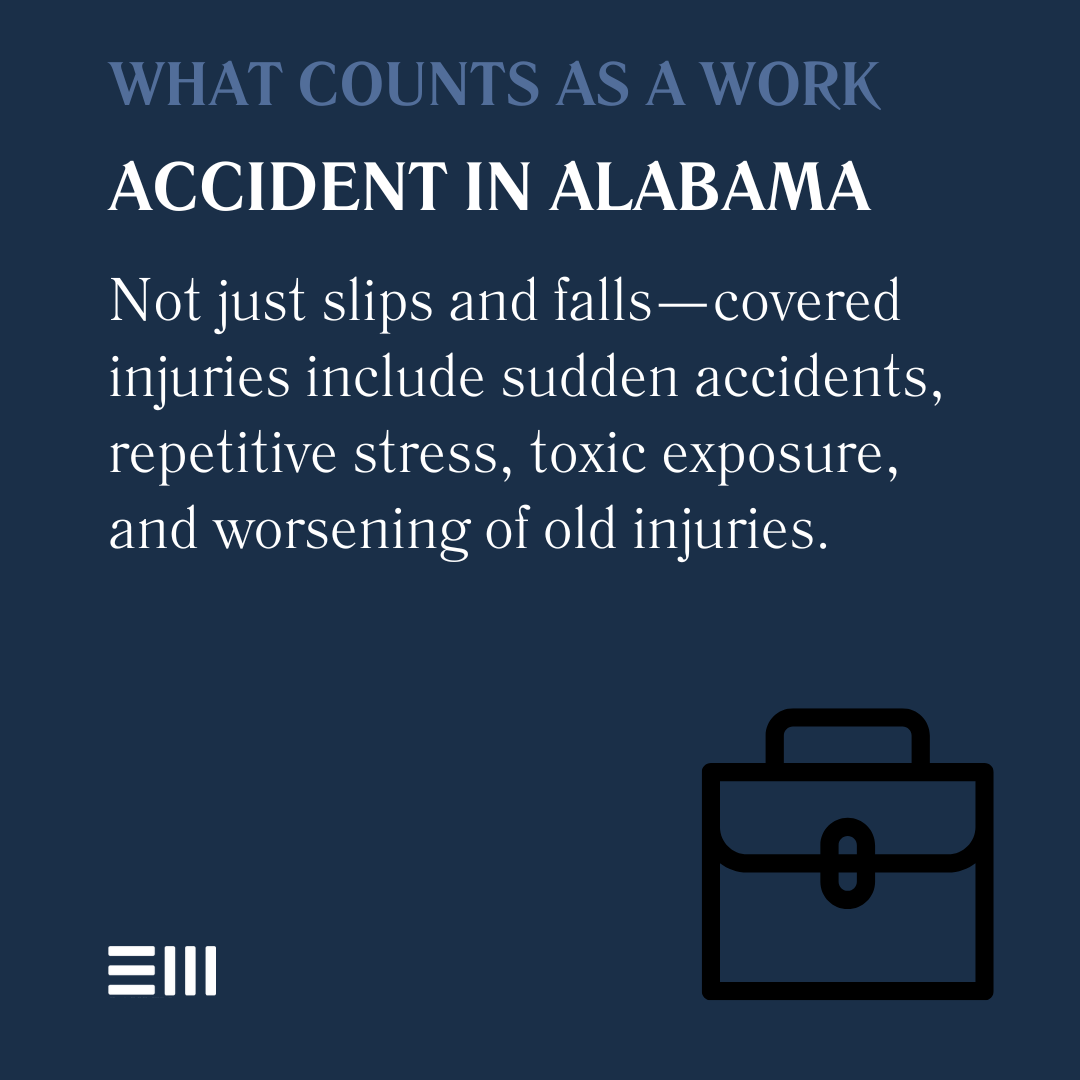
Covered injuries typically include:
- Traumatic injuries: Falls, cuts, burns, fractures, and other sudden accidents.
- Repetitive stress injuries: Carpal tunnel syndrome, tendonitis, and back problems from repeated motions.
- Occupational diseases: Illnesses caused by workplace exposure to chemicals, dust, or toxins.
- Aggravation of pre-existing conditions: When work activities worsen previous injuries.
- Mental injuries: Psychological trauma from workplace events (with specific limitations).
- Cumulative trauma: Injuries developing gradually from work activities over time.
Not all injuries qualify for coverage. Injuries from horseplay, intoxication, or intentional self-harm typically face denial. Additionally, injuries must arise "out of and in the course of employment," meaning they occurred while performing work duties.
This requirement often becomes a point of dispute in contested claims.
Filing Your Work Accident Claim in Alabama
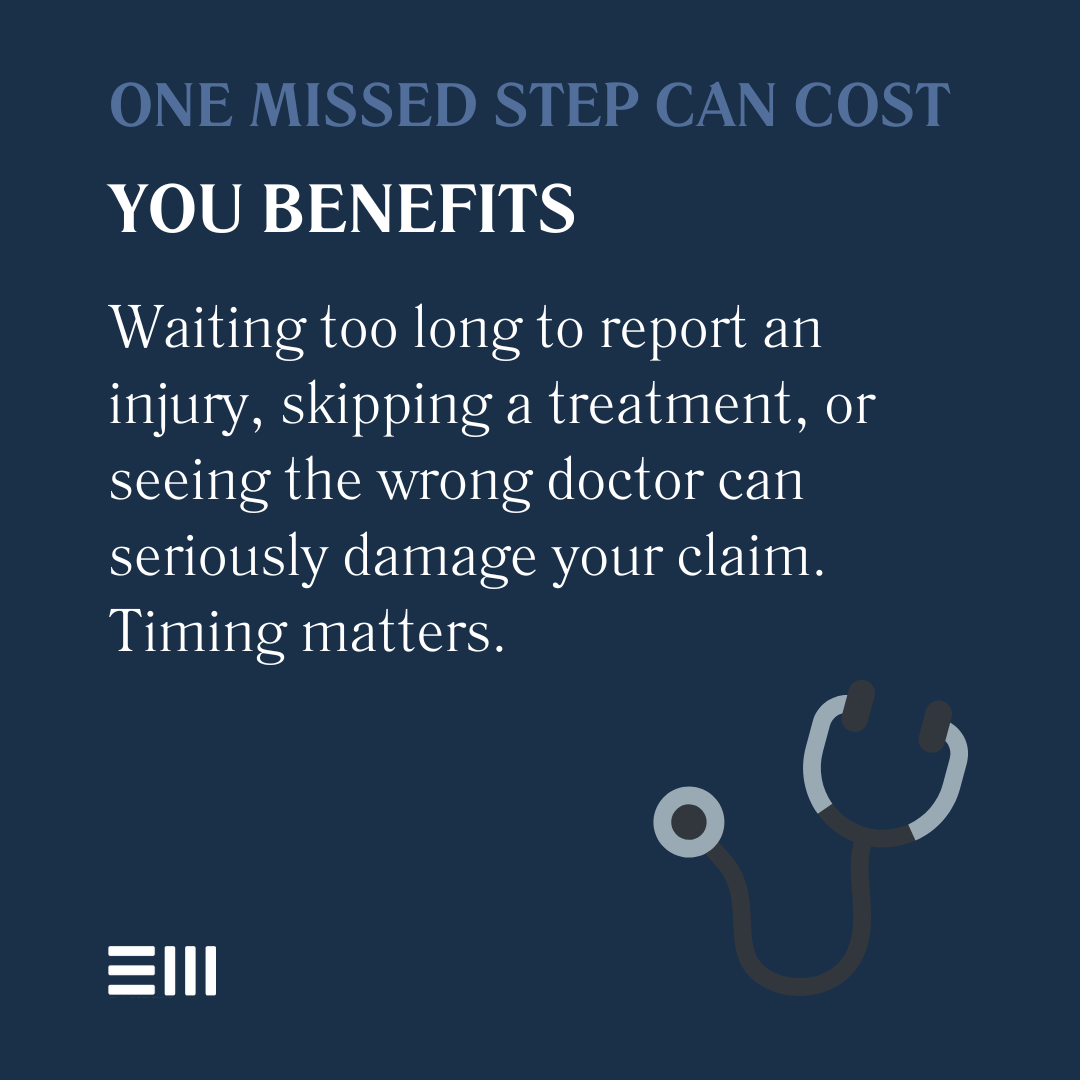
Properly filing a work accident claim in Alabama requires following specific procedures and meeting strict deadlines. Missing steps or deadlines can jeopardize your right to benefits, making prompt and proper action essential after any workplace injury.
The claim filing process involves:
- Immediate notification: Report injuries to supervisors as soon as possible, preferably in writing.
- Medical attention: Seek treatment from authorized medical providers designated by your employer.
- Written notice: Provide formal written notice within 5 days of the accident.
- Claim filing: Submit formal claim documentation within applicable time limits.
- Medical documentation: Ensure doctors properly document work-related causation.
- Follow-up compliance: Attend all medical appointments and comply with treatment plans.
Alabama law requires written notice to employers within 90 days of injury, though earlier notification strengthens claims.
For occupational diseases or cumulative trauma, the timeline begins when you knew or should have known about the work-related nature of your condition. Maintaining detailed records throughout this process provides crucial evidence if disputes arise.
Benefits Available to Injured Workers
Alabama workers' compensation provides several types of benefits designed to address different aspects of workplace injury impacts. Understanding available benefits helps injured workers ensure they receive full compensation for their losses.
Workers' compensation benefits include:
- Medical benefits: All reasonable and necessary medical treatment, medications, and equipment.
- Temporary total disability: Two-thirds of average weekly wage during complete work inability.
- Temporary partial disability: Compensation for reduced earning capacity during recovery.
- Permanent partial disability: Benefits for lasting impairments affecting work ability.
- Permanent total disability: Ongoing benefits for complete inability to work.
- Death benefits: Support for dependents when workplace accidents prove fatal.
Benefit calculations depend on average weekly wages and specific injury classifications. Alabama sets maximum and minimum benefit amounts that adjust annually. Understanding these calculations and classifications ensures workers receive appropriate compensation levels throughout their recovery and beyond.
Common Challenges in Work Accident Claims
Despite the no-fault nature of workers' compensation, many claims face challenges that can delay or reduce benefits. Recognizing common obstacles helps workers prepare stronger claims and respond effectively to insurance company tactics.
Frequent challenges include:
- Causation disputes: Insurers arguing injuries aren't work-related.
- Treatment denials: Refusal to approve recommended medical procedures.
- Independent medical examinations: Biased doctors minimizing injury severity.
- Surveillance tactics: Insurance companies monitoring injured workers.
- Return-to-work pressure: Premature push to resume duties before full recovery.
- Settlement pressure: Low offers that don't account for future needs.
Insurance companies employ various strategies to minimize claim costs, often at injured workers' expense.
They may dispute the work-related nature of injuries, question treatment necessity, or argue that workers can return to work sooner than doctors recommend. Understanding these tactics helps workers protect their rights and avoid common pitfalls.
Frequently Asked Questions About Work Accident Claims in Alabama
Navigating work accident claims in Alabama raises numerous questions for injured Alabama workers seeking to understand their rights and options.
Can I Choose My Own Doctor for a Work Injury?
Alabama law allows employers to direct initial medical treatment through their designated provider panel. However, workers can request one change of physician from the panel. In emergencies, seek immediate care anywhere, then transition to authorized providers for ongoing treatment.
What If My Employer Doesn't Have Workers' Compensation Insurance?
Employers who fail to carry required coverage face serious penalties and lose immunity from lawsuits. Injured workers can pursue claims through the state's Uninsured Employers Fund or file civil lawsuits seeking full damages, including pain and suffering not available in workers' compensation.
How Long Do I Have to File a Work Accident Claim?
Alabama requires written notice to employers within 90 days of injury. Formal workers' compensation claims must be filed within two years of the accident. For occupational diseases, the timeline begins when you discover the work-related nature of your condition.
Can I Be Fired for Filing a Workers' Compensation Claim?
Alabama law prohibits employer retaliation for filing legitimate workers' compensation claims. Employers who terminate, demote, or discriminate against workers for pursuing benefits face legal consequences. Document any adverse actions following your claim filing.
What If I Disagree with the Insurance Company's Decision?
Workers can contest claim denials or benefit disputes through Alabama's workers' compensation court system. This involves filing proper appeals, presenting evidence at hearings, and potentially pursuing cases through multiple appeal levels.
These questions address common concerns workers face when pursuing compensation for workplace injuries.
Let Justice Roll
Work accident claims in Alabama involve complex procedures, strict deadlines, and insurance companies focused on minimizing costs rather than supporting injured workers.
You shouldn't have to fight for benefits alone while recovering from injuries and worrying about your family's financial security.
Whether you're facing a denied claim, disputed medical treatment, or questions about your benefit rights, experienced legal guidance can make the difference between struggling through the system and receiving the full compensation you deserve.
Our attorneys here at Baxley Maniscalco understand Alabama's workers' compensation laws and know how to counter insurance company tactics that threaten your benefits.
We'll handle the legal complexities while you focus on healing, ensuring your claim receives the attention and advocacy it deserves.
Contact us today for a free consultation about your work accident claim.