
Alabama's roads witness devastating crashes daily, leaving victims to navigate a complex maze of insurance claims, medical treatments, and legal procedures while recovering from serious injuries.
This comprehensive guide provides the detailed information found in our car accident brochure, expanded with real case examples, practical strategies, and expert insights gained from years of representing accident victims across Alabama.
Meet our Auto Accident Attorneys

Alyssa Enzor Baxley, experienced trial attorney and active community member.

Adam Maniscalco, experienced trial attorney and Deputy Attorney General.
Understanding Alabama's Unique Car Accident Laws
Alabama's legal framework for car accidents differs significantly from neighboring states, creating unique challenges and opportunities for accident victims.
The state's contributory negligence doctrine stands as one of the harshest rules in the nation, completely barring recovery if you bear even 1% fault for the accident. For a detailed comparison, see our guide on no-fault vs. at-fault car accident laws in Alabama.
This unforgiving standard makes thorough documentation and aggressive legal representation essential. Insurance companies exploit this rule ruthlessly, searching for any evidence suggesting victim fault. Understanding how to counter these tactics can mean the difference between full compensation and walking away empty-handed.
Alabama also imposes specific requirements for insurance coverage, accident reporting, and claim procedures. Minimum liability coverage stands at $25,000 per person and $50,000 per accident for bodily injury, with $25,000 for property damage.
However, these minimums often prove woefully inadequate for serious accidents, making uninsured/underinsured motorist coverage critical for protecting your family.
The First 72 Hours: Critical Actions After Your Accident
Your actions in the immediate aftermath of an accident establish the foundation for your entire claim. The shock and confusion following a collision can cloud judgment, but understanding the critical steps protects your rights and maximizes potential compensation.
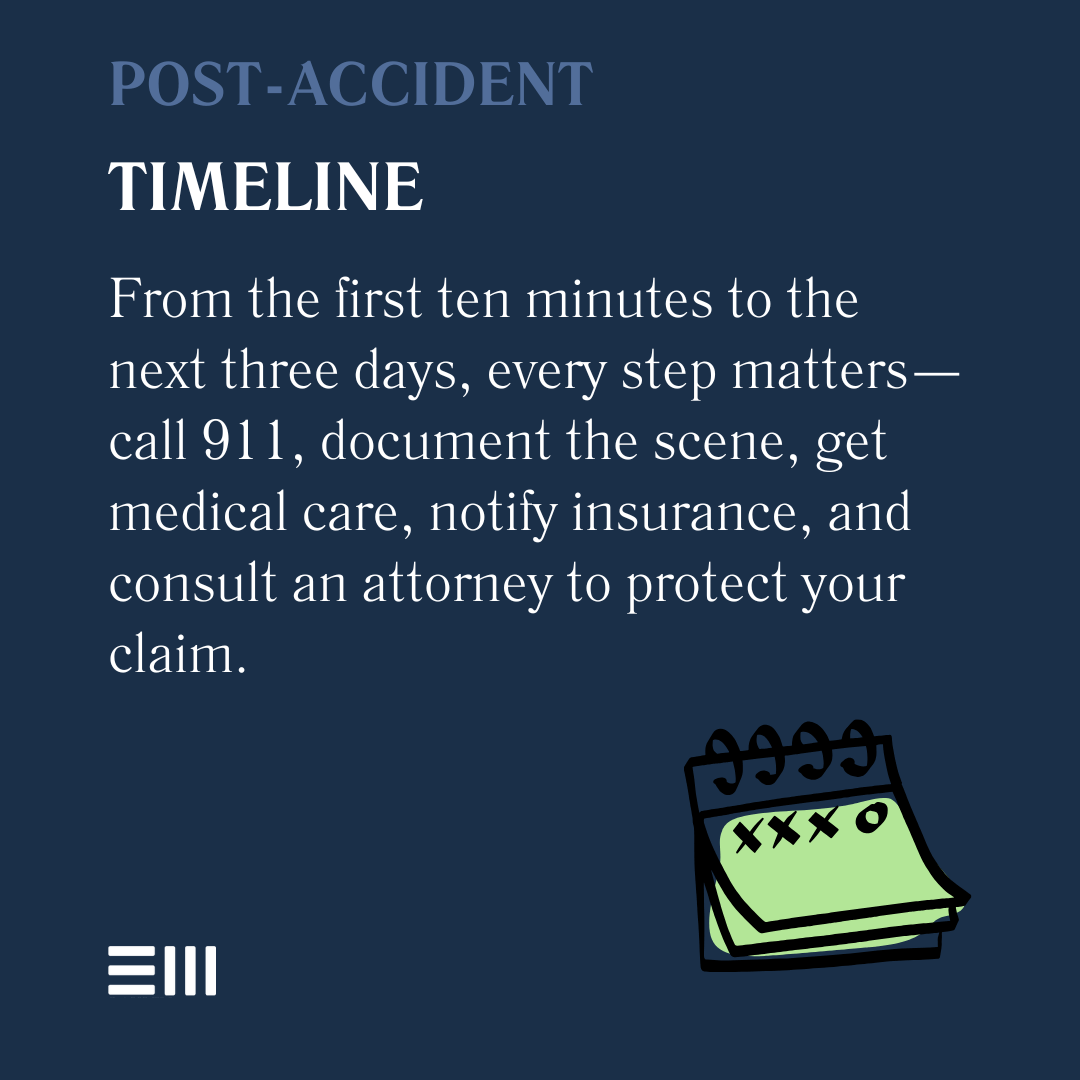
Medical attention takes absolute priority, even for seemingly minor injuries. Adrenaline masks pain, and many serious conditions like traumatic brain injuries or internal bleeding may not manifest symptoms immediately. Emergency room visits create crucial documentation linking injuries to the accident while ensuring prompt treatment prevents complications.
Scene documentation proves equally vital. Photograph vehicle damage from multiple angles, skid marks, traffic signals, weather conditions, and visible injuries. These images capture evidence that may disappear quickly through vehicle repairs, road maintenance, or healing.
Video recordings can document traffic patterns, witness statements, and your immediate physical condition.
For more guidance, review the most common mistakes people make after accidents.
Real Case Examples: Learning from Our Clients’ Experiences
Let’s spotlight a few recent real-world car accident case examples we settled for our clients.
Case Spotlight #1: T-Bone Collision Leads to Six-Figure Settlement
Our client was returning from Walmart in Oxford when another driver ran a red light, T-boning her pickup truck with such force that the bed separated from the cab. Despite clear traffic camera footage showing the other driver's violation, their insurance company initially denied responsibility and questioned Sarah's injuries.
Our investigation revealed that the at-fault driver was texting at the time of impact. We worked with accident reconstruction experts to demonstrate the severe forces involved and how they caused our client’s spinal disc injuries. Medical experts testified about her need for ongoing treatment and the impact on her ability to work.
Just days before trial, we secured a confidential six-figure settlement covering all medical expenses, lost wages, and providing substantial compensation for our client’s pain and suffering. This case demonstrates how aggressive representation can overcome initial insurance company denials.
Case Spotlight #2: Young Girl's Recovery After Devastating Head-On Crash
A distracted driver crossed the center line at 70 MPH while using his cell phone, causing a head-on collision that sent a young girl's head through the windshield. She suffered a severe concussion and facial lacerations requiring extensive medical treatment.
Our team immediately preserved cell phone records proving distraction, documented the child's medical journey, and negotiated with healthcare providers to reduce bills.
We recovered the full $100,000 policy limit and structured the settlement to provide for her future needs while protecting funds until adulthood.
This case highlights the importance of quick action to preserve evidence and creative settlement structuring for minor victims.
Case Spotlight #3: ATV Accident Complexity Resolved
When our client suffered multiple lumbar fractures in an ATV accident on private property, the at-fault driver's auto insurance denied coverage, claiming policy exclusions for off-road vehicles. This setback could have ended many claims.
Our investigation identified alternative coverage through the driver's homeowner's insurance policy. Despite initial resistance, we demonstrated how the homeowner's liability provisions applied to this situation. Through persistent negotiation and a two-day trial, we secured substantial compensation for our client's serious back injuries.
This example shows why experienced attorneys check all potential insurance sources rather than accepting initial coverage denials.
Navigating Insurance Company Tactics
Insurance companies deploy sophisticated strategies to minimize payouts, employing teams of adjusters, investigators, and attorneys focused on protecting their bottom line. Understanding these tactics empowers you to protect your interests effectively.
Learn about common myths surrounding car accident lawsuits to avoid falling for insurance company strategies.
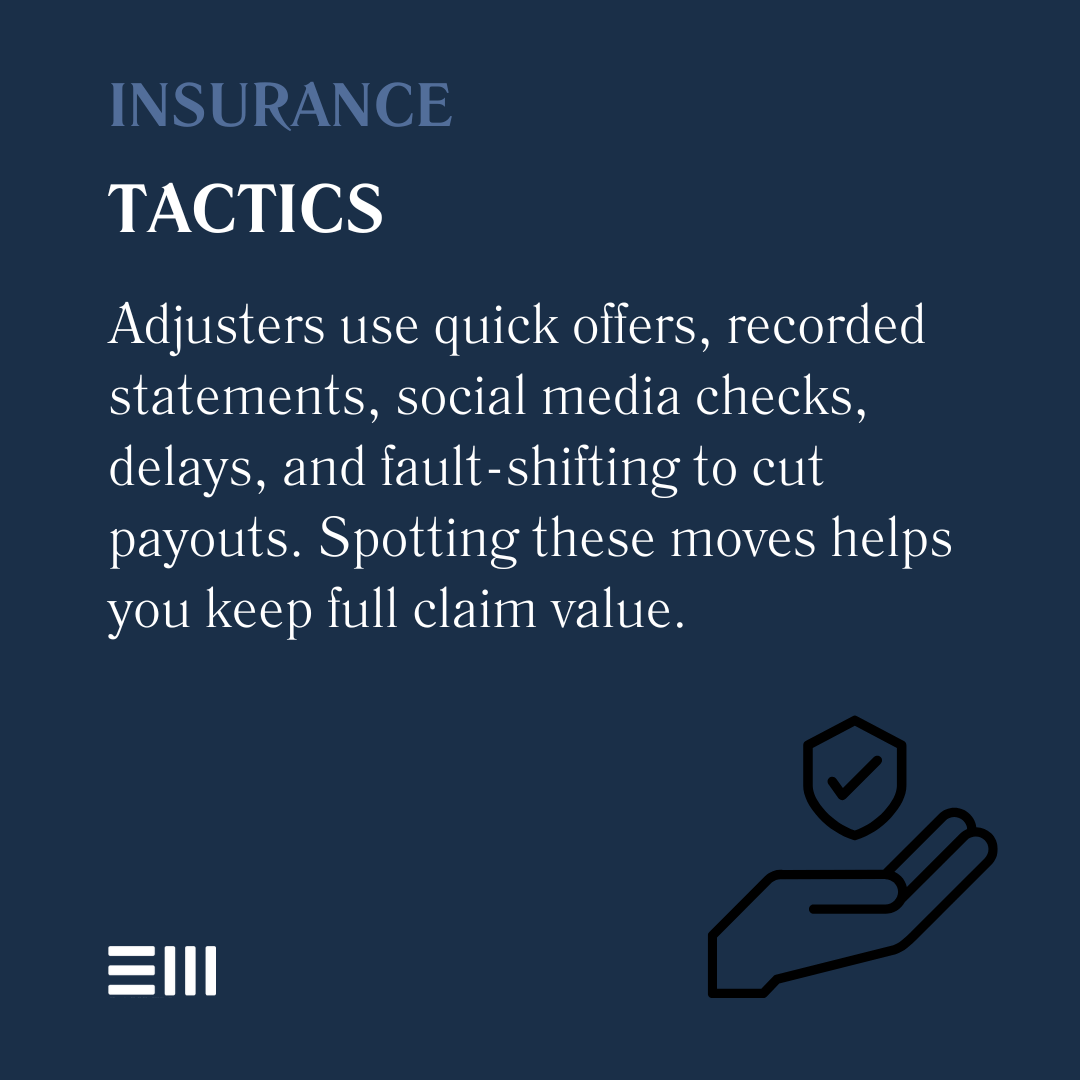
Insurance companies frequently use these manipulation strategies:
- Quick settlement offers before you understand injury extent.
- Recorded statements designed to elicit damaging admissions.
- Surveillance of social media and physical activities.
- Delay tactics hoping you'll accept less from desperation.
- Disputes over medical treatment necessity.
- Aggressive fault-shifting investigations.
- Broad medical record requests fishing for pre-existing conditions.
Recognizing these tactics helps you avoid common pitfalls and protect your claim's value throughout the negotiation process.
Insurance adjusters receive extensive training in psychological techniques designed to build rapport while extracting information harmful to your claim. They may seem friendly and concerned, but their primary obligation remains minimizing their company's financial exposure.
Common manipulation tactics include pressuring you to give recorded statements without legal counsel, offering quick settlements before you understand your injury's full extent, and requesting unnecessarily broad medical record authorizations.
They may also dispute treatment recommendations, claim pre-existing conditions caused your injuries, or argue that gaps in treatment indicate recovery.
Countering these tactics requires understanding your rights and maintaining disciplined communication. Never provide recorded statements without attorney guidance, as seemingly innocent comments can be twisted to suggest fault or minimize injuries.
Document all interactions with insurance representatives, including dates, times, and conversation content.
Medical Treatment and Documentation Strategies
Proper medical treatment serves dual purposes: ensuring optimal physical recovery while creating documentation essential for legal claims. Insurance companies scrutinize medical records searching for inconsistencies or treatment gaps to dispute injury claims.
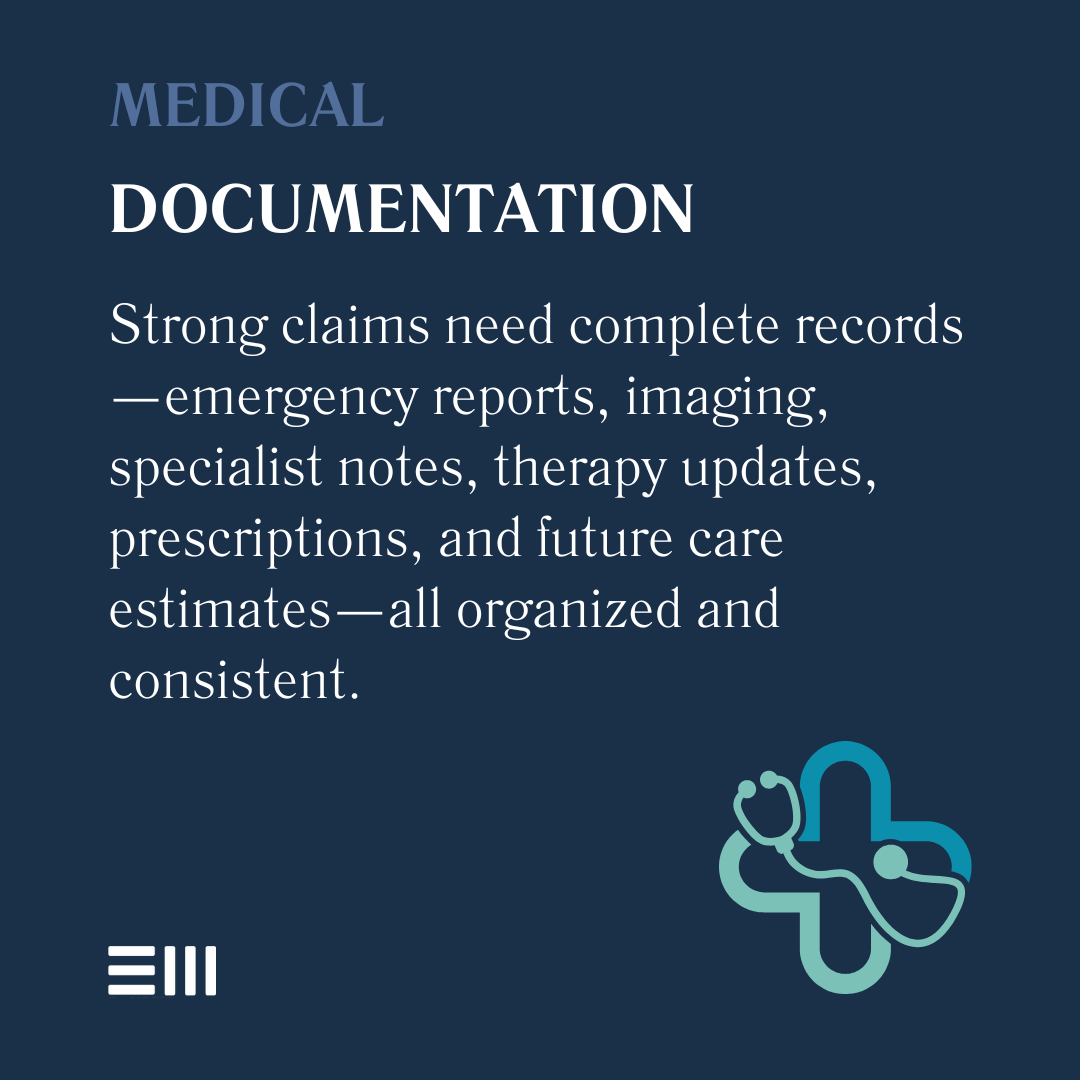
Essential medical documentation includes:
- Emergency treatment records with injury descriptions.
- Diagnostic imaging results (X-rays, MRIs, CT scans).
- Specialist consultations and treatment plans.
- Physical therapy progress notes.
- Prescription records and medication costs.
- Work restriction documentation.
- Future treatment recommendations with cost estimates.
Maintaining complete medical records strengthens your claim and provides the evidence needed to secure full compensation for all injury-related expenses.
Consistency in reporting symptoms proves crucial. Insurance companies compare statements across medical providers, looking for variations they can exploit. Maintain a pain journal documenting daily symptoms, limitations, and treatment effects.
This contemporaneous record provides powerful evidence of ongoing suffering and supports pain and suffering claims.
Treatment gaps create vulnerabilities that insurance companies exploit aggressively. Missing appointments or delaying follow-up care suggests injuries aren't serious. While financial constraints or transportation challenges may create legitimate barriers, documenting reasons for any gaps protects against negative inferences.
Building Your Strongest Case
Successful car accident claims require more than proving fault—they demand comprehensive documentation demonstrating every aspect of how the accident impacted your life. Building a strong case begins immediately after the accident and continues throughout your recovery.
For detailed guidance, review the dos and don'ts after a car accident.
Key elements for building your case include:
- Economic loss documentation (medical bills, lost wages, property damage).
- Non-economic impact evidence (pain journals, lifestyle changes).
- Witness statements and contact information.
- Expert opinions on liability and damages.
- Photographic evidence of injuries and property damage.
- Communication records with insurance companies.
- Future care cost projections from medical professionals.
Creating organized, comprehensive case files from the start ensures no critical evidence is overlooked and maximizes your potential compensation.
Timeline Expectations and Litigation Realities
Understanding realistic timelines helps manage expectations and make informed decisions throughout your claim. While every case differs, certain patterns emerge based on injury severity, liability clarity, and insurance company cooperation.
For specific examples, see how we handle car accidents in various Alabama cities.
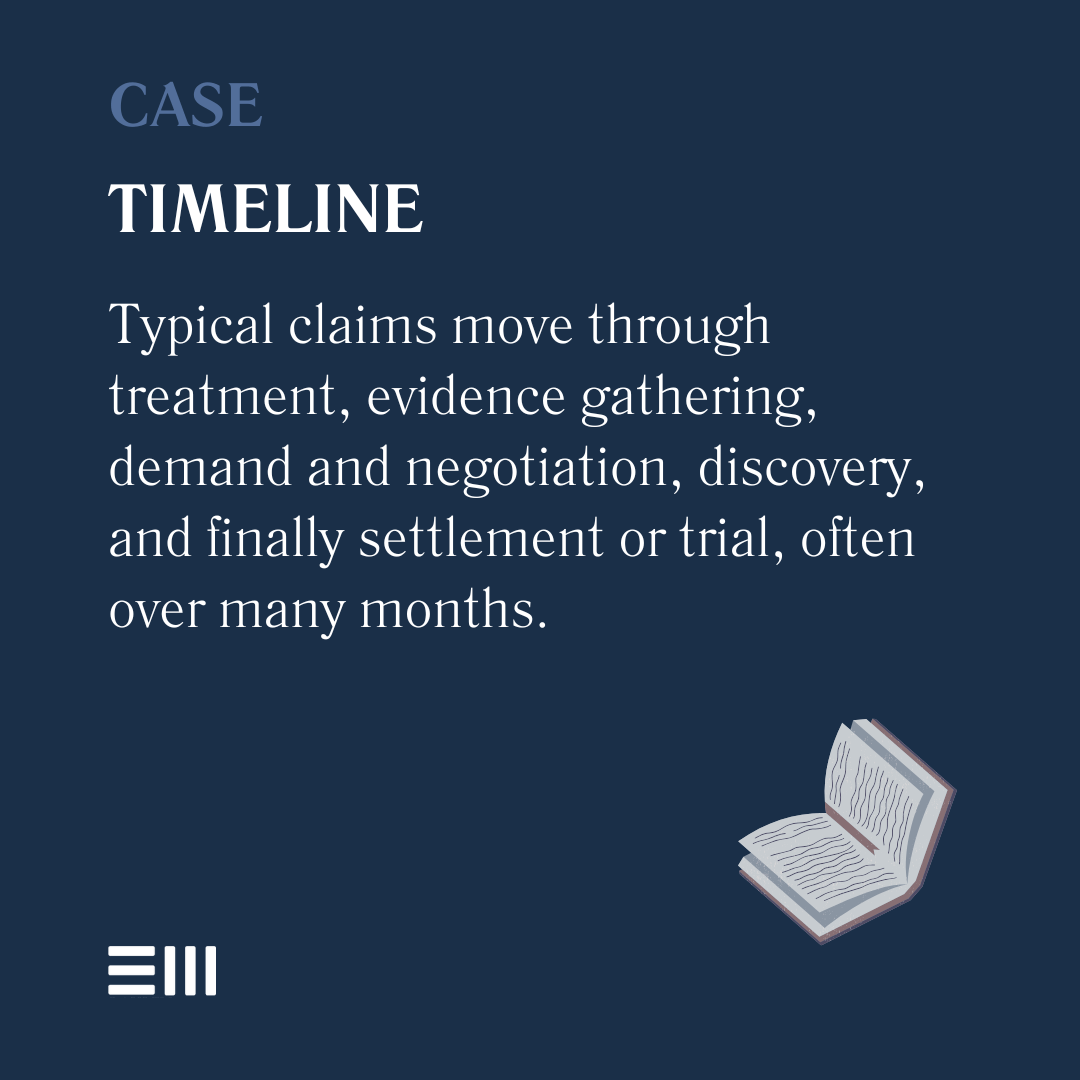
Simple cases with clear liability and modest injuries may settle relatively quickly. However, serious injuries requiring extended treatment often take significantly longer to resolve. Premature settlement before understanding your injury's full extent risks inadequate compensation for future needs.
The litigation process adds complexity and time but often proves necessary for fair compensation. Filing a lawsuit demonstrates serious intent and unlocks powerful tools like depositions, document requests, and expert witnesses.
While most cases still settle before trial, litigation positioning significantly improves negotiation leverage.
Maximizing Your Compensation
Achieving maximum compensation requires understanding all available damage categories and presenting compelling evidence for each element. Alabama law recognizes both economic and non-economic damages, though calculating fair value demands experience and strategic presentation.
Economic damages include all financial losses flowing from the accident. Medical expenses encompass emergency treatment, surgeries, therapy, medications, and medical equipment.
Lost wages cover both past missed work and reduced future earning capacity. Property damage includes vehicle repairs or replacement value plus personal items damaged in the crash.
Non-economic damages compensate for intangible losses like pain, suffering, emotional distress, and diminished life enjoyment. While harder to quantify, these damages often exceed economic losses in serious injury cases.
Effective presentation requires detailed documentation of how injuries impact daily activities, relationships, and overall life quality.
Future damages deserve special attention, as insurance companies often undervalue long-term impacts.
Medical experts can project future treatment needs and costs. Vocational experts assess career impact and lost earning capacity. Life care planners develop comprehensive future care cost analyses for catastrophic injuries.
Working with the Right Legal Team
Selecting appropriate legal representation significantly impacts your case outcome. The right attorney combines technical expertise with genuine commitment to client welfare, transforming the legal process from overwhelming burden to manageable journey.
Learn more about our approach to car accident cases across Alabama.
Experience matters tremendously in car accident cases. Seasoned attorneys understand insurance company tactics, maintain relationships with quality expert witnesses, and possess trial credibility that encourages reasonable settlements. They recognize case value accurately and refuse inadequate offers that inexperienced attorneys might accept.
Communication style proves equally important. Your attorney should explain complex legal concepts clearly, maintain regular contact about case developments, and remain accessible for questions or concerns. They should demonstrate genuine interest in your recovery beyond just legal outcomes.
Fee structures in personal injury cases typically involve contingency arrangements, meaning attorneys receive payment only from successful recoveries. This alignment of interests ensures aggressive representation, as your attorney's compensation depends on maximizing your recovery.
Understanding fee agreements prevents surprises and ensures transparency throughout the relationship.
Protecting Your Family's Future
Car accidents impact entire families, not just direct victims. Spouses lose consortium and household support while children miss parental guidance and activities, creating ripple effects throughout the household.
Essential protection strategies include:
- Adequate insurance coverage beyond state minimums.
- Uninsured/underinsured motorist protection.
- Umbrella policies for additional liability coverage.
- Medical payments coverage for immediate expenses.
- Estate planning to protect settlement funds.
- Special needs trusts for catastrophically injured victims.
- Regular vehicle maintenance to prevent accidents.
Taking proactive steps to protect your family before accidents occur provides peace of mind and financial security when facing unexpected tragedies.
Let Justice Roll
Knowledge without action provides little value when facing car accident aftermath. Whether you're currently dealing with an accident claim or preparing for potential future incidents, taking proactive steps protects your interests and maximizes recovery potential.
At Baxley Maniscalco, we transform the overwhelming complexity of car accident claims into manageable steps toward recovery and fair compensation. Our proven approach combines the comprehensive strategies outlined in this guide with personalized attention to your unique circumstances.
Don't let insurance companies dictate your recovery—call (256) 770-7232 today for your free consultation and discover how our experienced Alabama car accident lawyers can fight for the justice and compensation you deserve.
Together, we'll navigate Alabama's challenging legal landscape and secure the resources needed for your complete recovery.