

Ask any family law attorney what question they hear most from divorced parents, and “my child doesn’t want to go” will rank near the top of the list.
Online parenting forums are filled with parents debating whether a 12-year-old can simply refuse visitation, and the advice is almost always wrong.
Alabama law is clear: a child does not get to override a court order, regardless of their age or preferences. But the reality of forcing a resistant teenager into a car every other Friday is far more complicated than the legal rule suggests.
Understanding what happens if a child refuses to follow a visitation schedule in Alabama helps both parents respond in a way that protects the child and keeps them out of legal trouble.
The Court Order Stands Regardless of the Child’s Wishes
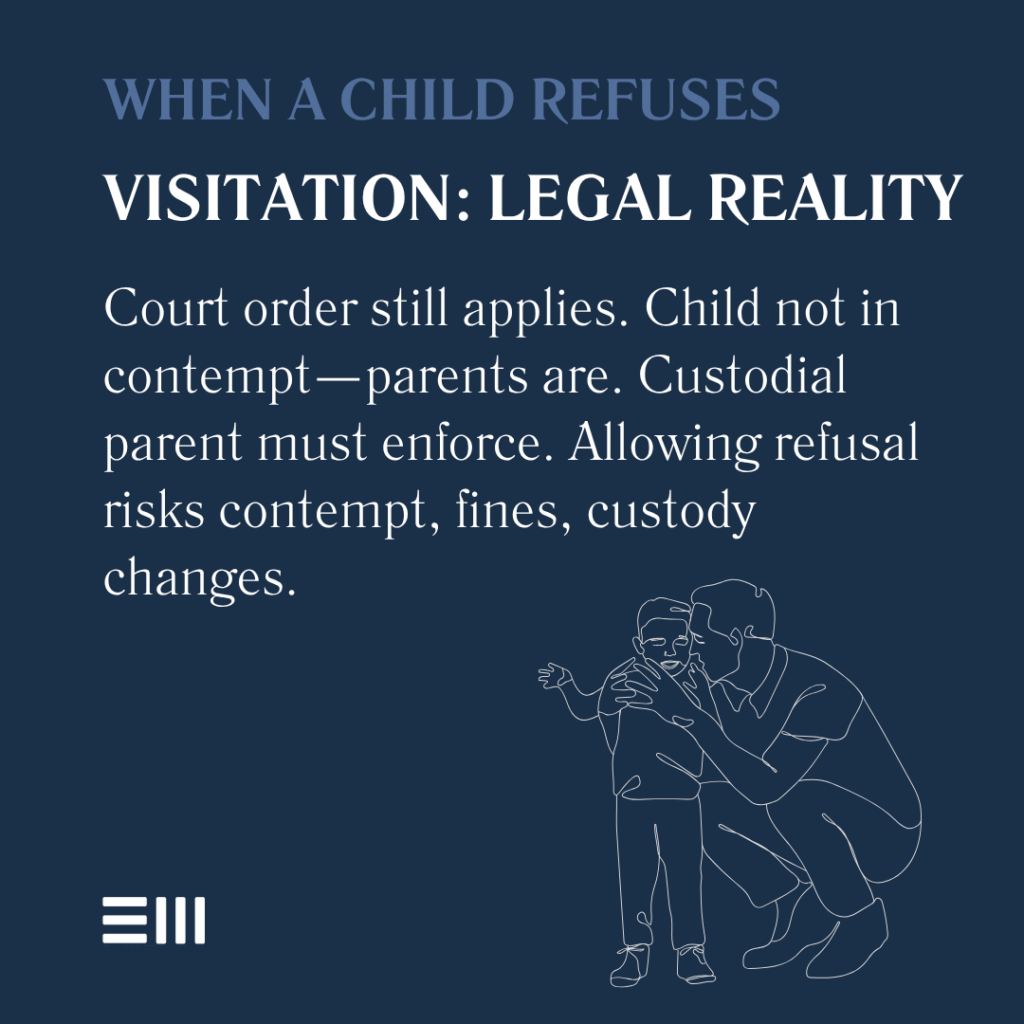
A custody and visitation order is a legally binding directive from an Alabama judge. It obligates both parents to comply — not the child.
When a child refuses to go, the court does not hold the child in contempt. Instead, it looks at the parents’ behavior to determine whether one or both of them contributed to the refusal or failed to make reasonable efforts to enforce the schedule.
The custodial parent has an affirmative obligation to facilitate visitation, even when the child protests. Simply telling the other parent “she doesn’t want to come” is not a legal defense.
If a judge concludes that the custodial parent allowed or encouraged the refusal, that parent could face contempt charges, fines, or a modification of the custody arrangement that works against them.
Why Children Resist Visitation and What Courts Consider
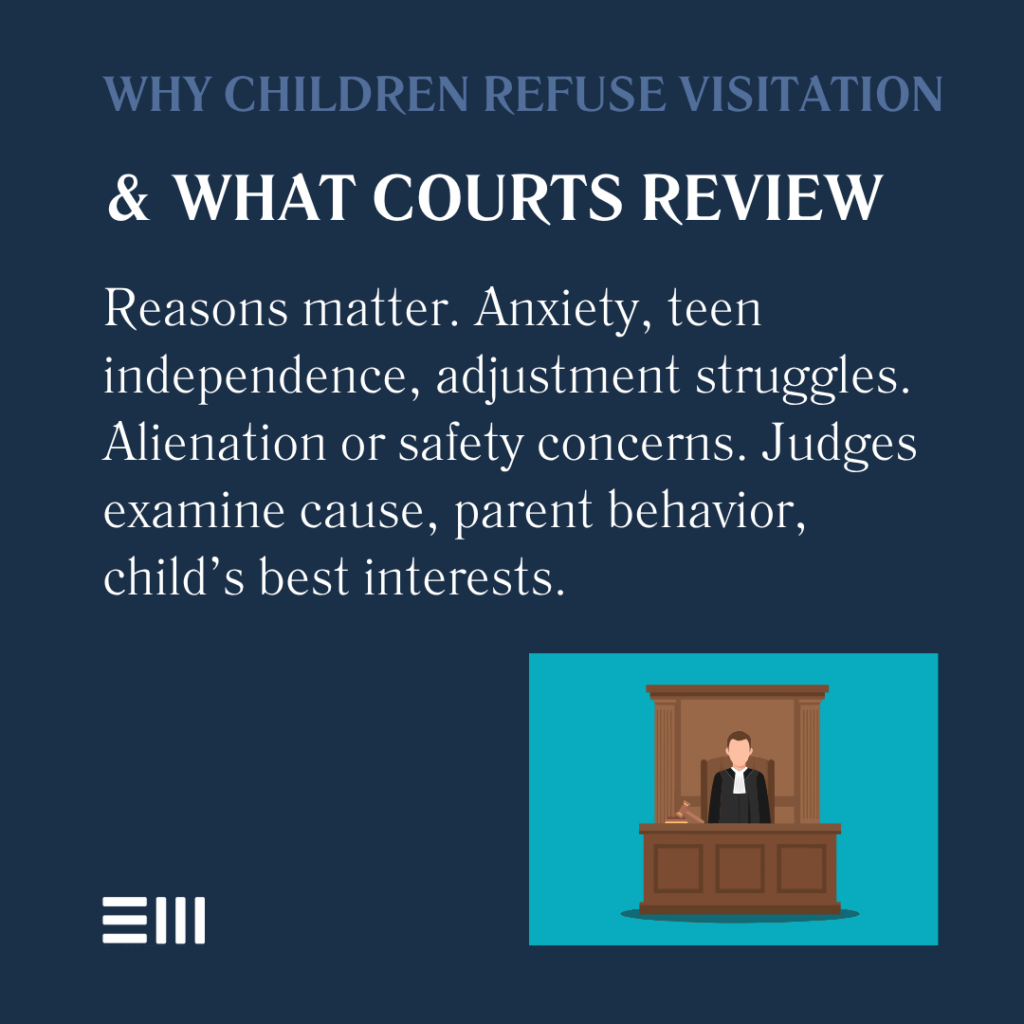
Alabama judges understand that a child’s refusal to visit is rarely as simple as a preference.
Courts look beyond the child’s stated wishes to identify the underlying cause, because the reason for the resistance determines the appropriate legal response. Several common factors drive visitation refusal.
- Normal developmental resistance. Younger children may experience separation anxiety, while teenagers often resent any schedule that competes with their social lives, sports, or desire for independence.
- Adjustment difficulties after divorce. Children processing grief, anger, or loyalty conflicts may direct those feelings at one parent by refusing to spend time with them, even when that parent has done nothing wrong.
- Parental alienation by the custodial parent. When one parent systematically undermines the child’s relationship with the other — through negative comments, guilt trips, or outright interference — the child may internalize that hostility and refuse visitation on their own. Courts take parental alienation extremely seriously.
- Legitimate safety concerns. In rare cases, a child’s refusal signals a genuine problem — abuse, neglect, substance use, or an unsafe living environment at the other parent’s home.
- A new stepparent or household dynamic. Changes in the non-custodial parent’s home, such as a remarriage or the presence of unfamiliar adults, can trigger discomfort in children who are still adjusting to the divorce.
Judges evaluate these factors carefully before deciding what happens if a child refuses to follow a visitation schedule in Alabama.
A child resisting because they want to attend a Friday night football game is treated very differently than a child who shows signs of fear or distress.
At What Age Can a Child Decide Custody in Alabama?
This is the most commonly misunderstood aspect of Alabama custody law. There is no age at which a child can unilaterally decide which parent to live with or refuse court-ordered visitation. Alabama does, however, give increasing consideration to a child’s preferences as they mature.
At age 14, Alabama law allows a child to express a preference about which parent they wish to live with, and that preference carries significant weight in custody proceedings.
But even at 14, the child’s preference is one factor among many — not a final decision. A judge can and will override a teenager’s stated preference if the evidence shows that following it would not serve the child’s best interests.
For children under 14, the court may still consider their wishes, but the weight given to those preferences is substantially less.
A seven-year-old who says “I don’t want to go to Dad’s house” will be heard, but the judge will focus far more on the parents’ conduct and the overall family dynamic than on the child’s statement.
What Both Parents Should Do When a Child Refuses
How each parent responds to a child’s visitation refusal directly affects their standing with the court. Taking the right steps protects your legal position while prioritizing the child’s emotional wellbeing.
- The custodial parent must make genuine efforts to enforce the order. Encouraging the child to attend, addressing their concerns, and physically facilitating the exchange all demonstrate good-faith compliance with the court’s directive.
- Document everything in writing. Both parents should keep a detailed log of every refused visit, including dates, the child’s stated reasons, and all efforts made to encourage compliance. Text messages and emails between co-parents are valuable records.
- Avoid speaking negatively about the other parent. Badmouthing the non-custodial parent — especially in front of the child — can be interpreted as alienation and may trigger a custody modification that shifts primary placement.
- Consider professional counseling. A family therapist or child psychologist can help identify the root cause of the child’s resistance and provide strategies for both parents. Courts view therapy involvement favorably.
- Consult an attorney before withholding visitation. If you believe the child has a legitimate safety concern, address it through the court — not by unilaterally cutting off the other parent’s time.
Handling the situation thoughtfully rather than reactively shows the court that you are focused on the child’s welfare, not on winning a battle with your co-parent.
Frequently Asked Questions About Visitation Refusal in Alabama
Parents in Alabama dealing with a child who resists visitation often share the same urgent questions. Below are answers to the most common concerns.
What if My Child Doesn’t Want to Visit the Other Parent?
You are still legally required to comply with the visitation order. Encourage your child to attend, address their concerns, and document the situation.
If the refusal is persistent, consult a family law attorney about requesting a modification rather than allowing repeated missed visits — which could put you at risk of contempt.
Can a Child Choose Which Parent to Live With in Alabama?
Not exactly. At age 14, a child may express a custody preference that carries significant weight, but the judge retains full authority to accept or reject that preference based on the child’s best interests. No child of any age has the legal power to override a custody order.
Could I Lose Custody if My Child Refuses to Visit the Other Parent?
Yes. If a court finds that you failed to make reasonable efforts to enforce visitation — or worse, that you actively encouraged the child’s refusal — the judge may modify the custody arrangement in the other parent’s favor.
Alabama courts view interference with visitation as a serious factor in custody decisions.
What if There Is a Safety Reason for the Child’s Refusal?
If you believe your child is in danger at the other parent’s home, document your concerns and file an emergency motion with the court immediately.
Do not simply allow visitation to lapse without a legal basis — a judge needs to hear the evidence and issue a formal order modifying or suspending visitation.
Can a Teenager Be Forced to Follow a Visitation Schedule?
Legally, yes — the order remains enforceable regardless of the child’s age. Practically, courts recognize that physically forcing a 16-year-old into a car creates more problems than it solves.
In these situations, judges often look for modified arrangements — such as adjusted schedules, family counseling, or therapeutic visitation — that respect the teenager’s growing autonomy while preserving the parent-child relationship.
If your situation involves persistent refusal or circumstances not addressed here, speaking with an attorney is the best path to a resolution that works for everyone.
Find the Right Solution Before the Court Finds One for You
A child’s refusal to follow visitation can escalate quickly from a parenting challenge into a legal crisis if it is not handled carefully.
Our experienced family law attorneys here at Baxley Maniscalco help Alabama parents navigate visitation disputes with a focus on protecting both the child’s well-being and the parent’s legal standing.
Whether you need to enforce a current order, defend against a contempt motion, or pursue a custody modification that better fits your family’s reality, we are here to guide you through every step.
Contact us today for a confidential consultation, and let us help you find a path forward that puts your child first.
Can't find what you're looking for? Search our site below.