
With Gordon County boasting the most interstate exits in Georgia along I-75's corridor, the county's 61,561 residents navigate unique traffic hazards daily while managing the same family law challenges faced across the state.
Manufacturing employment dominates Gordon County's economy—with 6,733 residents working in this sector—creating specific workplace injury risks alongside traditional road accident concerns.
Gordon County's demographic landscape reveals a community where 73.31% of households are family units, yet Georgia's statewide divorce rate of 2.1 per 1,000 people still impacts hundreds of local families annually.
Understanding how family law and personal injury matters intersect with Gordon County's specific characteristics helps residents make informed decisions during life's most challenging moments.
--
(Came here looking for a consultation? Get started here.)
Meet Our Attorneys

Alyssa Enzor Baxley, experienced trial attorney and active community member.

Sydney Merrin focuses her practice on family law matters.

Adam Maniscalco, experienced trial attorney and Deputy Attorney General.
Understanding Family Law Services in Gordon County
Family law addresses the most intimate legal matters individuals face, from marriage dissolution to child welfare.
In Gordon County, where the median household income stands at $61,997 and 9% of families live below the poverty line, financial considerations often complicate family law proceedings.
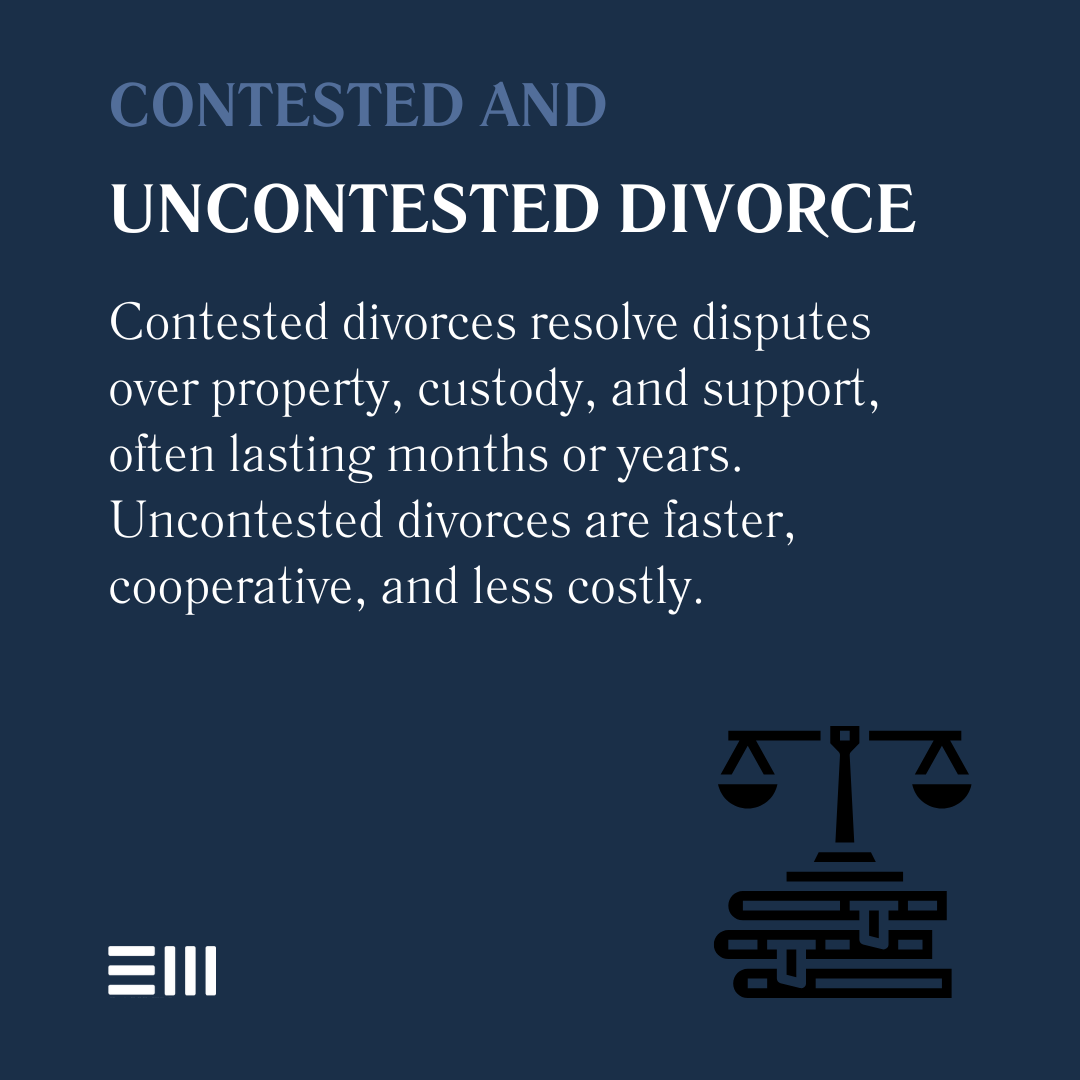
#1: Contested Divorce in Gordon County
When spouses cannot reach agreements on critical issues, contested divorces require judicial intervention to resolve disputes. These complex proceedings demand careful navigation of Georgia law while protecting individual rights and family interests.
Gordon County Superior Court handles contested divorce cases involving disputes over:
- Property division: Splitting marital assets acquired during the marriage.
- Alimony determination: Calculating appropriate spousal support amounts and duration.
- Child custody: Establishing primary residential custody and decision-making authority.
- Child support: Determining financial obligations based on income shares model.
- Debt allocation: Dividing marital debts fairly between parties.
- Business valuations: Assessing and dividing business interests or professional practices.
- Retirement accounts: Splitting pensions, 401(k)s, and other retirement assets.
Georgia recognizes thirteen legal grounds for divorce, providing both fault-based and no-fault options.
While "irretrievably broken" serves as the most common no-fault ground, fault-based grounds include adultery, desertion for one year, cruel treatment, habitual intoxication, conviction of certain felonies, mental incapacity, impotency at marriage time, pregnancy by another at marriage time, and others specified by statute.
The contested divorce timeline typically extends from six months to several years, depending on case complexity. Initial phases include petition filing, service of process, and the defendant's answer period.
Discovery follows, where both parties exchange financial documents, answer interrogatories, and participate in depositions. Temporary hearings may address immediate needs for support, custody, or exclusive home use during proceedings.
Georgia courts mandate mediation attempts in most contested cases, particularly those involving children.
This alternative dispute resolution process helps parties reach agreements without trial, reducing emotional strain and legal costs. When mediation fails, cases proceed to trial where judges hear evidence and issue final orders.
#2: Uncontested Divorce Proceedings
Uncontested divorces offer streamlined resolution when couples agree on all major issues before filing. This cooperative approach benefits both parties through reduced costs, faster resolution, and maintained privacy.
Requirements for uncontested divorce include:
- Complete agreement: Both parties must agree on all terms without court intervention.
- Settlement documentation: Comprehensive written agreements covering all aspects.
- Residency requirements: At least one spouse residing in Georgia for six months.
- Waiting period: Georgia's mandatory 30-day waiting period after filing.
- Financial disclosures: Full disclosure of assets, debts, and income.
- Parenting plans: Detailed custody and visitation arrangements if children involved.
The uncontested process typically concludes within 31-60 days after filing. Parties prepare and sign a settlement agreement addressing property division, support obligations, and custody arrangements.
After filing the petition and settlement agreement with Gordon County Superior Court, the non-filing spouse acknowledges service and consents to the divorce terms.
Cost savings represent a significant advantage of uncontested divorce. While contested cases may require tens of thousands in legal fees, uncontested divorces often conclude for a fraction of that cost.
Emotional benefits include reduced conflict exposure for children and preserved co-parenting relationships.
#3: Child Custody Determinations
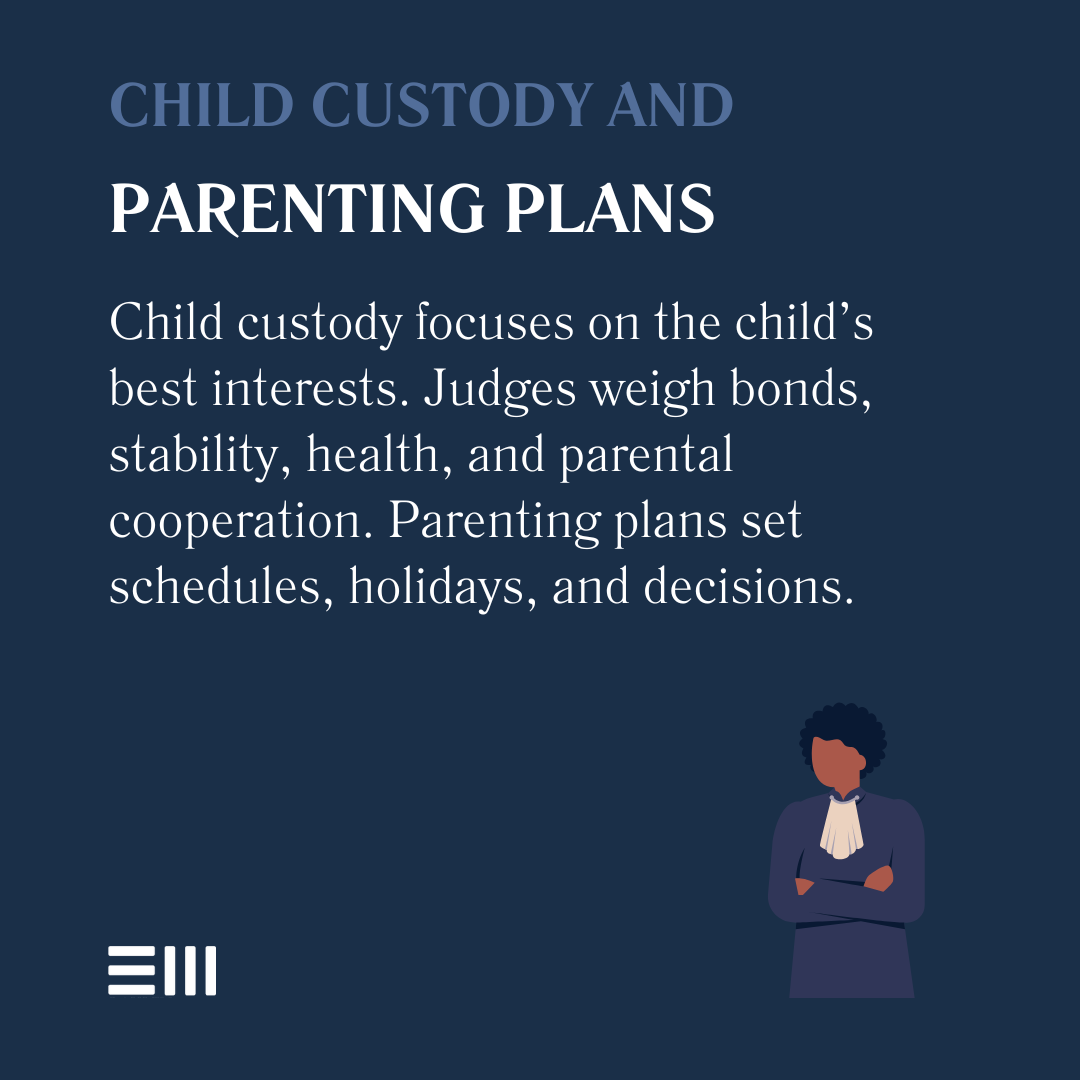
Gordon County courts prioritize children's best interests when determining custody arrangements. Georgia distinguishes between legal custody (decision-making authority) and physical custody (residential arrangements), with various combinations possible.
Factors judges consider in custody decisions include:
- Emotional bonds: The love, affection, and ties between each parent and child.
- Parenting capacity: Each parent's ability to provide guidance and support.
- Stability factors: Continuity in home, school, and community life.
- Home environments: Physical safety and suitability of each residence.
- Mental health: Each parent's psychological fitness for caregiving.
- Physical health: Any limitations affecting childcare abilities.
- Work schedules: Availability for school activities and daily care.
- Sibling relationships: Keeping brothers and sisters together when possible.
- Child preferences: Considering wishes of children 14 and older.
- Substance abuse: History of drug or alcohol problems.
- Domestic violence: Past abuse affecting child safety.
- Parental cooperation: Willingness to facilitate the other parent's relationship.
Joint legal custody has become increasingly common in Georgia, allowing both parents to participate in major decisions about education, healthcare, extracurricular activities, and religious upbringing. Physical custody arrangements vary from equal time-sharing to primary custody with scheduled visitation.
Parenting plans must address specific details including regular schedules, holiday divisions, summer arrangements, transportation responsibilities, communication methods, and decision-making protocols.
Courts may appoint guardian ad litems in contested custody cases to investigate and recommend arrangements serving children's best interests.
#4: Adoption Services
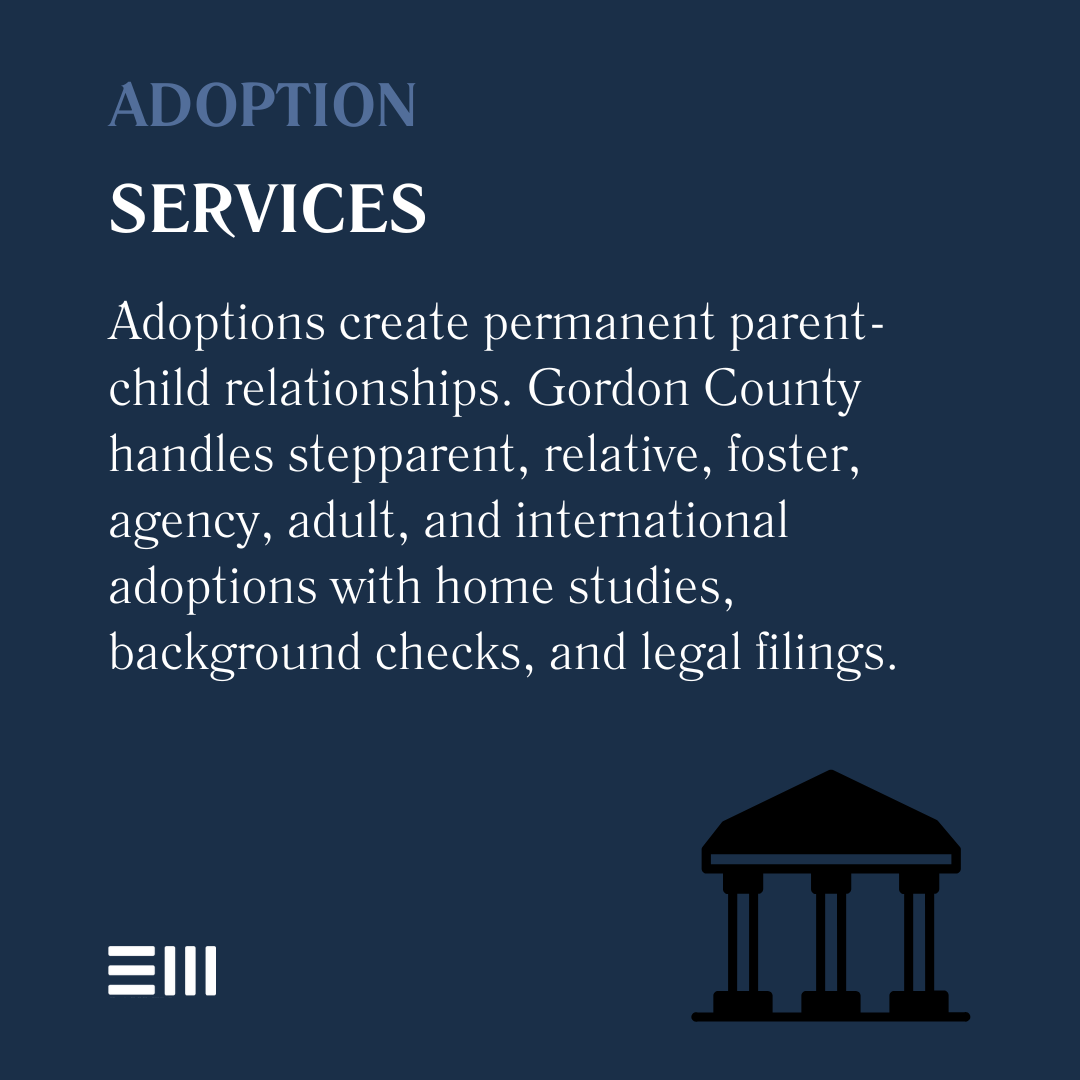
Adoption creates permanent legal parent-child relationships, requiring careful compliance with Georgia statutes and court procedures. Gordon County processes various adoption types, each with specific requirements and timelines.
Common adoption categories include:
- Stepparent adoptions: Most frequent type, requiring consent or termination of biological parent's rights.
- Relative adoptions: Grandparents, siblings, or other family members adopting related children.
- Private adoptions: Direct arrangements between birth parents and adoptive families.
- Agency adoptions: Placements through licensed adoption agencies.
- Foster adoptions: Adopting children from state custody after parental rights termination.
- Adult adoptions: Creating legal relationships with individuals over 18.
- International adoptions: Adopting children from other countries under Hague Convention rules.
The adoption process requires extensive documentation including home studies, criminal background checks, financial statements, medical examinations, and reference letters.
Georgia law mandates specific consent requirements and revocation periods, particularly for newborn adoptions where birth mothers cannot legally consent until 48 hours after delivery.
Termination of parental rights represents a critical component of most adoptions. Voluntary terminations require proper execution of surrender documents, while involuntary terminations demand clear evidence of abandonment, abuse, or unfitness.
Courts appoint attorneys for parents facing involuntary termination to ensure due process protection.
Post-adoption services help families adjust to new dynamics. These include counseling services, support groups, and resources for discussing adoption with children at age-appropriate levels.
Open adoptions, allowing ongoing contact between birth and adoptive families, have become increasingly common with varying degrees of openness.
Personal Injury Law in Gordon County
Personal injury law provides legal remedies when negligence causes harm to others.
Gordon County's unique position along Interstate 75—with more exits than any other Georgia county—creates specific traffic risks while its manufacturing-heavy economy presents workplace injury concerns.

#1: Car Accident Claims
Motor vehicle accidents represent the leading cause of personal injury claims in Gordon County. The county's extensive I-75 corridor, combined with State Routes 53, 136, 156, and numerous local roads, experiences significant traffic volume and accident risks.
Common accident locations and causes include:
- I-75 corridors: High-speed collisions involving passenger vehicles and commercial trucks.
- Highway 41 intersections: Dangerous crossings with limited visibility and heavy traffic.
- SR 53 commercial areas: Congestion-related accidents near shopping centers.
- Rural county roads: Single-vehicle accidents on curves and hills.
- School zones: Morning and afternoon accidents during student transportation.
- Construction zones: Work area collisions with changing traffic patterns.
- Railroad crossings: Accidents at Gordon County's numerous rail intersections.
Georgia's modified comparative negligence law allows recovery when plaintiffs are less than 50% at fault. However, any assigned fault percentage reduces compensation proportionally. This system requires careful investigation to establish liability percentages accurately.
Recoverable damages in car accident cases include:
- Medical expenses: Emergency treatment, surgeries, therapy, and ongoing care costs.
- Lost wages: Current income loss and diminished earning capacity.
- Vehicle damage: Repair costs or fair market value for total losses.
- Pain and suffering: Physical discomfort and emotional distress compensation.
- Loss of consortium: Impact on spousal relationships due to injuries.
- Permanent impairment: Compensation for lasting disabilities or disfigurement.
- Punitive damages: Additional awards for egregious conduct like drunk driving.
Insurance company tactics often minimize claim values through quick settlement offers, recorded statement requests, and liability disputes.
Early legal representation protects victims from these strategies while ensuring full damage documentation. Gordon County's proximity to Tennessee also raises cross-border insurance coverage issues requiring specialized knowledge.
#2: Dog Bite Injuries
Georgia's strict liability statute holds dog owners responsible for bite injuries regardless of the animal's previous behavior or the owner's knowledge of aggression. This protection applies when victims are lawfully present at bite locations.
Dog bite injuries often cause:
- Puncture wounds: Deep tissue damage risking infection and nerve injury.
- Facial injuries: Scarring requiring plastic surgery and emotional trauma.
- Hand injuries: Damage affecting work capacity and daily activities.
- Psychological trauma: PTSD, anxiety, and phobias requiring therapy.
- Infection risks: Bacterial complications demanding extended treatment.
- Rabies concerns: Prophylactic treatment when vaccination status unknown.
- Secondary injuries: Falls or defensive wounds during attacks.
Homeowner's and renter's insurance policies typically cover dog bite claims, though coverage limits and breed exclusions may apply. Some insurers refuse coverage for specific breeds or cancel policies after bite incidents, complicating recovery efforts.
Georgia law recognizes limited defenses including victim provocation and criminal trespass. However, children under seven cannot legally provoke animals, ensuring protection for young victims.
Local ordinances in Gordon County municipalities may impose additional owner responsibilities like leash laws and dangerous dog registrations.
Documentation proves critical in dog bite cases. Immediate medical treatment creates injury records while animal control reports establish ownership and vaccination status.
Photographs of injuries, the attack scene, and the animal help establish claim value. Witness statements provide crucial third-party verification of attack circumstances.
Other Personal Injury Case Types
Beyond vehicle accidents and dog bites, Gordon County residents face various injury risks requiring legal remedies. The county's manufacturing base, retail establishments, and property conditions create diverse liability scenarios.
Premises liability cases arise from dangerous property conditions including:
- Slip and fall accidents: Wet floors, uneven surfaces, or inadequate lighting in stores.
- Negligent security: Assaults in parking lots lacking proper lighting or patrols.
- Structural defects: Broken stairs, railings, or building code violations.
- Swimming pool accidents: Drownings or injuries from inadequate fencing or supervision.
- Merchandise displays: Falling objects or unstable shelving in retail environments.
- Parking lot hazards: Potholes, ice accumulation, or poor maintenance.
- Restaurant injuries: Burns from hot food, slip hazards, or food poisoning.
Product liability claims involve defective or dangerous products causing injury. Manufacturing defects, design flaws, and inadequate warnings create manufacturer liability.
Gordon County's manufacturing sector increases exposure to workplace equipment failures, while consumer products pose risks in homes and businesses.
Medical malpractice cases require proving healthcare providers deviated from accepted care standards.
Common scenarios include surgical errors, medication mistakes, diagnostic failures, and birth injuries. These complex cases demand expert testimony establishing standard of care breaches and causation links to patient harm.
Wrongful death claims allow surviving family members to seek compensation when negligence causes fatal injuries.
Georgia law specifies eligible claimants and recoverable damages including funeral expenses, lost financial support, and loss of companionship. The state's unique allocation between estate and survivors requires careful legal guidance.
Legal Process and Timeline Expectations
Understanding procedural requirements and realistic timelines helps clients prepare for their legal journey. Both family law and personal injury cases follow established processes with varying durations based on complexity and cooperation.
Family Law Case Progression
Family law proceedings begin with careful preparation and strategic filing decisions. Gordon County Superior Court handles divorce, custody, and adoption matters following Georgia statutory requirements and local rules.
Initial case phases include:
- Consultation and planning: Evaluating options and developing case strategies.
- Document gathering: Collecting financial records, property documentation, and evidence.
- Petition drafting: Preparing comprehensive initial pleadings stating relief sought.
- Filing procedures: Submitting documents with required fees to clerk's office.
- Service requirements: Ensuring proper notification through sheriff or private process.
- Response periods: Allowing 30 days for answers to divorce petitions.
- Temporary relief: Seeking immediate orders for support, custody, or asset protection.
Discovery represents a critical phase where parties exchange information through written interrogatories, document production requests, and depositions.
Financial affidavits detail income, expenses, assets, and debts. Subpoenas may obtain employment records, bank statements, or other third-party documentation.
Gordon County requires mediation attempts in most family law cases before trial. Certified mediators help parties negotiate agreements on property division, support, and parenting arrangements. Successful mediation avoids trial uncertainty while preserving party control over outcomes.
Trial preparation involves witness lists, exhibit organization, and legal briefing on contested issues. Family law trials proceed without juries, with judges deciding all factual and legal questions. Post-trial procedures may include appeals, modification requests, or enforcement actions.
Personal Injury Case Development
Personal injury cases require immediate action to preserve evidence and protect legal rights. Georgia's two-year statute of limitations creates filing deadlines, though earlier action typically yields better results.
Critical early steps include:
- Medical treatment: Seeking immediate care and following all treatment recommendations.
- Evidence preservation: Photographing injuries, accident scenes, and property damage.
- Report documentation: Obtaining police reports, incident reports, and witness information.
- Insurance notification: Reporting claims while avoiding detailed recorded statements.
- Investigation initiation: Preserving surveillance footage and physical evidence.
- Medical documentation: Maintaining treatment records and expense receipts.
- Lost wage verification: Documenting work absences and income losses.
Pre-litigation negotiations often resolve cases without lawsuit filing. Insurance adjusters evaluate medical records, bills, and lost wage documentation to assess claim values. Attorney representation during negotiations typically results in higher settlements than self-represented claimants receive.
When negotiations fail, formal litigation begins with complaint filing in appropriate courts. Gordon County State Court handles cases under $25,000, while Superior Court addresses larger claims.
Federal diversity jurisdiction may apply when parties reside in different states and damages exceed $75,000.
Litigation discovery includes depositions of parties, witnesses, and experts. Medical providers testify about injuries and treatment necessities.
Accident reconstruction experts analyze collision dynamics. Economic experts calculate future medical costs and lost earning capacity. This evidence development often motivates serious settlement discussions.
Financial Considerations and Fee Structures
Legal costs vary significantly between practice areas, reflecting different risk allocations and payment models. Understanding fee structures helps clients budget appropriately and make informed representation decisions.
Family Law Fee Arrangements
Family law attorneys typically charge hourly rates reflecting experience levels, case complexity, and local market conditions. Gordon County rates generally fall below Atlanta metro levels while exceeding rural Georgia averages.
Common fee structures include:
- Hourly billing: Traditional model charging for all time spent on cases.
- Retainer deposits: Advance payments against future hourly charges.
- Flat fees: Fixed prices for uncontested divorces or specific services.
- Limited scope representation: Reduced fees for handling only certain aspects.
- Payment plans: Monthly installments accommodating budget constraints.
- Fee awards: Court orders requiring one spouse to pay other's fees.
- Trust account management: Proper handling of client funds per ethics rules.
Beyond attorney fees, clients face various case expenses including court filing fees, service costs, mediator fees, guardian ad litem appointments, expert witnesses for valuations, court reporter charges for depositions, and transcript costs for appeals.
Careful budgeting prevents financial surprises during proceedings.
Georgia law permits fee-shifting in appropriate circumstances. When significant income disparities exist between spouses, courts may order the higher-earning party to pay reasonable attorney fees ensuring equal representation access.
Bad faith litigation conduct may also trigger fee awards against offending parties.
Personal Injury Contingency Fees
Personal injury attorneys work on contingency fee arrangements, collecting payment only from successful recoveries. This structure ensures injury victims can pursue justice regardless of financial resources.
Typical contingency arrangements include:
- Standard percentages: Usually 33.33% for pre-suit settlements.
- Litigation rates: Often increasing to 40% after lawsuit filing.
- Expense handling: Whether costs deduct before or after fee calculation.
- Settlement authority: Client control over accepting or rejecting offers.
- Fee caps: Maximum charges in certain case types like medical malpractice.
- Referral arrangements: Fee divisions when cases require specialized counsel.
- Statutory fees: Enhanced awards in certain circumstances like drunk driving cases.
Case expenses accumulate throughout representation including medical record fees, expert witness charges, court filing costs, deposition expenses, investigation fees, exhibit preparation, and trial technology.
Reputable firms advance these costs, seeking reimbursement only from successful recoveries.
The contingency system aligns attorney and client interests, incentivizing maximum recoveries while protecting clients from financial risk. This arrangement particularly benefits injured parties facing mounting medical bills and lost income during recovery periods.
Selecting Legal Representation in Gordon County
Choosing appropriate legal counsel significantly impacts case outcomes and client satisfaction. Gordon County residents should evaluate multiple factors when selecting attorneys for family law or personal injury matters.
Experience and Specialization
Legal practice requires specialized knowledge within specific areas. Family law attorneys understand Georgia domestic relations statutes, local judicial preferences, and effective negotiation strategies. Personal injury lawyers master insurance regulations, medical terminology, and liability theories.
Key evaluation criteria include:
- Practice focus: Percentage of practice devoted to relevant legal area.
- Case volume: Experience handling similar matters in Gordon County courts.
- Trial experience: Actual courtroom success when cases cannot settle.
- Professional recognition: Board certifications, peer reviews, and client testimonials.
- Continuing education: Ongoing training in evolving legal areas.
- Local relationships: Familiarity with Gordon County judges and opposing counsel.
- Resource availability: Staff support and expert witness networks.
Within practice areas, further specialization matters. Some family lawyers focus on high-conflict custody cases while others emphasize collaborative divorce.
Personal injury attorneys may concentrate on catastrophic injuries, trucking accidents, or products liability. Matching attorney strengths to case needs improves outcomes.
Local knowledge provides significant advantages. Attorneys familiar with Gordon County's judicial preferences, local rules, and community standards navigate cases more effectively than outside counsel learning these nuances during representation.
Communication and Accessibility
Effective representation requires clear, consistent communication between attorneys and clients. Establishing communication expectations early prevents frustration and ensures informed decision-making throughout cases.
Important communication considerations include:
- Response times: Expected turnaround for calls, emails, and messages.
- Update frequency: Regular case status reports without prompting.
- Communication methods: Preferred contact via phone, email, text, or portals.
- Team involvement: Understanding who handles various case aspects.
- Meeting availability: Office hours and appointment scheduling procedures.
- Emergency protocols: After-hours contact for urgent situations.
- Language services: Interpreter availability for non-English speakers.
Modern technology enhances attorney-client communication through secure client portals, electronic document sharing, case management updates, and virtual meeting capabilities. These tools particularly benefit Gordon County's rural residents facing travel challenges to attorney offices.
Cultural competency matters in Gordon County's increasingly diverse community. Attorneys serving Hispanic populations—representing 16.1% of county residents—should offer Spanish-language services or qualified interpreter access ensuring equal representation regardless of language barriers.
Frequently Asked Questions
Common concerns arise when individuals face family law or personal injury matters in Gordon County. Understanding typical issues helps people make informed decisions about legal representation and case strategies.
How Much Does a Divorce Cost in Gordon County?
Divorce costs vary dramatically based on complexity and cooperation levels. Uncontested divorces with complete agreement typically cost $1,500-$3,000 including attorney fees and court costs.
Contested cases requiring extensive litigation can exceed $20,000 or more, especially with business valuations, custody evaluations, or multiple experts.
Factors affecting costs include property complexity, custody disputes, income disparities requiring support calculations, discovery extent, and trial necessity.
Many attorneys offer payment plans or reduced rates for simple cases. Georgia law allows fee-shifting when income disparities exist, potentially requiring the higher-earning spouse to pay both parties' attorney fees.
What Happens to My Children During Divorce?
Children remain the court's primary concern throughout divorce proceedings. Temporary orders establish custody, visitation, and support arrangements during case pendency, providing stability while permanent decisions develop.
Georgia courts favor arrangements maintaining children's routines including school enrollment, extracurricular activities, and community connections. Both parents typically retain access unless safety concerns exist.
Parenting plans must address daily schedules, holiday divisions, summer arrangements, decision-making authority, and communication methods. Children 14 and older can express custody preferences, though judges make final determinations based on best interests.
Court-appointed representatives like guardian ad litems may investigate and recommend arrangements. Support calculations follow statutory guidelines considering both parents' incomes, childcare costs, and health insurance expenses.
How Long Do I Have to File an Injury Claim?
Georgia's statute of limitations provides two years from injury dates to file personal injury lawsuits. This deadline applies to car accidents, premises liability, products liability, and most negligence claims.
Shorter deadlines may apply for government claims requiring ante litem notices within six or twelve months. Discovery rules may extend deadlines when injuries aren't immediately apparent, such as toxic exposure or medical malpractice cases.
Wrongful death claims have two years from death dates, not original injury dates. Minor children's claims toll until their eighteenth birthday, providing additional time.
Missing deadlines permanently bars claims regardless of merit, making prompt legal consultation essential. Insurance claims have separate contractual deadlines requiring immediate attention.
Will My Personal Injury Case Go to Trial?
Most personal injury cases settle without trial through negotiations or mediation. Statistics show approximately 95% of cases resolve before trial, though serious preparation often motivates reasonable settlements.
Factors favoring settlement include clear liability, well-documented damages, adequate insurance coverage, and reasonable expectations.
Trial becomes necessary when parties cannot agree on liability, damage valuations differ significantly, insurance coverage disputes exist, or bad faith handling occurs.
Trial risks include unpredictable jury verdicts, extended timelines, increased costs, and appeals possibilities.
Experienced attorneys evaluate cases honestly, recommending trial only when settlement offers inadequately compensate injuries. Even cases scheduled for trial often settle during final preparations as court dates approach.
Can I Change My Child Support Amount?
Child support modifications require demonstrating substantial changes in circumstances since the original order.
Qualifying changes include income increases or decreases exceeding 25%, job loss or employment changes, children's needs evolving, healthcare cost changes, custody modification, or additional children born.
Georgia law presumes modifications appropriate when calculations show 15% or more difference from existing orders. The modification process involves filing petitions, updated financial affidavits, and hearings demonstrating changed circumstances.
Retroactive modifications generally aren't permitted, making prompt action essential when circumstances change. Voluntary income reductions rarely justify decreases, preventing parents from avoiding obligations.
Both increases and decreases follow the same standards, protecting children's interests while recognizing parents' changing abilities.
What If I'm Partially at Fault for My Accident?
Georgia's modified comparative negligence system allows recovery when plaintiffs are less than 50% at fault. Your fault percentage reduces compensation proportionally—20% fault means 20% reduction in damages. Fault exceeding 49% completely bars recovery under Georgia law.
Insurance companies aggressively argue comparative fault to minimize payments, making accurate fault allocation crucial. Common comparative fault arguments include speeding, distracted driving, failure to maintain proper lookout, or not wearing seatbelts.
Experienced attorneys counter these arguments through accident reconstruction, witness testimony, and legal precedents. Multiple defendants may share fault percentages, complicating calculations but potentially increasing recovery sources.
Early investigation preserves evidence supporting favorable fault allocation, protecting compensation rights.
Community Resources and Support Services
Gordon County offers various support services helping residents navigate legal challenges while maintaining family stability and recovering from injuries. Understanding available resources ensures comprehensive assistance beyond legal representation.
Family Support Services
Local organizations provide crucial assistance during family transitions. Gordon County's proximity to larger communities expands available resources while maintaining small-town support networks.
Available family resources include:
- Parenting classes: Court-approved programs teaching co-parenting skills and communication.
- Counseling services: Individual and family therapy addressing divorce adjustment.
- Support groups: Peer connections for single parents and blended families.
- Financial counseling: Budget planning and credit repair after divorce.
- Mediation services: Alternative dispute resolution avoiding court battles.
- Legal aid: Limited representation for qualifying low-income residents.
- Children's programs: Age-appropriate support helping kids process family changes.
The Northwest Georgia Family Crisis Center serves Gordon County residents experiencing domestic violence.
Services include emergency shelter, safety planning, court advocacy, counseling, and transitional housing assistance. Their 24-hour crisis hotline provides immediate support and resource connections.
Gordon County Department of Family and Children Services assists with TANF benefits, food stamps, Medicaid enrollment, childcare assistance, and family preservation services. These programs provide stability during financial transitions accompanying divorce or custody changes.
Local churches and community organizations offer additional support through divorce recovery programs, single parent ministries, and practical assistance like childcare during court proceedings.
These faith-based and secular resources provide emotional support and community connections during difficult transitions.
Accident Victim Support
Personal injury victims benefit from comprehensive medical and support services throughout Gordon County and nearby communities. Coordinated care addresses physical recovery, emotional trauma, and practical needs.
Medical and rehabilitation resources include:
- Emergency care: AdventHealth Gordon providing 24/7 trauma services.
- Specialty physicians: Orthopedists, neurologists, and pain management specialists.
- Physical therapy: Multiple clinics offering post-accident rehabilitation.
- Occupational therapy: Work conditioning and functional restoration programs.
- Mental health services: Trauma counseling and PTSD treatment.
- Vocational rehabilitation: Job retraining for permanent disability cases.
- Transportation assistance: Medical appointment transport for those unable to drive.
Support groups meet regularly for various injury types including traumatic brain injuries, spinal cord injuries, and chronic pain conditions. These peer-led groups share coping strategies, resource information, and emotional support throughout recovery processes.
The Georgia Department of Driver Services assists accident victims with handicap parking permits, driver's license modifications, and adaptive equipment evaluations. These services help maintain independence despite permanent injuries affecting mobility or function.
Local non-profits provide additional assistance including medical equipment loans, home modification resources, and financial assistance during recovery periods.
These organizations bridge gaps between insurance coverage and actual needs, ensuring comprehensive support for injury victims.
Let Justice Roll
Whether navigating the emotional complexities of family law matters or recovering from serious injuries, Gordon County residents face life-changing legal challenges requiring experienced guidance.
The intersection of local demographics, economic factors, and Georgia law creates unique considerations demanding attorneys who understand both legal principles and community dynamics.
Our experienced family law attorneys here at Baxley Maniscalco combine compassionate understanding with aggressive advocacy, guiding clients through divorce, custody disputes, and adoption proceedings.
We recognize that behind every case stands a family facing transition, deserving respectful representation that protects both immediate needs and long-term interests.
For personal injury victims, our experienced personal injury attorneys here at Baxley Maniscalco fight relentlessly against insurance companies and negligent parties who prioritize profits over people.
We understand the physical pain, financial strain, and emotional trauma accidents cause, dedicating ourselves to securing maximum compensation for medical bills, lost wages, and life-altering injuries.
Don't face these challenges alone. Contact Baxley Maniscalco today for a confidential consultation with attorneys who understand Gordon County's courts, community, and your unique circumstances.